
Which Mala Should You Use for Jaap? Tulsi, Rudraksha, Sphatik & More
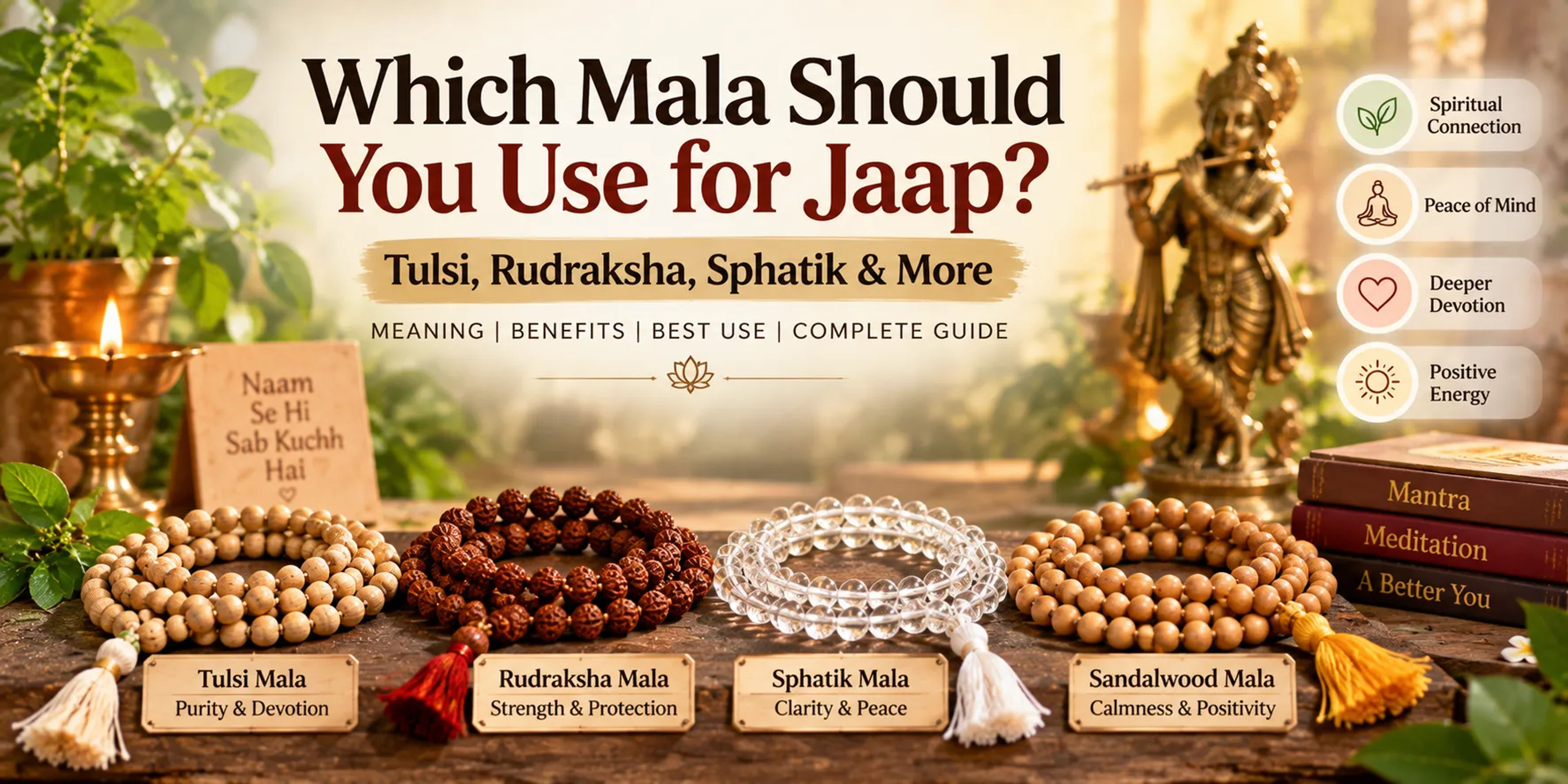
If you have started Naam Jaap or mantra chanting recently, you have probably wondered which mala to use — Tulsi, Rudraksha, Sphatik, Sandalwood, or something else. Walk into any store or search online and you will find dozens of strong claims, many of them contradictory.
This guide explains what each mala is traditionally used for, how the choice usually depends on your mantra and tradition, and what the number 108 actually represents. It is written to help you make an informed choice, not to tell you there is one “correct” mala for everyone.
Table of contents
What Is a Japa Mala?
A japa mala (also just called a mala, meaning “garland”) is a string of beads used to count repetitions of a mantra or a name of God during Naam Jaap. Each bead accounts for one repetition, so the mind is free to stay with the sound and meaning of the mantra instead of keeping count mentally. Malas are traditionally made from seeds, wood, or stone — Tulsi, Rudraksha and Sphatik (crystal) are the most commonly seen materials, along with sandalwood and lotus seed.
How to Choose a Mala
There is no mala that is universally “best” for everyone. Traditionally, the choice depends on a few things together, not any single rule:
- Your mantra or deity. Vaishnava mantras (Vishnu, Krishna, Rama) are commonly chanted on Tulsi. Shaiva mantras (Shiva) are commonly chanted on Rudraksha.
- Your tradition or sampradaya. Vaishnava, Shaiva and Shakta traditions each carry their own common practices around malas.
- Guidance from a guru or family lineage. Where this exists, it usually takes priority over general guides like this one.
- Personal comfort and preference. Bead size, weight, and how the mala feels in hand matter for a daily practice you will keep up with.
A note on claims you'll see online
Many product listings claim a mala will guarantee wealth, cure illness, remove negative energy, or supernaturally boost a mantra's power. These are traditional or commercial beliefs, not established facts, and this article is careful to label them as such rather than present them as guarantees.
Tulsi Mala
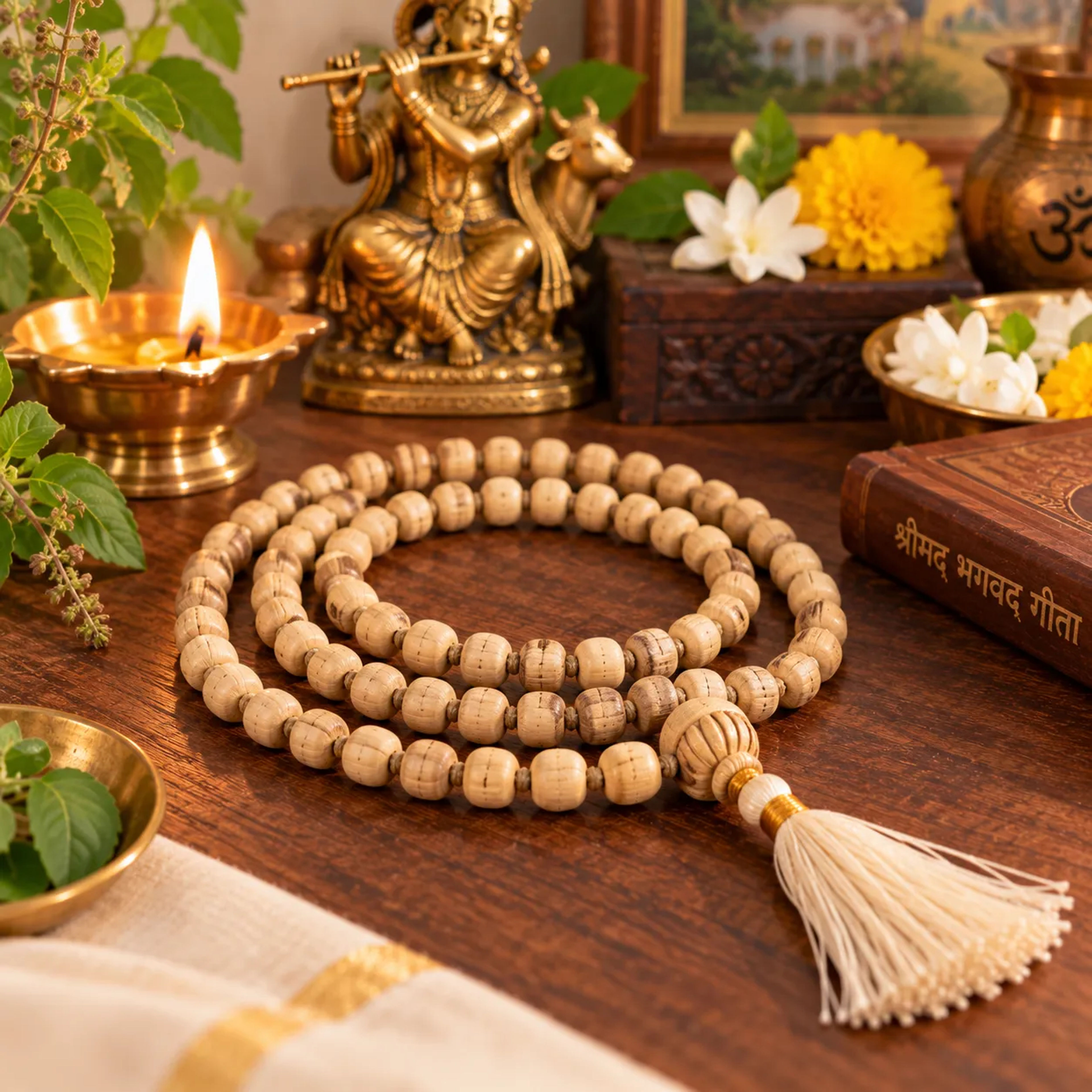
Tulsi (Holy Basil) is one of the most sacred plants in Hindu tradition and is regarded by Vaishnavas as an embodiment of Goddess Tulsi, closely associated with Lord Vishnu and Krishna. A mala made from dried Tulsi stem or root beads is the most widely used mala among devotees of Vishnu, Krishna, Rama, and Hanuman.
It's worth knowing that not every Tulsi mala serves the same purpose:
- Tulsi Japa Mala — a single strand of 108 larger beads (roughly 6–8mm), plus a guru bead, made specifically for counting mantras during chanting.
- Tulsi Kanthi Mala — smaller beads, often strung in two or more close-fitting rounds worn continuously around the neck. It is generally worn as a sign of devotion and surrender rather than used for active counting during japa.
Within Tulsi malas, you may also come across Rama Tulsi (lighter, greenish-white beads from the Rama Tulsi plant) and Shyama Tulsi (darker beads from the Shyama Tulsi plant). Both are used for japa; the difference is mainly the plant variety and bead colour rather than a difference in religious purpose.
Tulsi Mala is closely tied to Naam Jaap of Krishna, Rama, and Vishnu-related mantras, and is commonly recommended for daily devotional use, including by beginners, since it is considered gentle and widely accepted across Vaishnava practice.
Rudraksha Mala
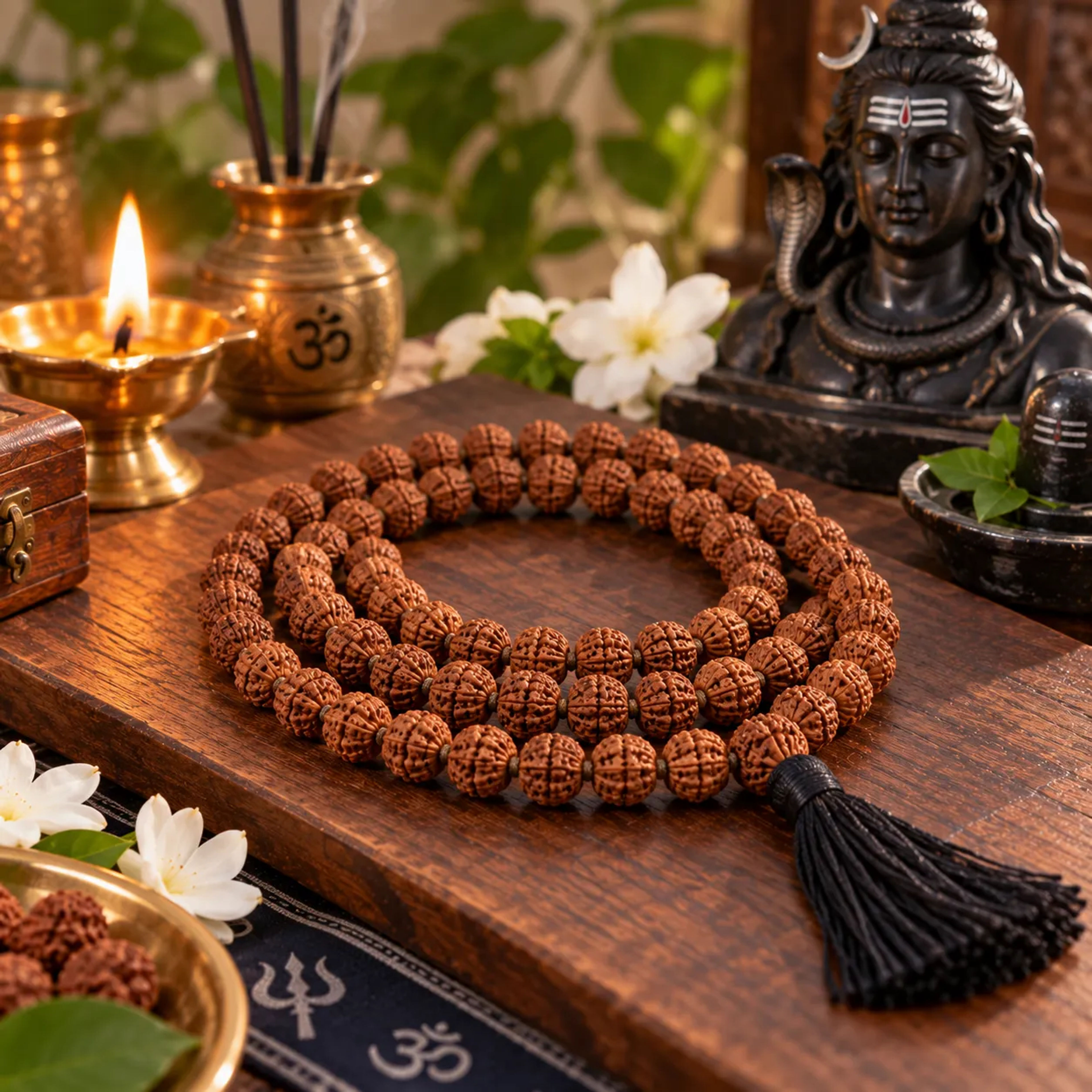
Rudraksha beads come from the seed of the Rudraksha tree (Elaeocarpus ganitrus), found mainly in the Himalayan region and parts of Nepal and Indonesia. The name comes from “Rudra” (a name of Shiva) and “Aksha” (eye); tradition, including the Rudrakshajabala Upanishad, describes Rudraksha as connected to Shiva. It is the mala most closely associated with Shaiva worship and with Om Namah Shivaya japa.
A word of caution on “mukhi” (face) claims: you will see Rudraksha beads marketed by their number of natural facets — 1 mukhi, 5 mukhi, 6 mukhi, and so on — each paired with specific promised benefits (health, planetary effects, career, and more). Some of these associations appear in traditional texts; many of the more specific medical or financial claims made by sellers are commercial marketing rather than verified traditional or scientific fact. The commonly worn 5-mukhi Rudraksha is generally considered the most widely available and suitable for everyday japa, with other mukhi counts reserved by some practitioners for specific traditional intentions.
Rudraksha Mala is traditionally used for Shiva mantras and for general japa within Shaiva practice, and many practitioners also use it more broadly for meditation and daily discipline.
Sphatik (Crystal) Mala
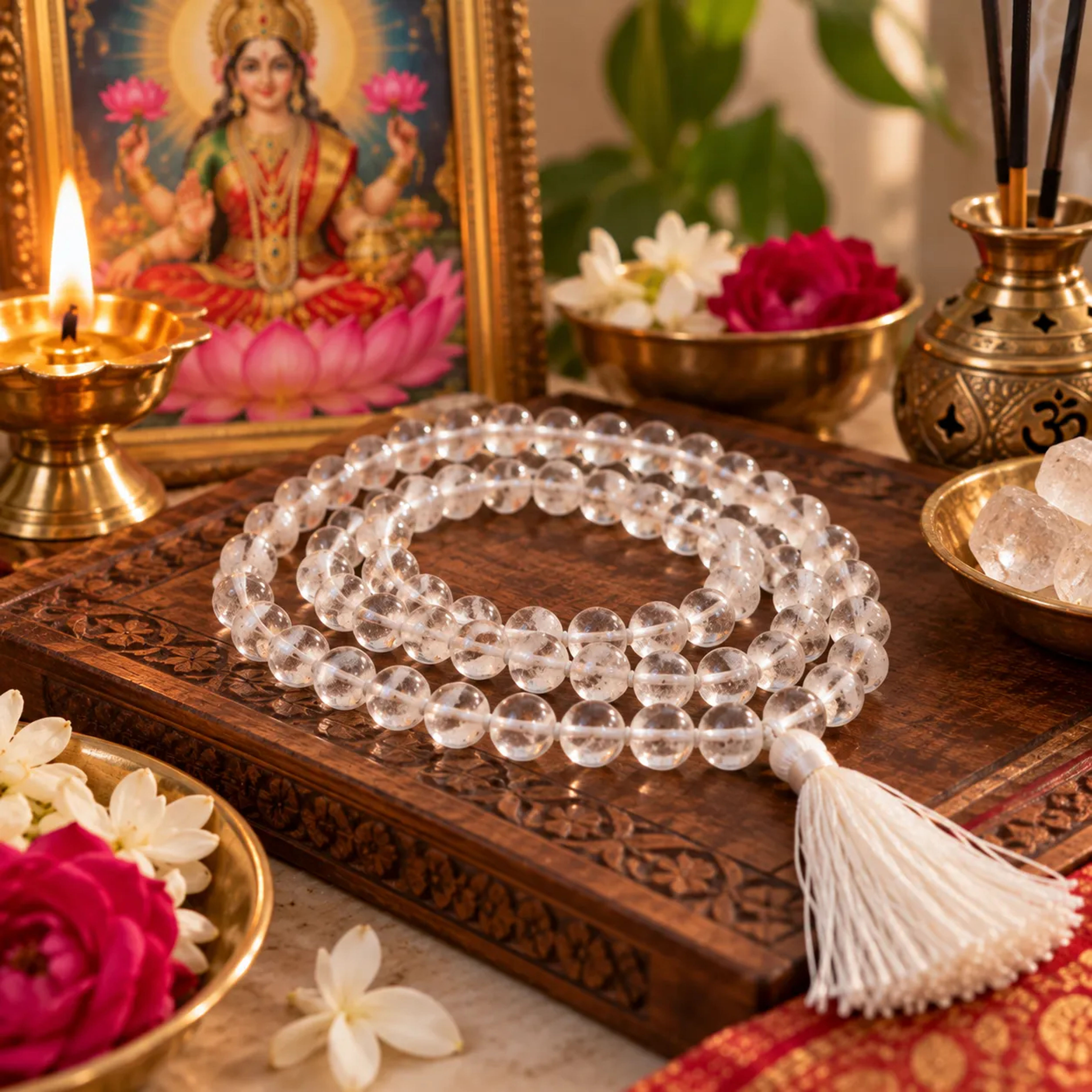
Sphatik is the Sanskrit name for natural clear quartz. Unlike Tulsi or Rudraksha, Sphatik is not tied to one deity — it is traditionally considered acceptable for japa of almost any deity, and is particularly common for mantras of Goddess Lakshmi, Saraswati, Durga, and for Gayatri Mantra. In Vedic astrology it is associated with the planet Venus (Shukra).
Sphatik is often described as having a cooling, calming quality, which is why some practitioners in hot climates or those who feel restless during meditation prefer it. Claims that it “balances chakras,” heals the body, or amplifies a mantra's power are traditional or crystal-therapy beliefs rather than scientifically established effects, and should be understood as such.
Sandalwood (Chandan) Mala
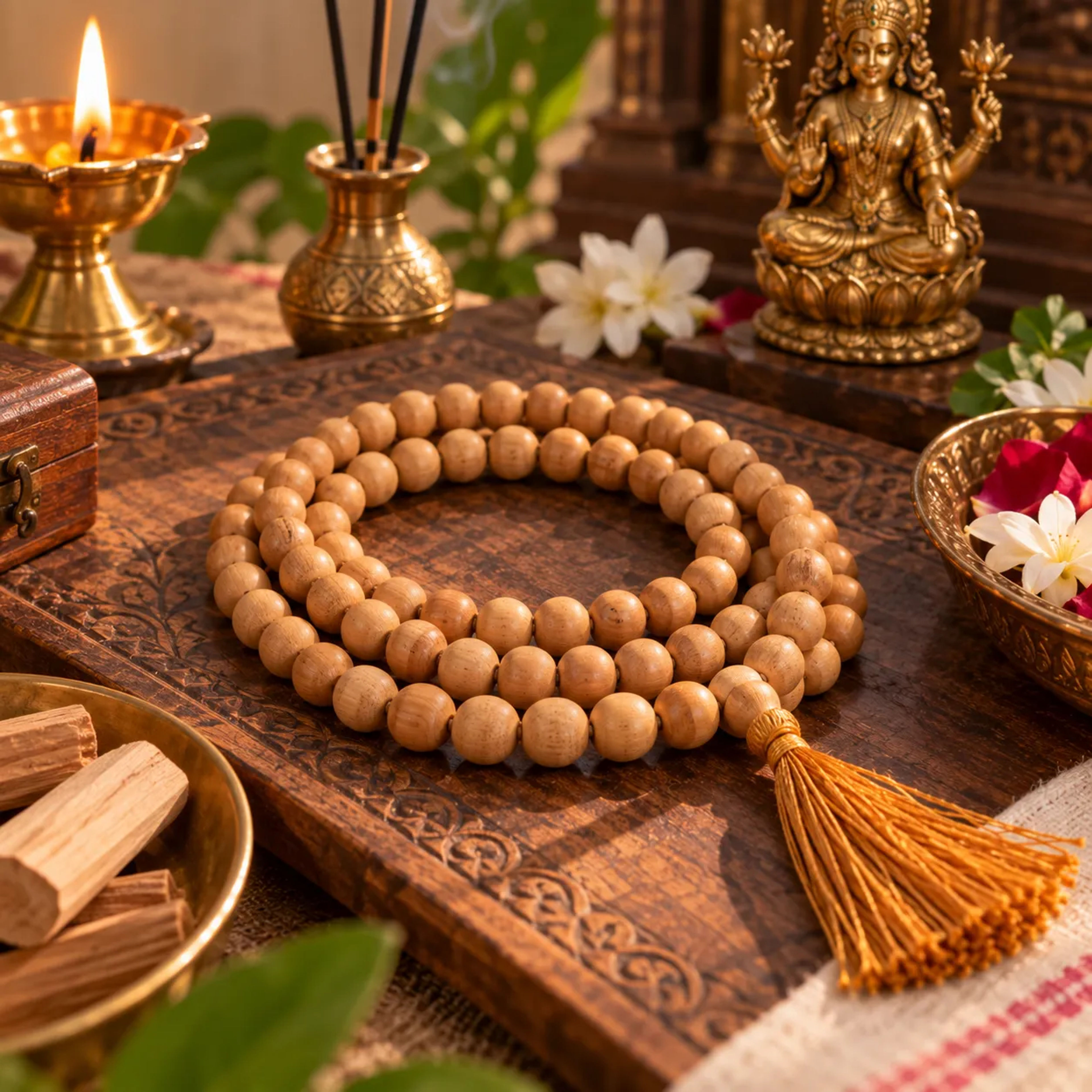
Sandalwood (Chandan) is considered one of the purest fragrant woods in Hindu tradition and has long been used in puja and daily worship. A Sandalwood mala is generally treated as suitable for all-purpose japa rather than being linked to one deity the way Tulsi or Rudraksha are, and is commonly used in worship of Ganesha and in general meditation practice. Its mild, calming fragrance and cooling association make it a comfortable everyday choice for many beginners.
Lotus Seed (Kamal Gatta) Mala
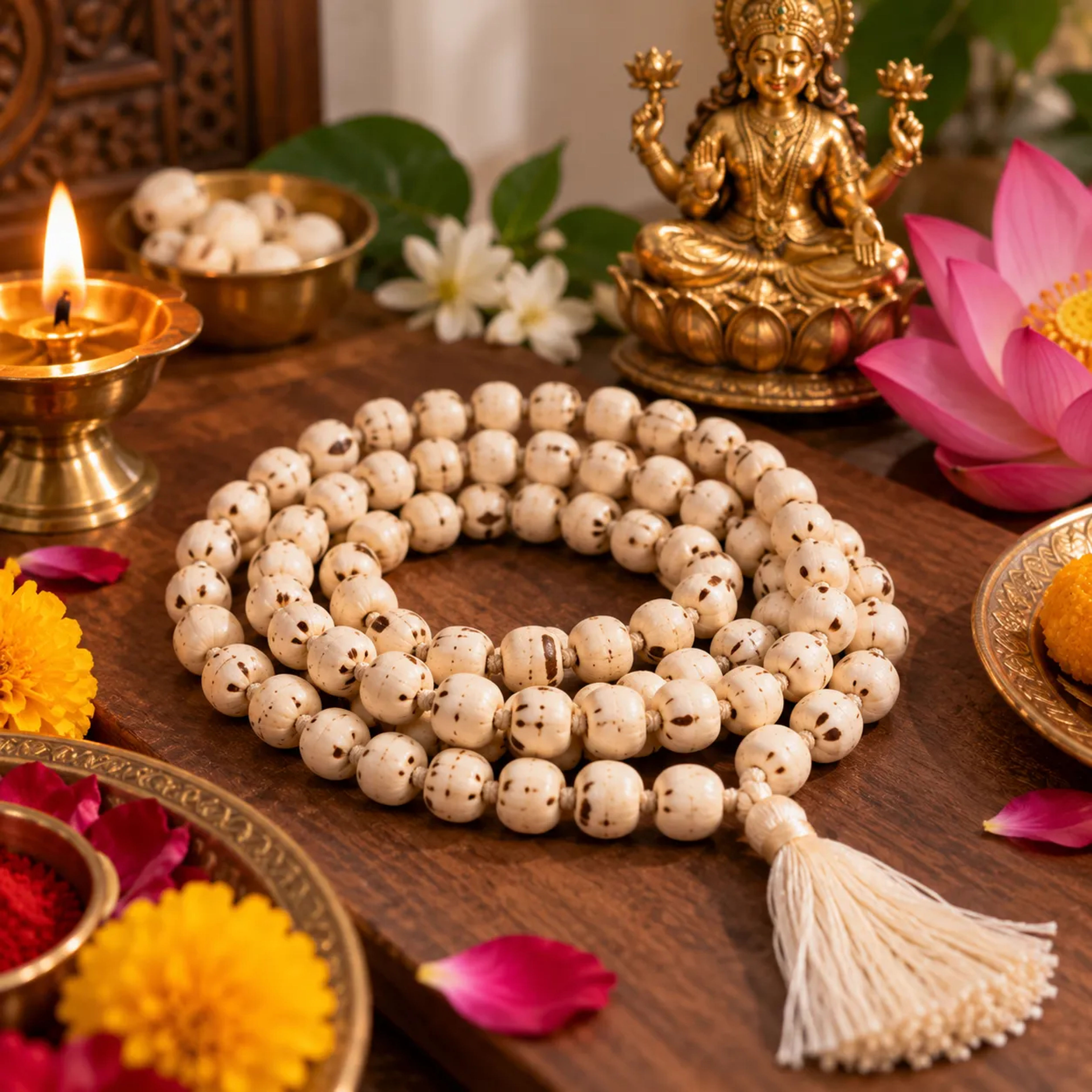
Kamal Gatta, or lotus seed beads, are traditionally associated with Goddess Lakshmi, who is described in scripture as Kamalvaasini — one who sits on a lotus. A Lotus Seed mala is therefore the mala most often recommended specifically for Lakshmi mantras and Sadhana connected to prosperity-related worship, rather than for general, all-purpose japa. As with other malas, claims that it “guarantees” wealth are a traditional devotional belief, not a factual promise.
Mala Comparison Table
A quick side-by-side, meant to help you understand the differences — not to declare a winner.
| Mala | Material | Traditional association | Common use |
|---|---|---|---|
| Tulsi | Tulsi (Holy Basil) wood | Vishnu, Krishna, Rama | Vaishnava Naam Jaap, daily use |
| Rudraksha | Rudraksha tree seed | Shiva | Shaiva japa, meditation |
| Sphatik | Natural clear quartz | Lakshmi, Saraswati, all deities | General-purpose japa, Gayatri Mantra |
| Sandalwood | Sandalwood (Chandan) | Ganesha; considered all-purpose | Everyday meditation and japa |
| Lotus Seed | Kamal Gatta (lotus seed) | Lakshmi | Lakshmi Sadhana and mantras |
Why Do Malas Have 108 Beads?
Most japa malas have 108 counting beads plus one extra, slightly larger bead called the guru bead (also called sumeru or meru), which is never counted. See our full explainer on why mantras are chanted 108 times for more, but in short, the number 108 is treated as sacred across Hindu, Buddhist, and yogic tradition for several reasons that different sources emphasise differently:
- Cosmological and astrological readings — such as the count of 12 zodiac signs multiplied by 9 planets in Vedic astrology.
- Symbolic completeness — 108 is treated in many traditions as a number representing wholeness.
- Sanskrit alphabet — some sources connect it to the 54 letters of the Sanskrit alphabet, each with a masculine and feminine form.
No single explanation is treated as the only correct one; different traditions and texts describe it differently. Not every mala has exactly 108 beads — wrist malas commonly have 27 or 54 beads (both factors of 108) for convenience, and you simply complete more rounds to reach 108 repetitions.
How to Hold and Use a Mala
Practices vary slightly across traditions and lineages, but a commonly followed method is:
- Hold the mala in your right hand, letting it rest over your middle finger.
- Move one bead per repetition using your thumb; the index finger is traditionally kept away from the beads.
- Start next to the guru bead and move around the mala one way.
- On reaching the guru bead again, don't cross over it — pause, or turn the mala around and continue in the other direction for your next round.
If your family or guru follows a different method, that takes priority over this general guide.
Caring for Your Mala
A few common practices, again with the understanding that specifics vary by tradition:
- Keep your mala in a clean cloth pouch or box rather than lying loose or on the floor.
- Many devotees keep a mala for personal use only rather than sharing it.
- Store it in your puja space when not in use.
- Wipe wooden or seed malas with a dry cloth; avoid excess water or harsh cleaning agents.
Common Beginner Questions
Which mala is good for beginners?
There isn't one universal answer. Many beginners start with Tulsi (if their practice centres on Krishna, Rama, or Vishnu) or Sandalwood, since both are commonly described as gentle and suitable for daily, all-purpose use. If your practice centres on Shiva, a Rudraksha mala is the more traditional starting point.
Can the same mala be used for different mantras?
Practices differ. Some traditions prefer dedicating one mala to one mantra or deity so its use stays consistent; others are more relaxed and use one mala across different practices. Neither is wrong — check with your tradition or simply pick a consistent approach for yourself.
Should I chant one bead at a time, or can I skip?
Traditional practice is one bead per repetition, moving steadily through the mala, rather than skipping beads.
For more on getting started, see How to Do Naam Jaap: A Beginner's Step-by-Step Guide and What Is the Best Time for Naam Jaap?.
Chanting Without a Mala? Divya Marg App Can Help
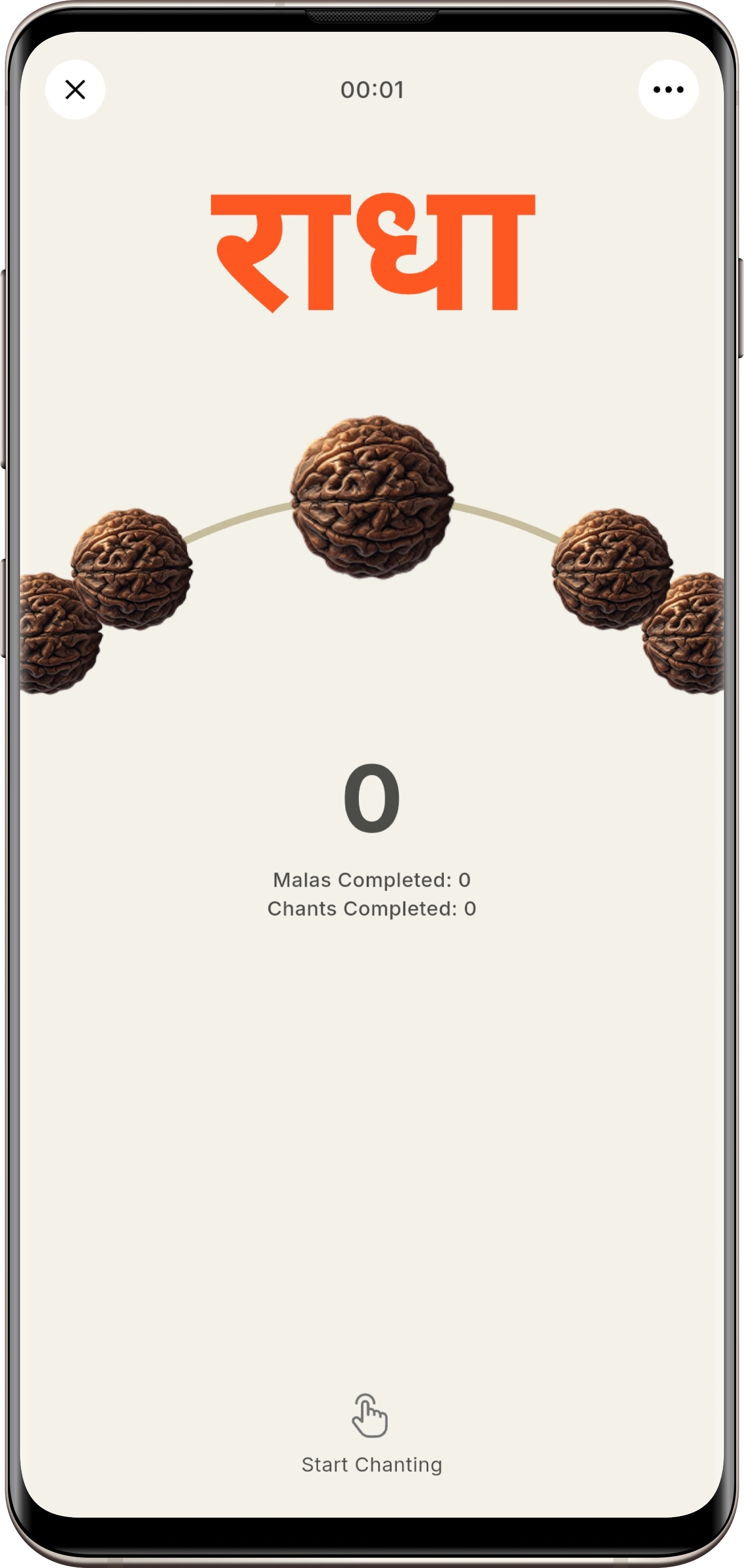
A mala remains the traditional way to count japa, and nothing here replaces that practice. But there are moments — commuting, walking, or simply not having your mala on hand — when a physical mala isn't practical. For those times, the Divya Marg app is a free, offline Naam Jaap counter that can track your repetitions as a simple practical alternative alongside your regular practice. See our comparison of mala vs. physical counter vs. digital Jaap counter for more on when each makes sense.
Chant with or without a mala
Use your physical mala alongside the app, or let the app do the counting when your hands are busy.
Set a Naam for Jaap
Choose 'Ram', 'Krishna', 'Shiva' or any Naam you're chanting and start anytime.
Daily Jaap goal
Set a realistic round target and let the app track your progress automatically.
Haptic bead-style counting
A gentle tap for each repetition, so your attention can stay on the Naam, not the count.
Works fully offline
Chant anywhere, signal or not — nothing needs an internet connection.
Simple progress tracking
See your chants, rounds and streak without any setup.
Begin your Naam Jaap today
Offline-first and built entirely around one purpose — helping you show up for your practice, every single day.
- Free, always
- Works offline
- No ads

Frequently Asked Questions
Frequently asked questions
Everything people usually ask before starting their Naam Jaap with Divya Marg.
Which mala is best for Jaap?
There is no single mala that is best for everyone. The right mala depends on your mantra, your deity or tradition, and personal or guru guidance. Tulsi is closely tied to Vishnu and Krishna devotion, Rudraksha to Shiva worship, and Sphatik is traditionally considered suitable for almost any deity, including Lakshmi and Saraswati.
Which mala should I use for Naam Jaap?
For simple Naam Jaap (repeating a name like Ram, Krishna, or Shiva), most traditions say any sincerely used mala works. Many devotees choose Tulsi for Krishna or Ram Naam Jaap, and Rudraksha for Shiva or Hanuman Naam Jaap, but this is a common preference rather than a strict rule.
Can I use a Tulsi Mala for any mantra?
Tulsi Mala is traditionally used for Vaishnava mantras (Vishnu, Krishna, Rama, Hanuman) and is generally considered gentle and suitable for daily use. Some devotees also use it for general Naam Jaap. If you follow a specific lineage, it's worth checking with your guru or tradition for mantras outside the Vaishnava context.
Can I use a Rudraksha Mala for any mantra?
Rudraksha Mala is traditionally connected with Shiva and Shaiva practice, and is widely used for Om Namah Shivaya and related mantras. Many devotees also use it more broadly, since Shaiva tradition treats Rudraksha as beneficial for general japa. Views vary by lineage, so this is a common practice rather than a fixed universal rule.
Should different mantras have different malas?
Some traditions recommend keeping one mala dedicated to one deity or mantra so its use stays consistent over time. Others are more relaxed about it. Neither approach is universally "correct" — it comes down to your tradition and personal practice.
Do all malas have to have 108 beads?
No. 108 is the most common and traditional count, but wrist malas of 27 or 54 beads (factors of 108) are also common for convenience, and some devotional traditions use different counts for specific purposes. The 108-bead mala remains the standard for a full round of japa.
What is the guru bead and should I cross it?
The guru bead (also called sumeru or meru) is the extra, often larger bead where the mala's two ends meet. Traditional practice says not to cross over it while counting — on reaching it, you pause or reverse direction and start the next round.
Can I chant without a mala?
Yes. Mantras can be chanted mentally, on your fingers, or with a simple counter — a mala is a traditional aid for focus and counting, not a requirement for japa to be valid.
Can I use a digital Jaap counter instead of a mala?
Yes, many people do, especially when a physical mala isn't practical — while commuting, at a desk, or when hands are occupied. A digital counter is simply a modern way to track repetitions; it doesn't replace the mala for those who prefer the traditional method, but it's a valid practical alternative.
Which fingers are used to move mala beads?
Common tradition says to hold the mala in the right hand and move each bead with the thumb, letting it rest on the middle finger, while keeping the index finger away from the beads. Practices can vary slightly by region and lineage.
Sources & References
- Rudrakshajabala Upanishad (traditional text on Rudraksha)
- Bhagavata Purana and Skanda Purana (traditional references to Tulsi)
- Garuda Purana (traditional reference to Sphatik / rock crystal)
- New World Encyclopedia — “Japa Mala”
- Wikipedia — “Japamala” and “Rudrakshajabala Upanishad”
This article summarises traditional beliefs and common devotional practice for general information. It is not a substitute for guidance from your own guru, priest, or lineage where you have one.