Mala vs Physical Counter vs Digital Jaap Counter: Which Is Best for Naam Jaap?
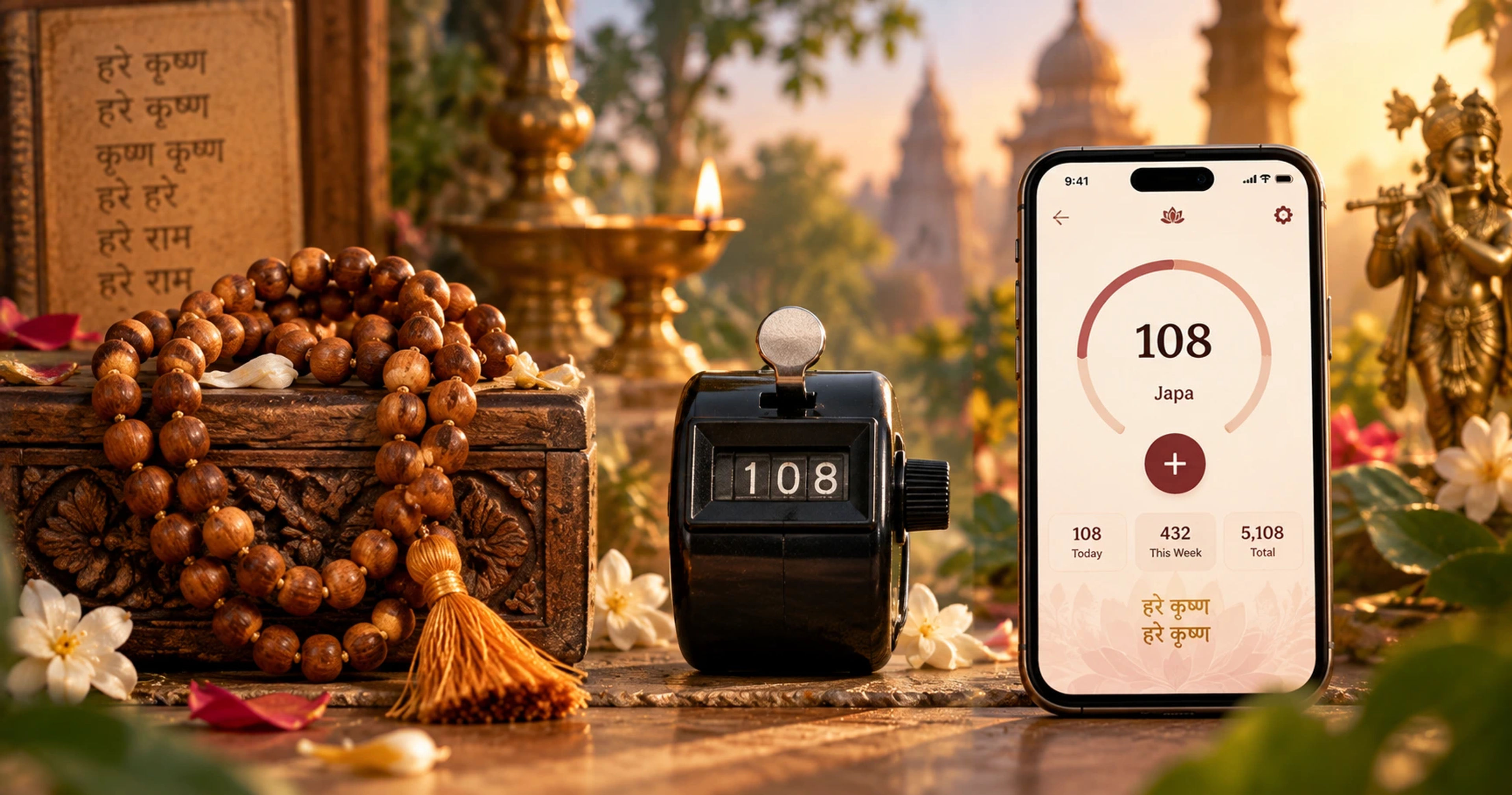
If you’ve been chanting for a while, you’ve probably faced this question at some point: mala vs physical counter vs digital jaap counter — which one should you actually use? All three do the same basic job of helping you count your Naam Jaap, but they suit different people, situations, and habits.
This guide compares all three methods honestly, without assuming one is automatically better than the others, so you can pick what genuinely fits your own practice.
Table of contents
Key takeaways
- A mala gives the most traditional, tactile chanting experience, but it’s easy to lose count mid-round.
- A physical clicker counter is simple and works without a phone, but it does one job only and can’t track history.
- A digital jaap counter app offers automatic counting, mala tracking, and progress history, but relies on your phone.
- None of these tools changes what actually matters in Naam Jaap — your attention and sincerity while chanting.
Why Counting Matters at All
Counting isn’t really about the number. It exists to give your chanting a shape — a way to know how much you’ve done and a reason to keep going tomorrow. Without some way to track repetitions, most people either lose count or lose the habit altogether.
That’s the whole reason mala, physical counters, and digital counters exist side by side. Each one solves the same problem — keeping count without breaking your focus — in a different way.
The Three Ways to Count Naam Jaap
Before comparing them in detail, here’s a quick overview of what each method actually is:
- Japa Mala — a string of prayer beads, usually 108, moved one bead at a time with each repetition.
- Physical Jaap Counter — a small mechanical or battery-powered clicker, often worn on a finger, pressed once per repetition.
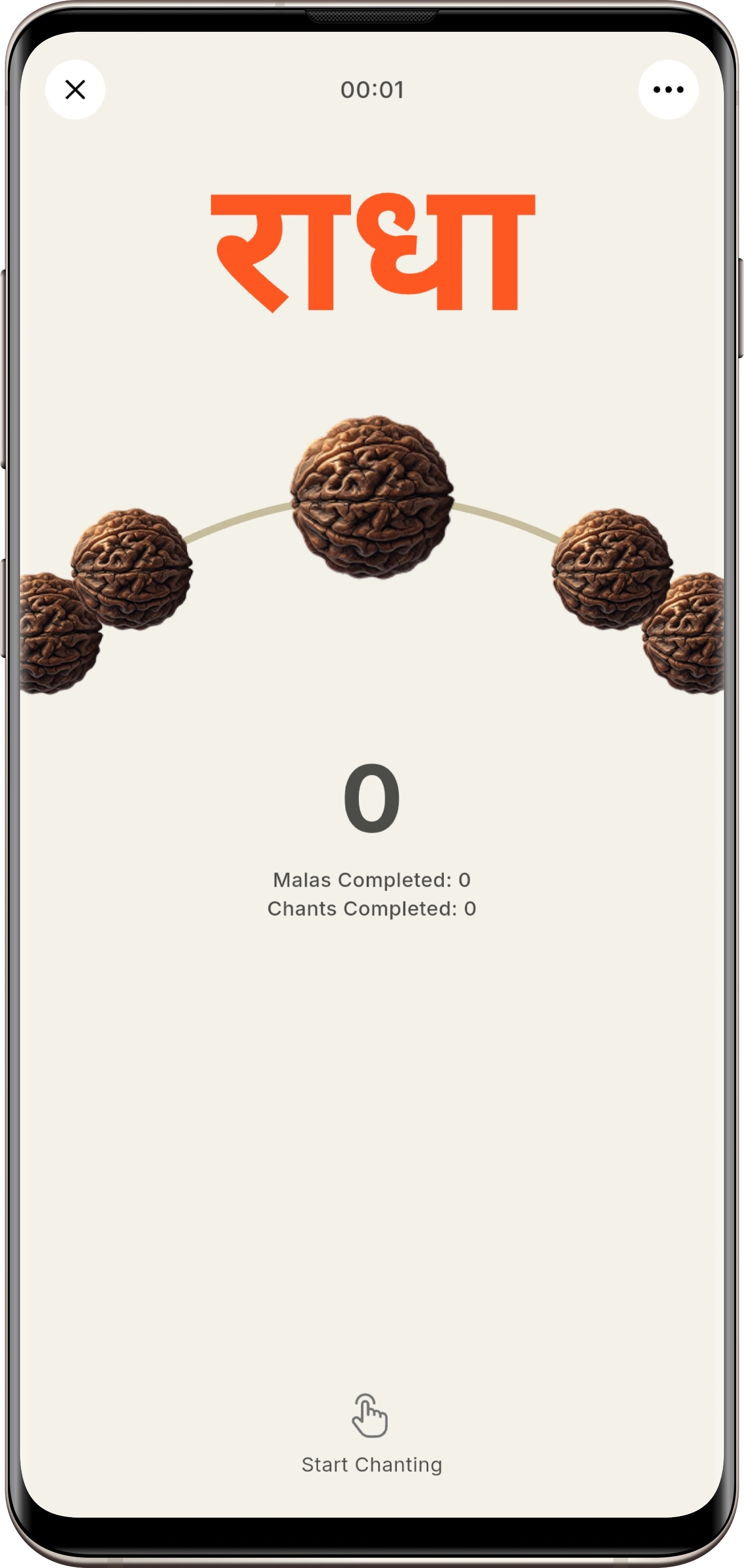
- Digital Jaap Counter — a mobile app that counts each tap or button press and usually tracks your progress over time.

1. Japa Mala
A japa mala is a string of beads, traditionally 108 plus one extra “meru” bead marking the start and end of a round. With every repetition, you move one bead between your fingers until you return to the meru bead, completing one mala. Rudraksha and tulsi are among the most common materials, each linked to different deities and traditions.
Advantages of a mala
- Strong traditional and devotional connection, especially for those raised with this practice
- The physical, tactile movement of beads can help many people stay grounded and present
- No battery, phone, or charging required
- Works well for seated, focused chanting at home or in a temple
Limitations of a mala
- It’s easy to lose count mid-round if your attention drifts, especially in longer sessions
- No automatic record of how many malas or repetitions you completed today, this week, or this month
- Needs both hands free, which isn’t always possible while commuting, working, or driving
- Using a mala openly isn’t always practical or comfortable in public or shared spaces
2. Physical Jaap Counter
A physical jaap counter, sometimes called a tally counter or japa clicker, is a small mechanical or battery-powered device with a button and a numeric display. Many are designed as finger rings so your hands stay free. Each press adds one to the count, and most models reset with a separate button.
Advantages of a physical counter
- Very simple to use, with almost no learning curve
- Doesn’t need a phone, so it avoids screen distractions entirely
- Compact and easy to carry in a pocket or wear on a finger
- A discreet option for chanting while commuting, working, or driving, when holding a mala isn’t practical
Limitations of a physical counter
- Usually tracks only the current count — no daily, weekly, or long-term history
- Limited to one running number, with no separate tracking for different mantras or sessions
- Can be misread, reset by accident, or simply forgotten somewhere
- An extra physical item to buy, carry, and eventually replace
3. Digital Jaap Counter (App)
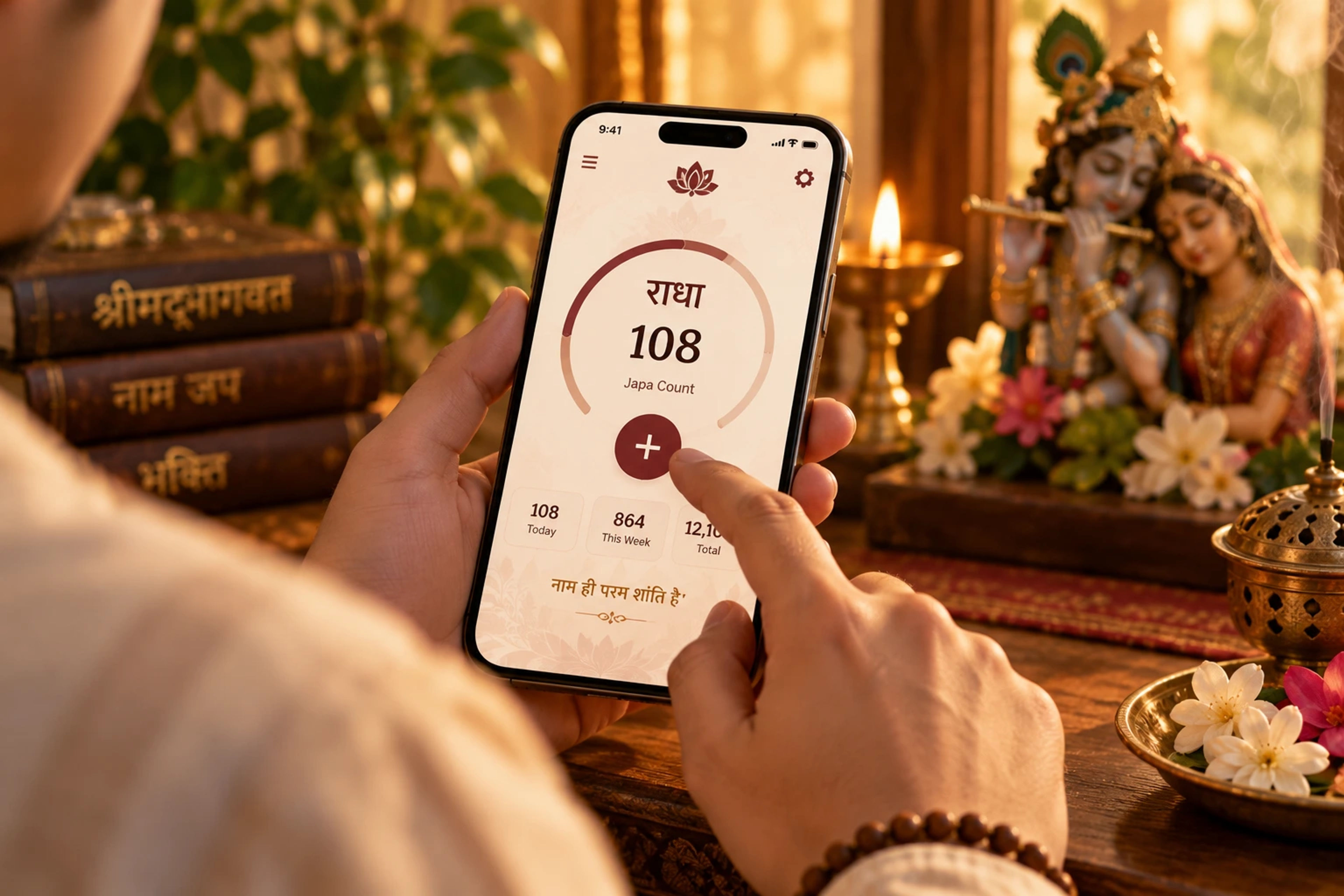
A digital jaap counter is a mobile app that replaces the mala or clicker with a tap, a button press, or sometimes a volume-button press, and counts each repetition automatically. Most jaap counter apps also complete a “mala” automatically at 108 and keep some record of your practice over time.
Advantages of a digital counter
- Removes the mental effort of counting, so more attention stays on the Naam itself
- Automatically completes a mala at 108 and starts the next one
- Keeps a running history — daily, weekly, or overall — instead of losing the count once you put it down
- Always in your pocket, since it’s on a device most people already carry everywhere
- Some apps, including Divya Marg, offer haptic (vibration) feedback per chant, volume-button counting so you don’t need to look at the screen, and a privacy mode that hides the chanting screen in shared or public spaces
Limitations of a digital counter
- Requires a charged phone, which some people specifically want to avoid during spiritual practice
- Doesn’t offer the same tactile, physical feeling as moving mala beads
- A phone in hand can invite notifications or distraction if you’re not using a focused or offline mode
- Feels less traditional to devotees who value the symbolism of a physical mala
Mala vs Physical Counter vs Digital Jaap Counter: Full Comparison
Here’s how the three methods stack up on the factors that actually matter to most people doing Naam Jaap.
| Factor | Japa Mala | Physical Counter | Digital Counter |
|---|---|---|---|
| Counting accuracy | Good, but easy to lose track | Reliable for a single count | Automatic and reliable |
| Traditional / tactile feel | Strongest | Minimal | Minimal |
| Portability | Moderate | High | High (uses your phone) |
| Hands-free use | No, needs one hand | Mostly, one press per count | Mostly, especially with volume-button counting |
| Progress tracking | None built in | Current count only | Daily / weekly / overall history |
| Privacy in public | Visible, can feel conspicuous | Fairly discreet | Discreet, more so with a privacy/hidden mode |
| Offline use | Yes, always | Yes, always | Depends on the app; some work fully offline |
| Distraction risk | Low | Very low | Low to moderate, depends on notifications |
| Cost | One-time, low to moderate | One-time, low | Often free |
| Long-term durability | Can wear out or break over years | Battery or mechanism can fail | Depends on your phone, not the tool itself |
Which One Should You Choose?
There’s no single right answer here — it genuinely depends on your situation and what you value in your practice.
- Choose a mala if you value the traditional and tactile experience of chanting, mostly practise seated at home or in a temple, and don’t need detailed tracking of your progress.
- Choose a physical counter if you want something simple that works without a phone, need a discreet way to count while commuting or working, and don’t mind that it won’t remember your history.
- Choose a digital counter if you want automatic, accurate counting, a record of your daily and overall practice, and the convenience of using a device you already carry everywhere.
If keeping track of a habit and seeing your progress over time genuinely helps you stay consistent, a digital counter like Divya Marg can be a useful fit, since it counts automatically, completes malas for you, and keeps a simple history of your daily practice. But that doesn’t make it the right choice for everyone — plenty of devotees will always prefer the feel of a mala in their hand, and that preference is just as valid.
Can You Use More Than One Method?
Yes, and many practitioners already do. A common pattern is using a mala for a focused morning or evening session at home, and switching to a physical or digital counter during the day — while commuting, at work, or anywhere carrying a mala isn’t practical. There’s no rule that says you must pick only one tool for life. The right combination is simply whatever keeps your practice going consistently.
If you’re new to Naam Jaap itself and want to understand the basics before worrying about counting tools, our guides on what Naam Jaap is and how to practise it and how to do Naam Jaap as a beginner are good places to start.
Divya Marg counts, so you don’t have to
Divya Marg is a free Naam Jaap app with haptic feedback on every chant, volume-button counting so you don’t need to look at your screen, offline support, daily reminders, and a privacy mode for chanting in shared spaces — built for exactly the situations where a mala isn’t practical.
Frequently Asked Questions
Which is better, mala or jaap counter?
Neither is universally better — it depends on what you need. A mala is better if you value the traditional, tactile feel of chanting and mostly practise at home. A jaap counter, physical or digital, is better if you want effortless accuracy, especially while travelling, working, or chanting in public.
Is a digital jaap counter as good as a mala for Naam Jaap?
From a spiritual standpoint, most teachings hold that what matters in Naam Jaap is your attention and sincerity, not the counting tool. A digital jaap counter is simply a counting aid — it can support a genuine practice just as a mala can, though it doesn't carry the same tactile or traditional experience.
Is 108 repetitions compulsory for Naam Jaap?
No. 108 is a widely used traditional count, partly because a standard mala has 108 beads, and different texts offer various explanations for its significance. But it isn't compulsory for everyone — many people start with fewer repetitions, like 27 or 54, and build up gradually, or simply chant for a fixed amount of time instead of a fixed count.
Can I lose count on a mala?
Yes, this is one of the most common mala complaints — it's easy to lose track mid-round if your attention drifts, especially during longer chanting sessions. Some practitioners get around this by chanting a fixed number of malas rather than trying to track an exact repetition count.
Is a physical jaap counter better than a digital one?
A physical clicker counter has one clear advantage: it works without a phone, a battery charge, or a screen, which some people prefer for a quieter, less digital practice. A digital counter usually offers more — such as automatic mala completion, daily and total tracking, and reminders — as long as you don't mind chanting with your phone nearby.
Do I need a mala to do Naam Jaap?
No, a mala is a helpful traditional tool, not a requirement. You can do Naam Jaap using your fingers, a physical clicker counter, a digital counter, or simply by chanting for a set amount of time without counting at all.
Can I switch between a mala and a digital counter?
Yes. Many practitioners use a mala at home during their main chanting session and switch to a physical or digital counter while travelling, at work, or wherever carrying a mala isn't practical. There's no rule against using different tools in different situations.
In Simple Words
Mala, physical counter, and digital jaap counter all do the same underlying job — helping you keep count so your mind can stay with the Naam. A mala offers tradition and touch. A physical counter offers simplicity without a screen. A digital counter offers automatic accuracy and a record of your progress. None of them replaces the actual practice — they only support it. Choose the one that fits how, where, and when you actually chant, and don’t be afraid to use more than one.
Sources and Further Reading
This comparison draws on common descriptions of japa malas, physical tally counters, and digital jaap counter apps found across devotional and product sources, alongside general understanding of traditional 108-count chanting practice. Specific product features mentioned for Divya Marg reflect what is currently available in the app.
Written and reviewed by the Divya Marg Editorial Team. Last updated 9 September 2026.
More guides
Begin your Naam Jaap today
Offline-first and built entirely around one purpose — helping you show up for your practice, every single day.
- Free, always
- Works offline
- No ads