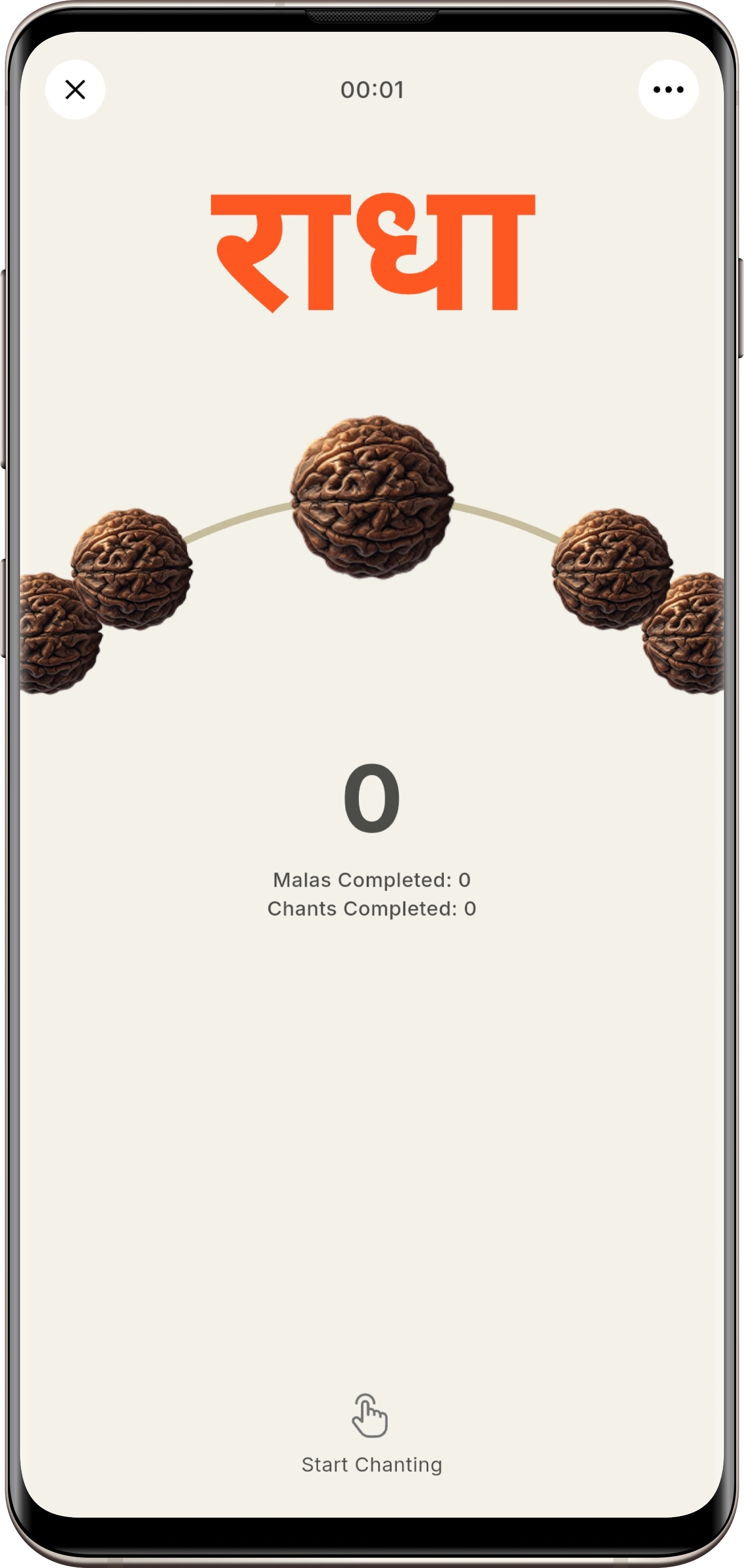
What Is the Best Time for Naam Jaap? Brahma Muhurta, Morning & Daily Practice

“What time should I chant?” is one of the first questions almost every new practitioner asks, usually right after they’ve decided they want to start. The honest, slightly unsatisfying answer is: it depends, but not in the way you might expect. Tradition has a clear preference. Real life has a say too. This guide covers both, so you can make a genuinely informed choice instead of picking a time you won’t actually keep.
If you haven’t yet nailed down how to chant, our beginner’s step-by-step guide covers the mechanics — this article is entirely about when.
Table of contents
Key takeaways
- Brahma Muhurta is roughly 96 minutes before sunrise — traditionally the most favoured window for practice.
- Morning is preferred, but not required — evening or any consistent time still counts as a real practice.
- Brahma Muhurta shifts daily with sunrise; a panchang or sunrise app gives you the exact window for your location.
- The time you'll actually repeat every day beats the "ideal" time you'll only manage twice a week.
What Brahma Muhurta Means
Brahma Muhurta literally translates to “the time of Brahma” (creation, or the creative principle) and refers to a specific window before sunrise — traditionally the last two muhurtas of the night, each 48 minutes long, together spanning roughly 96 minutes, or about 1 hour 36 minutes, before the sun comes up.
It is described across Vedic and yogic literature as a naturally quiet period: the world hasn’t fully woken up, the mind hasn’t yet picked up the day’s mental noise, and the body is typically still in a calmer, more rested state than it will be even an hour later. This combination is why Brahma Muhurta is so consistently recommended for meditation, study and Naam Jaap.
Why Mornings Are Traditionally Preferred
The preference for morning practice, and Brahma Muhurta specifically, comes down to a few recurring ideas across traditional texts and teachers:
- Fewer distractions. Before the day’s messages, tasks and conversations begin, there’s simply less competing for your attention.
- A settled mind. The mind is often described as calmer and less reactive shortly after waking, before it has accumulated the day’s stimulation.
- Setting the tone for the day. Practicing first, before anything else demands your attention, is said to carry a quality of remembrance into the rest of the day.
- Tradition and continuity. Morning practice is simply how the routine has been passed down across generations in many households, which gives it its own quiet momentum.
These are experiential and traditional observations, worth taking seriously, but they are not the same as a rule that makes other times invalid.

Morning vs. Evening Naam Jaap
Morning and evening practice tend to feel genuinely different, and it’s worth knowing what to expect from each rather than assuming one is simply “better.”
Morning chanting
Tends to feel clearer and quieter, especially before the household or the day’s notifications start. Many people find it easier to hold attention, and it has the added effect of starting the day with intention rather than reaction.
Evening chanting
Often works better as a way to close the day — a way of setting down whatever happened and returning to something steady before sleep. It can be harder to stay fully alert, especially late at night, but for many people it is simply the only realistic window they have.
Neither is a compromise. The practice that happens consistently is doing more for you than the “ideal” practice that happens occasionally.
Can You Do Naam Jaap at Any Time?
Yes. Naam Jaap has no fixed clock requirement. It can be done during a commute, on a lunch break, between tasks at work, or last thing before sleep. What changes across different times of day isn’t whether the practice “counts,” but how easy it is to hold quiet attention — mornings tend to make that easier for most people, but a busy household morning can be noisier than a quiet evening for someone else. Choose based on your actual life, not a general rule that may not fit your schedule.
This is exactly why Divya Marg doesn’t assume a fixed time — you can set a daily reminder for whichever hour genuinely works for you, morning, evening, or both, and the app tracks your streak either way.
Finding Your Brahma Muhurta Window
Because Brahma Muhurta is defined relative to sunrise, it shifts slightly every day and varies by your location and the season. As a rough estimate, subtract about 1 hour 36 minutes from your local sunrise time. For an exact daily window, a local panchang, a sunrise-time app, or a quick search for your city’s sunrise time is more reliable than relying on a fixed clock time like “4:30 a.m.” year-round, since sunrise itself moves across the year.
If calculating an exact window each day feels like more effort than it’s worth, a simpler approach works nearly as well: pick a consistent early-morning time that roughly falls in that range for your location, and hold to it. Approximate and consistent beats precise and occasional.
Building a Consistent Daily Routine
Whichever time you land on, a few things make it easier to actually keep:
- Anchor it to an existing habit. Right after waking, right after your first cup of tea, or right before bed — attaching Naam Jaap to something you already do daily removes the need to “remember” it separately.
- Prepare the night before, for mornings. If you’re chanting early, decide the night before that you’re doing it — deciding at 5 a.m. itself is much harder than deciding at 9 p.m. the evening before.
- Keep the session short enough to protect. A 10-minute practice you can defend against a busy morning beats a 30-minute one that gets cut the first time you’re running late.
- Track it. Seeing your practice show up at roughly the same time each day, over days and weeks, turns an intention into a visible pattern.
- Allow flexibility without guilt. A day where your only option is a quick evening session instead of your usual morning one is still a day you practiced — that matters more than protecting a perfect time slot.
Built around your schedule, not an ideal one
Whether your realistic window is Brahma Muhurta, a lunch break, or right before bed, Divya Marg is built to support whichever time you can actually keep — and to show you, honestly, when you tend to chant.
Daily reminders
Set a nudge for your chosen time — early morning, evening, or both — and let the app do the remembering.
Hourly chanting chart
See exactly when in the day you actually chant, so you can spot patterns and adjust your routine.
Daily & weekly streaks
A visible streak makes showing up at your chosen time each day easier to stick to.
Works fully offline
Chant at 5 a.m. or on a train at midnight — no signal needed either way.
Flexible daily target
Set a realistic goal for whichever time slot you actually have, morning or otherwise.
Dark mode
Chant comfortably before sunrise or after dark without a bright screen breaking the quiet.
Frequently Asked Questions
What is Brahma Muhurta exactly?
Brahma Muhurta is the period roughly 96 minutes (about 1 hour 36 minutes) before sunrise, traditionally divided into two 48-minute muhurtas. It's considered the most favourable window for meditation, study and spiritual practice across Vedic and yogic texts.
What time is Brahma Muhurta today?
It shifts with sunrise, so it changes slightly every day and varies by location. A quick way to estimate it: take your local sunrise time and subtract about 1 hour 36 minutes. For a precise daily time, a local panchang or sunrise-time app is more reliable than a fixed clock time.
Is evening Naam Jaap less effective than morning?
Not inherently. Brahma Muhurta is the traditionally preferred window, but the practice itself doesn't lose its value at other times. A consistent evening practice will serve you far better than an inconsistent attempt at mornings you keep missing.
Can I chant Naam Jaap right after waking up, still in bed?
Yes, mentally repeating your Naam before you get up is a common and accepted way to begin the day. Sitting up fully engages more of your attention, but chanting silently while still lying down is far better than skipping it.
Do I need to bathe before Naam Jaap?
Some traditional routines include bathing before spiritual practice as a way of settling the mind and body, but it is not a requirement for Naam Jaap to be valid or effective. If it fits your morning, it can help; if it doesn't, chanting without it is still complete practice.
What if I genuinely can't wake up early — can I still benefit?
Yes. The core practice — repeating your Naam with attention — doesn't require a specific hour. Choose whichever time of day you can realistically repeat every single day, and treat that as your ideal time.
How long should morning Naam Jaap be?
There's no fixed duration. Many people begin with 10-20 minutes or one to two malas in the morning and adjust from there based on their schedule and how the practice feels.
Should I chant at a different time on festival days or Ekadashi?
Some practitioners extend their practice or add sessions on specific auspicious days, but this is a personal or tradition-specific choice rather than a rule. Your regular daily timing works perfectly well year-round.
Pick a Time You'll Actually Keep
Brahma Muhurta is a genuinely good default if your schedule allows for it — quiet, undistracted, and steeped in tradition. But the real goal is a time slot you’ll return to tomorrow, and the day after that. If that’s 5 a.m., wonderful. If it’s 9 p.m. after everyone else is asleep, that works too.
Once you’ve picked a time, Divya Marg can hold the reminder and the count, so the only decision left each day is simply to sit down. For the mechanics of the practice itself, see our beginner’s step-by-step guide.
Written and reviewed by the Divya Marg Editorial Team. Last updated 14 August 2026.
More guides
Begin your Naam Jaap today
Offline-first and built entirely around one purpose — helping you show up for your practice, every single day.
- Free, always
- Works offline
- No ads