
Diwali Puja Mantras: Lakshmi Puja Mantras with Meaning
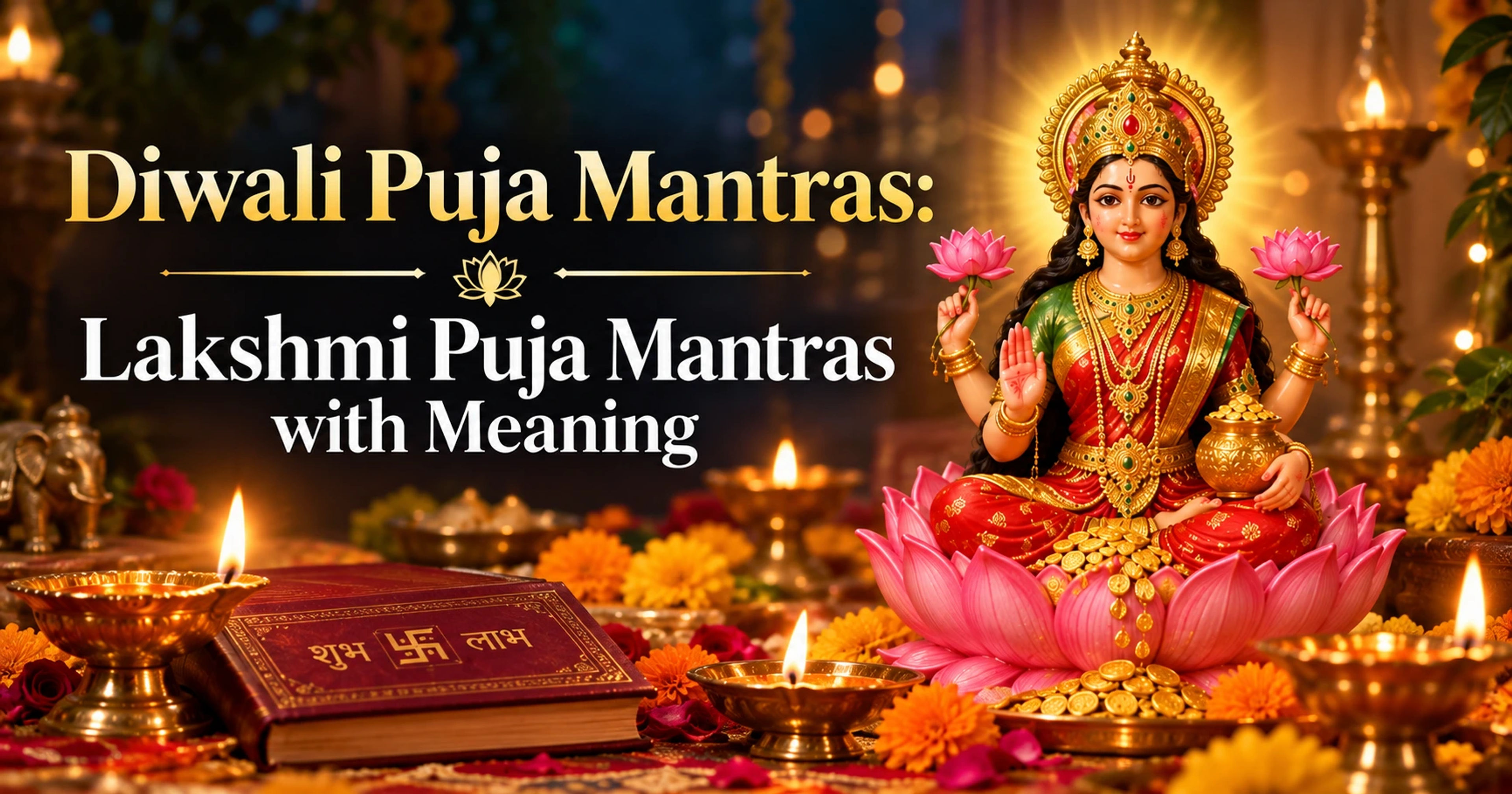
There is no single Diwali mantra. Families chant different Diwali puja mantras depending on their region, family tradition and the form of Lakshmi Puja they follow. Most, though, draw from a small shared set of prayers: a lamp-lighting verse, an invocation to Ganesha, and a few Lakshmi mantras and hymns such as the Lakshmi Gayatri, Namastestu Mahamaye and the Shri Suktam.
This guide gives the Sanskrit text, transliteration and simple meaning of the most commonly used Lakshmi Puja mantras, explains where each one comes from, and answers practical questions such as what a beginner can chant, how many times, and whether you need a mala or a full puja.
Diwali 2026 dates
- Lakshmi Puja (Diwali): Sunday, 8 November 2026, on Kartik Amavasya.
- Dhanteras: Friday, 6 November 2026.
Diwali follows the Hindu lunar calendar, so the date changes every year, while the mantras stay the same. We have not listed a clock-time muhurat because puja timing depends on your city’s sunset. Check a local panchang, or ask your family priest, for your exact time.
Table of contents
Diwali, Lakshmi Puja and Why Lakshmi Is Worshipped
Diwali, or Deepavali, is a five-day festival of lamps. Lakshmi Puja is the main evening worship on the day of Kartik Amavasya, the new-moon night. That is the darkest night of the lunar month, and many households mark it by cleaning the home, lighting diyas and welcoming Goddess Lakshmi.
In Hindu tradition, Lakshmi, also called Shri, is the goddess of prosperity, auspiciousness and grace, and the consort of Vishnu. The Puranas describe her rising from the churning of the cosmic ocean (Samudra Manthan). Her name is often traced to the Sanskrit idea of a goal or aim, and her four arms are commonly explained as representing the four aims of life: dharma, artha, kama and moksha.
So devotees traditionally understand Shri as more than money. It includes well-being, beauty, grace and good fortune, alongside material comfort. Lakshmi is worshipped together with Ganesha, who is invoked first as the remover of obstacles, and many families read this pairing as a reminder that prosperity is best held with wisdom.
There Is No Single Diwali Mantra
Diwali is celebrated in many ways, so the prayers differ too. Some common variations:
- North and West India: Lakshmi-Ganesha Puja in the evening. Many business families, especially in Gujarat and Rajasthan, also do Chopda Pujan, the worship of new account books.
- South India: Deepavali is often observed with an early-morning oil bath and is linked to Krishna’s victory over Narakasura. Lakshmi worship is also common, with local customs.
- Bengal, Odisha and Assam: Diwali night is often Kali Puja, with Kali mantras rather than Lakshmi mantras. In Bengal, the main Lakshmi Puja is Kojagari Lakshmi Puja on the Ashwin full moon.
- Vedic and priest-led pujas: These often use the Shri Suktam and follow a longer, structured order of worship.
- Vaishnava and Shakta households: Some centre Lakshmi-Narayan, others focus on Devi, and their preferred prayers may differ.
Jain and Sikh communities observe the same days with their own meanings. The advice in this article is a starting point. If your family, temple or priest follows a particular set of prayers, follow that first.
Where Mantras Fit in a Simple Home Lakshmi Puja
Lakshmi Puja is traditionally performed in the evening, most commonly during Pradosh Kaal, the period after sunset. Some traditions, especially Tantric ones, prefer the midnight period. A priest-led puja usually follows a longer sequence, but a simple home version often looks like this:
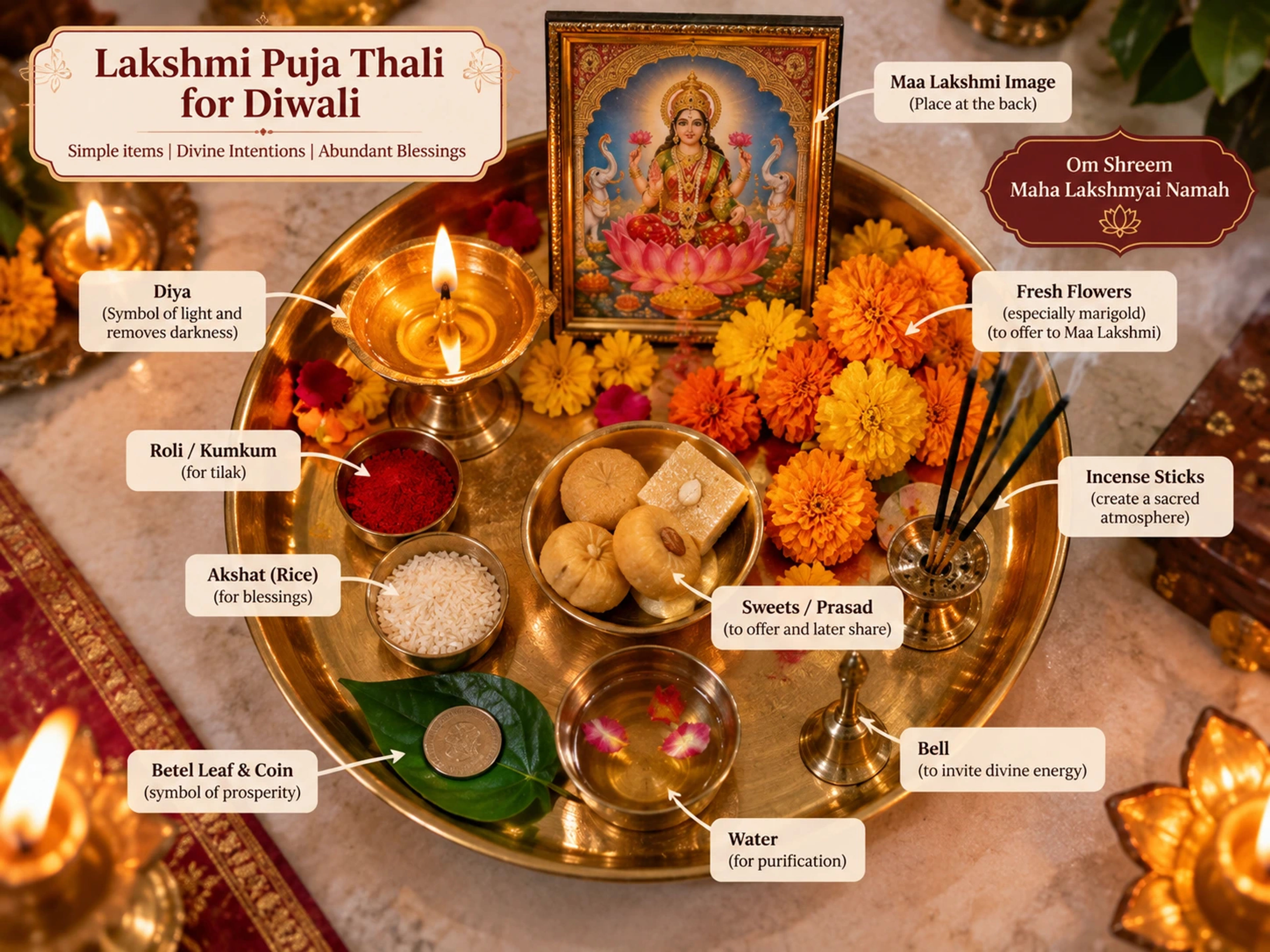
- Prepare the space. Clean the area and set out Lakshmi and Ganesha, in a murti or picture.
- Light the diya. Many people recite a lamp-lighting prayer such as Shubham Karoti here.
- Invoke Ganesha. A short Ganesha mantra or shloka.
- State your intention (sankalp). Some families do this formally with a priest; at home, many simply fold their hands and offer the puja in their own words.
- Worship Lakshmi. Offer flowers, incense and sweets or fruit while chanting a Lakshmi mantra, or reciting the Ashtakam or Shri Suktam. Lotus flowers are traditionally associated with her.
- Quiet japa. Chant your chosen mantra a set number of times.
- Aarti and prasad. Wave the lamp while singing the Lakshmi aarti, then share the prasad with the family.
Mantra, Stotra, Sukta, Aarti — What’s the Difference?
Quick distinction
- Mantra — a short sacred phrase meant to be repeated (japa), such as Om Shreem Mahalakshmyai Namah.
- Beej (seed) mantra — a single sacred syllable such as Shreem. It is understood through sound and tradition, not dictionary meaning.
- Stotra / Ashtakam — a devotional hymn in verse, such as the eight-verse Mahalakshmi Ashtakam. Usually recited, not counted on a mala.
- Sukta — a Vedic hymn, such as the Shri Suktam. Usually chanted in Vedic style.
- Aarti — a song of praise sung while waving a lamp before the deity, usually at the end of the puja.
Diwali Puja Mantras With Meaning
These are among the prayers most often used in Lakshmi Puja, in the order they usually appear. You do not need all of them. Pick one or two that feel right, and start small.
Lamp-lighting prayer
Shubham Karoti
शुभं करोति कल्याणम् आरोग्यं धनसम्पदा । शत्रुबुद्धिविनाशाय दीपज्योतिर्नमोऽस्तु ते ॥
Shubham karoti kalyanam arogyam dhana-sampada | Shatru-buddhi-vinashaya deepa-jyotir-namostu te ||
Meaning: I bow to the light of the lamp, which brings auspiciousness, well-being, health and abundance, and helps dispel hostile or harmful thoughts.
Traditional context: A familiar evening lamp prayer taught in many Hindu homes. It is not specific to Diwali or Lakshmi, but it suits the moment you light the first diya.
Source: Traditional household prayer verse; a single scriptural source is not commonly cited.
Invocation to Ganesha
Vakratunda Mahakaya
वक्रतुण्ड महाकाय सूर्यकोटिसमप्रभ । निर्विघ्नं कुरु मे देव सर्वकार्येषु सर्वदा ॥
Vakratunda mahakaya surya-koti-samaprabha | Nirvighnam kuru me deva sarva-karyeshu sarvada ||
Meaning: O Lord with the curved trunk and mighty form, whose radiance equals a million suns, please make all my undertakings free of obstacles, always.
Traditional context: Ganesha is traditionally invoked at the start of any puja, and Lakshmi Puja is usually done as Lakshmi-Ganesha Puja. Many families instead chant the short Om Gam Ganapataye Namah (ॐ गं गणपतये नमः).
Source: Widely recited traditional Ganesha shloka.
Simple japa mantra
Om Shreem Mahalakshmyai Namah
ॐ श्रीं महालक्ष्म्यै नमः
Om Shreem Mahalakshmyai Namah
Meaning: Om, salutations to the great Lakshmi. Shreem is the seed sound (beej) traditionally associated with Shri, that is, Lakshmi. Mahalakshmyai means "to Mahalakshmi", and Namah means "I bow".
Traditional context: One of the most commonly chanted Lakshmi mantras and a practical choice for beginners because it is short. Say it as: Om Shreem (long ee), Ma-ha-laksh-myai (last syllable rhymes with "eye"), Na-mah.
Source: Devotional japa mantra used across Lakshmi traditions. It is a mantra, not a longer hymn.
Longer Lakshmi beej mantra
Om Shreem Hreem Shreem Kamale Kamalalaye
ॐ श्रीं ह्रीं श्रीं कमले कमलालये प्रसीद प्रसीद । ॐ श्रीं ह्रीं श्रीं महालक्ष्म्यै नमः ॥
Om Shreem Hreem Shreem Kamale Kamalalaye praseeda praseeda | Om Shreem Hreem Shreem Mahalakshmyai Namah ||
Meaning: Om, Shreem Hreem Shreem. O Lakshmi seated on the lotus, whose abode is the lotus, be gracious, be gracious. Om, Shreem Hreem Shreem, salutations to Mahalakshmi.
Traditional context: Widely used in Lakshmi worship, and often called the Mahalakshmi mantra. Shreem is linked to Shri (Lakshmi); Hreem is a seed sound used in many Devi mantras and linked to Shakti. Because it contains several seed sounds, some traditions prefer that it be learned from a guru or family elder. The shorter mantra above is an easier place to start. See our Mahalaxmi Mantra guide for a deeper look.
Source: Popular Lakshmi upasana mantra; no single primary scriptural source is commonly cited, and small spelling variants exist.
Gayatri-format mantra
Lakshmi Gayatri
ॐ महालक्ष्म्यै च विद्महे विष्णुपत्न्यै च धीमहि । तन्नो लक्ष्मीः प्रचोदयात् ॥
Om Mahalakshmyai cha vidmahe Vishnupatnyai cha dheemahi | Tanno Lakshmih prachodayat ||
Meaning: Om, we meditate on Mahalakshmi, the consort of Vishnu. May Lakshmi inspire and guide our understanding.
Traditional context: Follows the Gayatri pattern used for many deities: we know (vidmahe), we meditate (dheemahi), may she inspire (prachodayat). It asks for guidance and clarity rather than any specific outcome. Some sources add "Shri" before Mahalakshmyai, so you may see slightly different wording.
Source: Widely used devotional mantra; exact wording varies slightly between compilations and traditions.
Vedic hymn (sukta), opening verse
Shri Suktam, verse 1
हिरण्यवर्णां हरिणीं सुवर्णरजतस्रजाम् । चन्द्रां हिरण्मयीं लक्ष्मीं जातवेदो म आवह ॥
Hiranya-varnam harinim suvarna-rajata-srajam | Chandram hiranmayim Lakshmim jatavedo ma avaha ||
Meaning: O Jataveda (Agni), bring to me Lakshmi: radiant and golden, adorned with garlands of gold and silver, gentle like the moon, shining with golden light. (Translators explain harinim in different ways, so wordings vary.)
Traditional context: The Shri Suktam is a Vedic hymn to Shri-Lakshmi from the khila (supplementary) portion of the Rigveda. Priests commonly chant the full hymn in Vedic style during Lakshmi Puja, and it is often learned by listening. Beginners can simply listen to it, or read this first verse with its meaning.
Source: Shri Suktam, Rigveda khila. A hymn of about 15 verses, not a short japa mantra.
Stotra from the Puranas
Namastestu Mahamaye (Mahalakshmi Ashtakam, verse 1)
नमस्तेऽस्तु महामाये श्रीपीठे सुरपूजिते । शङ्खचक्रगदाहस्ते महालक्ष्मि नमोऽस्तु ते ॥
Namastestu mahamaye shripithe surapujite | Shankha-chakra-gada-haste Mahalakshmi namostu te ||
Meaning: Salutations to you, O Mahamaya, seated at Shripitha and worshipped by the gods, who hold the conch, discus and mace in your hands. Salutations to you, O Mahalakshmi.
Traditional context: The first verse of the eight-verse Mahalakshmi Ashtakam, traditionally attributed to Indra in the Padma Purana. Many families recite the whole ashtakam during Lakshmi Puja; others chant just this opening verse.
Source: Padma Purana (Mahalakshmi Ashtakam), traditionally attributed to Indra.
| Prayer | Type | Length | Suits |
|---|---|---|---|
| Shubham Karoti | Prayer verse | 2 lines | Lighting the first diya |
| Vakratunda Mahakaya / Om Gam Ganapataye Namah | Invocation / mantra | 2 lines / short | Beginning the puja |
| Om Shreem Mahalakshmyai Namah | Japa mantra | Short | Beginner japa, families, children |
| Om Shreem Hreem Shreem Kamale... | Beej mantra | Medium | Those already familiar with Lakshmi japa |
| Lakshmi Gayatri | Gayatri mantra | 2 lines | Quiet meditation and japa |
| Namastestu Mahamaye | Stotra (ashtakam) | 8 verses | Recitation during the puja |
| Shri Suktam | Vedic hymn | About 15 verses | Priest-led puja, or listening |
Other Prayers You May Hear
Depending on your family or temple, you may also come across:
- Lakshmi Ashtottara Shatanamavali — the 108 names of Lakshmi, chanted as “Om Shriyai Namah” and so on. A natural fit if you like counting on a 108-bead mala.
- Kanakadhara Stotram — a hymn to Lakshmi traditionally attributed to Adi Shankaracharya.
- Lakshmi Sahasranama — the thousand names of Lakshmi, usually recited in longer pujas.
- Kubera prayers — some families, especially business families, worship Kubera alongside Lakshmi.
- Kali mantras — in Bengal and nearby regions, Diwali night is often devoted to Kali rather than Lakshmi.
- Lakshmi aarti — the devotional song, commonly beginning “Om Jai Lakshmi Mata”, sung at the close of the puja.
What Devotees Believe — and What Mantras Don’t Promise
In Hindu tradition, chanting Lakshmi mantras is a way of expressing devotion and seeking her grace. Devotees believe she is drawn to clean, well-lit, harmonious homes, and many traditional hymns end with a phalashruti, a verse describing the fruits of regular recitation. The Mahalakshmi Ashtakam has one. These verses express religious faith and are meant to encourage devotion.
No mantra guarantees wealth, business success, freedom from debt, health or the fulfilment of a wish. Honest work, careful planning and proper professional advice for money, health or legal matters remain important, and Diwali also has a strong tradition of generosity (dana) and service. Many teachers suggest keeping the focus on gratitude and steady devotion, and letting any outcome be secondary.
Dhanteras, Diwali, Govardhan Puja and Bhai Dooj
Diwali is a cluster of days, and the prayers change from day to day. This is helpful to know before you pick a mantra:
| Occasion | When | Focus |
|---|---|---|
| Dhanteras | Two days before Lakshmi Puja (Trayodashi) | Lord Dhanvantari, the divine physician, and Lakshmi and Kubera in many homes. Lamps for Yama are also lit in the evening. |
| Diwali / Lakshmi Puja | Kartik Amavasya (new moon) | Lakshmi with Ganesha. The mantras in this article belong here. Kali Puja in some regions. |
| Govardhan Puja (Annakut) | The day after Diwali; the exact date can differ by panchang | Krishna lifting Govardhan hill, worship of the hill and cattle, and large food offerings. Krishna prayers are used, not Lakshmi mantras. |
| Bhai Dooj | Shortly after Govardhan Puja | Sisters apply tilak to brothers and pray for their well-being. It is centred on family, not on a Lakshmi mantra. |
Between Dhanteras and Diwali, many regions also observe Naraka Chaturdashi (Chhoti Diwali or Kali Chaudas). Panchang dates for these days can shift by a day depending on the tithi and location, so confirm them locally.
How to Chant on Diwali: Beginner Questions
Which mantra should a beginner chant?
Om Shreem Mahalakshmyai Namah is a practical first choice because it is short and easy to say. Adding a brief Ganesha mantra before it is a common approach. You can add the Lakshmi Gayatri or Namastestu Mahamaye later as you grow comfortable.
How many times should I chant, and does it have to be 108?
No fixed number is required, and traditions differ. Many people use 108 (one mala) because it is a well-known traditional count; others chant 11, 21 or 54 times, or chant for a fixed number of minutes. A smaller number chanted with attention is generally considered better than a large number rushed. You can read more in why mantras are chanted 108 times.
Can I chant without doing a full puja?
Yes. A full ritual puja is not needed to chant a Lakshmi mantra with devotion. Many people light a single diya, sit quietly and chant. If you can also do a simple puja, that is wonderful, but it is not a condition.
Do I need a mala? Can I chant silently?
A mala is a counting aid, not a requirement, and you can count on your fingers, by time, or with a counter. If you want one, our guide to choosing a mala for jaap explains the options. Silent chanting is also widely accepted. Many teachers describe japa as aloud, in a whisper, or mental, and people often chant aloud during the puja and continue silently after.
Before, during or after the puja?
Families follow different orders. A common pattern is: lamp prayer and Ganesha invocation first, Lakshmi mantras or hymns during the worship, and quiet japa followed by aarti at the end. If your family or priest has a set order, keep to that.
Can families chant together?
Yes, and it is a lovely way to include children and elders. One person can lead each line, with everyone repeating. A short mantra works best for a group.
What if I don’t know Sanskrit pronunciation?
Start with a short mantra. Read the transliteration slowly, listen to a trusted recording or an elder, and repeat after them. Traditionally, careful pronunciation is valued, and it improves with practice, but a sincere, unhurried attempt is a fine place to begin. For longer Vedic hymns such as the Shri Suktam, it is common to listen first, or let a priest chant while you follow the meaning.
A Simple Diwali Chanting Routine
A short routine for the evening of Lakshmi Puja, or any day you want to chant. Adjust it to your family’s tradition.
- Wash up and sit in a clean, quiet place. Keep Lakshmi and Ganesha in front of you.
- Light a diya and say Shubham Karoti, or simply fold your hands.
- Chant Om Gam Ganapataye Namah 11 times.
- Chant Om Shreem Mahalakshmyai Namah 11, 21 or 108 times, as feels right.
- Optionally, recite the Lakshmi Gayatri or Namastestu Mahamaye.
- Sit in silence for a minute or two, then sing the aarti and share the prasad.
If you are new to chanting, our guides on what Naam Jaap is, how to do Naam Jaap and the best time for Naam Jaap cover the basics.
Counting Your Repetitions
Counting is a tool, not the goal. It helps you set a modest target and keep your attention on the mantra rather than on how many you have done. Beads, fingers, a tally counter, or an app can all work, so use whichever keeps you steady. If counting starts to feel like pressure, chant for a set time instead.
How Divya Marg Can Help
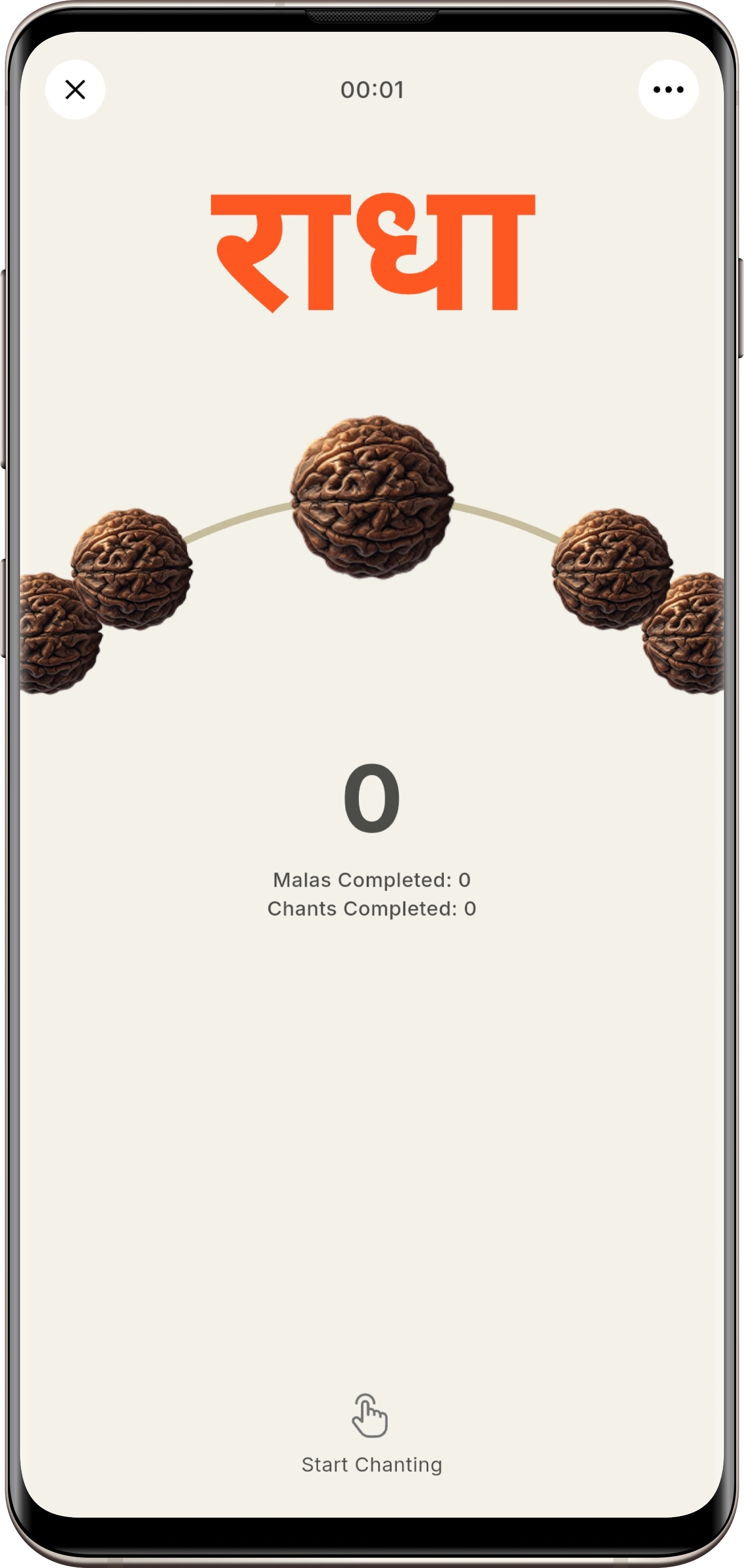
Divya Marg is a free, offline Naam Jaap app that helps you keep track of mantra repetitions during your devotional practice. It is completely optional: nothing about Diwali Puja requires an app, and a mala or your fingers work just as well. If you would like a simple way to count during a busy festival evening, it is there.
Free and offline
Count your chanting anywhere, with or without a signal.
Your own Naam
Set the mantra or name you want to chant as your active Naam.
Daily Jaap goal
Set a realistic repetition target and let the app keep count.
Simple progress tracking
See your chants and streak without any setup.
Begin your Naam Jaap today
Offline-first and built entirely around one purpose — helping you show up for your practice, every single day.
- Free, always
- Works offline
- No ads

Frequently Asked Questions
Frequently asked questions
Everything people usually ask before starting their Naam Jaap with Divya Marg.
What is the main mantra for Diwali Puja?
There is no single mantra that every household uses. Many families chant a Ganesha invocation first, then Lakshmi mantras such as Om Shreem Mahalakshmyai Namah, the Lakshmi Gayatri, Namastestu Mahamaye, or the Shri Suktam. Which ones you use depends on your region, family tradition and the form of puja you follow.
Which mantra should a beginner chant during Lakshmi Puja?
Om Shreem Mahalakshmyai Namah is a simple starting point. It is short, easy to remember, and widely used for Lakshmi japa. Many people also begin with a Ganesha prayer such as Om Gam Ganapataye Namah, since Ganesha is traditionally invoked first.
What is the difference between Diwali and Lakshmi Puja?
Diwali is the full five-day festival of lights. Lakshmi Puja is the main evening worship of Goddess Lakshmi (usually together with Ganesha) on the day of Kartik Amavasya, the new moon. Dhanteras, Govardhan Puja and Bhai Dooj are other days within the festival, each with its own focus.
How many times should a Diwali mantra be chanted?
There is no single fixed number. Many devotees use 108 repetitions (one mala), while others chant 11, 21 or 54 times, or simply for a set time. Chanting a smaller number with attention is generally seen as better than rushing through a large number.
Should a Lakshmi mantra be chanted 108 times?
108 is a well-known traditional count linked to mala beads, but it is not compulsory. Traditions differ, and a shorter, steady practice is fine, especially for beginners on a busy festival evening.
Can I chant a Lakshmi mantra without performing a full puja?
Yes. Many people light a lamp, sit quietly and chant a Lakshmi mantra without doing a full ritual puja. A full puja with a priest or elaborate offerings is not required to chant with devotion.
Can I chant Lakshmi mantras without a mala?
Yes. A mala is a counting aid, not a requirement. You can count on your fingers, chant for a fixed time, use a physical tally counter, or use a counting app such as Divya Marg.
Can I chant a Lakshmi mantra silently?
Yes. Many teachers describe mantra repetition as aloud, in a whisper, or silently in the mind, and all are widely accepted. Some people chant aloud during the puja and continue silently afterwards.
Should the mantra be chanted before, during or after Lakshmi Puja?
Practices vary. A common order is a lamp-lighting prayer and Ganesha invocation first, then Lakshmi mantras or hymns during the worship, then quiet japa and aarti at the end. If you are following a family or priest-led method, follow that.
Can the whole family chant together?
Yes. Families often chant together, with one person leading and the others repeating. Short mantras like Om Shreem Mahalakshmyai Namah are easy for children and elders to join.
What if I don't know Sanskrit pronunciation?
Start with a short mantra, read the transliteration slowly, and listen to a trusted recording or a family elder or priest. Your effort and devotion matter, and pronunciation improves with practice. For longer Vedic hymns like the Shri Suktam, it is common to listen to a priest or a good recording first.
Will chanting a Lakshmi mantra bring wealth?
In Hindu tradition, devotees chant Lakshmi mantras to seek her grace, and some texts describe benefits for regular recitation. These are religious beliefs, not guaranteed outcomes. A mantra is best seen as a devotional practice, not a substitute for honest work, sound planning or professional advice.
When is Lakshmi Puja performed on Diwali?
Lakshmi Puja is traditionally performed in the evening on Kartik Amavasya, most commonly during Pradosh Kaal, the period after sunset. Some traditions prefer the midnight period (Nishita or Mahanishita Kaal). Exact timings depend on your city, so check a local panchang. In 2026, Lakshmi Puja falls on Sunday, 8 November.
Sources and References
Sanskrit texts were checked against multiple published editions and transliterations. Where wording varies between traditions, we have said so above. Festival dates and timing principles were checked against current panchang sources.
- Shri Suktam (Rigveda khila): text and translation compared across Greenmesg and Sanatanatva.
- Mahalakshmi Ashtakam (Padma Purana, attributed to Indra): Sanskrit text with translation.
- Lakshmi Gayatri mantra: Drik Panchang.
- Lakshmi Puja timing principles (Pradosh Kaal, Mahanishita Kaal, Kojagari Lakshmi Puja): Drik Panchang.
- Diwali and Lakshmi Puja dates: Diwali and Lakshmi Puja (Wikipedia), Divine Hindu, Templepedia.
- Lakshmi iconography and the four aims of life: Lakshmi (Wikipedia).
- Diwali as a time of cleaning, generosity and service: Hindu American Foundation.
- Origin of Lakshmi in the churning of the ocean: Vishnu Purana (traditional text).
This article is for general devotional and educational purposes. Practices vary between families, regions and sampradayas, and your family tradition, temple or guru should be your first guide.