Why Is Radha Ashtami Celebrated? Story, Significance & Rituals
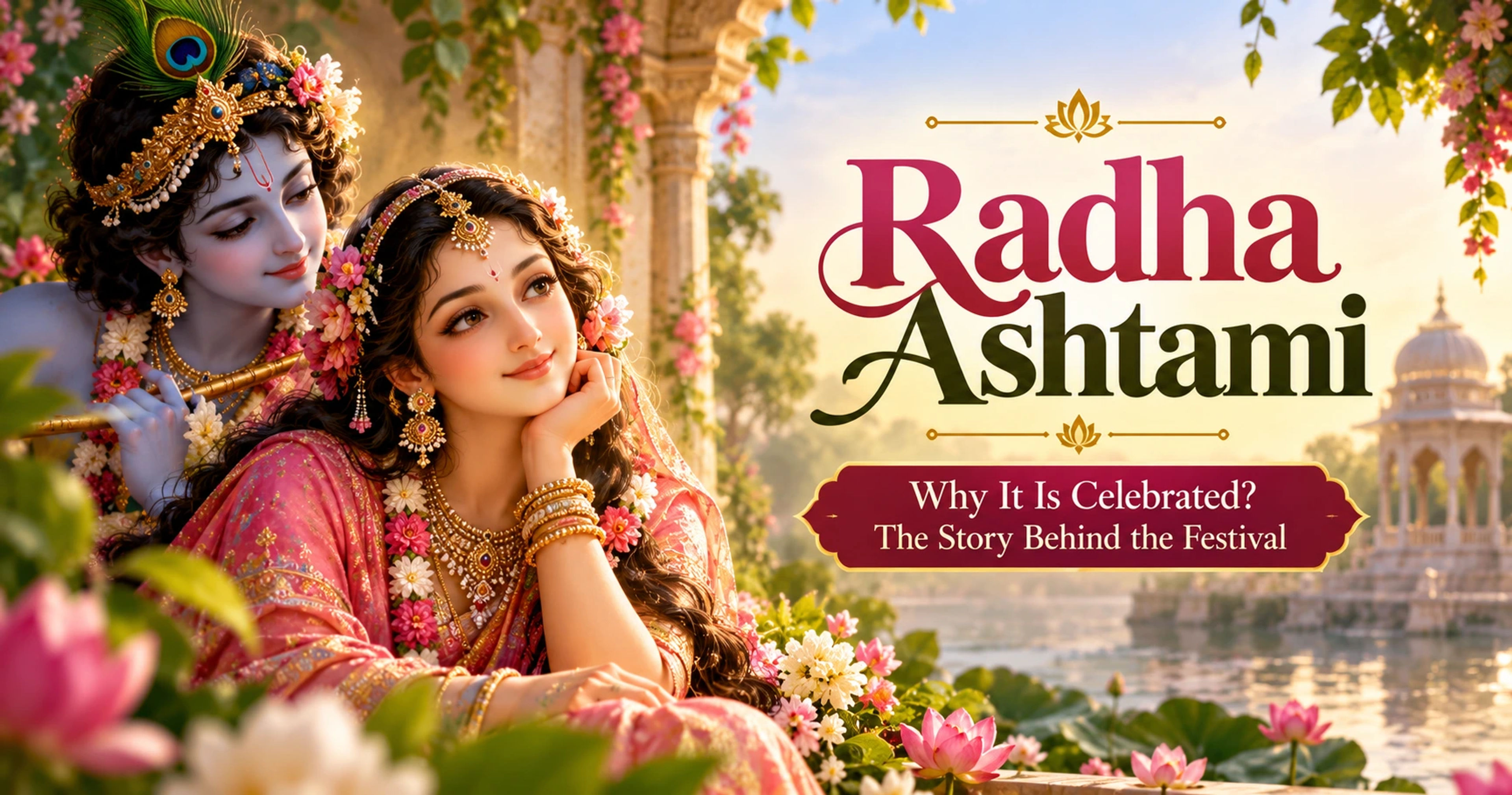
Radha Ashtami is one of the most sacred and joyful festivals in the Hindu devotional tradition. Celebrated exactly fifteen days after Krishna Janmashtami, Radha Ashtami marks the appearance anniversary of Shri Radha Rani — the supreme queen of Vrindavan, the embodiment of selfless love (prema), and the divine potency of Lord Krishna.
Across Braj Dham — from the hilltop temples of Barsana to the sacred groves of Vrindavan — millions of devotees observe this holy day with fasting, ecstatic kirtan, panchamrit abhishek, and intense Radha Naam Jaap. But why is Radha Ashtami celebrated with such reverence? What is the divine story behind her appearance, and how can devotees connect with her grace on this auspicious day?
Table of contents
Key takeaways
- Sacred Timing: Radha Ashtami falls on Bhadrapada Shukla Ashtami, exactly 15 days after Krishna Janmashtami.
- The Divine Appearance: Shri Radha appeared on a golden lotus floating in a pond near Barsana and opened her eyes only upon seeing infant Krishna.
- Spiritual Significance: Shri Radha represents Lord Krishna's internal bliss potency (Hladini Shakti) and supreme devotion.
- Fasting Tradition: Devotees observe a fast until noon (around 12:00 PM), the exact time of her appearance, followed by panchamrit abhishek and bhog.
- Naam Jaap: Radha Ashtami is considered the most powerful day to begin or deepen Radha Naam Jaap practice.
What Is Radha Ashtami?
Radha Ashtami is the birth anniversary (Prakatya Diwas or appearance day) of Shri Radha Rani. Just as Krishna Janmashtami celebrates the birth of Lord Krishna, Radha Ashtami celebrates the divine manifestation of Shri Radha.
In Vaishnava theology, particularly within Gauḍīya, Nimbārka, and Rādhāvallabha traditions, Shri Radha is not merely a historical or mythological figure; she is the eternal consort of Bhagavan Shri Krishna and the personification of divine love (Mahabhava). Worship of Krishna is regarded as complete only when Shri Radha’s name and devotion are honored alongside him.
When Is Radha Ashtami Celebrated?
Radha Ashtami is observed according to the Hindu lunar calendar on:
- Tithi: Ashtami (8th day) of Shukla Paksha (bright fortnight).
- Month: Bhadrapada (August–September in the Gregorian calendar).
- Interval: Exactly 15 days after Krishna Janmashtami (which occurs on Bhadrapada Krishna Ashtami).
According to traditional calculations, Shri Radha appeared during the noon hour (midday), which is why key rituals and abhishek are performed at 12:00 PM on Radha Ashtami.
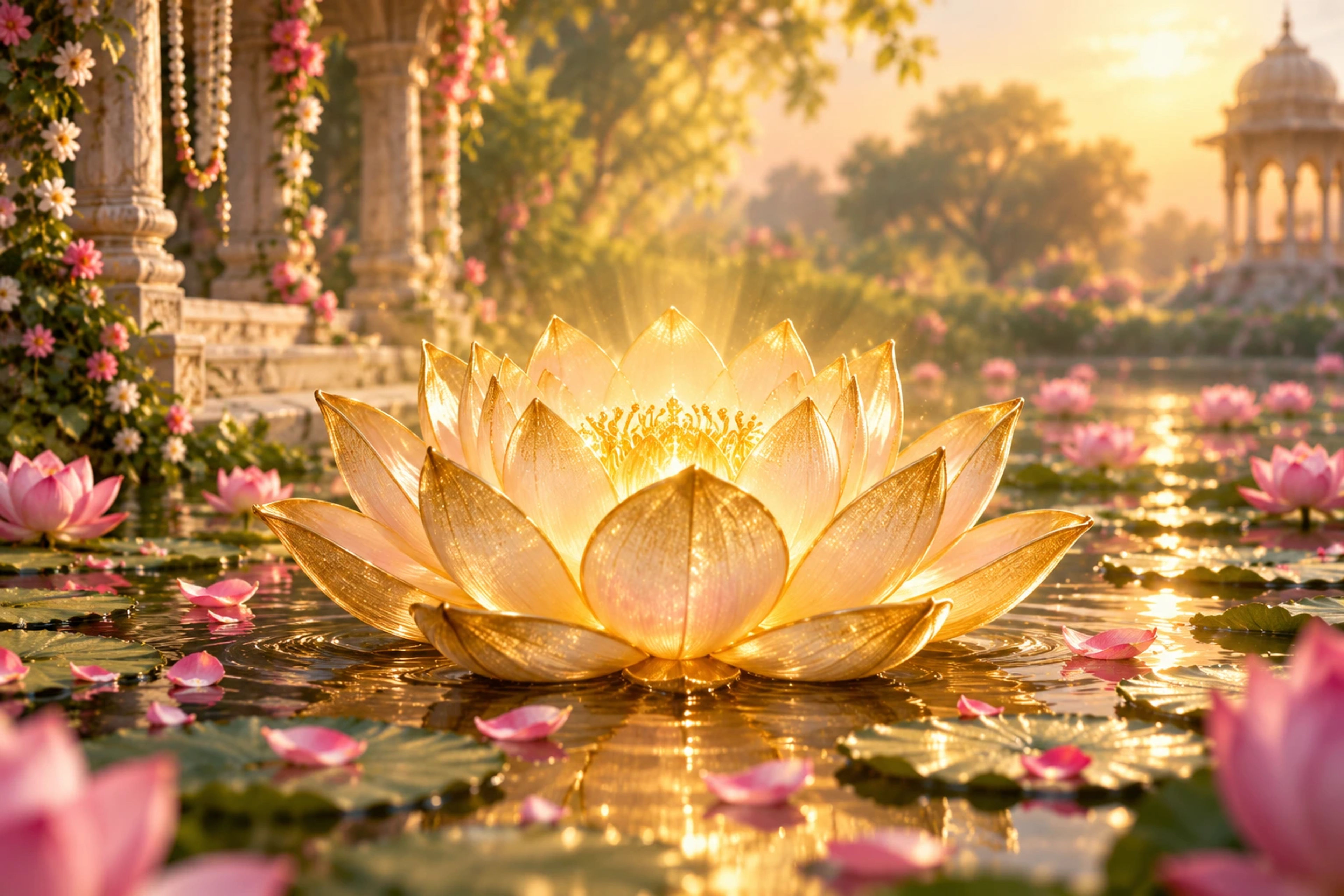
The Divine Appearance Story of Shri Radha
The story of Shri Radha’s appearance is beautifully recounted in sacred scriptures such as the Brahma Vaivarta Purana, Padma Purana, and local folklore of Braj Dham.
Unlike ordinary birth, scriptures describe that Shri Radha was not born from a mother’s womb. Instead, she manifested divine appearance on earth:
King Vrishabhanu, the chief of the cowherds in Rawal (near Barsana), was taking a holy bath in a lotus pond (known as Vrishabhanu Kunda or Radha Kunda) early one morning during the month of Bhadrapada. As he entered the water, he witnessed a blinding golden light emanating from the center of the lake.
Radiating at the center of the pond was a blooming thousand-petaled golden lotus flower. Resting gently on the lotus leaf was an exquisitely beautiful infant girl. Filled with deep affection and divine awe, King Vrishabhanu gathered the infant into his arms and brought her home to his wife, Queen Kirtida.
However, King Vrishabhanu and Queen Kirtida soon noticed something unusual: the baby kept her eyes closed and did not open them despite all care and affection. Distressed, they prayed for divine guidance.
A short time later, Sage Narada visited their home and foretold that the child was none other than the Supreme Goddess of devotion. Soon after, Nanda Baba and Yashoda Maiya arrived from Gokul to congratulate Vrishabhanu Baba, bringing infant Lord Krishna with them.
As little Krishna crawled up to the crib where baby Radha lay, he gently reached out and touched her. Instantly, baby Radha opened her eyes for the very first time in her life. The very first form her eyes gazed upon was Lord Krishna. Scriptural tradition explains that Shri Radha chose to look at no one in the world until her eyes could rest upon her beloved Krishna.
Why Is Radha Ashtami Celebrated? (Spiritual Significance)
Radha Ashtami holds profound spiritual significance for seekers on the path of Bhakti Yoga (devotional service):
- Celebration of Hladini Shakti: In Vedic philosophy, Bhagavan possesses three primary energies: Sat (existence), Chit (consciousness), and Ananda (bliss). Shri Radha is the personification of Krishna’s internal bliss-giving potency (Hladini Shakti). Celebrating Radha Ashtami means invoking divine joy, love, and spiritual fulfillment.
- The Ideal of Pure Devotion: Shri Radha represents Nishkama Bhakti — unselfish, unconditioned love that seeks nothing in return. She teaches how to love the Divine without expectation or ego.
- Access to Krishna’s Grace: Devotional masters teach that Lord Krishna’s compassion flows through Shri Radha. Repeating Radha’s name or honoring Radha Ashtami is considered the quickest path to attracting Krishna’s grace. As the famous Braj saying goes: “Radhe Radhe Shyam Milade” (Chanting Radhe leads to meeting Shyam).
- Feminine Aspect of Divinity: Radha Ashtami honors the divine motherly grace and compassion that protects and guides spiritual aspirants.
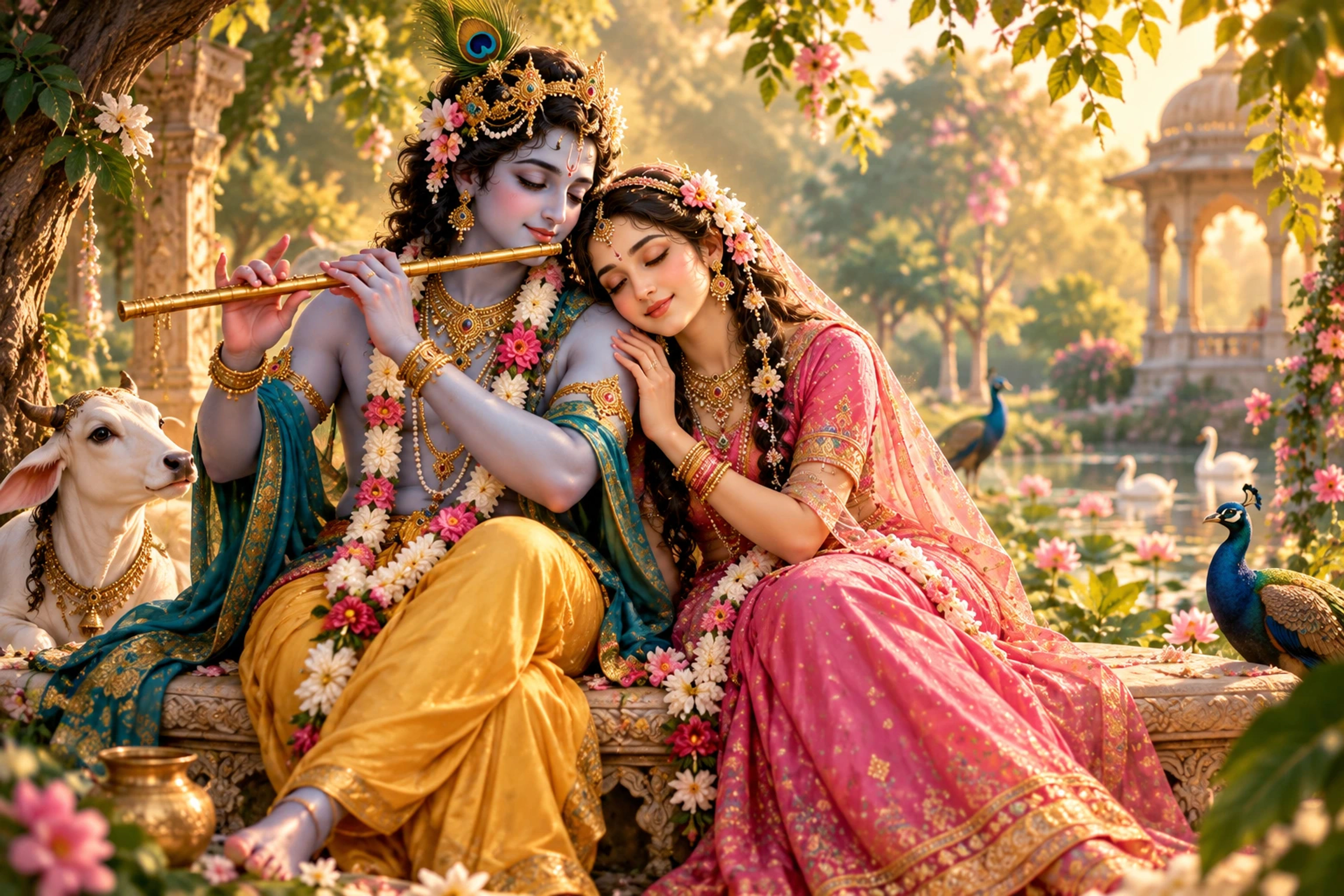
The Inseparable Bond of Radha and Krishna
It is said in devotional scriptures that Radha and Krishna are one soul existing in two physical forms (Eka Atma, Do Deha).
Just as musk cannot be separated from its fragrance, or fire from its heat, Lord Krishna cannot be separated from Shri Radha. Krishna is the supreme enchanter of the universe, but Radha is the enchanter of Krishna himself (Madan-Mohan-Mohini).
Without Radha, Krishna remains incomplete in devotional expression. That is why temples across India and the world enshrine their deities as Radha-Krishna, placing Radha’s name before Krishna’s in prayer and chanting.
How Radha Ashtami Is Celebrated in Braj Dham & Temples
Radha Ashtami is celebrated with extraordinary grandeur, especially in the sacred land of Braj:
- Barsana Festivities: In Barsana, Radha’s childhood abode, the main Shriji Temple atop the Bhanugarh hill is decorated with thousands of fresh flowers and lights. Devotees gather at midnight and early morning for Maha Aarti and Lathmar cultural songs.
- Rawal & Vrindavan: At her birth site in Rawal and major temples in Vrindavan (such as Banke Bihari, Shri Radha Raman, Radha Vallabh, and ISKCON), the deities are adorned in new golden silk garments (Poshak).
- Midday Abhishek (12:00 PM): Exactly at noon, priests perform a grand Maha Abhishek using milk, curd, honey, ghee, sugar (panchamrit), along with sacred waters and turmeric paste.
- Chappan Bhog & Prasadam: Devotees offer 56 distinct delicacies (Chappan Bhog) to Shri Radha Rani, which are later distributed among pilgrims as divine prasadam.
- Devotional Kirtan & Harinam: Congregational chanting of “Radhe Radhe” and devotional bhajans echoes through the streets of Braj from sunrise to midnight.
Radha Ashtami Fasting Rules & Home Puja Vidhi
If you wish to observe Radha Ashtami at home, here is a simple, practical guide to fasting and performing home puja:
Fasting Guidelines
- Fast Duration: The traditional fast is observed from sunrise until noon (12:00 PM), matching Shri Radha’s appearance hour.
- Types of Fasting:
- Nirjala: Complete fast without water until noon (for experienced practitioners).
- Phalahar: Consuming only water, milk, or fruits until afternoon.
- Parana (Breaking Fast): After completing the midday puja, offering bhog, and taking prasadam, the fast is broken around afternoon.
Simple Step-by-Step Home Puja Vidhi
- Cleanse your space: Wake up early, take a bath, wear clean clothing, and clean your home altar or puja room.
- Set up the altar: Place an image or idol of Shri Radha-Krishna on a clean cloth (preferably red or yellow). Decorate with fresh lotus or jasmine flowers.
- Light a Diya: Light a ghee lamp (diya) and incense (agarbatti).
- Abhishek (Optional): If you have a brass or marble idol of Radha Krishna, perform a gentle bath with panchamrit (milk, curd, honey, ghee, sugar) followed by clean water, then dress the deity in clean clothes.
- Offer Tilak & Flowers: Apply sandalwood paste (chandan) and kumkum to the deity, and offer fresh flowers and tulsi leaves (to Krishna’s feet).
- Offer Bhog: Offer fresh fruits, sweets (such as kheer, peda, or halwa), and fresh water.
- Chant Radha Ashtottara Shatanamavali or Radha Naam: Recite the 108 names of Radha Rani or chant Radha Naam on a mala (108 times or more).
- Perform Aarti: Sing Shri Radha Rani Aarti or Radha-Krishna Aarti while waving the ghee lamp.
- Accept Prasadam: Distribute prasadam to family members and break your fast.
The Importance of Radha Naam Jaap on Radha Ashtami
Beyond ritual worship, the soul of Radha Ashtami lies in Naam Jaap — the loving, repeated remembrance of Shri Radha’s name.
Revered contemporary spiritual figures such as Premanand Ji Maharaj emphasize that chanting “Radha” or “Radhe Radhe” requires no complex rituals, initiation, or specific venue. The divine name itself holds total potency.
On Radha Ashtami, spiritual energy is considered especially conductive for devotional practices. Chanting even one mala (108 repetitions) of Radha Naam on this day helps calm a restless mind, wash away past negative impressions (samskaras), and awaken pure love in the heart.
To learn more about starting a daily chanting habit, read our detailed guide on What Is Radha Naam Jaap? Meaning & Practice and How to Do Naam Jaap for Beginners.
Track your Radha Naam Jaap effortlessly on Radha Ashtami
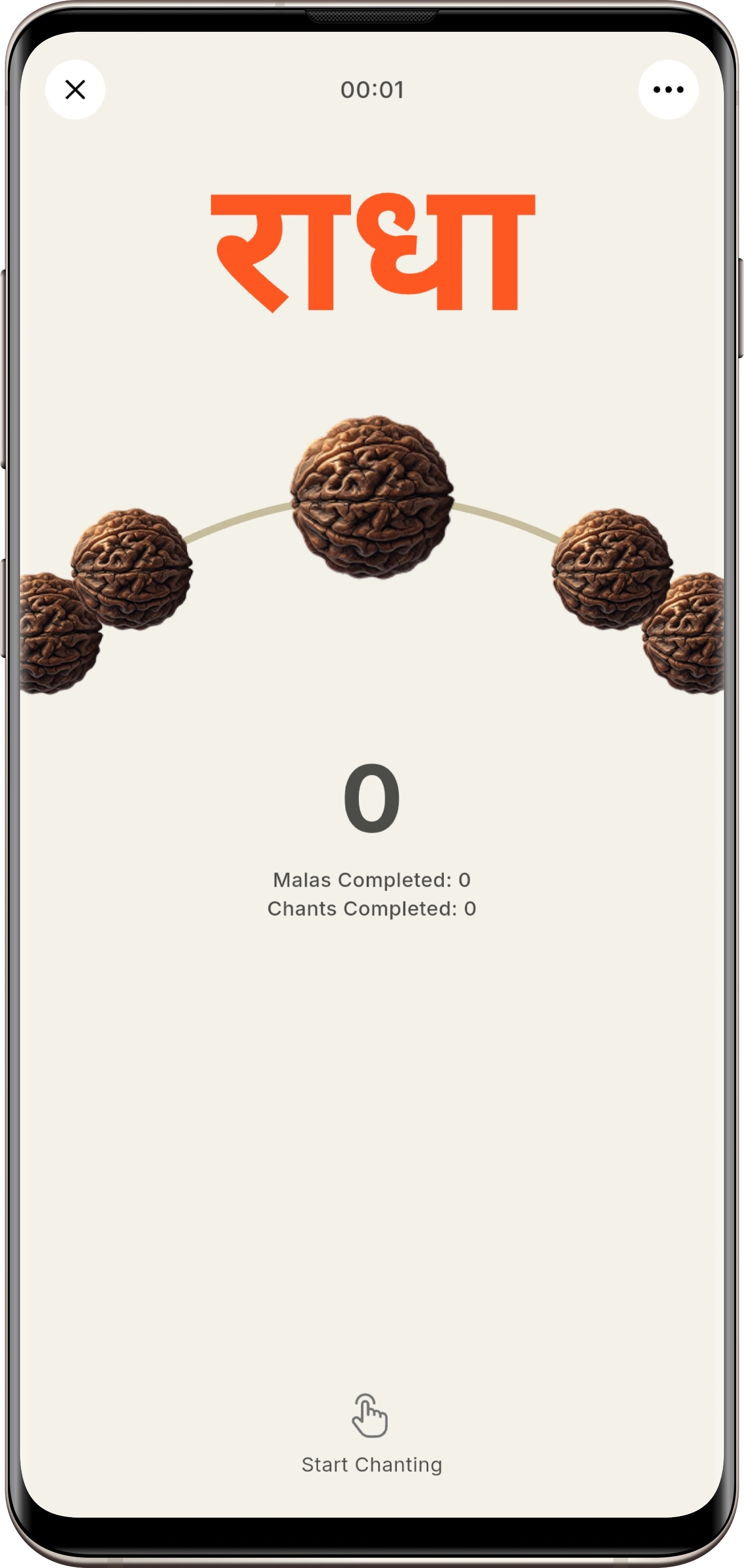
Whether you choose to chant 108 times, 11 malas, or maintain continuous remembrance throughout Radha Ashtami, Divya Marg makes it simple to count your Jaap with tactile haptic feedback without needing to look at your screen.
Set Radha Naam as active mantra
Begin chanting 'Radha' or 'Radhe Radhe' with a single tap.
Haptic bead counting
Feel each chant as a bead vibration on your phone without glancing at the screen.
Daily Jaap goal & streak
Set a daily mala target (e.g. 1 mala or 108 chants) and track your streak.
100% offline & private
Chant seamlessly anywhere — in temples, during travel, or at home.
Volume button chanting
Count your chants discrete and hands-free using your device volume buttons.
Gentle daily reminders
Never miss your daily Jaap routine with customizable notifications.
Frequently Asked Questions
Common questions about Radha Ashtami, its significance, and rituals.
What is Radha Ashtami?
Radha Ashtami is the auspicious festival celebrating the birth anniversary (appearance day) of Shri Radha Rani, the divine consort of Lord Krishna and the embodiment of pure devotional love (prema).
When is Radha Ashtami celebrated?
Radha Ashtami is celebrated on the eighth day (Ashtami) of the bright fortnight (Shukla Paksha) in the Hindu month of Bhadrapada, exactly 15 days after Krishna Janmashtami.
Why is Radha Ashtami celebrated 15 days after Janmashtami?
Janmashtami marks the birth of Lord Krishna on Bhadrapada Krishna Ashtami. Exactly 15 days later, on Bhadrapada Shukla Ashtami, devotees celebrate Shri Radha's appearance, honoring the divine feminine power (Hladini Shakti) without whom Krishna worship is considered incomplete.
How do devotees fast on Radha Ashtami?
Devotees typically observe a half-day fast (up to afternoon/noon, around 12:00 PM), which coincides with the time of Shri Radha's appearance. After offering abhishek and bhog to Shri Radha-Krishna, the fast is opened with prasadam.
Where is Radha Ashtami celebrated with the greatest grandness?
Radha Ashtami is celebrated with immense devotion and grand festivities across Braj Dham, especially in Barsana (Radha's abode), Rawal (her birth place), Vrindavan, Mathura, and Radha Kunda.
Why did baby Radha not open her eyes until seeing Lord Krishna?
According to devotional tradition, when King Vrishabhanu found baby Radha on a lotus leaf in a pond, her eyes remained closed. She opened her eyes for the very first time only when infant Lord Krishna came before her, signifying that her vision was solely meant for Krishna.
Can beginners start Radha Naam Jaap on Radha Ashtami?
Yes! Radha Ashtami is considered one of the most sacred and grace-filled days to begin or deepen Radha Naam Jaap practice. Chanting 'Radhe Radhe' or 'Radha' with attention on this day brings deep peace and devotion.
Is Krishna worship complete without Radha?
In Vaishnava theology, Krishna and Radha are two forms of one divine reality. Shri Radha represents Krishna's inner pleasure potency (Hladini Shakti). Devotees believe Krishna is most pleased when worshipped along with or through Shri Radha.