108 Names of Radha Rani: Complete List, Meanings & Significance
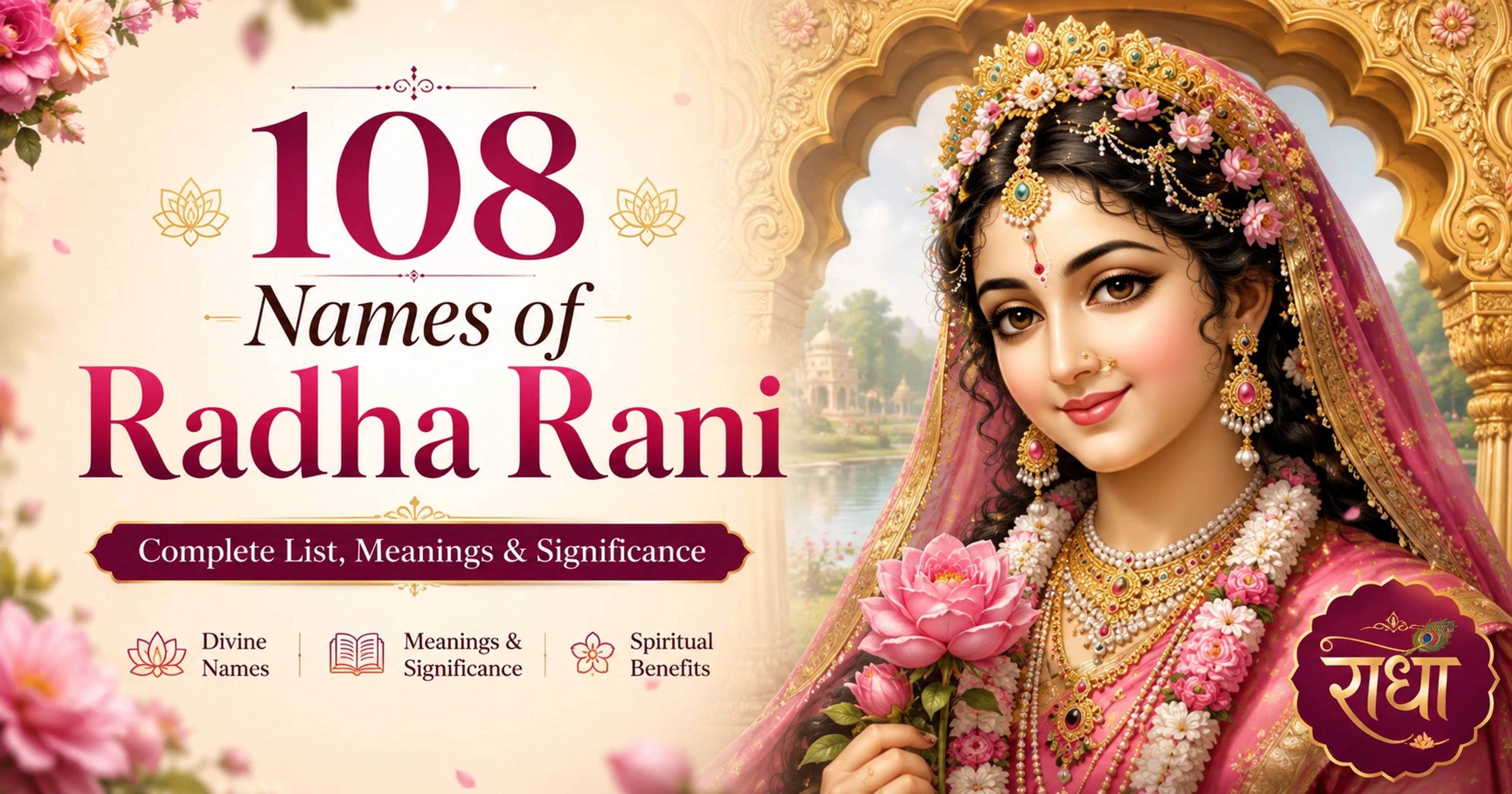
The 108 names of Radha Rani with meaning — often called the Radha Ashtottara Shatanamavali — are a traditional devotional list in which each name expresses a different quality, relationship or aspect of Radha within Radha-Krishna bhakti. Reciting or reflecting on such a list is a long-standing practice across Vaishnava devotional traditions, used as a way to contemplate the divine from many angles rather than just one.
This article gives the complete, sourced list of all 108 names — in Devanagari, transliteration and English meaning — along with the devotional context behind them, how the practice relates to Radha Naam Jaap, and how someone might begin including either practice in daily life.
Table of contents
Who Is Radha Rani?
Radha, revered by devotees as Radha Rani, is honoured within Radha-Krishna devotional traditions as Krishna’s eternal beloved and the embodiment of pure, selfless devotion. Different Vaishnava traditions describe her significance in somewhat different ways — some emphasize her as Krishna’s divine consort, others treat devotion to her as inseparable from devotion to divine love itself. This article doesn’t present any single interpretation as the one accepted across all of Hinduism; where a specific tradition’s view is described, it is identified as such.
Why Does Radha Rani Have So Many Names?
Across Hindu devotional traditions, a deity is rarely described with a single name. Multiple names allow different qualities, relationships and moods to be expressed individually — one name might describe beauty, another a specific relationship to Krishna, another a role within a particular divine pastime (lila), and another a quality like compassion or purity. For Radha specifically, many of her 108 names describe her relationship to Krishna, her place within the Rasa dance, her connection to Vrindavan, and qualities such as grace, devotion and divine love. Reciting the full list is, in that sense, a way of contemplating her from many angles rather than reducing her to one description.
What Is Radha Ashtottara Shatanamavali?
The term breaks down simply: Ashtottara means “108” (literally “eight more than a hundred”), Shata means “hundred,” and Namavali means a garland or string of names. Radha Ashtottara Shatanamavali, then, refers to a traditional collection of 108 names used in devotional recitation — a format used widely across Hindu tradition for many deities, not unique to Radha.
As with most such namavalis, different publications and devotional lineages can present some variation in spelling, ordering, or the specific selection of names. This is not unusual and doesn’t indicate that any one version is incorrect.
108 Names of Radha Rani with Meaning
The 108 names of Radha Rani, presented as the Radha Ashtottara Shatanamavali, are a devotional collection of names expressing different qualities, relationships and aspects associated with Radha within Radha-Krishna bhakti. The exact spelling, order and selection can vary between sources and traditions. Below is one carefully sourced version, cross-checked across independent Sanskrit stotra sources, with concise English meanings.
A note on this list
Traditional sources publish this namavali in Sanskrit without accompanying English translations. The meanings below are devotional, best-effort English glosses prepared for this article rather than official translations; entries marked (interpretive) are compound names where the precise sense is less certain and the meaning offered is a reasonable devotional reading rather than a literal one. Two entries (51 and 60) are genuine repetitions found in the source text itself, not a transcription error.
श्री राधायै नमः
Shri Radhayai Namah
Salutation to Shri Radha — her own name.
श्री राधिकायै नमः
Shri Radhikayai Namah
Radhika, an affectionate form of the name Radha.
कृष्णवल्लभायै नमः
Krishnavallabhayai Namah
The beloved of Krishna.
कृष्णसम्युक्तायै नमः
Krishnasamyuktayai Namah
She who is united with Krishna.
वृन्दावनेश्वर्यै नमः
Vrindavaneshvaryai Namah
The queen of Vrindavan.
कृष्णप्रियायै नमः
Krishnapriyayai Namah
Dear to Krishna.
मदनमोहिन्यै नमः
Madanamohinyai Namah
She whose beauty enchants even Madana, the god of love.
श्रीमत्यै नमः
Shrimatyai Namah
The glorious one, possessed of Shri (auspicious splendour).
कृष्णकान्तायै नमः
Krishnakantayai Namah
The beloved consort of Krishna.
कृष्णानन्दप्रदायिन्यै नमः
Krishnanandapradayinyai Namah
She who bestows joy upon Krishna.
यशस्विन्यै नमः
Yashasvinyai Namah
The glorious, famed one.
यशोदानन्दनवल्लभायै नमः
Yashodanandanavallabhayai Namah
Beloved of the son of Yashoda (Krishna).
त्रैलोक्यसुन्दर्यै नमः
Trailokyasundaryai Namah
The most beautiful one across the three worlds.
वृन्दावनविहारिण्यै नमः
Vrindavanaviharinyai Namah
She who delights in Vrindavan.
वृषभानुसुतायै नमः
Vrishabhanusutayai Namah
Daughter of Vrishabhanu, her father in tradition.
हेमाङ्गायै नमः
Hemangayai Namah
She of golden-hued limbs.
उज्ज्वलगात्रिकायै नमः
Ujjvalagatrikayai Namah
She whose form is radiant.
शुभाङ्गायै नमः
Shubhangayai Namah
She of auspicious form.
विमलाङ्गायै नमः
Vimalangayai Namah
She whose form is spotless.
विमलायै नमः
Vimalayai Namah
The pure, spotless one.
कृष्णचन्द्रप्रियायै नमः
Krishnachandrapriyayai Namah
Beloved of Krishnachandra (Krishna, likened to the moon).
रासप्रियायै नमः
Rasapriyayai Namah
She who delights in the Rasa, the divine circular dance.
रासाधिष्टातृदेवतायै नमः
Rasadhishthatridevatayai Namah
The presiding deity of the Rasa dance.
रसिकायै नमः
Rasikayai Namah
She who relishes divine sentiment (rasa).
रसिकानन्दायै नमः
Rasikanandayai Namah
The joy of rasikas, connoisseurs of divine love.
रासेश्वर्ये नमः
Raseshvaryai Namah
The mistress of the Rasa dance.
रासमण्डलमध्यस्थायै नमः
Rasamandalamadhyasthayai Namah
She who stands at the centre of the Rasa circle.
रासमण्डलशोभितायै नमः
Rasamandalashobhitayai Namah
She who adorns the Rasa circle.
रासमण्डलसेव्यायै नमः
Rasamandalasevyayai Namah
She who is honoured within the Rasa circle.
रासक्रिडामनोहर्यै नमः
Rasakridamanoharyai Namah
She whose Rasa-play is captivating.
कृष्णप्रेमपरायणायै नमः
Krishnapremaparayanayai Namah
She wholly devoted to love for Krishna.
वृन्दारण्यप्रियायै नमः
Vrindaranyapriyayai Namah
She who loves the Vrinda forest (Vrindavan).
वृन्दावनविलासिन्यै नमः
Vrindavanavilasinyai Namah
She who sports in Vrindavan.
तुलस्यधिष्टातृदेव्यै नमः
Tulasyadhishthatridevyai Namah
The presiding goddess of the Tulsi (holy basil) plant.
करुणार्णवसम्पूर्णायै नमः
Karunarnavasampurnayai Namah
She who is complete as an ocean of compassion.
मङ्गलप्रदायै नमः
Mangalapradayai Namah
She who bestows auspiciousness.
कृष्णभजनाश्रितायै नमः
Krishnabhajanashritayai Namah
She who takes refuge in devotion to Krishna.
गोविन्दार्पितचित्तायै नमः
Govindarpitachittayai Namah
She whose heart is offered to Govinda (Krishna).
गोविन्दप्रियकारिण्यै नमः
Govindapriyakarinyai Namah
She who acts to please Govinda.
रासक्रीडाकर्यै नमः
Rasakridakaryai Namah
She who performs the Rasa dance.
रासवासिन्यै नमः
Rasavasinyai Namah
She who dwells within the Rasa dance.
राससुन्दर्यै नमः
Rasasundaryai Namah
The beautiful one of the Rasa dance.
गोकुलत्वप्रदायिन्यै नमः
Gokulatvapradayinyai Namah
She who bestows the blessed nature of Gokul.(interpretive)
किशोरवल्लभायै नमः
Kishoravallabhayai Namah
Beloved of the youthful one (Krishna, as Kishore).
कालिन्दीकुलदीपिकायै नमः
Kalindikuladipikayai Namah
The lamp of the banks of the Kalindi (Yamuna) river.
प्रेमप्रियायै नमः
Premapriyayai Namah
She who is dear through love; who loves love itself.
प्रेमरूपायै नमः
Premarupayai Namah
She whose very form is love.
प्रेमानन्दतरङ्गिण्यै नमः
Premanandataranginyai Namah
She who is the rippling waves of the bliss of love.
प्रेमधात्र्यै नमः
Premadhatryai Namah
The nurturer of love.
प्रेमशक्तिमय्यै नमः
Premashaktimayyai Namah
She composed of the very power of love.
कृष्णप्रेमवत्यै नमः
Krishnapremavatyai Namah
She who possesses love for Krishna.
कृष्णप्रेमतरङ्गिण्यै नमः
Krishnapremataranginyai Namah
The rippling waves of love for Krishna.
गौरचन्द्राननायै नमः
Gaurachandrananayai Namah
She whose face is like a fair, moonlit glow.
चन्द्रगात्र्यै नमः
Chandragatryai Namah
She whose form is moon-like.
सुकोमलायै नमः
Sukomalayai Namah
The very tender, delicate one.
रतिवेषायै नमः
Rativeshayai Namah
She adorned in the manner of Rati, goddess of love.
रतिप्रियायै नमः
Ratipriyayai Namah
She who delights in loving devotion.
कृष्णरतायै नमः
Krishnaratayai Namah
She who takes delight in Krishna.
कृष्णतोषणतत्परायै नमः
Krishnatoshanatatparayai Namah
She intent on pleasing Krishna.
कृष्णप्रेमवत्यै नमः
Krishnapremavatyai Namah
She who possesses love for Krishna (repeated in the source namavali; see note above the list).
कृष्णभक्तायै नमः
Krishnabhaktayai Namah
She devoted to Krishna.
कृष्णप्रियभक्तायै नमः
Krishnapriyabhaktayai Namah
The beloved devotee of Krishna.
कृष्णक्रीडायै नमः
Krishnakridayai Namah
She who shares in Krishna's divine play.
प्रेमरताम्बिकायै नमः
Premaratambikayai Namah
The motherly one devoted to love.(interpretive)
कृष्णप्राणायै नमः
Krishnapranayai Namah
She who is the very life-breath of Krishna.
कृष्णप्राणसर्वस्वदायिन्यै नमः
Krishnapranasarvasvadayinyai Namah
She who gives her all — her very life — to Krishna.
कोटिकन्दर्पलावण्यायै नमः
Kotikandarpalavanyayai Namah
She whose grace surpasses millions of Kamadevas.
कन्दर्पकोटिसुन्दर्यै नमः
Kandarpakotisundaryai Namah
She more beautiful than millions of Kamadevas.
लीलालावण्यमङ्गलायै नमः
Lilalavanyamangalayai Namah
She whose playful grace is auspicious.
करुणार्णवरूपिण्यै नमः
Karunarnavarupinyai Namah
She whose form is an ocean of compassion.
यमुनापारकौतुकायै नमः
Yamunaparakautukayai Namah
She who delights on the far banks of the Yamuna.
कृष्णहास्यभाषणतत्परायै नमः
Krishnahasyabhashanatatparayai Namah
She engaged in joyful, smiling conversation with Krishna.
गोपाङ्गनावेष्टितायै नमः
Gopanganaveshtitayai Namah
She who is surrounded by the gopis.
कृष्णसङ्कीर्तिन्यै नमः
Krishnasankirtinyai Namah
She who sings the glories (kirtan) of Krishna.
राससक्तायै नमः
Rasasaktayai Namah
She absorbed in the Rasa dance.
कृष्णभाषातिवेगिन्यै नमः
Krishnabhashativeginyai Namah
She who converses eagerly with Krishna.(interpretive)
कृष्णरागिण्यै नमः
Krishnaraginyai Namah
She passionately devoted to Krishna.
भाविन्यै नमः
Bhavinyai Namah
She full of divine sentiment (bhava).
कृष्णभावनामोदायै नमः
Krishnabhavanamodayai Namah
She who delights in contemplation of Krishna.
कृष्णोन्मादविदायिन्यै नमः
Krishnonmadavidayinyai Namah
She who awakens divine longing in Krishna.(interpretive)
कृष्णार्तकुशलायै नमः
Krishnartakushalayai Namah
She skilled in easing Krishna's longing.(interpretive)
पतिव्रतायै नमः
Pativratayai Namah
The devoted, faithful consort.
महाभावस्वरूपिण्यै नमः
Mahabhavasvarupinyai Namah
She whose nature is Mahabhava, the highest state of divine love.
कृष्णप्रेमकल्पलतायै नमः
Krishnapremakalpalatayai Namah
The wish-fulfilling vine of love for Krishna.
गोविन्दनन्दिन्यै नमः
Govindanandinyai Namah
She who delights Govinda.
गोविन्दमोहिन्यै नमः
Govindamohinyai Namah
She who enchants Govinda.
गोविन्दसर्वस्वायै नमः
Govindasarvasvayai Namah
She who is everything to Govinda.
सर्वकान्ताशिरोमण्यै नमः
Sarvakantashiromanyai Namah
The crest-jewel among all beloveds.
कृष्णकान्ताशिरोमण्यै नमः
Krishnakantashiromanyai Namah
The crest-jewel among Krishna's beloveds.
कृष्णप्राणधनायै नमः
Krishnapranadhanayai Namah
The treasured life-breath of Krishna.
कृष्णप्रेमानन्दामृतसिन्धवे नमः
Krishnapremanandamritasindhave Namah
The nectarous ocean of the bliss of Krishna's love.
प्रेमचिन्तामण्यै नमः
Premachintamanyai Namah
The wish-fulfilling jewel of love.
प्रेमसाध्यशिरोमण्यै नमः
Premasadhyashiromanyai Namah
The crest-jewel attainable through love.
सर्वैश्वर्यसर्वशक्तिसर्वरसपूर्णायै नमः
Sarvaishvarya-Sarvashakti-Sarvarasapurnayai Namah
She complete with all opulence, all power and all divine sentiment.
महाभावचिन्तामण्यै नमः
Mahabhavachintamanyai Namah
The wish-fulfilling jewel of supreme divine love.
कारुण्यामृतायै नमः
Karunyamritayai Namah
She who is the nectar of compassion.
तारुण्यामृतायै नमः
Tarunyamritayai Namah
She who is the nectar of youthful beauty.
लावण्यामृतायै नमः
Lavanyamritayai Namah
She who is the nectar of grace.
निजलज्जापरीधानश्यामपटुशार्यै नमः
Nijalajja-Paridhana-Shyamapatushatyai Namah
She adorned in her own modesty alongside a dark garment.(interpretive)
सौन्दर्यकुङ्कुमायै नमः
Saundaryakunkumayai Namah
She whose beauty is like auspicious kumkum.
सखीप्रणयचन्दनायै नमः
Sakhipranayachandanayai Namah
She who soothes like sandalwood in her sakhis' devotion.(interpretive)
गन्धोन्मादितमाधवायै नमः
Gandhonmaditamadhavayai Namah
She whose fragrance intoxicates Madhava (Krishna).
महाभावपरमोत्कर्षतर्षिण्यै नमः
Mahabhavaparamotkarshatarshinyai Namah
She who yearns for the supreme heights of Mahabhava.(interpretive)
सखीप्रणयितावशायै नमः
Sakhipranayitavashayai Namah
She moved by the loving devotion of her sakhis.(interpretive)
कृष्णप्रियावलीमुख्यायै नमः
Krishnapriyavalimukhyayai Namah
The foremost among Krishna's beloveds.
आनन्दस्वरूपायै नमः
Anandasvarupayai Namah
She whose very nature is bliss.
रूपगुणसौभाग्यप्रेमसर्वाधिकाराधिकायै नमः
Rupaguna-Saubhagya-Prema-Sarvadhikaradhikayai Namah
Radhika, who holds supreme claim over beauty, virtue, fortune and love — the name itself ending in “Radhika.”
एकमात्रकृष्णपरायणायै नमः
Ekamatrakrishnaparayanayai Namah
She whose sole and only refuge is Krishna.
What Do the 108 Names of Radha Rani Represent?
Looking across the full list, a few themes recur clearly enough to name directly:
- Her relationship to Krishna. A large number of names describe her as Krishna's beloved, companion or life-breath — reflecting how central this relationship is to her devotional identity.
- The Rasa dance and Vrindavan. Several names place her at the centre of the Rasa (the divine circular dance) and describe her connection to Vrindavan and the Yamuna's banks.
- Beauty and grace. Many names describe physical radiance, tenderness and grace, often in devotional rather than literal terms.
- Divine love itself. A striking number of names describe her not just as loving, but as love's very embodiment — her form, nature or power described directly as prem (love).
These themes are drawn directly from the list itself rather than imposed on it — not every name fits neatly into one category, and that's expected of a namavali built up over a long devotional tradition rather than a modern taxonomy.
Why Is the Number 108 Important?
108 is one of the most widely used numbers in Hindu devotional practice, most visibly as the standard bead count of a japa mala. Its significance is explained several different ways depending on the source and tradition: some point to its use across sacred texts (such as the 108 Upanishads), others to numerological readings of the digits 1, 0 and 8, and others to cosmological or astronomical associations. There isn’t one universally agreed explanation, and this article doesn’t present any single one as definitive — what's consistent is simply that 108 has carried devotional and symbolic weight across Hindu practice for a very long time. A closer look at the number's various explanations is a topic we plan to cover in a dedicated future article.
Can You Chant the 108 Names of Radha Rani?
Yes, and there's more than one accepted way to do so:
- Reciting the complete namavali — aloud or mentally, in one sitting.
- Reading the names slowly — pausing to reflect on each meaning rather than moving quickly through the list.
- Using them during personal prayer — incorporating a portion of the list into an existing devotional routine.
- Listening to a devotional recitation — many audio and video recitations of this namavali exist.
- Following guidance from your own tradition or teacher — if you follow a specific lineage, its own conventions take precedence over any single method described here.
No one method is mandatory; several approaches are genuinely valid.
What Is the Difference Between Radha Naam Jaap and the 108 Names?
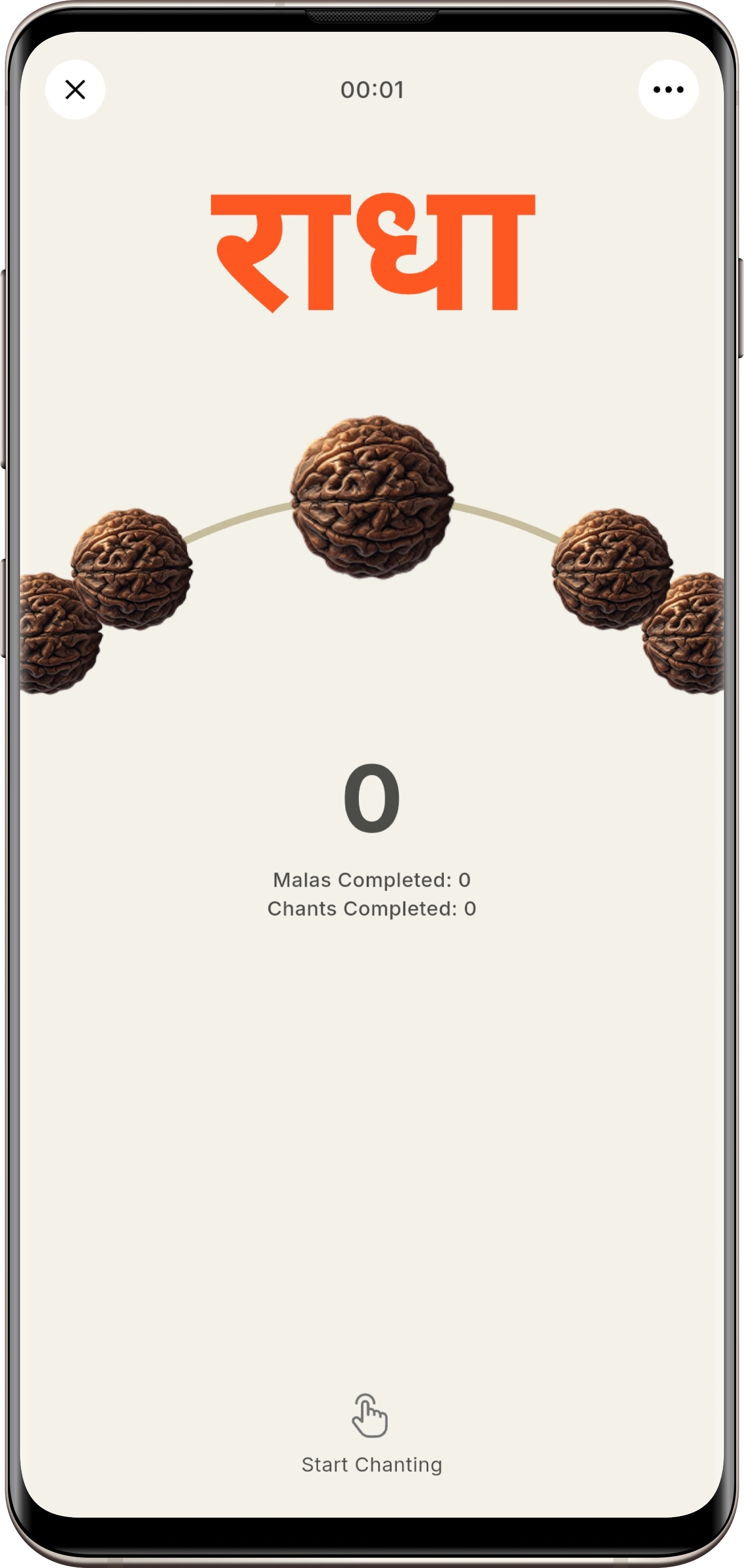
These two practices are related but distinct, and it's worth being clear about the difference. Radha Naam Jaap is the repeated remembrance of a single name — “Radha” or “Radha Naam” — chanted again and again, often counted on a mala, as a regular devotional practice. The Radha Ashtottara Shatanamavali (the 108 names covered in this article) is a sequence of 108 different names, each describing a distinct quality or aspect, typically recited once through rather than repeated.
In short: Naam Jaap is repetition of one name; the 108 names are a recitation of many different names. Some devotees practice one, some practice both, and neither excludes the other. If you'd like to go deeper into Radha Naam Jaap specifically — its meaning, significance and how to practice it — our complete guide to Radha Naam Jaap covers it in full.
Radha Naam Jaap and Daily Devotion
Learning these 108 names and their meanings can naturally deepen interest in a more regular devotional habit — and for many people, that habit takes the form of a daily Radha Naam Jaap practice rather than reciting the full namavali every day. If you're new to the idea and want to learn how to practice Radha Naam Jaap, or want the fuller background on what Naam Jaap is more generally, those guides walk through getting started step by step.
Premanand Ji Maharaj and Radha Naam
Readers exploring Radha devotion today often encounter it through Premanand Ji Maharaj, a contemporary Vrindavan-based saint whose satsangs on Radha-Krishna devotion have reached a wide audience in recent years. Within his tradition, constant remembrance of the Divine Name is treated as a central daily discipline. To be clear, this connection is about shared devotional context, not a specific claim: there's no indication that Premanand Ji Maharaj created or specifically endorses this particular 108-name list, and Divya Marg has no affiliation with him or his ashram. For the fuller picture of his life and teachings, see our guide to Premanand Ji Maharaj's teachings.
How to Include Radha Naam in Daily Practice
A simple structure, offered as an example rather than a fixed rule:
- Morning: a few quiet minutes of devotional remembrance, seated calmly.
- During a Jaap session: repeat your chosen Naam using a mala or another counting method, if desired.
- Learning the names: read a handful of names and their meanings at a time, rather than all 108 at once.
- Evening: a short period of quiet remembrance, if it fits your day.
From learning the names to a daily practice
Learning the names and meanings of Radha Rani can inspire a deeper interest in daily remembrance. Divya Marg gives you a simple way to turn that interest into an actual daily Naam Jaap habit — choose Radha Naam, set a realistic goal, and let the app help you stay consistent.
Choose Radha Naam as your Naam
Set it as your active mantra and begin whenever you're ready.
Daily Jaap goal
Set a realistic target and let the app track it for you.
Haptic bead counting
Feel each repetition so your attention can stay on the name.
Works fully offline
Chant anywhere, signal or not.
Daily reminders
A gentle nudge at whatever time you choose to practice.
Simple progress tracking
See your chants, malas and streak without any setup.
Conclusion
Radha Rani's many names aren't 108 different ways of saying the same thing — each one offers its own small window into devotion, beauty, love and her relationship with Krishna. Reading through them slowly, rather than rushing to the end, is itself a kind of devotional practice.
Beginners don't need to approach this list all at once, or treat it as a test to complete. A few names at a time, read with attention, is a genuine way to begin. And if the names inspire you toward a simpler, daily habit of remembrance, Radha Naam Jaap — with or without Divya Marg to help you stay consistent — is a natural next step.
Frequently Asked Questions
What are the 108 names of Radha Rani?
The 108 names of Radha Rani, known as the Radha Ashtottara Shatanamavali, are a traditional devotional list of epithets for Radha, each expressing a different quality, relationship or aspect of her significance within Radha-Krishna bhakti. The full sourced list appears above.
What is the meaning of the 108 names of Radha Rani?
Each name is a Sanskrit epithet — some describe her beauty or radiance, many describe her relationship and devotion to Krishna, and others describe her role within the Rasa dance and Vrindavan. Individual meanings are given alongside each name above.
Can I find the 108 names of Radha Rani in English?
Yes — this article gives the Devanagari, a Roman transliteration, and an English meaning for each of the 108 names, so you can read them without needing to know Sanskrit.
What is Radha Ashtottara Shatanamavali?
It's the traditional Sanskrit term for this list: “Ashtottara” means 108 (literally “eight more than a hundred”), “Shata” means hundred, and “Namavali” means a garland or string of names. Together, the term refers to a devotional recitation of 108 names.
Why does Radha Rani have 108 names?
Many Hindu deities have a traditional 108-name namavali, tied to the broader devotional and symbolic significance of the number 108. Each name offers a different point of contemplation rather than functioning as a simple label.
Can I chant the 108 names of Radha Rani every day?
Many devotees do include such namavalis in regular devotional recitation. There's no single mandatory frequency — some read a section slowly to reflect on the meanings, while others recite the full list as part of a regular practice.
How do you chant the 108 names of Radha Rani?
Common approaches include reciting the complete namavali aloud or mentally, reading the names slowly to reflect on their meaning, listening to a devotional recitation, or using them during personal prayer — following whichever approach fits your own practice or tradition.
What is the difference between Radha Naam Jaap and the 108 names of Radha Rani?
Radha Naam Jaap is the repeated remembrance of a single name (“Radha” or “Radha Naam”) as a regular chanting practice. The 108 names are a distinct, longer sequence of different epithets, typically recited rather than repeated. The two practices are related but not identical.
Why is the number 108 important in Hinduism?
108 appears throughout Hindu devotional practice — most visibly as the standard bead count of a mala. Various traditional and symbolic explanations exist for the number's significance, and no single explanation is universally agreed upon across all traditions.
Do all traditions use the same 108 names of Radha Rani?
Not necessarily. Different devotional publications and traditions can present variations in spelling, order or selection. This article follows one carefully sourced version, noted where it's presented.
Can beginners chant Radha Rani's names?
Yes. No initiation or prior experience is required to read, reflect on, or recite these names — beginners can start simply by reading a few names and their meanings.
Can I do Radha Naam Jaap without a mala?
Yes. A mala helps with counting but isn't required — you can count mentally, use a digital counter, or simply chant for a set amount of time instead.
Related guides
What Is Radha Naam Jaap? Meaning, Significance & How to Practice
A focused guide to chanting Radha's name daily.
Premanand Ji Maharaj: Life, Teachings & Radha Naam Jaap
His life in Vrindavan and why Radha Naam is central to his path.
What Is Naam Jaap? Meaning, Benefits & How to Do It
The complete background on Naam Jaap as a practice.
How to Do Naam Jaap: A Beginner’s Step-by-Step Guide
Choosing your Naam, counting to 108, and starting small.
Sources & Further Reading
- Shri Radha Ashtottara Shatanamavali — Devanagari text cross-verified across astrodisha.com, stotranidhi.com and slokam.in
- Wikipedia, “Radha” — general background on Radha within Vaishnava traditions
- General references on the traditional significance of 108 in Hindu devotional practice
Written and reviewed by the Divya Marg Editorial Team. Last updated 2 September 2026.
More guides
Begin your Naam Jaap today
Offline-first and built entirely around one purpose — helping you show up for your practice, every single day.
- Free, always
- Works offline
- No ads