
Why Is Goddess Lakshmi Worshipped on Diwali? Story & Significance
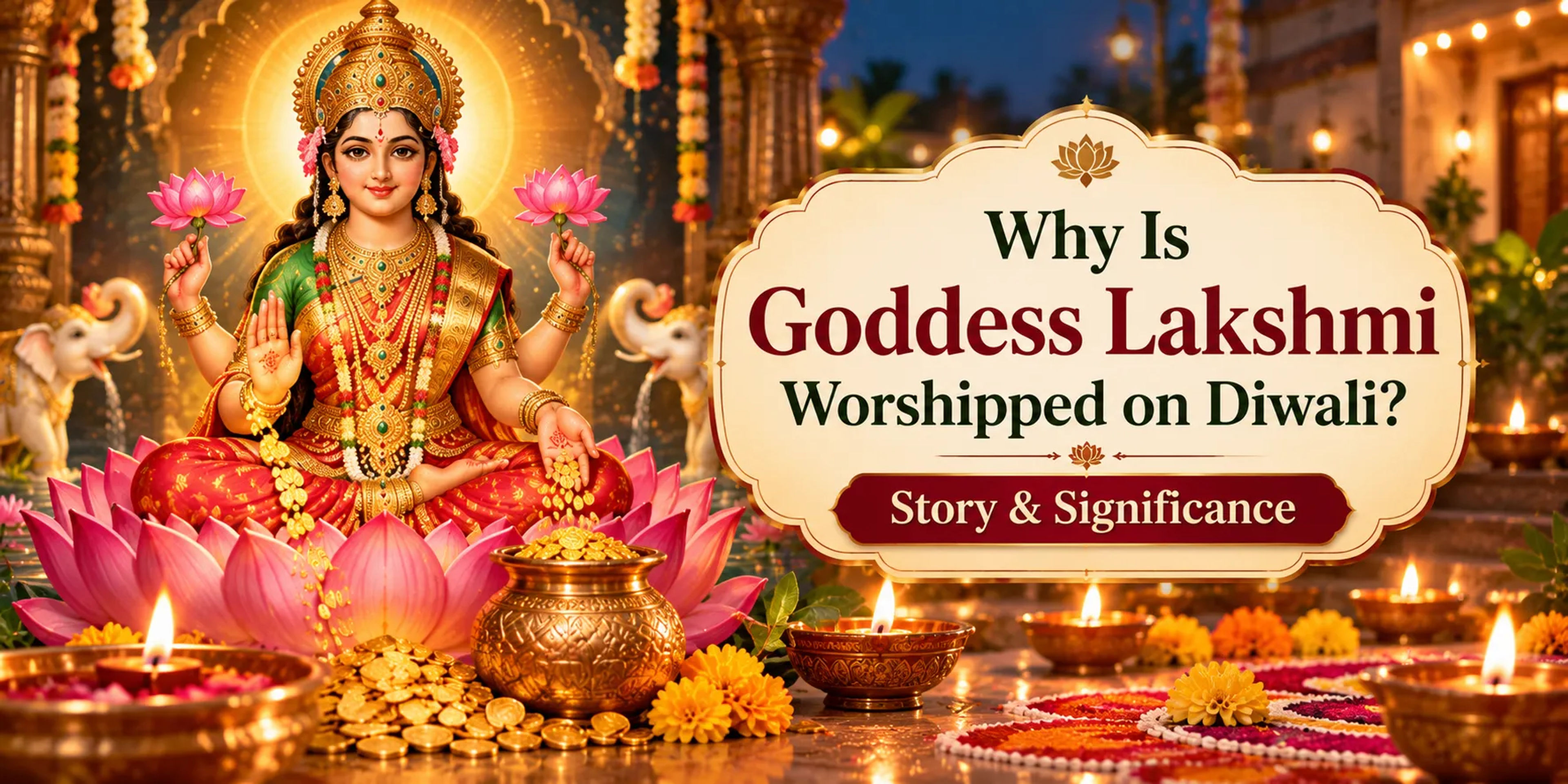
Every year on the dark moon night (Amavasya) of the Hindu month of Kartik, homes across India and around the world light up with rows of clay diyas, colorful rangoli patterns, and open doors. This central evening of Diwali is anchor-marked by a sacred ritual: Lakshmi Puja (often searched as Laxmi Puja).
While Diwali celebrates several historical and scriptural events—such as Lord Rama’s return to Ayodhya and Lord Krishna vanquishing Narakasura—the worship of Goddess Lakshmi remains the spiritual centerpiece for millions of households.
But why is Goddess Lakshmi specifically worshipped on Diwali? What are the ancient stories behind this tradition, why is Lord Ganesha worshipped alongside her, and how do Hindu scriptures define true prosperity? In this article, we explore the history, symbolism, regional traditions, and spiritual meaning of Diwali Lakshmi Puja.
Table of contents
Who Is Goddess Lakshmi?
In Hindu tradition, Goddess Lakshmi (लक्ष्मी) is the divine consort of Lord Vishnu, the preserver of the universe. She embodies Sri (auspiciousness, grace, and radiance) and represents prosperity in all its forms—both material and spiritual.
Derived from the Sanskrit root Lakshya (लक्ष्य), meaning “goal” or “aim,” Maa Lakshmi guides human beings toward the ultimate goals of life (Purusharthas), which include righteous duty (Dharma), prosperity (Artha), worldly joy (Kama), and spiritual liberation (Moksha).
In sacred iconography, she is traditionally depicted standing or seated upon a blooming pink lotus, holding lotus flowers in two hands while bestowing gold coins and blessings with her front hands. The lotus symbolizes purity and detachment—rising pristine and beautiful above muddy waters.
Why Is Goddess Lakshmi Worshipped on Diwali?
The worship of Goddess Lakshmi on Diwali is not a modern innovation or a purely commercial practice. It is rooted in Puranic history, seasonal agricultural traditions, and timeless spiritual symbolism.
On Diwali night, three core reasons explain why devotees invoke Maa Lakshmi:
- Scriptural Emergence: According to ancient texts like the Vishnu Purana and Mahabharata, Kartik Amavasya is the sacred day Goddess Lakshmi emerged from the cosmic ocean during the Samudra Manthan.
- Welcoming Divine Light on the Darkest Night: Kartik Amavasya is the darkest night of the autumn lunar cycle. Lighting lamps and invoking the radiant goddess of light and fortune dispels both external and internal darkness.
- Harvest & Gratitude: Historically, Diwali coincided with the completion of the autumn harvest (Kharif season). Farmers and merchant communities offered their first gains to Maa Lakshmi in gratitude for sustenance and seasonal abundance.
Traditional Stories: Samudra Manthan & Lord Vishnu
Sacred Hindu literature records multiple traditional narratives connecting Lakshmi Ji to Diwali. Rather than treating one narrative as the sole origin, Hindu tradition honors these interconnected stories:
1. The Emergence During Samudra Manthan
The most prominent Puranic story is the Samudra Manthan (Churning of the Ocean of Milk) conducted jointly by the Devas (celestials) and Asuras (demons) to recover lost divine treasures.
As the ocean churned, divine gifts emerged, culminating in the appearance of Goddess Lakshmi holding a garland of lotus flowers. Recognized as the supreme personification of auspiciousness, she chose Lord Vishnu as her eternal consort, placing the lotus garland around his neck. Celestial beings illuminated the universe with lamps to celebrate their divine union—an event commemorated annually on Diwali night.
2. The Rescue of Lakshmi from King Bali
Another traditional narrative connects Diwali to Lord Vishnu’s Vamana avatar. According to this account, King Bali had conquered the three worlds and restricted the celestials, including Goddess Lakshmi. Lord Vishnu, in the form of the dwarf Brahmin Vamana, requested three paces of land, humbled King Bali’s ego, and liberated Goddess Lakshmi and the Devas on Kartik Amavasya.
Why Are Lakshmi and Ganesha Worshipped Together?
A distinct feature of Diwali Lakshmi Puja is that Goddess Lakshmi is almost always worshipped alongside Lord Ganesha, the elephant-headed deity of wisdom, intellect, and new beginnings.
The Spiritual Harmony of Wisdom & Wealth
In Hindu philosophy, wealth (Lakshmi) without intellect and ethical wisdom (Ganesha) can easily lead to pride, greed, and eventual downfall. Conversely, wisdom without resources limits one’s ability to perform righteous actions in the world. Worshipping Lakshmi and Ganesha together ensures that material prosperity is guided by moral clarity, humility, and spiritual wisdom.
Additionally, Lord Ganesha is recognized as Vighnaharta (the remover of obstacles). Traditional Hindu worship dictates that any sacred ritual begins with an invocation to Ganesha to ensure the ceremony proceeds smoothly without hindrances.
To learn more about invoking Lord Ganesha before your prayers, see our guide on the Ganesh Mantra: Meaning, Benefits & How to Chant.
Spiritual vs. Material Wealth in Hindu Tradition
Modern commercial culture often reduces Lakshmi Puja to a prayer for financial gain. However, traditional scriptures offer a far richer understanding of abundance through the concept of Ashta Lakshmi (the eight forms of Lakshmi):
| Form of Lakshmi | Sanskrit Name | Spiritual & Life Meaning |
|---|---|---|
| 1. Primeval Wealth | Adi Lakshmi | The foundational source of eternal spiritual grace and consciousness. |
| 2. Financial Wealth | Dhana Lakshmi | Material resources, currency, and financial security needed for householder life. |
| 3. Food & Agricultural Wealth | Dhanya Lakshmi | Nourishment, wholesome food, and agricultural abundance. |
| 4. Royal Strength & Courage | Gaja / Dhairya Lakshmi | Inner strength, patience, and courage to face life’s challenges. |
| 5. Offspring & Family Harmony | Santana Lakshmi | Family well-being, healthy children, and harmonious relationships. |
| 6. Victory & Determination | Vijaya Lakshmi | Overcoming obstacles and achieving success in righteous endeavors. |
| 7. Knowledge & Wisdom | Vidya Lakshmi | Education, creative skills, and practical knowledge. |
Important Perspective: Devotional prayers to Maa Lakshmi are expressions of spiritual surrender, gratitude, and moral alignment. They should not be misunderstood as magical guarantees for immediate wealth or financial success.
Why Clean Homes and Light Diyas for Lakshmi?
In the weeks leading up to Diwali, families traditionally engage in deep house cleaning, painting, decluttering, and decorating. On Diwali night, doors are adorned with fresh marigold garlands (Toran), colorful floor designs (Rangoli), and rows of lighted earthen lamps.
Culturally and devotionally, these customs reflect the ancient principle of Saucha (purity and cleanliness):
- Cleanliness Welcomes Auspiciousness: Traditional beliefs hold that divine grace resides in spaces that are orderly, serene, and clean.
- Symbolic Thresholds: Bright rangolis and entrance diyas symbolise welcoming guests, positive energy, and divine blessings into the household.
For a detailed look at why earthen lamps are lit across Diwali night, read our complete guide on Why Do We Light Diyas on Diwali? Meaning & Rules.
Regional Variations in Lakshmi Puja Traditions
While Diwali is celebrated across India, regional customs highlight different aspects of festive worship:
- North & West India: Traders and business communities celebrate Chopda Pujan (or Sarda Pujan), opening new accounting ledgers before Goddess Lakshmi and Lord Ganesha to seek ethical, prosperous business in the coming year.
- Bengal & Eastern India: Main Lakshmi Puja (Kojagari Lakshmi Puja) is traditionally observed on the full moon night of Ashwin month, while Diwali night (Kartik Amavasya) is dedicated to Kali Puja.
- South India: Deepavali emphasizes early morning oil baths (Abhyanga Snan), celebrating Krishna’s victory over Narakasura, followed by evening family prayers and lamps.
Diwali 2026 Date and Auspicious Timing
Because Diwali follows the Hindu lunar calendar (Panchang), its date varies slightly each year in the Gregorian calendar.
In 2026, main Diwali and Lakshmi Puja fall on Sunday, November 8, 2026.
Traditional Lakshmi Puja is observed during Pradosh Kaal (the evening twilight period after sunset) while Amavasya tithi prevails. Exact puja muhurat times vary depending on your specific city and time zone; local panchang guides should be consulted for precise regional timings.
During your evening prayers, chanting authentic sacred verses adds depth to your worship. Explore our guide to Diwali Puja Mantras: Key Chants for Lakshmi Puja and master the sacred Mahalaxmi Mantra.
How Divya Marg Supports Your Devotional Practice
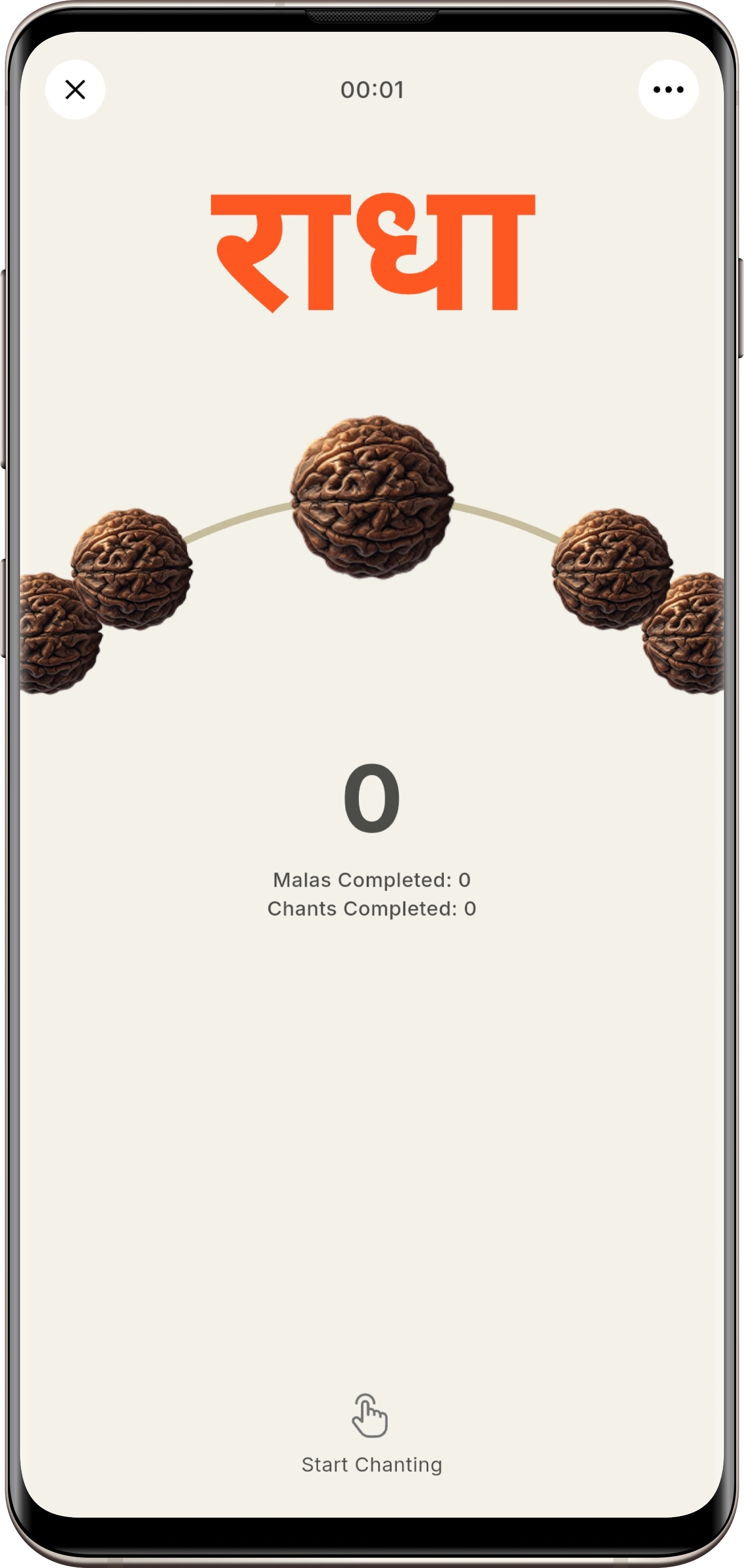
Festivals like Diwali inspire us to deepen our spiritual connection. Whether you are chanting the Mahalaxmi Mantra, chanting the Hare Krishna Mahamantra, or practicing daily quiet meditation, Divya Marg is designed to accompany your spiritual journey:
Lakshmi & Ganesha Mantras
Read correct Sanskrit text and transliterations for Diwali mantras like the Mahalaxmi Mantra and Ganesh Gayatri.
Digital Bead Counter
Count your mantra rounds effortlessly using smooth haptic feedback during your festive puja.
Customizable Daily Goals
Set achievable daily Naam Jaap targets to build a steady chanting habit beyond the festive season.
Fully Offline Access
Perform your daily or festival chanting anywhere without relying on an active internet connection.

Begin your Naam Jaap today
Offline-first and built entirely around one purpose — helping you show up for your practice, every single day.
- Free, always
- Works offline
- No ads

Frequently Asked Questions
Why do Hindus worship Goddess Lakshmi on Diwali?
Goddess Lakshmi is worshipped on Diwali because Kartik Amavasya marks her divine emergence during the churning of the cosmic ocean (Samudra Manthan) and her celestial marriage to Lord Vishnu. Devotees offer prayers to welcome her blessings of prosperity, purity, and spiritual grace into their homes.
Why are Goddess Lakshmi and Lord Ganesha worshipped together on Diwali?
Lord Ganesha represents wisdom, intellect, and the removal of obstacles (Vighnaharta), while Goddess Lakshmi represents wealth and prosperity. Worshipping them together signifies that wealth gained without wisdom or righteousness can lead to vanity, whereas wealth guided by wisdom yields true well-being.
Is 'Laxmi Puja' different from 'Lakshmi Puja'?
No. 'Laxmi' and 'Laxmi Puja' are common phonetic spellings in English, while 'Lakshmi' is the standard transliterated spelling. Both refer to the same deity and traditional Diwali worship.
When is Diwali Lakshmi Puja in 2026?
In 2026, main Diwali and Lakshmi Puja fall on Sunday, November 8, 2026, coinciding with the Kartik Amavasya tithi according to the Hindu lunar calendar.
What does Goddess Lakshmi symbolize in Hinduism?
Goddess Lakshmi symbolizes both material abundance (dhana) and spiritual prosperity, including purity, generosity, inner harmony, fortune, and the supportive energy (Shakti) of Lord Vishnu.
Why do people clean their houses thoroughly before Lakshmi Puja?
In Hindu tradition, cleanliness (Saucha) is associated with divine purity and positive energy. Preparing a clean, orderly home is a cultural and devotional way to express respect and welcome Maa Lakshmi on Diwali night.
Is worshiping Goddess Lakshmi guaranteed to make someone wealthy?
No. In Hindu theology, devotional worship is an expression of spiritual reverence, gratitude, and moral alignment, not a magical contract or guaranteed financial formula. True wealth includes good health, wisdom, peace, and righteous living.
Sources & References
- Vishnu Purana (Book 1, Chapter 9 — The Churning of the Ocean & Emergence of Sri Lakshmi).
- Srimad Bhagavatam (Canto 8, Chapter 8 — The Emergence of Goddess Lakshmi from Samudra Manthan).
- Brihadaranyaka Upanishad (Passages on Saucha, purity, and internal light).
- Drik Panchang & Hindu Calendar Calculations for Diwali 2026 (Kartik Amavasya Tithi — November 8, 2026).