
Mahalaxmi Mantra: Meaning, Benefits, Significance & How to Chant
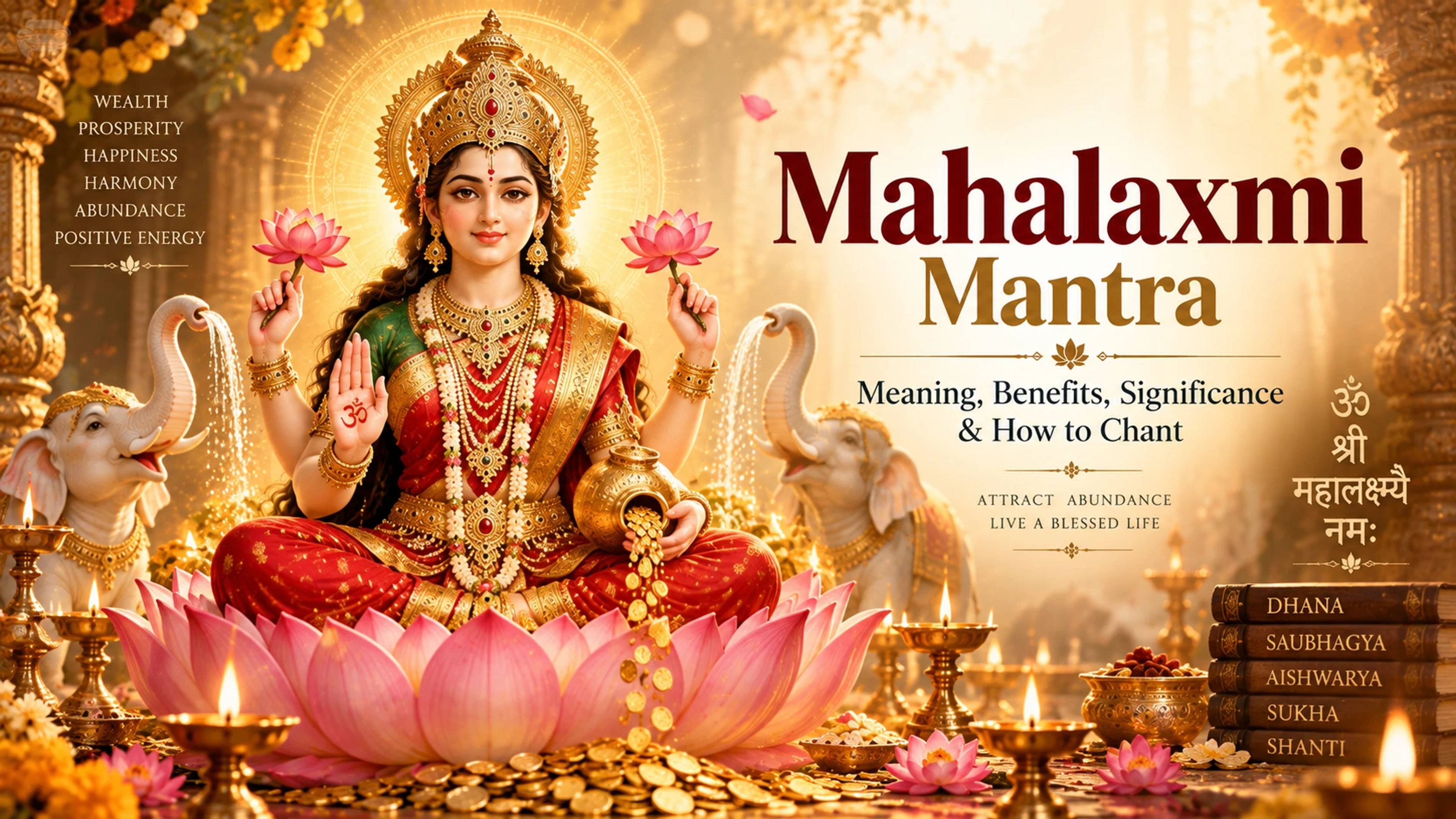
The Mahalaxmi Mantra is one of the most widely chanted mantras in Hindu devotional practice. It is a short prayer to Goddess Lakshmi, the deity associated with prosperity, abundance and auspiciousness.
In this guide, you will find the correct Sanskrit text, transliteration and simple meaning of the most important Lakshmi mantras, how they are traditionally chanted, how repetitions are counted, and how this connects to festivals like Diwali and Lakshmi Puja.
Table of contents
Who Is Goddess Mahalakshmi?
Mahalakshmi is the great form of Goddess Lakshmi, the consort of Lord Vishnu. She is worshipped as the goddess of wealth, fortune, beauty and well-being — but in devotional tradition, her blessings are understood to go beyond money alone, covering auspiciousness, grace, and inner contentment as well. She is usually shown seated or standing on a lotus, often with gold coins flowing from her hands.
What Is a Mahalaxmi Mantra?
A Mahalaxmi Mantra is a short Sanskrit phrase repeated with devotion to invoke Goddess Lakshmi. The word Shri (also written Shree or Sri) means auspiciousness, radiance and grace, and is closely linked to Lakshmi herself. Namah means “I bow” or “salutations.” Shreem is a bija, or seed sound, believed to carry the concentrated vibration of Lakshmi’s energy.
The most commonly chanted Mahalaxmi Mantra is Om Shreem Mahalakshmyai Namah, but several other Lakshmi mantras are also widely used, each suited to slightly different practices.
Mantra, Beej Mantra or Stotra — What’s the Difference?
Quick distinction
- Beej (seed) mantra — a single syllable like Shreem. It has no literal dictionary meaning; its power is traditionally understood to lie in sound, not translation.
- Mantra — a short phrase, usually a few words, meant to be repeated many times (japa), such as Om Shreem Mahalakshmyai Namah.
- Stotra — a longer devotional hymn made of several verses, such as the Mahalakshmi Ashtakam. It is usually recited once or a few times, not counted on a mala the way a short mantra is.
Important Lakshmi Mantras With Meaning
There are many Lakshmi mantras in circulation online, but not all of them are equally established or equally useful for a beginner. The four below were chosen because they are traditionally significant, commonly searched, and genuinely practical to start chanting.
Most widely chanted
Om Shreem Mahalakshmyai Namah
ॐ श्रीं महालक्ष्म्यै नमः
Om Shreem Mahalakshmyai Namah
Meaning: “Om, salutations to the great Goddess Lakshmi.” Shreem is Lakshmi’s seed sound, Maha means great, Lakshmyai means “to Lakshmi,” and Namah means “I bow.”
Traditional significance: This is the most common Lakshmi mantra used for daily japa, considered accessible for beginners since it requires no initiation.
Lakshmi Beej Mantra
Om Shreem Namah
ॐ श्रीं नमः
Om Shreem Namah
Meaning: Shreem (श्रीं) is a bija — a seed syllable without a literal dictionary meaning. It is traditionally regarded as the concentrated sound-form of Lakshmi’s energy, built from the root Shri, meaning splendour or auspiciousness.
Traditional significance: Used on its own for simple, short daily chanting, or combined into longer mantras. Some traditions extend it as Om Hreem Shreem Lakshmibhyo Namah.
Vedic-style invocation
Lakshmi Gayatri Mantra
ॐ महादेव्यै च विद्महे विष्णुपत्न्यै च धीमहि । तन्नो लक्ष्मीः प्रचोदयात् ॥
Om Mahadevyai Cha Vidmahe Vishnupatnyai Cha Dheemahi Tanno Lakshmih Prachodayat
Meaning: “Om, let us meditate on the great Goddess, the consort of Vishnu. May that Lakshmi inspire and guide our understanding.”
Traditional significance: Follows the Gayatri format used for many deities — an invocation asking for wisdom and guidance rather than a request for a specific outcome.
Stotra, not a short mantra
Mahalakshmi Ashtakam
नमस्तेऽस्तु महामाये श्रीपीठे सुरपूजिते । शङ्खचक्रगदाहस्ते महालक्ष्मि नमोऽस्तुते ॥
Namastestu Mahamaye Shripithe Surapujite | Shankha-Chakra-Gada-Haste Mahalakshmi Namostute (Verse 1 of 8)
Meaning: “Salutations to you, O Mahamaya, who resides on the sacred seat of Shri and is worshipped by the gods. O Mahalakshmi, who holds the conch, discus and mace — I bow to you.”
Traditional significance: An eight-verse hymn traditionally attributed to Indra, found in the Padma Purana. It is recited in full rather than repeated as japa, often during Lakshmi Puja and Navratri.
Traditional Benefits of Chanting
Hindu devotional tradition associates chanting Lakshmi mantras with themes such as prosperity, abundance, auspiciousness, gratitude, devotion and general well-being. Many practitioners also describe the practice as calming and grounding, similar to other forms of daily japa.
These are traditional and devotional beliefs, not scientifically established claims. Chanting a mantra is not a guarantee of money, business success, debt removal, or any specific financial or medical outcome. It is best understood as a spiritual and devotional practice, not a shortcut to a particular result.
How to Chant the Mahalaxmi Mantra
- Beginners are welcome. No initiation is required to chant Om Shreem Mahalakshmyai Namah or the beej mantra Om Shreem Namah.
- Aloud or silently. Both are accepted. Many people chant softly or mentally (manasika japa) once they know the mantra well.
- A mala helps, but isn’t required. A 108-bead mala is a traditional aid for counting, not a condition for the mantra to work.
- Consistency matters more than a number. A shorter, focused practice repeated daily is generally seen as more valuable than an occasional long session.
- Follow your own tradition first. If your family or a priest has taught you a specific method, that takes priority over any general guide.
Counting Your Repetitions
Because Divya Marg is a Naam Jaap and mantra-counting app, here is a quick look at the common ways people count Lakshmi mantra repetitions:
- 108-bead mala — the traditional method, one bead per repetition.
- Physical counters — handheld click-counters, useful when a mala isn’t practical.
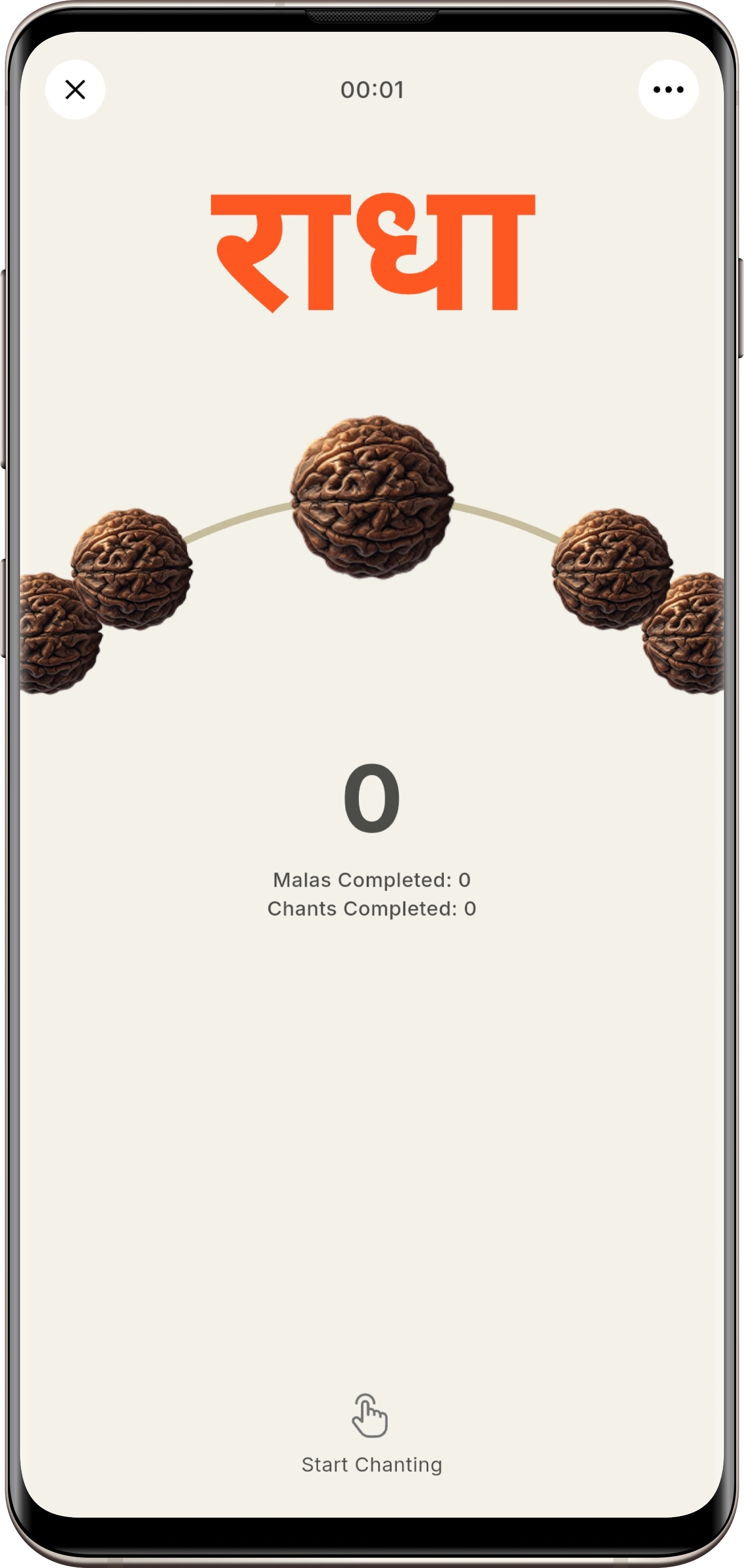
- Digital Jaap counters — apps that count taps or beads and track your daily total automatically.
108 is a well-known traditional count, but it is not a rule that applies to everyone. Some traditions use 9 repetitions or multiples of it instead. What matters most for a daily practice is picking a realistic goal and staying consistent with it over time.
To understand daily chanting practice in more depth, see our guides on What Is Naam Jaap? Meaning, Benefits, How to Do It & Daily Practice and How to Do Naam Jaap: A Beginner’s Step-by-Step Guide.
Lakshmi Mantras, Dhanteras & Diwali
Lakshmi worship is closely tied to the Diwali season. Dhanteras, which falls two days before Diwali, marks the start of the festivities and is associated with inviting prosperity into the home. On the main night of Diwali, many households perform Lakshmi Puja, where Lakshmi mantras or the Mahalakshmi Ashtakam are often recited as part of the worship. In parts of eastern India, Kojagari Lakshmi Puja is observed on the full moon night after Durga Puja, following a related but separate regional tradition.
These customs vary by region and family, so it is worth following whatever tradition is practiced in your own home rather than assuming one version applies everywhere. Outside of festival season, the same mantras are just as valid for everyday chanting.
How Divya Marg Can Help
Once you have chosen a Lakshmi mantra to chant, Divya Marg can help you keep the practice going:
Choose your Lakshmi Naam
Set 'Lakshmi' or 'Mahalakshmi' as your active Naam and begin anytime.
Daily Jaap goal
Set a realistic repetition target and let the app track it for you.
Haptic bead counting
Feel each repetition so your attention can stay on the mantra.
Works fully offline
Chant anywhere, signal or not.
Daily reminders
A gentle nudge at whatever time you choose to practice.
Simple progress tracking
See your chants, malas and streak without any setup.

Begin your Naam Jaap today
Offline-first and built entirely around one purpose — helping you show up for your practice, every single day.
- Free, always
- Works offline
- No ads

Frequently Asked Questions
Which Lakshmi Mantra is best for beginners?
Om Shreem Mahalakshmyai Namah is usually the easiest starting point. It is short, widely known, and does not require any initiation or special training to begin chanting.
What does the Mahalaxmi Mantra mean?
Om Shreem Mahalakshmyai Namah means 'Om, salutations to the great Goddess Lakshmi.' Shreem is Lakshmi's seed sound, and Namah is an offering of respect. The full meaning of each word is explained above.
How should the Mahalaxmi Mantra be pronounced?
Say it slowly at first: Om (as in home), Shreem (rhymes with 'cream'), Maha-lakshmy-ai, Namah (na-mah). A simple transliteration is given above for each mantra to help with pronunciation.
How many times should I chant it?
There is no fixed rule. Many people use a 108-bead mala as a traditional count, but chanting fewer times with attention is considered better than rushing through 108 without focus. Beginners can start with any number that feels sustainable, like 11 or 21.
Is chanting 108 times necessary?
No. 108 is a well-known traditional number linked to mala beads, but it is not compulsory. Some traditions also use 9 or multiples of it. What matters more is regularity than hitting an exact count.
Can I chant the Lakshmi Mantra without a mala?
Yes. A mala is a helpful tool for counting, not a requirement for the mantra to be valid. You can chant while counting on your fingers, using a physical counter, or a digital Jaap counter like Divya Marg.
Can the Mahalaxmi Mantra be chanted every day?
Yes, many devotees include it in a daily practice, often in the morning or evening. Consistency over time is generally considered more meaningful than chanting only occasionally.
What is the connection between Lakshmi Mantras and Diwali?
Lakshmi is worshipped on Diwali night during Lakshmi Puja, and many people chant her mantras or the Mahalakshmi Ashtakam as part of this puja. Dhanteras, two days before Diwali, is also associated with inviting prosperity into the home. Practices vary by region and family tradition.
What is the difference between the Lakshmi Mantra and the Mahalakshmi Ashtakam?
A mantra like Om Shreem Mahalakshmyai Namah is a short, repeatable chant. The Mahalakshmi Ashtakam is a longer eight-verse devotional hymn (stotra) traditionally recited once or a few times, not repeated in a mala count the way a mantra is.