
Ganesh Mantra: Meaning, Benefits, Significance & How to Chant
Lord Ganesha is worshipped first among all deities in Hindu tradition, which is why so many prayers, journeys, and new beginnings start with a Ganesh mantra. But with so many versions floating around online, it’s easy to wonder which one is authentic, what it actually means, and how you’re supposed to chant it.
This guide covers the most important and widely chanted Ganesh mantras, their correct Sanskrit text and meaning, and practical guidance on chanting them as a beginner — without exaggerated claims about what they can do for you.
Table of contents
Key takeaways
- Om Gam Ganapataye Namah is the most commonly chanted Ganesh mantra for daily practice.
- Ganesha is traditionally invoked at the start of new undertakings as the remover of obstacles.
- No single Ganesh mantra requires exactly 108 repetitions — the count is a mala tradition, not a fixed rule.
- Traditional beliefs about the mantra's power are matters of devotion and faith, not scientifically proven outcomes.
What Is a Ganesh Mantra?
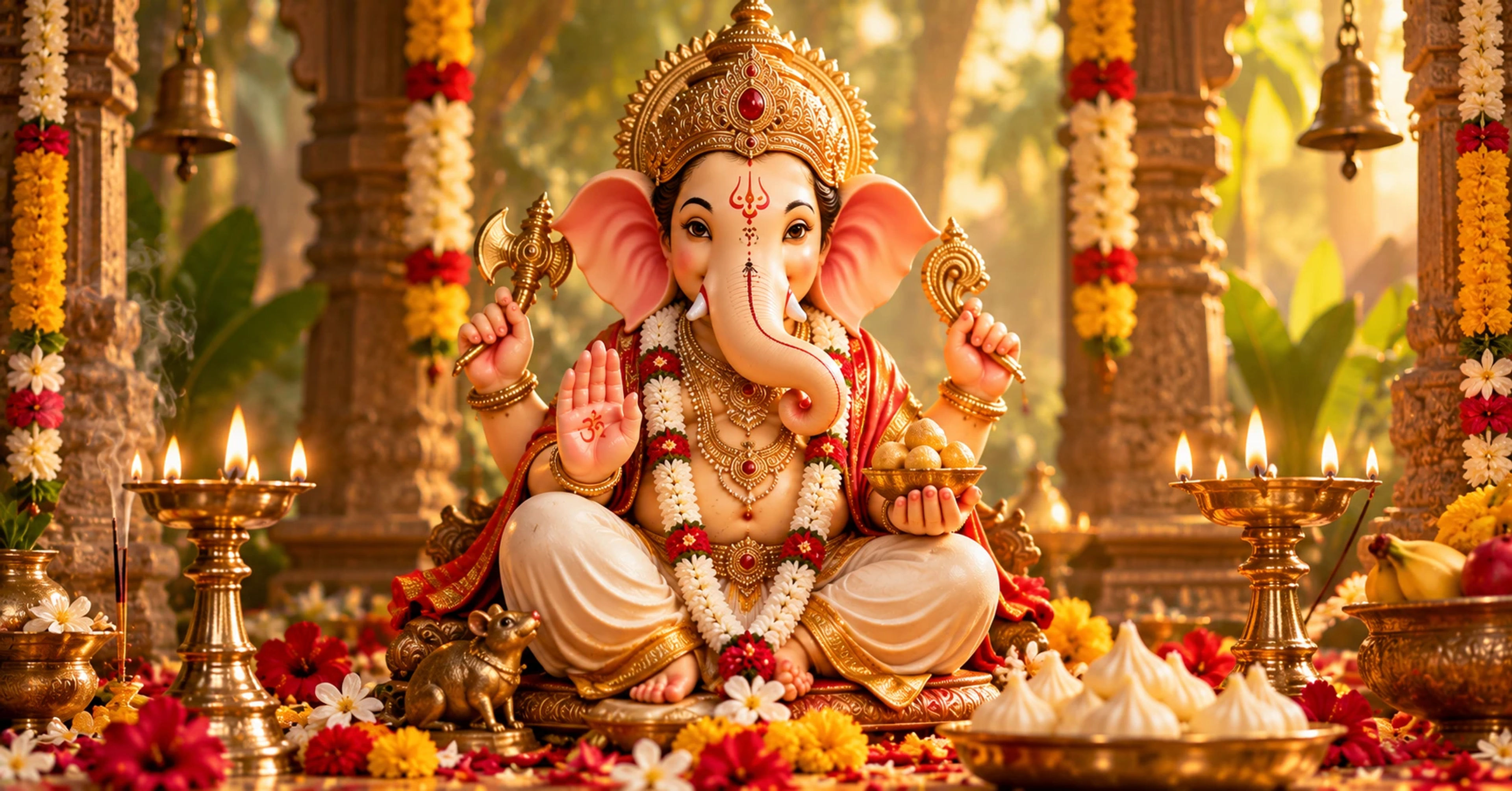
A Ganesh mantra is a sacred verse or phrase in Sanskrit addressed to Lord Ganesha, the elephant-headed deity known as the remover of obstacles (Vighnaharta) and the one worshipped first (Prathama Pujya) before any other deity or undertaking. Ganesh mantras range from very short phrases used for quick daily invocation to longer verses drawn from Vedic and Puranic sources.
Why Devotees Chant Ganesh Mantras
In Hindu tradition, Ganesha is invoked before starting something new — a journey, a business, a ceremony, an exam, or even a piece of writing — because he is considered the deity of auspicious beginnings. Chanting his mantras is a way of seeking his blessings, expressing devotion, and settling the mind before an important task.
The Most Important Ganesh Mantras
There are many Ganesh mantras in circulation, but the four below are the ones most widely used in daily practice, with reliable traditional sourcing.
1. Om Gam Ganapataye Namah (Beej Mantra)
ॐ गं गणपतये नमः
Oṁ Gaṁ Gaṇapataye Namaḥ
This is the most commonly chanted Ganesh mantra, often called the Ganesh beej (seed) mantra because it’s built around “Gam,” the seed sound traditionally associated with Ganesha. It appears in the Ganapati Atharvashirsha, a short Upanishad dedicated to Ganesha.
Meaning: “I bow to Lord Ganapati.” It is a simple, direct salutation — which is exactly why it’s so widely used for quick daily invocation, before starting work, or as a short mantra for beginners to learn first.
2. Ganesh Gayatri Mantra
ॐ एकदन्ताय विद्महे वक्रतुण्डाय धीमहि । तन्नो दन्तिः प्रचोदयात् ॥
Oṁ Ekadantāya Vidmahe Vakratuṇḍāya Dhīmahi | Tanno Dantiḥ Pracodayāt ||
This verse follows the traditional Gayatri metre and appears in the Ganapati Atharvashirsha. A closely related version beginning with “Tatpurushāya Vidmahe” instead of “Ekadantāya Vidmahe” is found in other Vedic sources, including the Narayana Upanishad and the Taittiriya Aranyaka. Both versions are in genuine traditional use, so you’ll come across either depending on the source.
Meaning: “We meditate on the one-tusked Lord (Ekadanta); we contemplate the one with the curved trunk (Vakratunda). May that tusked one guide and inspire us.” Like other Gayatri mantras, it is a prayer for guidance and clarity of mind.
3. Vakratunda Mahakaya
वक्रतुण्ड महाकाय सूर्यकोटि समप्रभ । निर्विघ्नं कुरु मे देव सर्वकार्येषु सर्वदा ॥
Vakratuṇḍa Mahākāya Sūryakoṭi Samaprabha | Nirvighnaṁ Kuru Me Deva Sarvakāryeṣu Sarvadā ||
This is probably the most recognisable Ganesh shloka, traditionally recited before starting any new task, journey, or ceremony. It is widely associated with the Narada Purana in popular tradition, though you will find this attribution stated with varying levels of confidence across sources, so it’s best understood as a well-established devotional verse rather than one with a single, precisely pinned-down textual origin.
Meaning: “O Lord of the curved trunk and mighty form, whose radiance equals millions of suns, please make all my endeavours free of obstacles, always.”
4. Om Shri Ganeshaya Namah
ॐ श्री गणेशाय नमः
Oṁ Śrī Gaṇeśāya Namaḥ
A simple, widely used salutation to Ganesha, often the very first mantra taught to children or complete beginners because of how easy it is to pronounce and remember.
Meaning: “I bow to the auspicious Lord Ganesha.”
What Are the Benefits? (Traditional Belief vs. Fact)
Across Ganesha traditions, chanting his mantras is associated with:
- Seeking blessings before beginning something new
- Overcoming obstacles, in the devotional sense of Ganesha as Vighnaharta
- Deepening devotion and a sense of connection to Ganesha
- Wisdom, clarity of mind, and auspiciousness
These are traditional devotional beliefs, held sincerely by devotees for centuries — not scientifically established claims. Chanting a Ganesh mantra does not guarantee wealth, success, the removal of every obstacle, or a specific health outcome. It’s reasonable to see it as a source of focus, comfort, and devotion alongside your own effort, not a replacement for it.
How to Chant Ganesh Mantras
Pronunciation
Listen to a correct, slow recitation a few times before chanting on your own, especially for the longer verses like the Ganesh Gayatri or Vakratunda Mahakaya. Getting comfortable with a short mantra like Om Gam Ganapataye Namah first makes the longer ones easier to pick up later.
Aloud or silent
Chanting aloud is common, especially in groups or while learning pronunciation. Once you’re familiar with a mantra, chanting it softly or silently in the mind is equally accepted and often preferred for personal, meditative practice.
Is a specific time required?
There’s no strict rule limiting these mantras to a particular hour. Many people chant them in the morning as part of daily worship, or specifically before starting something important — a new job, an exam, a journey, or a ceremony — in keeping with Ganesha’s traditional role as the deity of beginnings.
Including it in daily Naam Jaap
Many practitioners begin their daily Naam Jaap with a short Ganesh mantra before moving on to other mantras, reflecting the traditional custom of invoking Ganesha first. If you’re new to Naam Jaap in general, our guides on what Naam Jaap is and its benefits and how to do Naam Jaap as a beginner cover the basics that apply here too.

Counting Your Repetitions
Ganesh mantras, especially the shorter ones like Om Gam Ganapataye Namah, are often chanted in repeated rounds. A 108-bead japa mala is the traditional tool for this, since one full round of the mala naturally comes to 108 repetitions — a count tied to the mala itself rather than a rule specific to any one Ganesh mantra.
That said, there’s no requirement to chant exactly 108 times. Shorter counts like 11, 21, or 54 repetitions are commonly used, particularly by beginners or for a quick invocation before starting a task, and simply chanting for a few focused minutes without counting at all is also perfectly fine.
Alongside a mala, a physical clicker counter or a digital jaap counter app are both practical ways to keep track, especially if you're chanting on the move or during a short break at work. We've compared these options in detail in Mala vs Physical Counter vs Digital Jaap Counter.
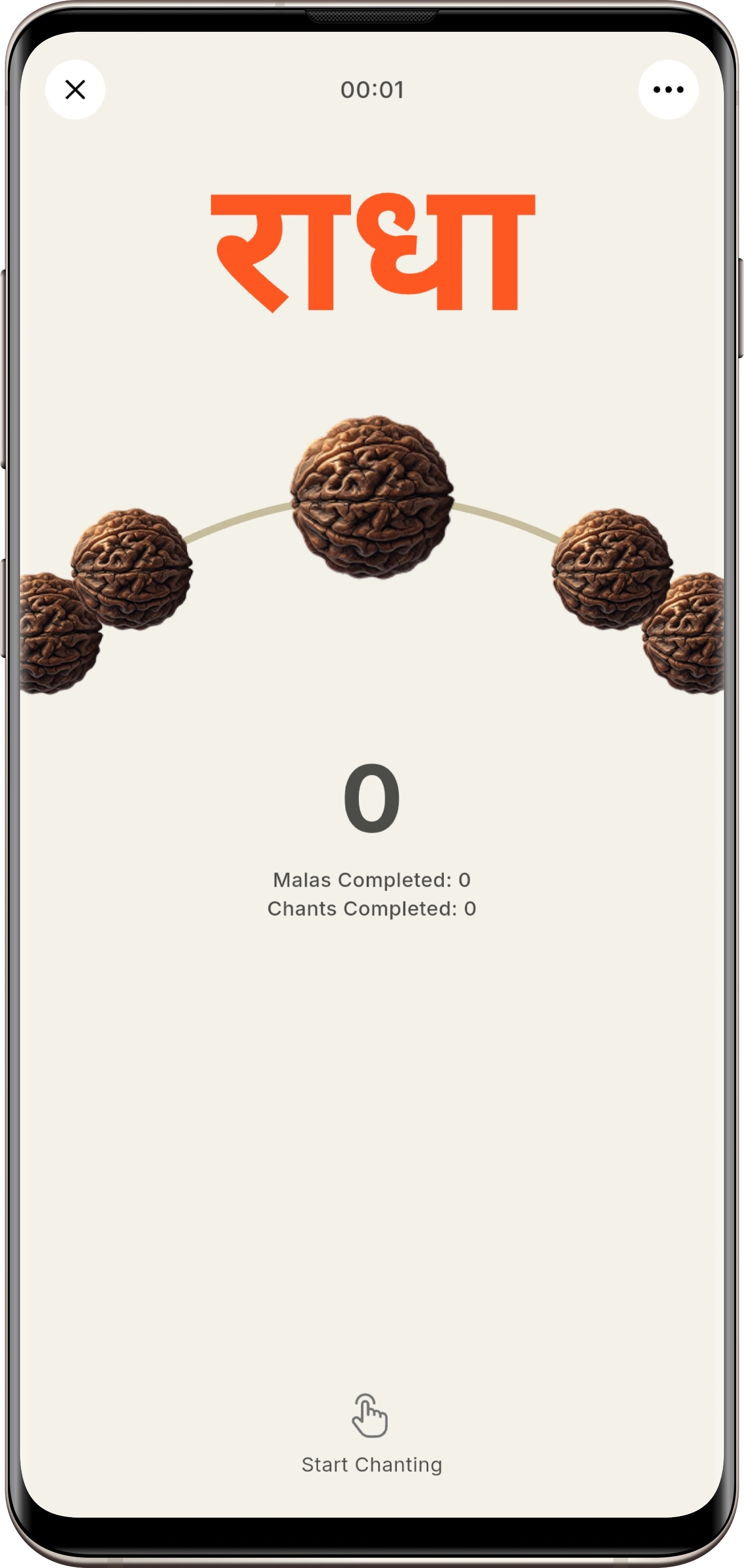
This is where Divya Marg fits in practically: it lets you count repetitions of any Ganesh mantra with a simple tap, completes a "mala" automatically at 108, and keeps a record of your daily practice so nothing is lost once you set your phone down. It's a tool for tracking the counting itself, not a substitute for learning the mantra correctly or chanting with genuine attention.

Begin your Naam Jaap today
Offline-first and built entirely around one purpose — helping you show up for your practice, every single day.
- Free, always
- Works offline
- No ads

If you'd also like to learn more about Ganesha's other names, see our guide to the 21 Names of Lord Ganesha, or if you're preparing for the festival, check our Ganesh Chaturthi Sthapana Guide.
Frequently Asked Questions
Which is the best Ganesh Mantra?
There's no single 'best' mantra that suits everyone — it depends on your comfort level. Om Gam Ganapataye Namah is the most widely chanted for daily practice because it's short and easy to remember, while the Ganesh Gayatri Mantra and Vakratunda Mahakaya are preferred by those wanting a slightly longer, more descriptive invocation.
What does Om Gam Ganapataye Namah mean?
It means 'I bow to Lord Ganapati, represented by the sacred sound Gam.' Gam is considered the beej (seed) sound associated with Ganesha, and the mantra is a direct salutation to him, commonly chanted before starting new work or during daily worship.
Do I need to chant a Ganesh Mantra 108 times?
No, 108 is a traditional count linked to a full mala, not a fixed requirement for Ganesh mantras specifically. Many people chant 108 times when using a mala simply because that's how many beads it has, but shorter counts like 11 or 21 repetitions are equally valid, especially for beginners.
Can beginners chant Ganesh mantras?
Yes. Ganesh mantras are among the most commonly chanted in Hindu practice and there's no traditional restriction on who can chant them. It helps to first listen to a correct recitation to get the pronunciation right, then start with a short, simple mantra like Om Gam Ganapataye Namah before moving to longer ones.
Can Ganesh Mantras be chanted silently?
Yes. Chanting aloud is common for beginners and in group settings since it helps with learning pronunciation, but softly whispered or fully silent, mental repetition is equally accepted once you're familiar with the mantra and want a quieter, more personal practice.
Is a mala necessary to chant Ganesh mantras?
No, a mala is a traditional aid for counting, not a requirement. You can chant using your fingers, a physical clicker counter, a digital jaap counter app, or simply chant for a set amount of time without counting repetitions at all.
Does chanting a Ganesh Mantra guarantee success or remove all obstacles?
Ganesha is traditionally revered as the remover of obstacles (Vighnaharta) and is invoked at the start of new undertakings out of devotional belief and custom. This is a matter of faith passed down through tradition, not a scientifically proven guarantee, so it shouldn't be treated as a substitute for genuine effort or, where relevant, professional advice.
Can I include a Ganesh Mantra in my daily Naam Jaap practice?
Yes, many people include a Ganesh mantra as part of a broader daily Naam Jaap routine, often chanting it first before moving to other mantras, in keeping with the tradition of invoking Ganesha before beginning any significant undertaking.