
Hanuman Mantra: Meaning, Benefits, Significance & How to Chant
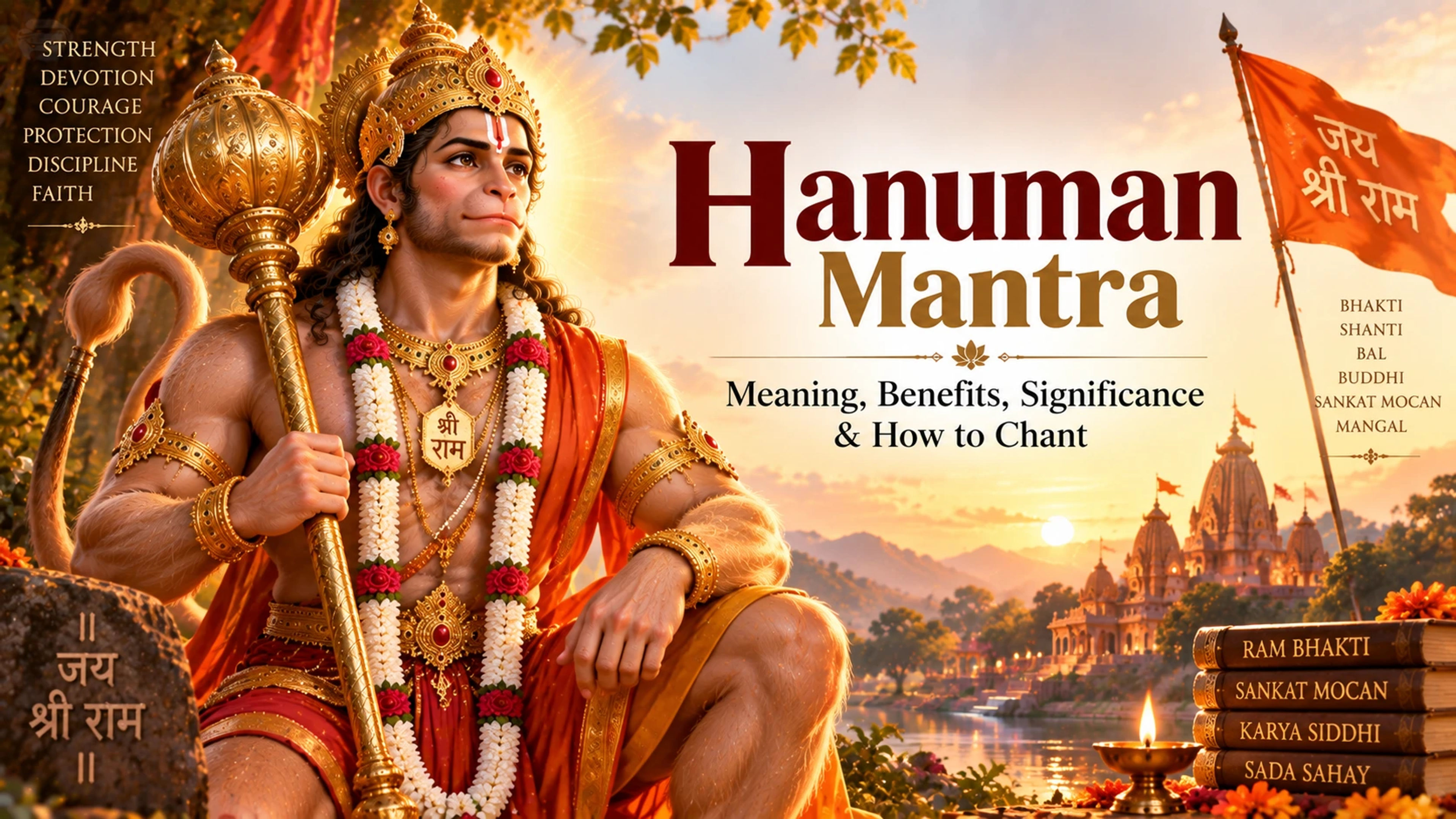
Hanuman mantras are short Sanskrit chants of devotion to Lord Hanuman — the devoted companion of Lord Rama, known across India for his strength, courage and unwavering loyalty. They are some of the most widely chanted mantras in Hindu devotional practice, and among the easiest for a complete beginner to start with.
This guide covers the Hanuman mantras that matter most — what they mean, where they come from, and how to chant them — without turning into an endless list of Sanskrit phrases you'll never use.
Table of contents
What Is a Hanuman Mantra?
A Hanuman mantra is a short Sanskrit phrase, usually just a few words, chanted as a form of devotion (bhakti) and remembrance (smaran) of Hanuman. Unlike a full hymn or prayer, a mantra is built for repetition — the same short phrase said again and again, either aloud or silently, as a form of japa (repeated chanting).
Not everything associated with Hanuman is technically a mantra. Longer compositions like the Hanuman Chalisa are devotional hymns, meant to be read or sung in full rather than repeated as a short phrase. We'll come back to that distinction below.
Why Do Devotees Chant Hanuman Mantras?
Hanuman is traditionally seen as the ideal devotee — selfless, courageous and completely dedicated to Rama. Chanting his mantras is a way of expressing devotion and, traditionally, of inviting these same qualities — courage, focus, humility — into one's own life. For many people, it's also simply an easy, approachable way to begin a daily chanting practice, since no formal initiation is required.
The Most Important Hanuman Mantras
There are many Hanuman mantras in circulation online, but most trace back to a small number of genuinely significant ones. Here are the three worth learning, starting with the simplest.
Om Hanumate Namah
Best for beginnersॐ श्री हनुमते नमः
Om Shri Hanumate Namah
Meaning: "Om. Salutations to revered Hanuman." A short, direct greeting to Hanuman — Hanumate means "to Hanuman," and Namah means bowing or salutation.
Significance: This is the simplest and most commonly chanted Hanuman mantra. Reference works on Hanuman list this salutation form as his principal mantra. It carries no complex ritual requirement, which is why it's often the first mantra beginners learn.
Hanuman Gayatri Mantra (Anjaneya Mantra)
For deeper meditationॐ आञ्जनेयाय विद्महे वायुपुत्राय धीमहि । तन्नो हनुमत् प्रचोदयात् ॥
Om Anjaneyaya Vidmahe Vayuputraya Dhimahi, Tanno Hanuman Prachodayat
Meaning: "We meditate on Anjaneya, the son of Anjana and of the wind-god Vayu. May Hanuman inspire and guide our thoughts."
Significance: Built on the Gayatri mantra pattern (a structure used for many deities, not only Hanuman), this version is sometimes called the Anjaneya Mantra since it addresses Hanuman as Anjaneya, "son of Anjana." It's typically used for quiet meditation rather than fast repetition.
Manojavam Marutatulyavegam
Traditional invocationमनोजवं मारुततुल्यवेगं जितेन्द्रियं बुद्धिमतां वरिष्ठम् । वातात्मजं वानरयूथमुख्यं श्रीरामदूतं शरणं प्रपद्ये ॥
Manojavam Marutatulyavegam Jitendriyam Buddhimatam Varishtham, Vatatmajam Vanarayuthamukhyam Shriramadutam Sharanam Prapadye
Meaning: "I take refuge in the swift-as-thought, wind-swift, self-controlled, wisest of the wise, son of the wind, chief of the monkey army, messenger of Sri Rama."
Significance: This verse comes from Valmiki's Ramayana and is traditionally recited as a Dhyana Shloka (an invocation to visualise Hanuman) before Sundara Kanda or the Hanuman Chalisa. Some versions end with "shirasa namami" ("I bow my head") instead of "sharanam prapadye" ("I take refuge") — both are used in different regional traditions.
Hanuman Mantra vs. Hanuman Chalisa vs. Bajrang Baan
These three are often mentioned together, but they serve different purposes:
- Hanuman Mantra — a short phrase (like the ones above), meant to be repeated many times as japa.
- Hanuman Chalisa — a 40-verse devotional poem composed by the poet-saint Tulsidas, praising Hanuman's qualities and deeds. It is read or sung in full, not repeated as a short chant.
- Bajrang Baan — a longer devotional hymn (stotra) invoking Hanuman's protection, traditionally recited in full, often on Tuesdays or Saturdays.
All three are valid, well-established ways of connecting with Hanuman — they simply work differently. This article focuses on the short mantras meant for repetition.
Traditional Benefits of Chanting
Within Hindu devotional tradition, regular chanting of Hanuman mantras is associated with:
- Devotion. A direct way to express reverence and connection to Hanuman.
- Courage and inner strength. Hanuman is traditionally seen as an embodiment of fearlessness, and his mantras are chanted to invoke that same steadiness.
- Remembrance. Keeping Hanuman's example of selfless service in mind through the day.
- Spiritual discipline. A consistent daily practice that builds focus and regularity.
- Overcoming fear. Traditionally associated with steadying the mind in the face of anxiety or self-doubt.
These are traditional, devotional associations, not medical or scientific claims. Chanting a Hanuman mantra is not traditionally presented as a guarantee of physical strength, wealth, success, or protection from every danger, and it is not a substitute for medical care. Separately, general research on repetitive chanting and meditation practices suggests they can support focus and a sense of calm for many people — a distinct, evidence-based observation about repetitive practice, not a claim specific to this mantra.
How to Chant a Hanuman Mantra
If you follow a family or lineage-specific method, that takes priority. For everyone else, a simple approach works well:
- Aloud (Vaikhari). Chant the mantra clearly out loud. This is often easiest for beginners, since the sound itself helps hold attention.
- Whispered (Upanshu). A soft, near-silent chant, once you're familiar with the words.
- Mental (Manasika). Repeating the mantra silently in the mind — a more advanced stage many people grow into over time.
For pronunciation, say each part clearly and evenly — Om — Ha-nu-ma-te — Na-mah — without rushing. Tuesday and Saturday are traditionally considered significant days for Hanuman worship, and early morning is a commonly preferred time for focused chanting, but there is no rule against chanting at whatever time genuinely fits your day.
How Many Times Should You Chant It?
There's no single number that applies to every person or every mantra. A widely followed traditional count is 108 repetitions, matching the beads on a standard mala. Some people do multiple rounds; others keep it much simpler.
Beginners are generally better off starting small — 11 or 21 repetitions a day — and building up gradually, rather than attempting 108 on day one and losing consistency. See our separate guide on why mantras are traditionally chanted 108 times for more on where this number comes from.
Counting Repetitions: Mala, Counters and Goals
A mala (a string of 108 beads plus one larger “guru bead”) is the traditional way to count japa without breaking focus to count numbers in your head. If you don't have or want to use a mala, common alternatives include a simple physical clicker or a digital jaap counter. Our guide on chanting without a mala covers this in more detail, and mala vs. physical counter vs. digital jaap counter can help you decide what suits you best. Whichever method you use, setting a small, realistic daily goal — repetitions, not perfection — is usually what makes a practice last.
Can Beginners Chant It Daily, Without a Mala?
Yes to both. Hanuman mantras are among the more approachable ones for a daily habit — short, requiring no initiation, and chantable anywhere: at home, on a commute, or during a short break. Many people treat this as a simple form of Naam Jaap. If you're just starting out, our beginner’s step-by-step guide to Naam Jaap walks through the basics of building the habit.
How Divya Marg Can Help
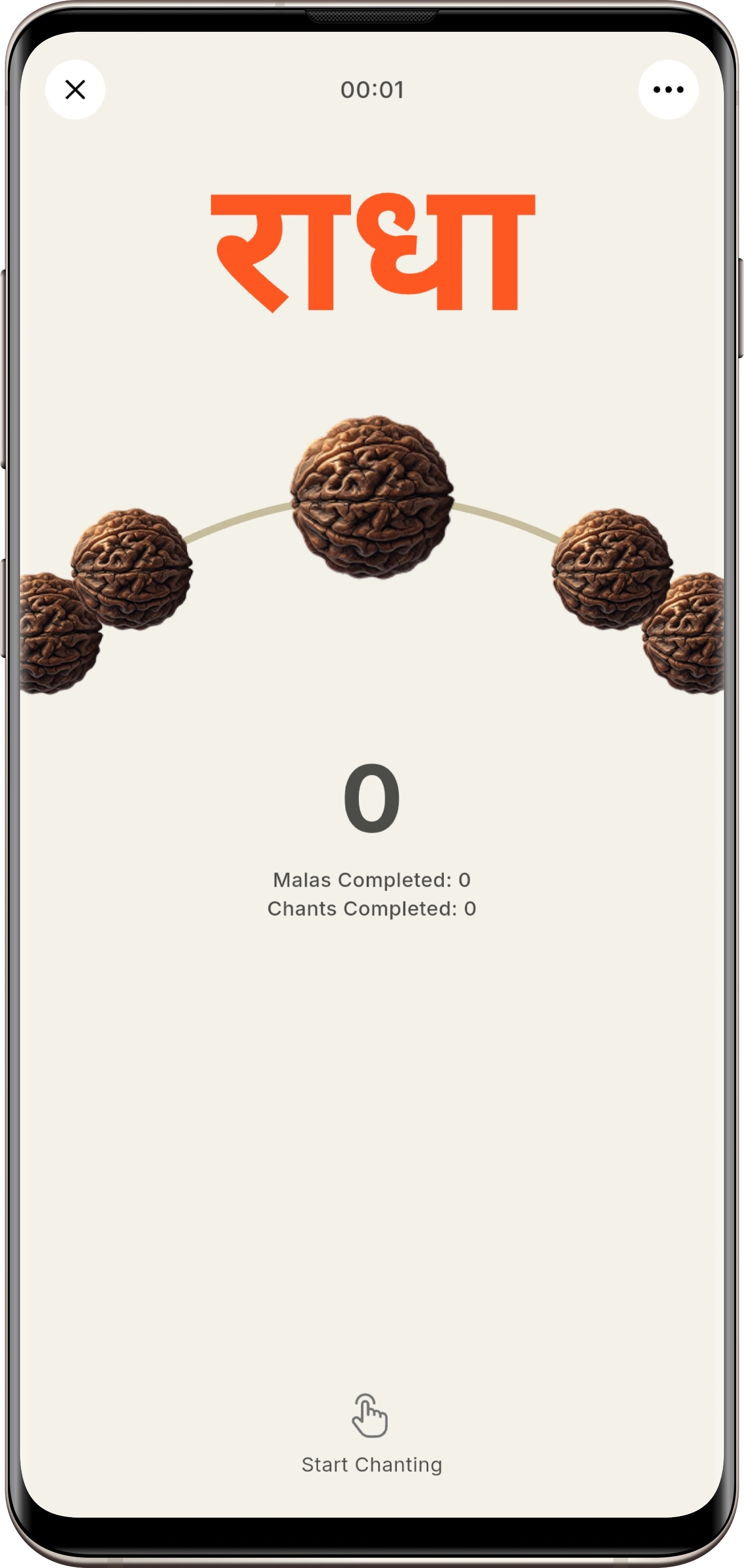
Once you've picked a mantra and a rough method, the part that usually falls away first is counting. The Divya Marg app is built for exactly that:
Choose your Hanuman Mantra
Set any of these mantras as your active Naam and start a session anytime.
Daily Jaap goal
Set a realistic repetition target and let the app track it for you.
Haptic bead counting
Feel each repetition so your attention can stay on the mantra, not the count.
Works fully offline
Chant anywhere, signal or not.
Daily reminders
A gentle nudge at whatever time you choose to practice.
Simple progress tracking
See your chants, malas and streak without any setup.

Begin your Naam Jaap today
Offline-first and built entirely around one purpose — helping you show up for your practice, every single day.
- Free, always
- Works offline
- No ads

Frequently Asked Questions
Which Hanuman Mantra is best for beginners?
Om Hanumate Namah (or Om Sri Hanumate Namah) is generally the easiest starting point. It is short, simple to pronounce, and does not require any special initiation or ritual to begin.
What does Om Hanumate Namah mean?
It means "Om, salutations to Hanuman." Namah expresses bowing down or reverence, and Hanumate simply means "to Hanuman."
What is the Hanuman Beej Mantra?
A Beej (seed) Mantra adds a short seed syllable before Hanumate Namah — commonly Hum or Ham depending on the tradition — to intensify the salutation. Because sources vary on the exact syllable used, and this form is generally taught by a teacher within a specific lineage, beginners are usually better served starting with the plain Om Hanumate Namah.
What is the difference between a Hanuman Mantra and the Hanuman Chalisa?
A mantra like Om Hanumate Namah is a short phrase meant for repetition (japa). The Hanuman Chalisa is a 40-verse devotional poem composed by Tulsidas that praises Hanuman's qualities and deeds — it is read or sung rather than repeated as a single short phrase.
Is Bajrang Baan a mantra?
No. Bajrang Baan is a longer devotional hymn (stotra) invoking Hanuman's protection, traditionally recited in full rather than repeated like a short mantra.
How many times should a Hanuman Mantra be chanted?
There is no single number required of everyone. A traditional and common count is 108 repetitions, counted on a mala, but beginners often start with a smaller number such as 11 or 21 and build up over time.
Is chanting 108 times necessary?
No. The 108-count is a widely followed tradition — it matches the number of beads on a standard mala — but it is not a strict rule. Chanting a smaller number consistently every day is generally considered more valuable than an occasional 108.
Can a Hanuman Mantra be chanted without a mala?
Yes. A mala is a counting aid, not a requirement. You can count on your fingers, use a simple clicker, or use a digital jaap counter instead.
Can beginners chant a Hanuman Mantra daily?
Yes. Many devotees chant a short Hanuman mantra as part of a daily routine. Tuesday and Saturday are traditionally considered significant days for Hanuman worship, but daily chanting on any day is a common and accepted practice.
What is the traditional significance of chanting Hanuman mantras?
In Hindu devotional tradition, Hanuman is associated with courage, strength, humility and unwavering devotion to Rama. Chanting his mantras is traditionally linked to invoking these qualities, remembering Hanuman through the day, and building a steady spiritual discipline — rather than any guaranteed outcome.