Why Is Radha's Name Said Before Krishna's? Radha Krishna Explained
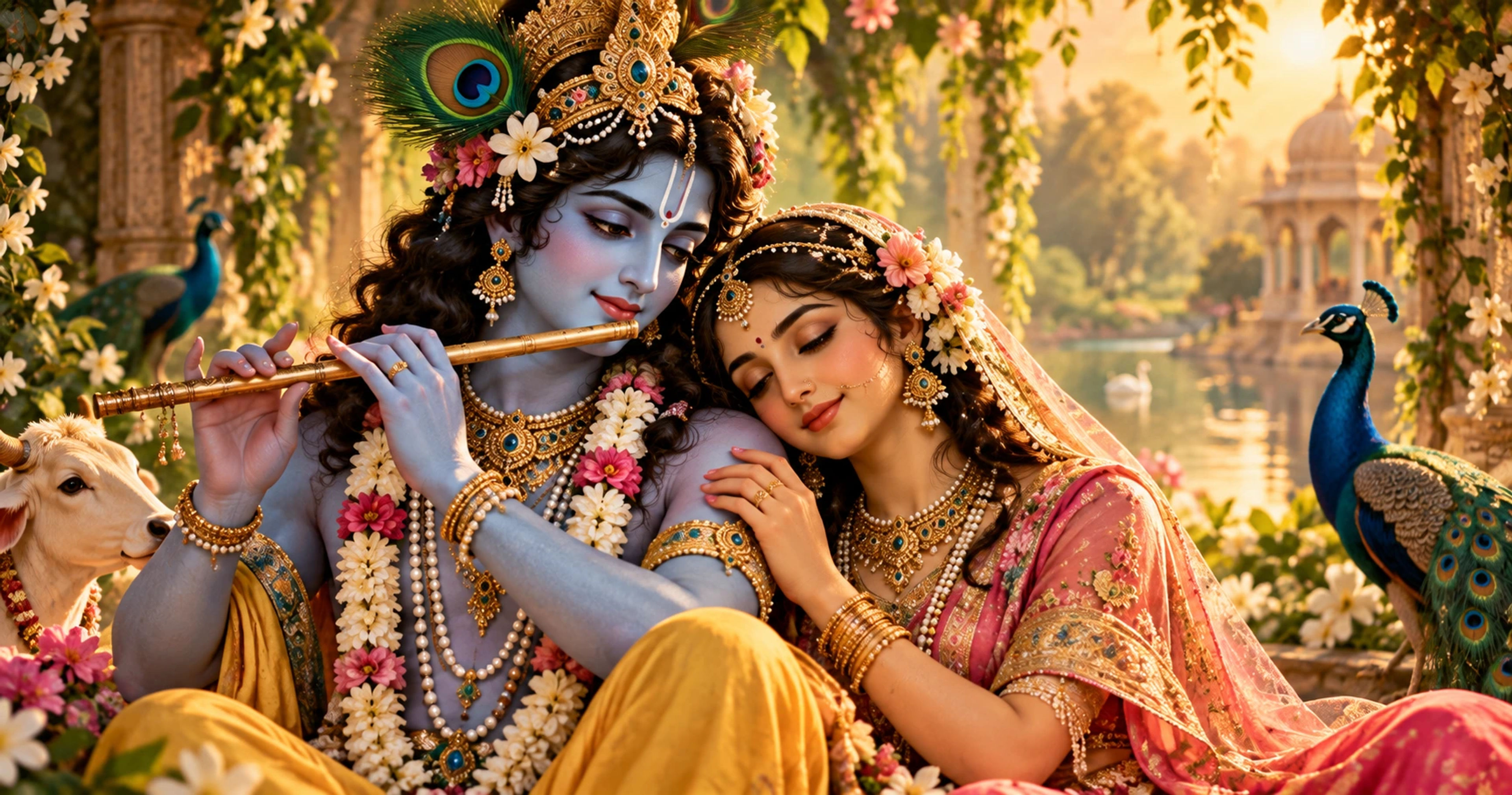
Say it out loud and it feels completely natural: “Radha Krishna,” never “Krishna Radha.” You’ve heard it in bhajans, seen it on temple walls, maybe said it yourself a thousand times — without ever quite asking why Her name comes first. It turns out different Vaishnava traditions answer that question in genuinely different ways, and no single explanation is the one official Hindu position.
This guide walks through the most respected explanations, clearly marks which tradition each one comes from, and is honest about where there simply isn’t one universal rule.
Table of contents
Key takeaways
- “Radha Krishna” follows a wider Hindu naming pattern where the goddess’s name is often said first, as in Sita-Ram and Lakshmi-Narayan.
- In Gaudiya Vaishnavism, Radha is understood as Krishna’s hladini shakti, his power of love, which is why devotees approach Krishna through her.
- Other traditions, like Nimbarka and Radha Vallabh Sampradaya, explain Radha’s place differently — some even worship Her as the supreme deity.
- There is no single scriptural rule that makes saying “Krishna Radha” wrong or offensive — it’s simply not the common devotional convention.
The Short Answer
In simple words: devotees say “Radha Krishna” mainly because Radha is understood, across most Vaishnava devotional traditions, as the energy, love, or grace through which one approaches Krishna — so Her name is placed first as a gesture of reverence, and as a reminder that devotion begins with love before it reaches its object. Exactly how each tradition explains this differs, and there’s no single verse or rule in Hindu scripture that every school points to as the definitive reason.
Who Is Radha, Briefly
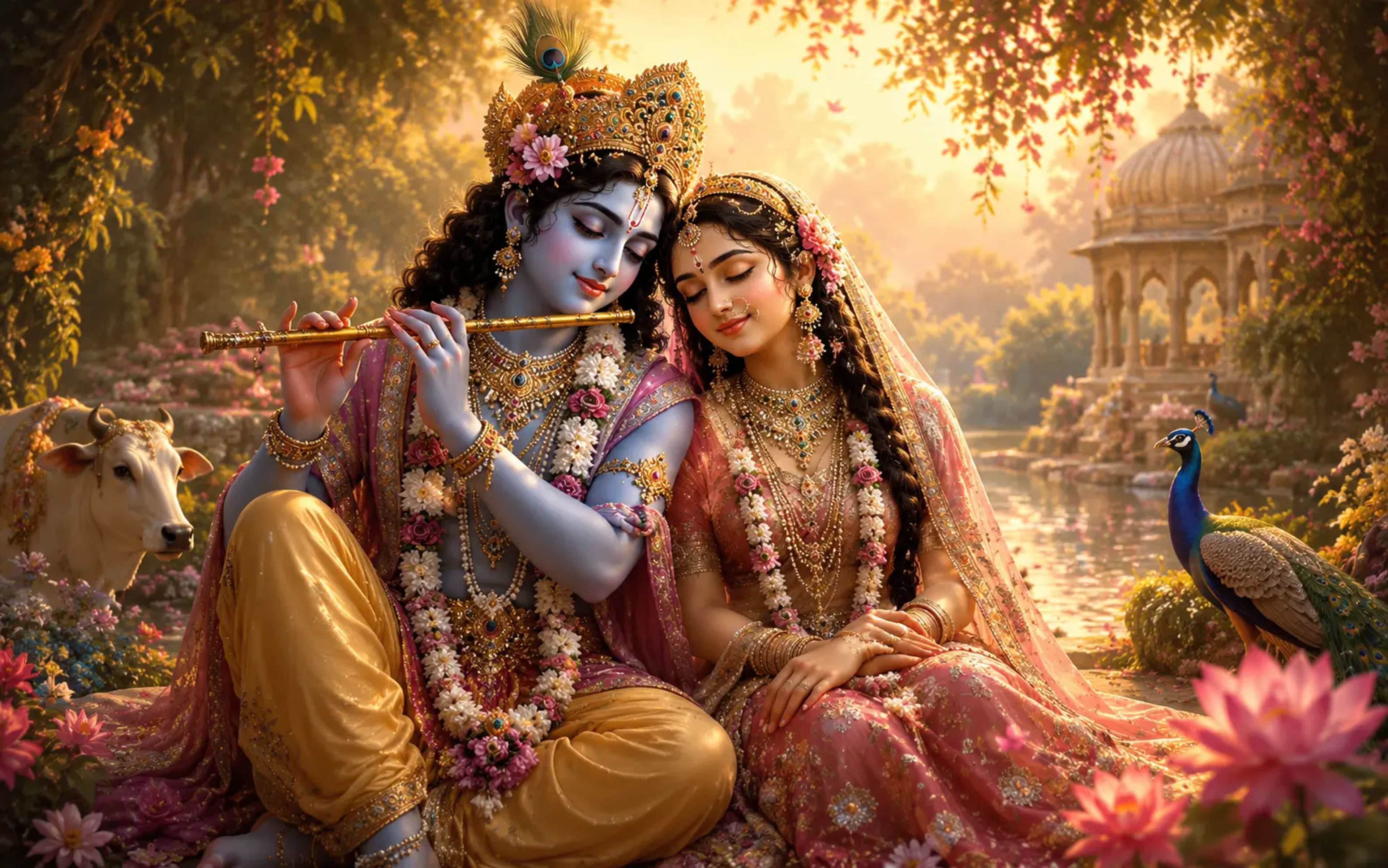
Radha is central to the devotional life of Vrindavan and the broader Krishna bhakti tradition. She is described as a gopi, a cowherd maiden of Vrindavan, and as Krishna’s most beloved companion, whose love for Him is held up as the ideal of pure, selfless devotion. Different texts and traditions describe Her role and status in different ways — as Krishna’s eternal consort, His internal spiritual energy, or, in a smaller number of traditions, as the supreme deity Herself. Radhashtami, Her appearance day, is celebrated with particular devotion across many Vaishnava communities.
A Wider Pattern: Sita-Ram, Lakshmi-Narayan
“Radha Krishna” isn’t the only divine pair named this way. You’ll also hear “Sita Ram,” “Lakshmi Narayan,” and “Gauri Shankar” — the goddess’s name said before the god’s. A commonly offered explanation is rooted in the idea of shakti, meaning divine energy or power: the goddess is seen as the active energy through which the god is expressed and approached, so naming Her first honours that role. This is a recognisable pattern in Hindu devotional naming rather than a hard grammatical or scriptural rule with no exceptions, and regional and traditional variations do exist.
Seen this way, “Radha Krishna” fits a broader devotional habit, not an isolated rule invented just for this one divine pair.
The Gaudiya Vaishnava View: Hladini Shakti
The most detailed and widely cited explanation comes from Gaudiya Vaishnavism, the tradition founded on the teachings of Chaitanya Mahaprabhu, which is also the theological background of movements like ISKCON. Here, Krishna is held to be the supreme source of all energies, and Radha is understood as His hladini shakti — His own internal power of spiritual bliss and love, personified. In simple terms, if Krishna is the one who loves, Radha represents the love itself, expressed as a person.
Within this framework, a devotee is taught that Krishna is most easily approached through Radha’s grace, since She embodies the very quality of loving devotion that draws a soul toward Him. Saying Her name first is treated as a mark of that approach — seeking Her blessing and mood of love before turning to Krishna Himself. Gaudiya teachers sometimes illustrate this with the relationship between the sun and sunlight: without the light, the sun cannot be experienced, and without the sun, the light has no source. Neither has full meaning without the other.
It’s worth being clear that this hladini shakti framework is a specific theological teaching within Gaudiya Vaishnavism, built up through the writings of scholars in that lineage such as the Goswamis of Vrindavan. It is widely respected and very influential, but it is a tradition-specific explanation rather than a single rule stated identically across every branch of Hinduism.
How Other Traditions See It
Gaudiya Vaishnavism isn’t the only lineage that worships Radha and Krishna together, and other traditions describe Their relationship somewhat differently.
Nimbarka Sampradaya
The Nimbarka Sampradaya, one of the oldest Vaishnava traditions to formally worship Radha alongside Krishna, is generally credited as an early source of theological writing on Radha as a deity in Her own right. In this tradition, Radha is understood as Krishna’s eternal, wedded consort — His equal companion rather than a subordinate figure — and the two are worshipped together as an inseparable divine couple.
Pushtimarg (Vallabha Sampradaya)
The Pushtimarg tradition, founded by Vallabhacharya, also worships Radha and Krishna as the divine couple, with deep emphasis on grace and loving devotion. Practice and emphasis vary within this tradition’s different branches, but the underlying theme remains devotion to Radha and Krishna together.
Radha Vallabh and Haridasi Sampradayas
A smaller number of traditions go further still. The Radha Vallabh Sampradaya, founded by Hita Harivansh in sixteenth century Vrindavan, and the related Haridasi Sampradaya, worship Radha as the Supreme Being Herself, with Krishna honoured as Her most intimate beloved. This is a distinct theological position, not the mainstream Vaishnava view, and it’s important not to present it as representative of all Krishna devotion.
Comparing the Traditions
Here’s a simple side-by-side view. This is a simplification of much deeper theology in each tradition, meant only to show that “why Radha first” doesn’t have one single answer.
| Tradition | How Radha is understood | Relation to Krishna |
|---|---|---|
| Gaudiya Vaishnavism | Hladini shakti — Krishna’s energy of love, personified | Krishna is supreme; Radha is His most cherished energy |
| Nimbarka Sampradaya | Eternal, wedded consort of Krishna | Co-equal divine couple |
| Pushtimarg (Vallabha) | Beloved consort within the divine couple | Worshipped together, grace-centred devotion |
| Radha Vallabh / Haridasi | The Supreme Being Herself | Krishna is Her most intimate beloved |
Is There One Universal Rule?
No. There is no single scriptural verse that every Hindu tradition agrees is the definitive reason Radha’s name comes first, and there’s no rule declaring that saying the names in another order is wrong for everyone. What exists instead is a strong, widely shared devotional convention — “Radha Krishna” — supported by several different theological explanations depending on which tradition you ask. It’s more accurate to say several traditions arrived at the same practice from different directions, rather than that one tradition’s explanation speaks for all of Hinduism.
Does the Order Really Matter?
For everyday devotional purposes, no teaching suggests that saying “Krishna Radha” is sinful, dangerous, or disrespectful. “Radha Krishna” is simply the far more common form, carried forward by centuries of bhajans, temple tradition, and popular usage. If you’re chanting with sincerity and love, most teachers would agree that your intention and attention matter far more than the exact sequence of two names.
Chanting Radha’s Name in Naam Jaap
Many devotees include Radha’s name in their daily Naam Jaap, either on Her own or as part of “Radha Krishna” or “Radhe Krishna” chanting. If you’d like to understand this practice in more depth, our guide on Radha Naam Jaap — its meaning, significance, and how to practise it covers it in detail.
And if you’re new to Naam Jaap as a practice altogether, our guides on what Naam Jaap is and how to practise it and how to do Naam Jaap as a beginner are good starting points.
Divya Marg helps you stay consistent with your Naam Jaap
Divya Marg is a free Naam Jaap app that counts each chant automatically, completes a mala at 108 on its own, and keeps a simple daily record — so you can stay focused on the Naam itself, whether you're chanting Radha Krishna or any other Naam.
Frequently Asked Questions
Why do we say "Radha Krishna" and not "Krishna Radha"?
There isn't one single scriptural rule that all Hindu traditions follow. The most common explanation, especially within Gaudiya Vaishnavism, is that Radha represents Krishna's hladini shakti — his power of love and bliss — and devotees approach Krishna through her grace, so her name is placed first as a mark of respect and as the gateway to Krishna. Other traditions explain the order differently, and some simply follow it as long-standing convention rather than a strict rule.
Is it wrong or disrespectful to say "Krishna Radha" instead?
No. There's no widely accepted teaching that says reversing the order is sinful or offensive. "Radha Krishna" is simply the far more common devotional convention, similar to how "Sita Ram" is said more often than "Ram Sita." It reflects tradition and habit more than a strict rule with penalties for not following it.
What is hladini shakti?
Hladini shakti is a term used mainly in Gaudiya Vaishnava theology for Krishna's internal power of spiritual bliss and love. Radha is described as the personification of this energy — in simple words, the living expression of Krishna's own capacity to love and to be loved.
Do all Hindu traditions agree that Radha's name should come first?
Most Vaishnava traditions that worship Radha and Krishna together do use "Radha Krishna" as the common phrase, but they don't all agree on exactly why, or on Radha's exact status relative to Krishna. Traditions like the Radha Vallabh Sampradaya even consider Radha the supreme deity herself, while others, like the Nimbarka Sampradaya, see her as Krishna's eternal, wedded, co-equal consort. The practice of saying her name first is shared far more widely than any single explanation for it.
Is Radha considered greater than Krishna?
This depends entirely on the tradition. Mainstream Gaudiya Vaishnavism generally holds Krishna as the supreme source, with Radha as his most intimate and cherished energy. A smaller number of traditions, such as the Radha Vallabh Sampradaya, worship Radha herself as the supreme deity. Neither view is universal across all of Hinduism, so it's more accurate to say interpretations differ by tradition than to state one view as the single Hindu position.
Why do other divine pairs also have the female name first, like Sita Ram or Lakshmi Narayan?
This is a recognisable pattern in Hindu devotional naming, often explained through the idea that the goddess represents shakti, or divine energy, while the god represents the one that energy expresses through. "Sita Ram," "Radha Krishna," and "Lakshmi Narayan" are commonly cited examples, though exceptions and regional variations exist too.
What does "Radhe Krishna" mean?
"Radhe" is simply a vocative form of Radha's name, used when addressing her directly in chanting or prayer, similar to calling out to her by name. "Radhe Krishna" and "Radha Krishna" are used interchangeably in most devotional contexts, with "Radhe Krishna" being especially common in kirtan and everyday greetings in Vrindavan and North Indian Vaishnava culture.
In Simple Words
“Radha Krishna” follows a devotional pattern seen across Hindu tradition, where the goddess’s name is often said before the god’s, as a mark of Her role as divine energy, love, or grace. Gaudiya Vaishnavism explains this through the idea of hladini shakti, Nimbarka traditions see Radha as Krishna’s eternal equal consort, and a smaller number of traditions worship Her as supreme in Her own right. No single verse or rule speaks for every tradition, and no teaching treats the reverse order as wrong or dangerous. What stays constant across all of them is the underlying spirit: love comes before its object, and devotion begins with the heart’s longing before it reaches God.
Sources and Further Reading
This article draws on general descriptions of Gaudiya Vaishnava theology and the concept of hladini shakti as taught by Chaitanya Mahaprabhu’s followers, the Nimbarka Sampradaya’s teachings on Radha as Krishna’s eternal consort, and documented accounts of the Radha Vallabh and Haridasi Sampradayas, which worship Radha as the supreme deity. Where traditions differ or a claim is a specific school’s interpretation rather than a universal position, this is noted in the text. Specific product features mentioned for Divya Marg reflect what is currently available in the app.
Written and reviewed by the Divya Marg Editorial Team. Last updated 10 September 2026.
More guides
Begin your Naam Jaap today
Offline-first and built entirely around one purpose — helping you show up for your practice, every single day.
- Free, always
- Works offline
- No ads