Why Did Bharata Refuse to Become King of Ayodhya? 6 Reasons from the Ramayana

Imagine coming home after a long trip and being told: your father is gone, your elder brother has been sent away, and the entire kingdom is now yours. Most people would at least be tempted. Bharat was not.
His refusal of the throne of Ayodhya is one of the most powerful moments in the Ramayana. It was not one single reason that made him say no, but several, each one revealing something about who Bharat really was.
Table of contents
Key takeaways
- By Ikshvaku tradition, the eldest son inherited the throne, and Ram was the eldest.
- Bharat refused to accept a kingdom gained through Kaikeyi's scheme and Ram's unjust exile.
- He loved and respected Ram like a father and went to Chitrakoot to bring him back.
- He finally ruled only as Ram's servant, with Ram's padukas on the throne, for fourteen years.
The short answer
Bharat refused the throne because he believed it rightfully belonged to Ram, the eldest son, by the tradition of the Ikshvaku dynasty. He also could not accept a kingdom won through his mother's scheme, one that had sent Ram into exile and broken his father's heart. Above all, he loved Ram too deeply to take his place.
What Actually Happened
On the eve of Ram's coronation, Queen Kaikeyi used two boons King Dasharatha had once promised her. Bharat, her son, would be crowned king. Ram would go into exile for fourteen years. Bound by his word, Dasharatha agreed, and Ram left for the forest with Sita and Lakshman. The grieving king died soon after.
Bharat was away at his grandfather's kingdom of Kekaya the whole time. He came home to an empty palace, a dead father and a mother who proudly told him that Ayodhya was now his. His answer surprised everyone. He said no.
But why? Here are the reasons the Ramayana gives us.
1. The Throne Belonged to the Eldest Son
In the Ikshvaku dynasty, the line of Raghu and Dasharatha, the kingdom passed to the eldest son. Ram was the eldest, and he was already chosen as crown prince. When the ministers and Guru Vasishtha asked Bharat to accept the crown, he reminded them of this tradition plainly: the kingdom was Ram's by right.
For Bharat, a boon could not overturn dharma. A promise made to his mother did not change what was right for Ayodhya.
2. He Saw Ram as a Father
In the Ramayana, Bharat speaks of his elder brother with the same respect a son gives a father. With Dasharatha gone, Ram was now the head of the family in Bharat's eyes. Taking Ram's throne would have felt to him like taking his own father's seat while his father was still alive.
3. He Would Not Profit from Injustice
Bharat knew exactly how this kingdom had come to him. An innocent brother had been exiled, and his father had died of grief. Accepting the crown would have meant enjoying the fruit of that injustice.
This is the heart of Bharat's character. The throne was legally his. His father had granted it. But Bharat understood something many people forget: what is allowed is not always what is right.
4. His Love for Ram Was Greater Than Any Kingdom
Bharat did not simply refuse the crown and stay comfortable in the palace. He walked all the way to Chitrakoot, with the queens, the ministers and the army of Ayodhya, to beg Ram to come home. When he saw Ram living in a forest hut and wearing bark clothes, he broke down in tears and fell at his brother's feet.
Goswami Tulsidas, in the Ramcharitmanas, praises Bharat's love for Ram again and again. Many devotees believe no one in the Ramayana loved Ram more selflessly than Bharat.
5. He Could Not Bear Being Seen as Part of the Plot
Bharat was terrified that people would think he had planned all of this with his mother. When he met Ram's mother, Queen Kausalya, he swore one oath after another, calling terrible consequences upon himself if he had ever wished for Ram's exile. Only then did Kausalya embrace him as her own son.
Becoming king would have proved his critics right. Refusing the throne was the only way to show the world that his heart was clean.
6. Ayodhya Wanted Ram
The people of Ayodhya had celebrated Ram's coronation with joy, and they wept when he left. Bharat knew that a king who sits on a throne against the wishes of his people cannot rule well. Ayodhya's heart was with Ram, and so was Bharat's.
What Bharat Gave Up
| He could have had | He chose instead |
|---|---|
| The crown of Ayodhya | Ram's padukas on the throne |
| Life in the royal palace | A simple hermitage in Nandigram |
| Silk robes and jewels | Bark clothing and matted hair |
| Power in his own name | Ruling only as Ram's servant |
| Fourteen years as king | Fourteen years of waiting for his brother |
So Did Bharat Ever Rule Ayodhya?
Yes, but never as king. At Chitrakoot, Ram refused to return before his fourteen years were complete, because breaking their father's word would be adharma. He asked Bharat to look after Ayodhya until then.
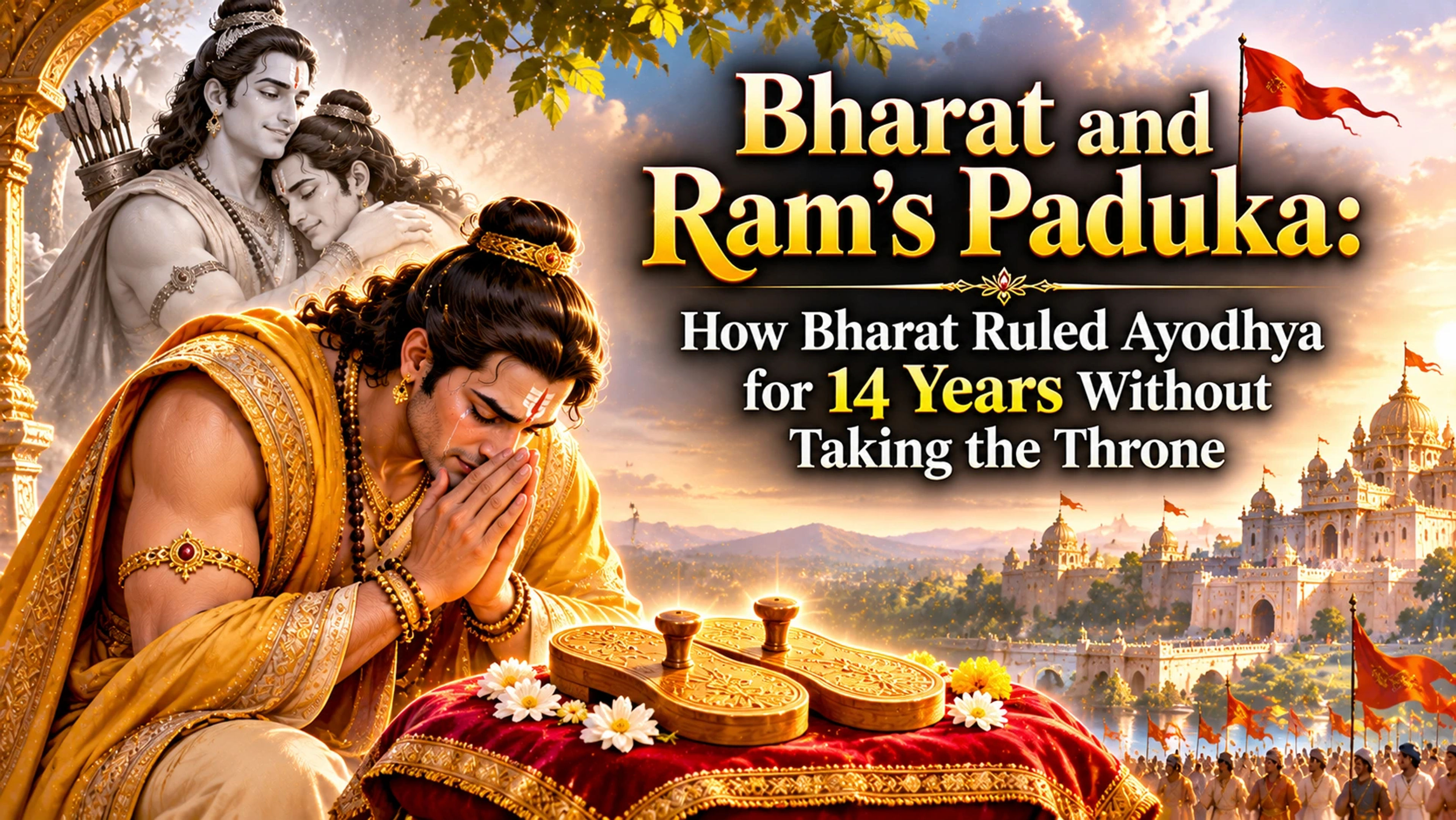
Bharat agreed on one condition. He took Ram's padukas, placed them on the throne and ruled for fourteen years as their servant, offering every decision to them. When Ram returned, Bharat handed back the kingdom exactly as he had received it. Read the full story in Bharat and Ram's Paduka.
What Bharat's Refusal Teaches Us
- Do not take what you did not earn. Even when the law is on your side, ask whether it is fair.
- Relationships outlast possessions. Bharat lost a kingdom and kept a brother. Ayodhya got both back in the end.
- Integrity is shown in private choices. No one could have stopped Bharat from becoming king. He stopped himself.
- Love is proven by sacrifice, not words. Bharat did not just say he loved Ram. He lived it for fourteen years.
Bharat was offered everything and wanted nothing, except his brother back.
Remember Ram the Way Bharat Did
For fourteen years in Nandigram, Bharat kept Ram at the centre of every day. You can carry a little of that devotion into your own day with Ram naam jaap:
श्री राम जय राम जय जय राम
Shrī Rām Jay Rām Jay Jay Rām
Learn the meaning of this mantra and how to chant it on a mala, and track your daily jaap with the Divya Marg app. To meet all four brothers together, read the story of Ram, Lakshman, Bharat and Shatrughan.
Why did Bharata refuse to become king?
Bharata refused because the throne belonged to Ram as the eldest son, because he would not accept a kingdom won through his mother's scheme and Ram's unjust exile, and because his love and respect for Ram were greater than any desire for power.
Did Bharat know about Kaikeyi's plan?
No. Bharat was at his grandfather's kingdom of Kekaya when Kaikeyi asked for her boons. He only learned what had happened when he returned to Ayodhya, and he was devastated.
What did Bharat say to Kaikeyi?
Bharat rebuked his mother bitterly for what she had done. He told her he would never accept the kingdom and would bring Ram back from the forest.
Did Bharat become king of Ayodhya?
Not as king. He ruled Ayodhya for fourteen years as Ram's representative, placing Ram's padukas on the throne and living as an ascetic in Nandigram, then returned the kingdom when Ram came back.
How did Bharat prove he was innocent?
Bharat swore solemn oaths before Queen Kausalya that he had never wished for Ram's exile. He then refused the throne and went to Chitrakoot to beg Ram to return, proving his innocence through his actions.

Begin your Naam Jaap today
Offline-first and built entirely around one purpose — helping you show up for your practice, every single day.
- Free, always
- Works offline
- No ads