Shri Ram Jai Ram Jai Jai Ram: Meaning, Benefits and How to Chant It on a Mala

Few mantras are as simple, or as loved, as Shri Ram Jai Ram Jai Jai Ram. It has no complicated pronunciation, needs no initiation, and can be chanted by anyone, anywhere: in a temple, on a morning walk, or quietly before sleep.
In this guide we look at what each word of the mantra means, why Ram naam holds such a special place in the Sanatan tradition, and exactly how to chant it on a mala so your practice becomes steady and joyful.
Table of contents
Key takeaways
- Shri Ram Jai Ram Jai Jai Ram is known as the trayodashakshari (13-syllable) Ram mantra.
- It is a naam mantra, so it is traditionally considered open to everyone without formal diksha.
- One round of a 108-bead mala takes most people about 5 to 8 minutes.
- Consistency matters more than count: one mala every day beats eleven malas once a week.
The Mantra
श्री राम जय राम जय जय राम
Shrī Rām Jay Rām Jay Jay Rām
Counted the traditional way, the mantra has 13 syllables (shrī, rā, ma, ja, ya, rā, ma, ja, ya, ja, ya, rā, ma), which is why it is called the trayodashakshari mantra. Its rhythm is easy to fall into, which makes it ideal for long jaap sessions.
Meaning of Shri Ram Jai Ram Jai Jai Ram, Word by Word
| Word | Meaning | Devotional sense |
|---|---|---|
| Shri (श्री) | Auspiciousness, grace; also a name of Mata Sita / Lakshmi | Remembering Sita Ram together, grace and the Lord as one |
| Ram (राम) | The one in whom yogis delight; Bhagwan Shri Ram | Calling the Lord by name |
| Jai (जय) | Victory, glory | Praising Ram |
| Jai Jai (जय जय) | Glory, glory | Deepening praise into complete surrender |
Read as a whole, many teachers explain the mantra in three movements: Shri Ram is the invocation, Jai Ram is praise, and Jai Jai Ram is surrender. The chanter moves from calling, to praising, to offering themselves fully.
Why Ram Naam Is Considered So Powerful
In the phala shruti of the Vishnu Sahasranama, Mata Parvati asks Bhagwan Shiva for an easy way to receive the merit of reciting all thousand names of Vishnu. Shiva replies with this famous shloka:
श्री राम राम रामेति रमे रामे मनोरमे । सहस्रनाम तत्तुल्यं रामनाम वरानने ॥
Shrī Rāma Rāma Rāmeti Rame Rāme Manorame, Sahasranāma Tattulyaṁ Rāma Nāma Varānane
The verse says that chanting the name Ram is equal to the thousand names. This is why Ram naam is often called the Taraka mantra, the name that carries the soul across the ocean of samsara. Tradition holds that in Kashi, Shiva himself whispers Ram naam to those leaving their bodies.
Ram naam in recent history
Swami Ramdas of Anandashram in Kerala made Shri Ram Jai Ram Jai Jai Ram the centre of his sadhana and shared it with thousands of seekers. Maharashtra's saint Samarth Ramdas is also remembered by devotees for his lifelong chanting of the 13-syllable mantra.
Benefits of Chanting the Mantra
Devotees describe both spiritual and everyday benefits from regular Ram naam jaap. Experiences differ from person to person, but these are the ones most often shared:
- A steadier mind. Repeating one simple name gives scattered thoughts a single place to rest.
- Daily remembrance of Bhagwan. Even a few minutes of jaap keeps Shri Ram present through the rest of the day.
- Bhakti without barriers. No special rituals, timings or materials are needed, so the practice fits any life.
- Inner strength in hard times. Many turn to Ram naam for courage, just as Hanuman ji drew his strength from it.
- A sense of purpose. Working towards a sankalp, such as one lakh names, turns devotion into a joyful daily discipline.
How to Chant Shri Ram Jai Ram Jai Jai Ram on a Mala
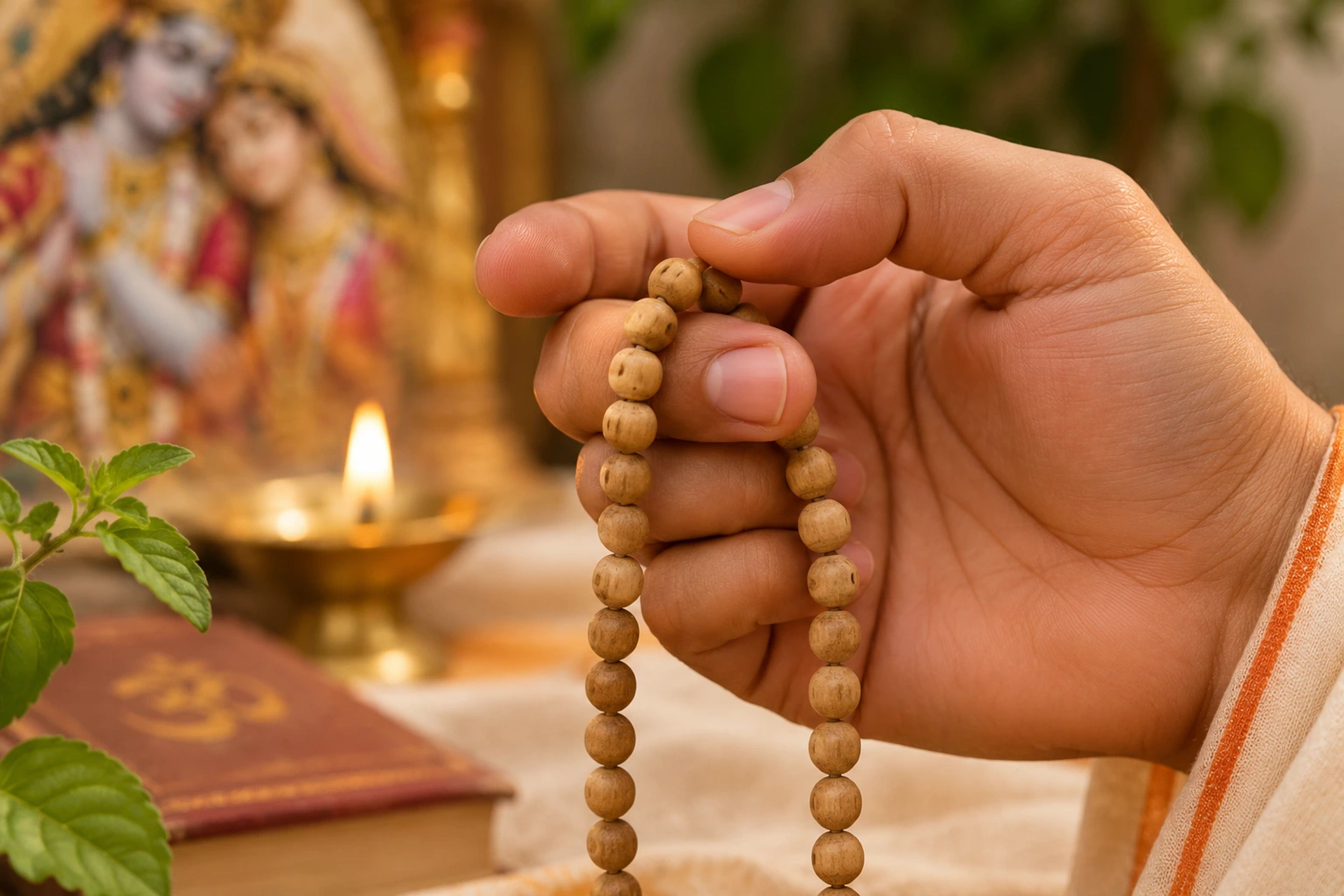
A japa mala has 108 beads plus one larger bead called the sumeru (or guru bead). Tulsi malas are traditionally preferred for Ram and Vishnu mantras, but any mala you feel connected to will work.
- Sit comfortably facing east or north if possible, with your back straight. A clean, quiet corner helps, but is not required.
- Hold the mala in your right hand, draped over the middle finger. Traditionally the index finger does not touch the beads.
- Start at the bead next to the sumeru. Chant the full mantra once, then use your thumb to move to the next bead.
- Repeat for all 108 beads. Keep a steady pace and let your attention rest on the sound of the name.
- Do not cross the sumeru. When you reach it, one mala is complete. To begin another round, turn the mala around and go back the way you came.
- Close with gratitude. Bow your head and offer the jaap to Shri Ram before getting up.
Aloud, whispered or silent?
Scriptures describe three ways to chant: vachika (aloud), upanshu (whispered, lips moving) and manasika (silent, in the mind). Beginners usually find chanting aloud or in a whisper easiest because the sound holds the attention. As your practice deepens, you can try silent jaap.
Best time to chant
Brahma muhurta, roughly 1.5 hours before sunrise, is considered the most peaceful time for jaap. But naam jaap has no strict rules about timing. Morning, evening, while travelling or before bed, the best time is simply the time you can keep every day.
Daily Practice Plans
Choose a plan that matches your routine. Times below assume about 3 to 4 seconds per mantra; your pace may be faster or slower.
| Goal | Malas per day | Mantras per day | Approx. time |
|---|---|---|---|
| Beginner | 1 | 108 | 5 to 8 minutes |
| Steady practice | 3 | 324 | 15 to 20 minutes |
| Dedicated sadhak | 11 | 1,188 | About 1 hour |
| Sava lakh sankalp in 40 days | 29 | 3,132 | About 3 hours |
Start small
If you are new to jaap, commit to just one mala a day for 21 days. Once it feels natural, add more. A small promise kept daily builds far deeper devotion than a large one that breaks.
Track Your Ram Naam Jaap with Divya Marg
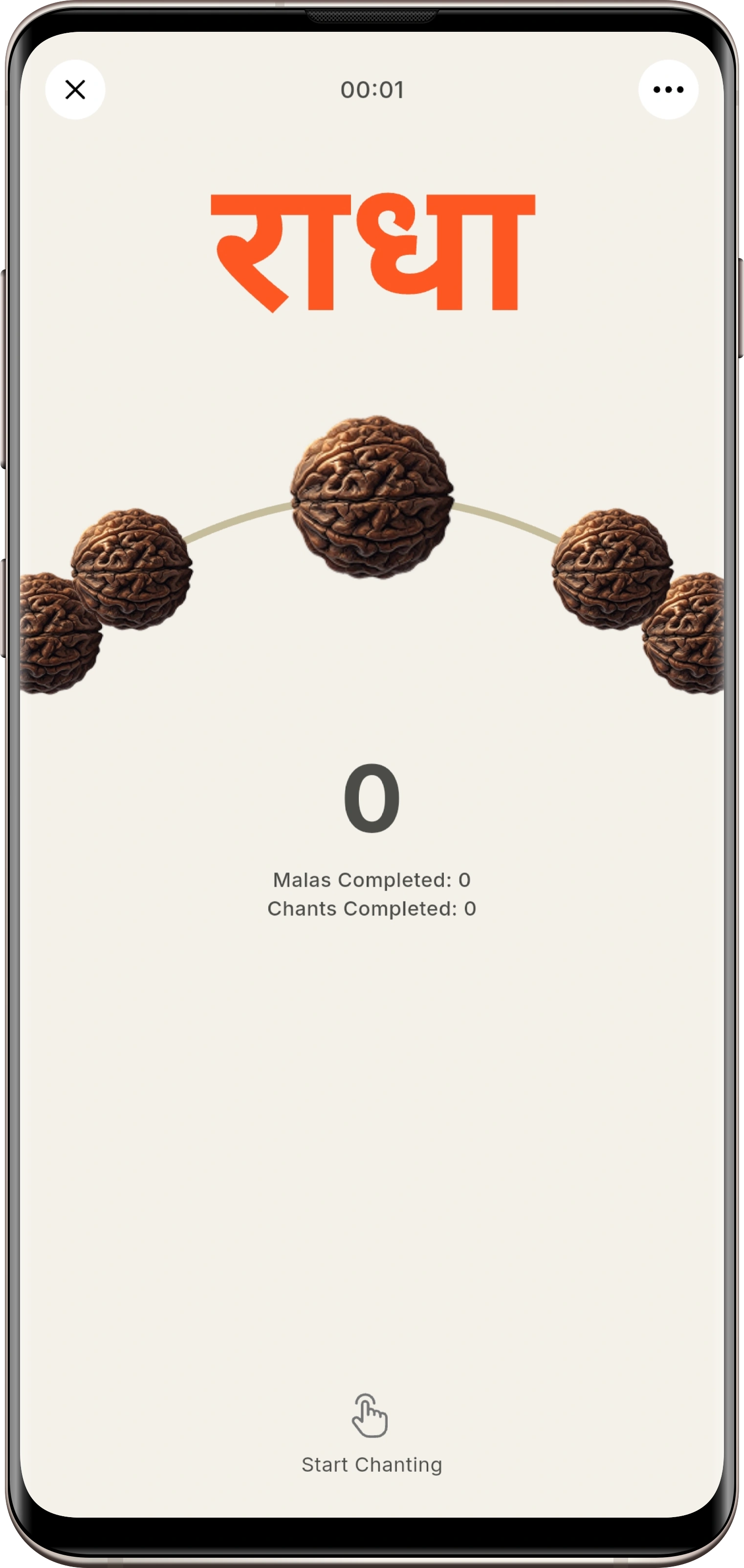
Don't have a mala with you, or keep losing count? The Divya Marg app gives you a digital mala with gentle haptic feedback on every bead, saves your sessions automatically, and tracks your progress towards any sankalp. You can even start a group jaap with family and friends and celebrate together when the count is complete.
What is the meaning of Shri Ram Jai Ram Jai Jai Ram?
It means "O Shri Ram, victory to Ram, victory, victory to Ram." Devotionally it moves from invoking Ram (Shri Ram), to praising him (Jai Ram), to complete surrender (Jai Jai Ram).
Why is it called the 13-syllable mantra?
In Sanskrit counting, Shri Ram Jai Ram Jai Jai Ram has 13 syllables (shrī, rā, ma, ja, ya, rā, ma, ja, ya, ja, ya, rā, ma), so it is known as the trayodashakshari mantra.
Can anyone chant Shri Ram Jai Ram Jai Jai Ram?
Yes. It is a naam mantra, and traditionally naam jaap is open to everyone regardless of age, gender or background, without needing formal initiation.
How many times should I chant the mantra daily?
One mala of 108 repetitions is a good start for beginners. Many devotees chant 3 or 11 malas daily. Regularity matters more than the number.
Which mala is best for chanting Ram naam?
A tulsi mala is traditionally preferred for Ram and Vishnu mantras. Rudraksha or sandalwood malas are also used. You can also use a digital mala in the Divya Marg app.
Can I chant Ram naam without a mala?
Yes. You can chant silently or aloud at any time. A mala or a jaap counter simply helps you keep count and stay focused during longer sessions.

Begin your Naam Jaap today
Offline-first and built entirely around one purpose — helping you show up for your practice, every single day.
- Free, always
- Works offline
- No ads