Ram, Lakshman, Bharat and Shatrughan: The Story of the Four Brothers of the Ramayana

Most of us have argued with a brother or sister over something small: the last piece of mithai, the TV remote, who gets the front seat. Now imagine your family is handed an entire kingdom, and one brother is told to give it all up and leave for the forest.
That is exactly what happened to the four sons of King Dasharatha. And what makes their story so powerful is not that they fought over Ayodhya. It is that not one of them wanted to take it from the others. This is the story of Ram, Lakshman, Bharat and Shatrughan, and the four very different ways they loved each other.
Table of contents
Key takeaways
- Ram was the son of Kausalya, Bharat of Kaikeyi, and Lakshman and Shatrughan were the twin sons of Sumitra.
- Lakshman was always devoted to Ram, and Shatrughan to Bharat.
- All four married together in Mithila: Sita, Urmila, Mandavi and Shrutakirti.
- Each brother showed love differently: Ram by trusting, Lakshman by serving, Bharat by sacrificing and Shatrughan by supporting.
A Prayer, a Payasam and Four Sons
King Dasharatha had everything a king could want: a rich kingdom, a loyal people and three queens. Everything except children. Growing old and worried for the future of Ayodhya, he arranged the great putrakameshti yajna, guided by the sage Rishyashringa.
From the sacred fire rose a divine being carrying a bowl of payasam, blessed rice pudding. The king shared it among his queens. Kausalya received a share, Kaikeyi received a share, and Sumitra received a share twice. In time, four sons were born to the palace.
| Brother | Mother | Wife | Remembered for |
|---|---|---|---|
| Ram | Kausalya | Sita | Dharma, truth and keeping his word |
| Lakshman | Sumitra | Urmila | Fierce loyalty and service |
| Bharat | Kaikeyi | Mandavi | Selfless love and renunciation |
| Shatrughan | Sumitra | Shrutakirti | Quiet duty and steady support |
Lakshman and Shatrughan were twins, the two sons of Sumitra. And from childhood, something beautiful happened. Lakshman could not bear to be away from Ram, and Shatrughan was always at Bharat's side. Four brothers, but really two pairs, and one family.
Growing Up in Ayodhya
Picture four boys running through the palace courtyards of Ayodhya. They learned the Vedas from Guru Vasishtha, practised archery together and rode out on horseback. Valmiki describes all four as learned, brave and devoted to their father.
Like any brothers, each had his own nature. Ram was calm and thoughtful. Lakshman was quick to act and quick to anger when someone wronged Ram. Bharat was gentle and deeply emotional. Shatrughan spoke little but noticed everything.
When the sage Vishvamitra asked for Ram's help to protect his yajna, Lakshman simply went along. Nobody had to ask him. That was how it always would be.
Four Weddings in Mithila
In Mithila, Ram broke Shiva's great bow and won Sita's hand. But King Janaka did not want only one son-in-law from such a family. All four brothers were married in one grand celebration:
- Ram married Sita, daughter of King Janaka.
- Lakshman married Urmila, Janaka's younger daughter.
- Bharat married Mandavi, daughter of Janaka's brother Kushadhvaja.
- Shatrughan married Shrutakirti, Mandavi's younger sister.
So the four brothers married four sisters and cousins. The two families became one, and for a short, happy time Ayodhya was full of celebration.
Ram: The Brother Who Kept His Word
Then came the day that changed everything. On the eve of his coronation, Ram was told he must leave for the forest for fourteen years so that Bharat could be king.
What did Ram do? He smiled, touched his father's feet and agreed. No arguments, no bitterness towards Kaikeyi, no anger towards Bharat. For Ram, his father's promise was more important than a throne. And not once in the whole Ramayana does he speak a harsh word about Bharat.
This is the quiet heart of Ram as an elder brother. He never competed with his brothers. He trusted them completely.
Lakshman: The Brother Who Would Not Stay Behind
Nobody asked Lakshman to go into exile. He could have stayed in the palace with his new bride. Instead, he told Ram that he would go wherever Ram went, and that Ram without Lakshman was unthinkable.
For fourteen years he guarded Ram and Sita. He built their hut at Panchavati, stood watch at night and fought beside Ram against every demon. When Lakshman fell on the battlefield, struck by Meghnad's shakti, Ram wept like a child and said he could find another kingdom or another army, but never another brother like Lakshman. Hanuman flew to bring the Sanjeevani herb, and Lakshman rose again.
The sacrifice we forget
Behind Lakshman's loyalty stood Urmila. She stayed behind in Ayodhya for fourteen years without her husband so that he could serve his brother. Many devotees count her silent sacrifice among the greatest in the Ramayana.
Bharat: The Brother Who Refused a Kingdom
Bharat was away at his grandfather's kingdom when all of this happened. He came home to find his father gone, his brother exiled and a crown waiting for him. Most people would have been tempted. Bharat was heartbroken.
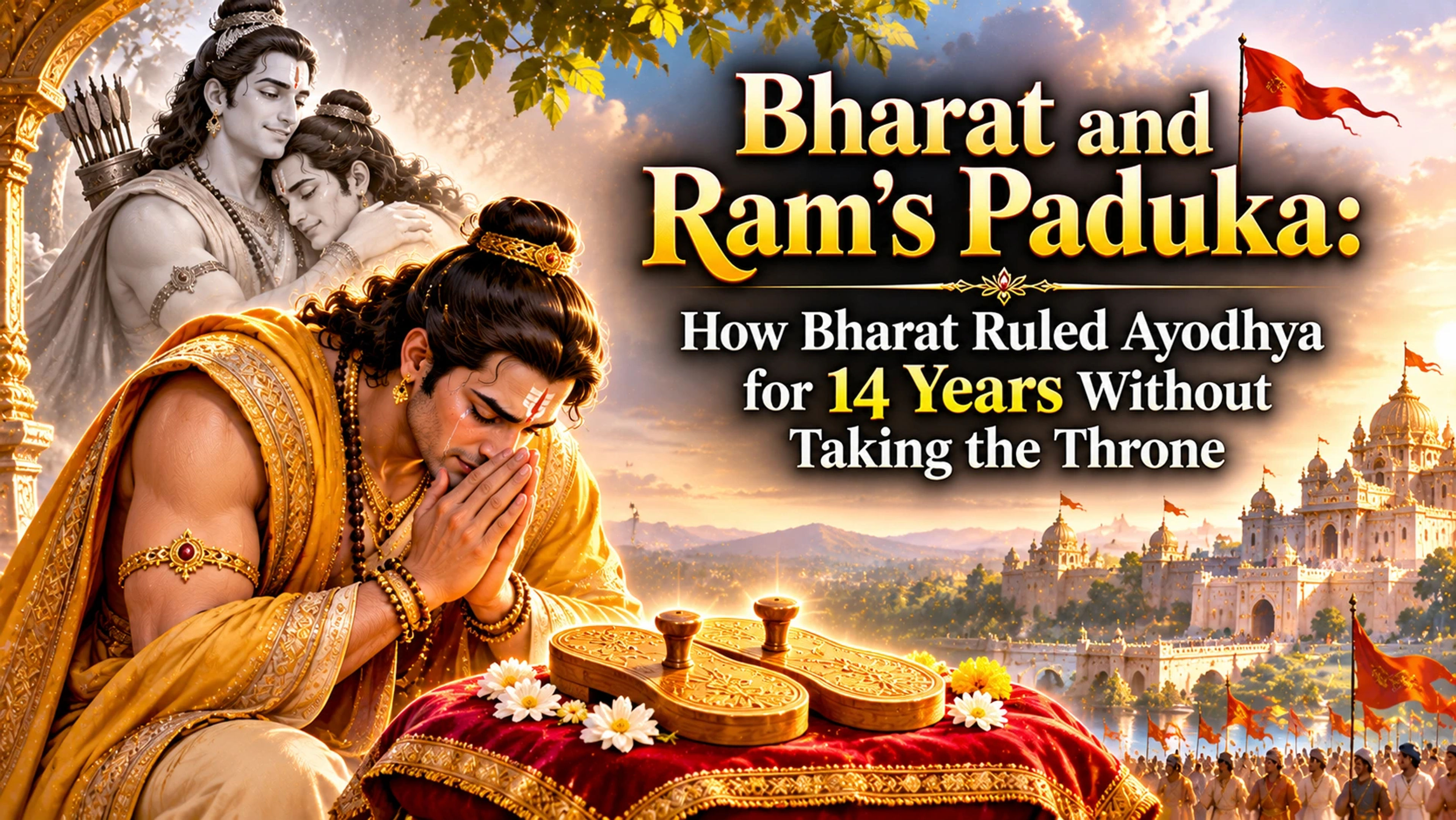
He refused the throne, walked to Chitrakoot with all of Ayodhya and fell at Ram's feet, begging him to come home. When Ram would not break his father's word, Bharat carried Ram's padukas back on his head, placed them on the throne and ruled for fourteen years as their servant, living like a hermit in Nandigram. You can read the full story in Bharat and Ram's Paduka.
If Lakshman showed love by staying close, Bharat showed it by staying away from everything Ram had lost.
Shatrughan: The Quiet Brother
Shatrughan is the brother people forget, and that is exactly what makes him special. He never asked for attention. When Bharat went to Chitrakoot, Shatrughan went too. When Bharat lived in Nandigram, it was Shatrughan who stood beside him and helped care for the kingdom and the grieving queens.
He also had fire in him. When he returned to Ayodhya and learned that the maid Manthara had poisoned Kaikeyi's mind, he seized her in anger. It was Bharat who stopped him, saying that Ram would never forgive them for harming a woman. Even in his anger, Shatrughan listened to his brother.
Later, Shatrughan proved his own courage. He defeated the demon Lavanasura, who was troubling the sages, and founded the city of Madhupuri, which tradition identifies with Mathura. The quietest brother turned out to be a great warrior and king in his own right.
Four Kinds of Love
What makes the four brothers so moving is that each one loved in his own way:
| Brother | How he loved | In one line |
|---|---|---|
| Ram | By trusting | He never doubted his brothers, even when others did |
| Lakshman | By serving | He gave up comfort to stay by Ram's side |
| Bharat | By sacrificing | He gave up a kingdom that was legally his |
| Shatrughan | By supporting | He stood quietly behind those who needed him |
There was no jealousy, no fighting over property and no ego. In a story where a kingdom was literally up for grabs, not one of the four brothers tried to grab it.
What the Four Brothers Teach Us Today
Families today still fight over the things the brothers let go of: property, inheritance, who got more and who was treated better. The four sons of Dasharatha offer a different way:
- Trust before you judge. When Lakshman suspected Bharat was coming to attack, Ram refused to believe it. He was right.
- Show up without being asked. Lakshman did not wait for an invitation to stand by his brother.
- Some things are bigger than what you are owed. Bharat could have kept the throne. He chose the relationship instead.
- Quiet support matters. Shatrughan reminds us that the person in the background is often the one holding everything together.
- Let a brother stop you. Shatrughan's anger cooled because he listened to Bharat. Good siblings hold each other back from mistakes.
Kingdoms can be won again. A brother, once lost, cannot.
Celebrate the Family of Ram This Diwali
Diwali celebrates Ram's return to Ayodhya, and the moment the four brothers finally stood together again after fourteen years. This year, make it a family celebration of Ram naam. Start a group jaap in the Divya Marg app, invite your siblings and family, and chant together:
श्री राम जय राम जय जय राम
Shrī Rām Jay Rām Jay Jay Rām
New to the mantra? Our guide explains what Shri Ram Jai Ram Jai Jai Ram means and how to chant it. And for a deeper prayer, try reciting the 108 names of Lord Rama together on Diwali night.
Who were the four brothers in the Ramayana?
Ram, Lakshman, Bharat and Shatrughan were the four sons of King Dasharatha of Ayodhya. Ram was the eldest, born to Queen Kausalya. Bharat was born to Kaikeyi, and Lakshman and Shatrughan were twins born to Sumitra.
Were Lakshman and Shatrughan twins?
Yes. Lakshman and Shatrughan were the twin sons of Queen Sumitra. Even so, Lakshman was closest to Ram, while Shatrughan was closest to Bharat.
Who were the wives of the four brothers?
Ram married Sita and Lakshman married Urmila, both daughters of King Janaka. Bharat married Mandavi and Shatrughan married Shrutakirti, daughters of Janaka's brother Kushadhvaja. All four weddings took place together in Mithila.
Who was the eldest of the four brothers?
Ram was the eldest. Bharat was second, followed by the twins Lakshman and Shatrughan.
What did Shatrughan do in the Ramayana?
Shatrughan supported Bharat throughout Ram's exile and helped care for Ayodhya. Later he defeated the demon Lavanasura and founded Madhupuri, which tradition identifies with Mathura.
What do the four brothers of the Ramayana teach us?
They show that family love can be stronger than power or property. Ram trusted, Lakshman served, Bharat sacrificed and Shatrughan supported, and none of them tried to take the kingdom from the others.
Begin your Naam Jaap today
Offline-first and built entirely around one purpose — helping you show up for your practice, every single day.
- Free, always
- Works offline
- No ads