Bharat and Ram's Paduka: How Bharat Ruled Ayodhya for 14 Years Without Taking the Throne
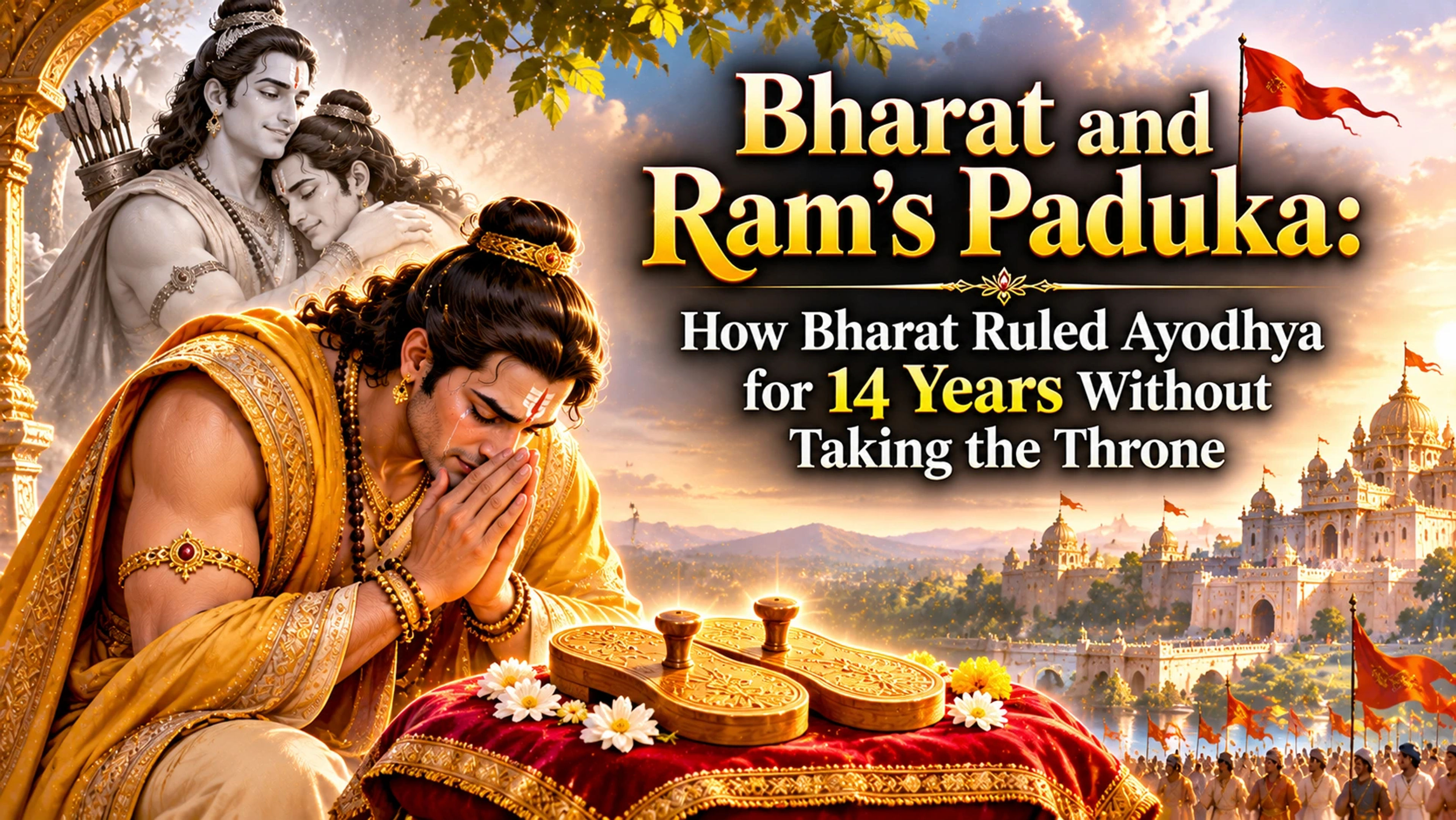
Most stories about power are about people fighting to get it. The story of Bharat in the Ramayana is the opposite. He was handed the throne of Ayodhya, one of the greatest kingdoms of its age, and he refused it.
Instead, he walked to the forest, begged his elder brother Shri Ram to come home, and returned with nothing but Ram's wooden sandals, the padukas. For fourteen years those padukas sat on the throne while Bharat ruled as their servant. As Diwali approaches, it is the perfect time to revisit one of the most moving chapters of the epic.
Table of contents
Key takeaways
- Bharat was away at his maternal grandfather's kingdom of Kekaya when Ram was exiled and had no part in Kaikeyi's demand.
- He refused the throne, went to Chitrakoot to bring Ram back, and returned with Ram's padukas when Ram chose to keep their father's word.
- Bharat placed the padukas on the throne and ruled Ayodhya for 14 years from Nandigram, living like an ascetic.
- His rule is remembered as the ideal of trusteeship: holding power on behalf of someone else, never for yourself.
Who Was Bharat in the Ramayana?
Bharat was the son of King Dasharatha and Queen Kaikeyi, and the second of the four brothers after Shri Ram. Lakshman and Shatrughan were the twin sons of Queen Sumitra. Bharat and Shatrughan were especially close, just as Ram and Lakshman were.
When Dasharatha decided to crown Ram as the yuvaraja (crown prince), Bharat was not even in Ayodhya. He and Shatrughan were staying with their maternal grandfather in the kingdom of Kekaya. This detail matters, because everything that followed happened without his knowledge.
How Bharat Was Given the Throne
Long before, Dasharatha had promised Kaikeyi two boons. Influenced by her maid Manthara, Kaikeyi used them on the eve of Ram's coronation: Bharat would be crowned king, and Ram would be exiled to the forest for fourteen years.
Bound by his word, Dasharatha could not refuse. Ram accepted the exile without a trace of anger and left with Sita and Lakshman. Heartbroken, Dasharatha passed away soon after. Messengers were sent to Kekaya to bring Bharat home, without being told what had happened.
Bharat Refuses to Become King
Bharat returned to a silent, grieving Ayodhya. When Kaikeyi told him that his father was gone, Ram was exiled, and the kingdom was now his, he was devastated rather than pleased. He rebuked his mother bitterly for what she had done in his name.
After performing his father's last rites, Bharat stood before the ministers and the royal guru Vasishtha and made his decision clear: the kingdom belonged to Ram, the eldest son. He would not be king. He would go to the forest himself and bring Ram back.
A test of character
Bharat had every legal claim to the throne. His father had granted it and his mother had won it. He gave it up not because he was forced to, but because he believed it was not rightfully his.
The Meeting at Chitrakoot
Bharat set out with the queens, Guru Vasishtha, the ministers and the army of Ayodhya. When Lakshman saw the army approaching Chitrakoot, he suspected Bharat had come to attack Ram and secure his kingdom. Ram calmed him, saying Bharat would never do such a thing.
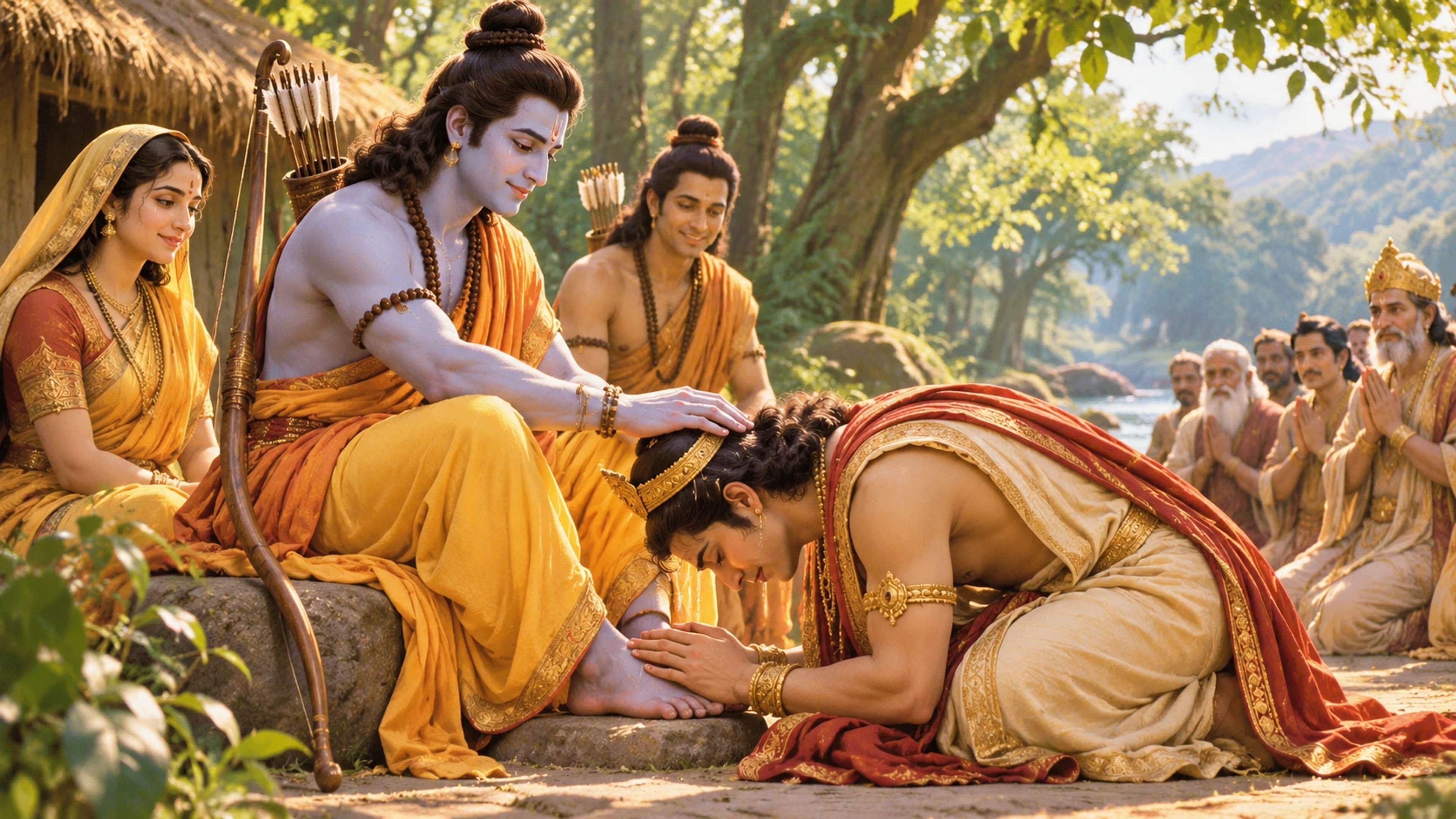
Ram was right. Bharat arrived in tears and fell at his brother's feet. He told Ram of their father's death and pleaded with him to return and rule. The whole court, the mothers and even Kaikeyi joined in asking Ram to come home.
But Ram would not go back. Their father had given his word, and Ram believed that keeping it was his dharma, even after Dasharatha's death. A son who broke his father's promise to gain a kingdom, he said, could not rule righteously.
Why Bharat Asked for Ram's Padukas
When Bharat understood that Ram would not change his mind, he made one final request. He asked Ram to step onto a pair of padukas and give them to him. Ram did so, and Bharat placed the sandals on his own head with deep reverence.
The padukas were not just a keepsake. By taking them, Bharat made it clear to all of Ayodhya that Ram was still the king. Bharat would only look after the kingdom in Ram's name until he returned. He also made a vow: if Ram did not come back on the day the fourteen years ended, Bharat would give up his life.
Bharat's 14 Years in Nandigram
Bharat did not even move back into the palace. He settled in Nandigram, a village near Ayodhya, so that he would live much like Ram was living in the forest. Devotees today identify Nandigram with Bharatkund in Ayodhya district.
- He placed Ram's padukas on the royal throne and bowed to them every day.
- Every decision of the kingdom was first offered to the padukas, as if Ram himself were giving the order.
- He wore bark clothing and matted hair, the dress of an ascetic, instead of royal robes.
- He slept on the ground, ate simple food and spent his days in remembrance of Ram.
- All tribute and wealth that came to Ayodhya was treated as Ram's, not his own.
| Aspect | A typical king | Bharat in Nandigram |
|---|---|---|
| Seat of power | Royal palace | A simple hermitage outside the capital |
| Throne | Sits on it himself | Ram's padukas sit on it |
| Dress | Silks and jewels | Bark clothing and matted hair |
| Decisions | Made in his own name | Offered to the padukas, made in Ram's name |
| Treasury | His to enjoy | Held in trust for Ram |
Bharat Milap: Ram Returns to Ayodhya
As the fourteen years came to an end, Ram, now victorious over Ravana, sent Hanuman ahead to tell Bharat he was coming. Ram knew his brother's vow and did not want him to fear even a moment's delay.
When the brothers finally met, Bharat placed the padukas back on Ram's feet and handed back the kingdom exactly as he had received it. This reunion, the Bharat Milap, is one of the most emotional moments in the Ramayana. Ram's return to Ayodhya, welcomed by rows of lamps, is the story Diwali celebrates.
Bharat Milap in Varanasi
In Varanasi, the Nati Imli Bharat Milap is celebrated every year soon after Dussehra. Huge crowds gather to watch the four brothers embrace, a tradition that has continued for centuries.
Life Lessons from Bharat's Paduka Rule
- Power is a responsibility, not a reward. Bharat saw the throne as something to protect, not something to enjoy.
- Lead as a trustee. Whatever we manage, whether a family, a business or a team, we hold it on behalf of others.
- What is right matters more than what is allowed. The throne was legally his, but Bharat knew it was not rightfully his.
- Love is shown through sacrifice. Bharat never told Ram how much he loved him. He showed it every day for fourteen years.
- Humility makes a leader great. Bharat bowed to a pair of sandals every morning, and Ayodhya prospered under his care.
Bharat's greatness was not that he ruled Ayodhya well. It was that he never once forgot whose kingdom it was.
Remember Ram Like Bharat Did
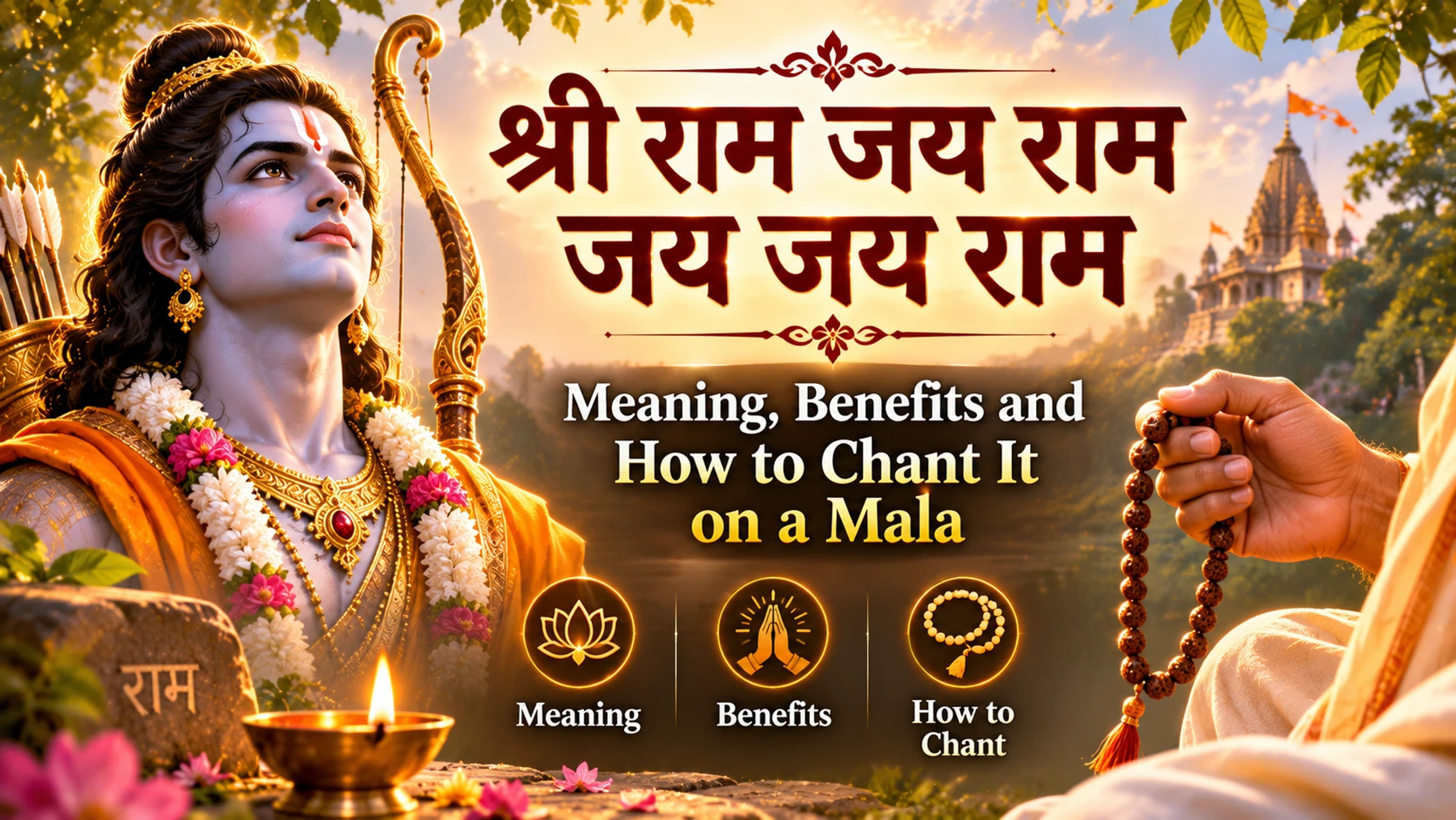
For fourteen years, Bharat kept Ram at the centre of every day. You can bring the same remembrance into your own life with a few minutes of Ram naam jaap. Start with the simple 13-syllable mantra:
श्री राम जय राम जय जय राम
Shrī Rām Jay Rām Jay Jay Rām
Read our guide on the meaning of Shri Ram Jai Ram Jai Jai Ram and how to chant it on a mala, then track your daily jaap with the Divya Marg app. This Diwali, you can even start a family sankalp and chant together as Ayodhya waits for Ram's return.
Why did Bharat take Ram's padukas?
Ram refused to return to Ayodhya before completing his 14 years of exile. Bharat asked for his padukas so that he could place them on the throne as a symbol that Ram was still the true king, while Bharat looked after the kingdom on his behalf.
Where did Bharat live during Ram's exile?
Bharat lived in Nandigram, a village near Ayodhya, for all 14 years. He lived like an ascetic, wearing bark clothing and sleeping on the ground. Devotees identify Nandigram with present-day Bharatkund in Ayodhya district.
Did Bharat know about Kaikeyi's plan?
No. Bharat was at his maternal grandfather's kingdom of Kekaya when Kaikeyi asked for her two boons. He learned of Ram's exile and Dasharatha's death only when he returned to Ayodhya.
What vow did Bharat take at Chitrakoot?
Bharat vowed that if Ram did not return to Ayodhya the day the 14 years ended, he would give up his life. This is why Ram sent Hanuman ahead to tell Bharat he was on his way.
What is Bharat Milap?
Bharat Milap is the reunion of Bharat and Ram when Ram returns to Ayodhya after his exile. It is celebrated with great devotion, especially the famous Nati Imli Bharat Milap in Varanasi held after Dussehra.
What does Bharat's paduka rule teach us?
It teaches the idea of trusteeship: holding power or wealth on behalf of others rather than for yourself. It also shows that doing what is right matters more than doing what is merely allowed.
Begin your Naam Jaap today
Offline-first and built entirely around one purpose — helping you show up for your practice, every single day.
- Free, always
- Works offline
- No ads