Sita's Strength: Shiva's Bow, the Thousand-Headed Ravana and the Warrior Within

When most people think of Mata Sita, they picture someone gentle, patient and kind. All of that is true. But it is only half the picture.
This is the Sita who, as a little girl, is said to have lifted the bow of Shiva that mighty kings could not move. The Sita who, in one ancient Ramayana, defeats a Ravana with a thousand heads after Ram himself has fallen. And the Sita who, alone in Lanka, told Hanuman she could burn Ravana to ashes, and chose not to.
Table of contents
Key takeaways
- A beloved tradition says young Sita lifted Shiva's bow, which led Janaka to set the swayamvar condition.
- In the Adbhuta Ramayana, Sita takes a fierce form of the Divine Mother and destroys the thousand-headed Ravana.
- In Valmiki's Ramayana, her strength is shown through courage, wisdom and restraint rather than weapons.
- Sita is understood as Shakti, the divine power that is always one with Ram.
Born from the Earth
Sita's story begins in a field. King Janaka of Mithila was ploughing the land for a yajna when his plough struck something in the soil. There, in the furrow, lay a baby girl. Janaka took her home as his own daughter and named her Sita, meaning the furrow.
She was called Bhumija, daughter of the earth, and Janaki, daughter of Janaka. And like the earth itself, she would prove to be both gentle and unbreakable.
The Girl Who Lifted Shiva's Bow
In Janaka's palace lay a weapon no ordinary person could even move: the great bow of Bhagwan Shiva, handed down in Janaka's family for generations. Kings and warriors had tried to lift it and failed.
A much-loved tradition tells what happened one day when Sita was still a little girl. While playing, or in some versions while cleaning the room where the bow was kept, she lifted the mighty bow with one hand and moved it aside as if it were a toy.
Janaka was amazed. He realised that his daughter was no ordinary child. And he made a decision: only a man who could lift and string this same bow would be worthy of marrying her. That is how the famous swayamvar condition came to be.
Where this story comes from
Valmiki's Ramayana tells us that Janaka set lifting and stringing Shiva's bow as the condition for Sita's marriage. The story of young Sita lifting the bow herself comes from later folk and devotional tradition, where it is told across India with great affection.
Think about what this means. Ram became famous across the three worlds for breaking a bow that Sita, in this telling, had already lifted as a child. The swayamvar was not a test to find someone stronger than every king. It was a test to find someone worthy of her.
Sita the Warrior: The Adbhuta Ramayana
If you want to see Sita with weapons in hand, you need to turn to a lesser-known text, the Adbhuta Ramayana. Its name means the wondrous Ramayana, and it tells a story you will not find in Valmiki.
After Ram defeated the ten-headed Ravana and returned to Ayodhya, the sages praised his victory. Sita smiled. Ravana was not the greatest danger, she said. There was another, far more powerful: Sahasramukha Ravana, a Ravana with a thousand heads.
Ram set out with his army to defeat him. But in the battle, the thousand-headed Ravana shot a single arrow that struck Ram down, and the whole army fell into despair.
Then Sita rose. Seeing Ram lying on the battlefield, she took on a terrifying, all-powerful form of the Divine Mother, often described as Kali. In a single moment, she destroyed Sahasramukha Ravana and his army, a feat no god or warrior had managed.
Ram defeated the Ravana with ten heads. Sita defeated the one with a thousand.
In this text, Sita is revealed as Shakti herself, the power behind all creation, without whom even Ram cannot act. It is a reminder that in the Sanatan tradition, Sita and Ram are never two separate beings, but Shakti and Shiva, energy and consciousness, always together.
Strength Without Weapons: Sita in Valmiki's Ramayana
In Valmiki's Ramayana, Sita does not fight with a bow or sword. Her strength shows up in other ways, and it is just as remarkable.
She chose the forest
When Ram was exiled, he asked Sita to stay safely in Ayodhya. She refused. She argued with him, firmly and fearlessly, until he agreed to take her. A princess raised in a palace walked willingly into fourteen years of forest life, because she would not abandon her husband.
She warned Ram about weapons
In the forest, Sita once gently cautioned Ram. She told him the story of a peaceful sage who was given a sword to keep safe. He began carrying it everywhere, and slowly his mind turned towards violence, until he lost the fruit of all his tapasya. Sita's message was clear: a weapon must serve dharma, and should never be used without reason. This is the wisdom of someone who truly understood the power of weapons.
She stood alone against Ravana
In Lanka, Sita was surrounded by rakshasis, threatened day and night, and given months to give in to Ravana. She never did. She would not even look at him directly, and she spoke to him only through a blade of grass she held between them.
She had the power to burn Ravana
When Hanuman found her in Ashok Vatika, Sita told him something extraordinary. By the power of her own tapas and purity, she could reduce Ravana to ashes herself. She chose not to, because it was Ram's dharma to rescue her and defeat Ravana, and because using her power in anger would waste her tapas.
She even declined Hanuman's offer to carry her back to Ram on his shoulders. She would return only when Ram came for her, with honour.
| Moment | What it shows | Source |
|---|---|---|
| Lifting Shiva's bow as a child | Divine physical strength | Folk and devotional tradition |
| Defeating Sahasramukha Ravana | Sita as Shakti, the supreme power | Adbhuta Ramayana |
| Choosing exile with Ram | Courage and conviction | Valmiki Ramayana |
| Warning Ram about weapons | Wisdom about the use of power | Valmiki Ramayana |
| Refusing Ravana for months | Unshakable inner strength | Valmiki Ramayana |
| Saying she could burn Ravana | Power held back by choice | Valmiki Ramayana |
Raising Luv and Kush
Later in life, Sita lived in Valmiki's ashram and raised her twin sons, Luv and Kush, on her own. Under Valmiki's guidance they grew into skilled archers and gifted singers of the Ramayana itself. In many folk tellings, these two young boys even stopped the horse of Ram's Ashwamedha yajna and held off his army. Their courage was their mother's courage.
Why Sita's Strength Matters Today
- Gentleness is not weakness. Sita was soft-spoken and kind, and also the strongest person in many rooms.
- True power includes restraint. She could have burned Ravana, and chose dharma instead.
- Courage can be quiet. Months of refusing Ravana in Lanka took more strength than a single battle.
- Shakti and Shiva are one. The Adbhuta Ramayana reminds us that Ram's strength and Sita's strength were never separate.
Chant the Names of Sita and Ram Together
In Bharat, Ram is rarely remembered without Sita. Even the most famous Ram mantra begins with Shri, which many devotees understand as Mata Sita herself:
श्री राम जय राम जय जय राम
Shrī Rām Jay Rām Jay Jay Rām
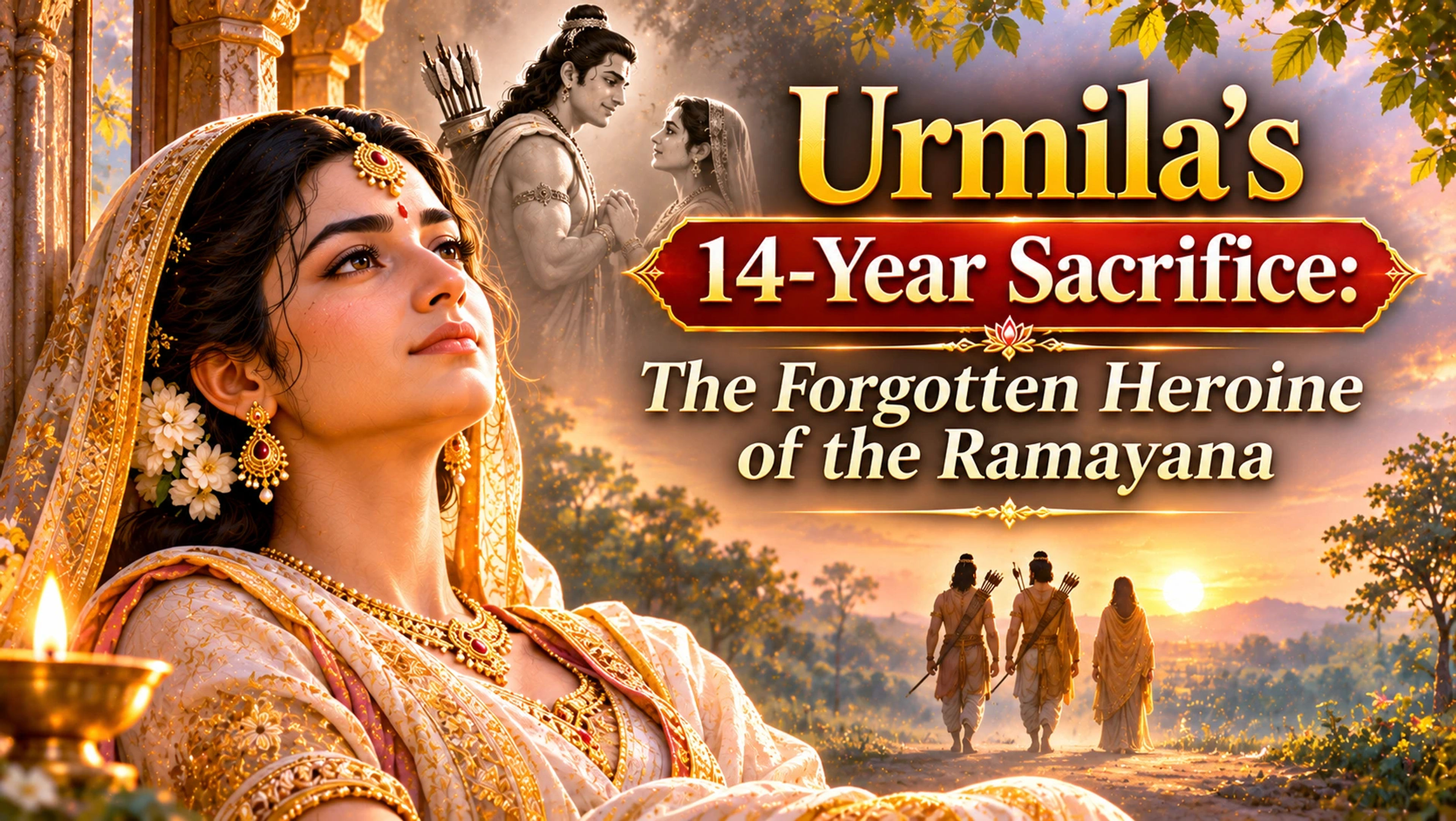
Learn what this mantra means and how to chant it, or simply chant Sita Ram with your mala. Track your daily jaap with the Divya Marg app. And to read about Sita's sister, who made her own quiet sacrifice, read Urmila's 14-year sacrifice.
Did Sita really lift Shiva's bow?
A much-loved folk and devotional tradition says that young Sita lifted Shiva's bow easily, which inspired King Janaka to make lifting and stringing it the condition for her marriage. Valmiki's Ramayana mentions the condition but not this episode.
Did Sita fight in a war?
Not in Valmiki's Ramayana. In the Adbhuta Ramayana, however, Sita takes the fierce form of the Divine Mother and destroys Sahasramukha Ravana, a thousand-headed Ravana, after Ram is struck down in battle.
Who is Sahasramukha Ravana?
Sahasramukha Ravana is a thousand-headed Ravana described in the Adbhuta Ramayana. He was said to be more powerful than the ten-headed Ravana, and was defeated by Sita herself.
Could Sita have defeated Ravana herself?
In Valmiki's Ramayana, Sita tells Hanuman she could burn Ravana with the power of her tapas, but chooses not to, as it was Ram's duty to rescue her and using her power in anger would waste her tapas.
Why is Sita called Bhumija?
Sita is called Bhumija, daughter of the earth, because King Janaka found her in a furrow of the earth while ploughing a field for a yajna.
Begin your Naam Jaap today
Offline-first and built entirely around one purpose — helping you show up for your practice, every single day.
- Free, always
- Works offline
- No ads