Navratri Mantras: Durga Mantras to Chant During Navratri (With Meaning)

Many people search for 'the Navratri mantra' hoping for one simple line to chant for nine days. The honest answer is that there is no single universal Navratri mantra. Families, regions and sampradayas follow different traditions, and each is valid within its own lineage.
This guide gathers the Durga mantras most commonly chanted during Navratri, with Devanagari, transliteration and meaning, and then shows how a beginner can build a calm, realistic chanting practice around them. Sharad Navratri 2026 begins on Sunday, 11 October 2026, so this is a good time to choose one mantra and prepare.
Table of contents
Key takeaways
- There is no single official Navratri mantra. Choose one that matches your family tradition, your teacher's guidance, or your own devotion.
- For beginners, short mantras such as Om Dum Durgayai Namah or Om Devi Shailputryai Namah (and its day-wise forms) are easy to start with.
- The Navadurga mantras connect each of the nine days to one form of the Goddess, but you may also chant one mantra for all nine days.
- 108 repetitions is a popular count, not a universal requirement. A smaller steady count is better than an unrealistic one you cannot keep.
- A mala is helpful but not compulsory. You can chant silently, in a low voice, or aloud, and you do not need to fast to chant.
- Traditional devotional beliefs about benefits are matters of faith. No mantra guarantees wealth, health, marriage or any worldly result.
What Are Navratri Mantras?
Navratri mantras are sacred words, verses or short seed syllables chanted in praise of Goddess Durga and her nine forms, the Navadurga, during the nine nights of Navratri. They range from a simple name-based mantra like Om Dum Durgayai Namah to verses from the Devi Mahatmya (also called Durga Saptashati), a well-known Sanskrit text in the Markandeya Purana tradition that is widely recited during Navratri.
People usually look for Navratri mantras for one of two reasons: they want a short mantra they can chant daily, or they want to understand what the well-known verses mean. This article covers both. If you are new to the idea of chanting itself, our guide on what Naam Jaap is explains the basics.
There is no single 'Navratri mantra'
Different traditions emphasise different mantras: Durga, Chamunda, a particular Navadurga form, or a family deity. Some mantras, especially seed (beej) mantras like the Navarna mantra, are traditionally taken with guidance from a teacher. If your family or guru has given you a mantra, that takes priority over anything you read online.
Navratri 2026: Dates and Timings
According to published Panchang sources for India, Sharad Navratri 2026 begins on Sunday, 11 October 2026 with Ghatasthapana (Kalash Sthapana) and Maa Shailputri worship, and Vijayadashami (Dussehra) falls on Tuesday, 20 October 2026. Panchangs commonly list a Ghatasthapana window of roughly 6:19 AM to 10:12 AM, with the Abhijit muhurat around 11:44 AM to 12:31 PM, calculated for New Delhi (IST).
Tithi and muhurat timings change with sunrise and location, and Panchangs sometimes differ on how the later days (such as Ashtami and Navami) are counted. Please check a Panchang for your own city or ask your family priest before fixing your puja time. For chanting itself you do not need a special muhurat; any calm time of day works.
Why Are Mantras Chanted During Navratri?
Navratri is a period of devotion to Shakti, the divine feminine, and many devotees use these nine nights for prayer, simplicity and regular practice. Chanting gives the mind a single point of focus and makes daily worship easy to sustain, even for people with busy schedules.
It helps to separate two kinds of claims. Traditional devotional belief holds that sincere chanting brings the Goddess's grace, inner strength and protection. These are matters of faith and personal experience. What can be said more neutrally is that repetitive, focused practice such as prayer or mantra meditation is reported by many people to feel calming, although scientific studies on this are limited and vary in quality. No mantra can promise a particular outcome, and this article does not make such promises.
Best Durga Mantras to Chant During Navratri
The mantras below are among the most commonly used during Navratri. They are listed from simplest to more advanced, so beginners can start at the top.
Om Dum Durgayai Namah (simple Durga mantra)
ॐ दुं दुर्गायै नमः
Om Dum Durgāyai Namaḥ
Meaning: Om, salutations to Goddess Durga. 'Dum' is the beej (seed) syllable traditionally associated with Durga, and 'Durgayai namah' means 'I bow to Durga'. It is short, easy to remember and suitable for beginners.
Ya Devi Sarvabhuteshu (Devi Stuti)
या देवी सर्वभूतेषु शक्तिरूपेण संस्थिता। नमस्तस्यै नमस्तस्यै नमस्तस्यै नमो नमः॥
Yā devī sarvabhūteṣu śakti-rūpeṇa saṃsthitā | Namastasyai namastasyai namastasyai namo namaḥ ||
Meaning: To the Goddess who dwells in all beings in the form of Shakti (power), salutations again and again. This verse comes from the Devi Stuti in the fifth chapter of the Devi Mahatmya. The same verse is repeated with different forms (for example 'matri-rupena' or 'shanti-rupena'), and many devotees recite the Shakti version during Navratri.
Sarva Mangala Mangalye
सर्वमङ्गलमाङ्गल्ये शिवे सर्वार्थसाधिके। शरण्ये त्र्यम्बके गौरि नारायणि नमोऽस्तु ते॥
Sarva-maṅgala-māṅgalye śive sarvārtha-sādhike | Śaraṇye tryambake gauri nārāyaṇi namo'stu te ||
Meaning: O Narayani, auspicious one among all that is auspicious, consort of Shiva, fulfiller of all worthy aims, giver of refuge, three-eyed Gauri, I bow to you. This is a widely recited prayer from the eleventh chapter of the Devi Mahatmya.
Durga Gayatri Mantra
ॐ कात्यायनाय विद्महे कन्याकुमारि धीमहि। तन्नो दुर्गिः प्रचोदयात्॥
Om Kātyāyanāya vidmahe kanyākumāri dhīmahi | Tanno durgiḥ pracodayāt ||
Meaning: We know Katyayani; we meditate upon Kanyakumari. May Durgi inspire and guide us. This is one of the traditional Durga Gayatri forms. Other Durga Gayatri versions exist in different traditions, so follow the one your family or teacher uses.
Navarna Mantra (Chamunda mantra)
ॐ ऐं ह्रीं क्लीं चामुण्डायै विच्चे
Om Aim Hrīm Klīm Cāmuṇḍāyai Vicce
Meaning: A nine-syllable beej mantra (the 'nava-arna') associated with Chandi, the Goddess of the Durga Saptashati tradition. The seed syllables Aim, Hrim and Klim are traditionally linked to the Goddess's aspects of knowledge, power and attraction or devotion, though explanations vary between lineages. Because it is a beej mantra, many traditions advise taking it from a guru; if you do not have one, the simpler mantras above are a gentler place to begin.
Navadurga Mantras: Day-Wise Mantras for the Nine Forms
Navratri is traditionally observed by dedicating each day to one form of the Goddess. The nine forms are named together in a verse from the Devi Kavacham, a protective hymn connected with the Chandi Path tradition.
Names of the Nine Durgas (Devi Kavacham)
प्रथमं शैलपुत्रीति द्वितीयं ब्रह्मचारिणी। तृतीयं चन्द्रघण्टेति कूष्माण्डेति चतुर्थकम्॥ पञ्चमं स्कन्दमातेति षष्ठं कात्यायनीति च। सप्तमं कालरात्रीति महागौरीति चाष्टमम्॥ नवमं सिद्धिदात्री च नवदुर्गाः प्रकीर्तिताः॥
Prathamaṃ śailaputrīti dvitīyaṃ brahmacāriṇī | Tṛtīyaṃ candraghaṇṭeti kūṣmāṇḍeti caturthakam || Pañcamaṃ skandamāteti ṣaṣṭhaṃ kātyāyanīti ca | Saptamaṃ kālarātrīti mahāgaurīti cāṣṭamam || Navamaṃ siddhidātrī ca navadurgāḥ prakīrtitāḥ ||
Meaning: The first is Shailaputri, the second Brahmacharini, the third Chandraghanta, the fourth Kushmanda, the fifth Skandamata, the sixth Katyayani, the seventh Kalaratri, the eighth Mahagauri and the ninth Siddhidatri. These are declared to be the nine Durgas.
A simple way to chant day by day is to use the short 'Om Devi ... Namah' form for each Goddess. These are commonly published for Navratri worship, and they are easy for beginners to pronounce. Some families also recite a longer dhyana (meditation) verse for each form, which you can learn from your priest or a reliable Panchang or temple source.
| Day | Form of the Goddess | Day-wise mantra | Traditional association |
|---|---|---|---|
| Day 1 | Maa Shailputri | ॐ देवी शैलपुत्र्यै नमः (Om Devi Shailputryai Namah) | Daughter of the Himalaya; the day of Ghatasthapana |
| Day 2 | Maa Brahmacharini | ॐ देवी ब्रह्मचारिण्यै नमः (Om Devi Brahmacharinyai Namah) | Austerity, devotion and steady discipline |
| Day 3 | Maa Chandraghanta | ॐ देवी चन्द्रघण्टायै नमः (Om Devi Chandraghantayai Namah) | Courage and protection; depicted with a crescent moon shaped like a bell |
| Day 4 | Maa Kushmanda | ॐ देवी कूष्माण्डायै नमः (Om Devi Kushmandayai Namah) | Described in tradition as the creator of the cosmos with her gentle smile |
| Day 5 | Maa Skandamata | ॐ देवी स्कन्दमातायै नमः (Om Devi Skandamatayai Namah) | Mother of Skanda (Kartikeya); the motherly form |
| Day 6 | Maa Katyayani | ॐ देवी कात्यायन्यै नमः (Om Devi Katyayanyai Namah) | The warrior form, daughter of Sage Katyayana |
| Day 7 | Maa Kalaratri | ॐ देवी कालरात्र्यै नमः (Om Devi Kalaratryai Namah) | The fierce form associated with removing fear and darkness |
| Day 8 | Maa Mahagauri | ॐ देवी महागौर्यै नमः (Om Devi Mahagauryai Namah) | Purity and calm; often linked with Durga Ashtami |
| Day 9 | Maa Siddhidatri | ॐ देवी सिद्धिदात्र्यै नमः (Om Devi Siddhidatryai Namah) | The giver of siddhis (spiritual accomplishments) in tradition |
Which day is which?
The order of the nine forms is the same in most traditions, but the calendar date of each puja can shift when a tithi is repeated or skipped. In 2026, Day 1 (Shailputri) is on 11 October. For later days, such as Ashtami and Navami, check a Panchang for your city, as sources can differ by a day.
If you prefer one common verse for every day, the Ya Devi Sarvabhuteshu stuti works naturally with the Navadurga idea. It is traditionally recited by replacing the word 'shakti-rupena' with the name of each form, for example 'shailaputri-rupena' on Day 1. Check the wording with your family's tradition before changing it.
Which Mantra Should You Choose?
| If you want... | Consider | Why |
|---|---|---|
| The simplest start | Om Dum Durgayai Namah | Short, easy to count and easy to chant silently. |
| A different mantra each day | Day-wise Om Devi ... Namah mantras | Connects each day to one of the nine forms. |
| A verse with meaning to reflect on | Ya Devi Sarvabhuteshu or Sarva Mangala Mangalye | Well-known Devi Mahatmya verses, good for slow, thoughtful recitation. |
| A traditional Vedic-style chant | Durga Gayatri Mantra | Familiar meter; chanted in many households. |
| A beej mantra practice | Navarna Mantra | Usually best with guidance from a guru or family tradition. |
How to Chant Navratri Mantras
When to chant
Many people chant in the early morning after a bath, or in the evening near the time of aarti, because these are quiet hours at home. But the best time is the one you can keep for nine days. If you can only chant during a commute break or before sleep, that is still sincere practice. Our guide to the step-by-step method of Naam Jaap has more on building a time slot.
How many times should you chant?
There is no single count that every tradition requires. Counts of 11, 21, 27, 54 and 108 are all commonly used, and some devotees chant for a fixed duration instead of a fixed number. 108 is popular because it matches the beads of a standard mala; you can read about this in why mantras are chanted 108 times. If you are new, begin with a small number you can finish calmly each day, and increase only if it feels natural.
| Level | Suggested count | Approx. time for a short mantra* |
|---|---|---|
| First-time chanter | 11 or 21 repetitions | A few minutes |
| Building a routine | 27 or 54 repetitions | Roughly 10 to 15 minutes |
| One full mala | 108 repetitions | Roughly 15 to 20 minutes |
*Time depends on your pace and the length of the mantra. Longer verses like Sarva Mangala Mangalye take more time per repetition, so beginners often recite them just a few times with full attention.
Mala or no mala?
A mala is a traditional tool that helps you count without breaking your focus, but it is not compulsory. You can chant without one, using a fixed time, finger counting, or a counter. For more on this, see the Naam Jaap beginner's guide.
Silent, whispered or aloud?
Traditions describe several styles: aloud (vachika), in a low murmur (upamshu) and silently in the mind (manasika). Many teachers regard silent chanting as the subtlest, while aloud chanting can help beginners stay focused or recite a longer verse correctly. Choose what keeps your attention steady, and pronounce each word as carefully as you can without worrying about being perfect.
Cleanliness and respectful practice
- Many people bathe, wear clean clothes and sit in a quiet spot, ideally facing their altar or a picture of the Goddess.
- A lamp, incense or a flower is a common offering, but simple devotion matters more than elaborate arrangements.
- Sit comfortably on a mat or chair. There is no need to endure pain; a relaxed posture helps concentration.
- Switch off notifications for the duration of your chant.
- If you are unwell, travelling or unable to follow a ritual routine, you can still chant mentally. Practices differ by family and region, and these are common customs rather than strict rules for everyone.
A Simple Daily Navratri Chanting Routine
Here is a gentle routine for the nine days. Adjust it to your family customs and schedule.
- Choose your mantra before Day 1. Either one mantra for all nine days (for example Om Dum Durgayai Namah) or the day-wise Navadurga mantras.
- Set a fixed time. Morning or evening, for the same duration each day.
- Settle in (1 to 2 minutes). Sit quietly, light a lamp if you wish and take a few slow breaths.
- Begin with a short prayer. A simple salutation to the Goddess, or the Ya Devi Sarvabhuteshu verse once.
- Chant your count. Start with 11, 21 or 108 repetitions, aloud, softly or silently.
- Close with gratitude. Sit in silence for a minute, then end with a prayer or aarti as per your tradition.
- Keep a simple note. Write down the day and your count so you can see your own consistency over the nine days.
Navratri Chanting and Naam Jaap
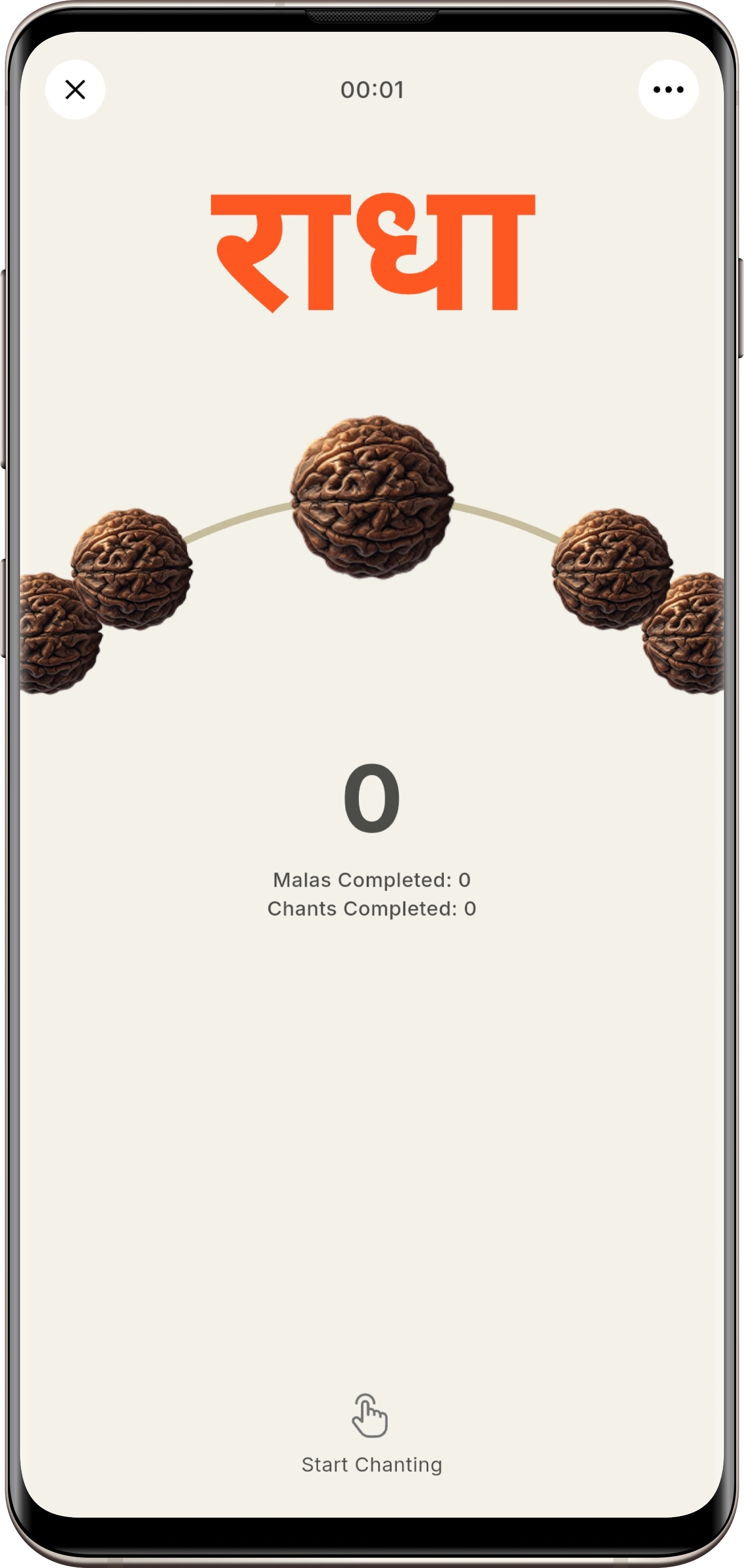
Naam Jaap is the practice of repeating a divine name or mantra with devotion. During Navratri, chanting 'Durga' or a short Durga mantra is a form of Naam Jaap, and it needs no special preparation beyond sincerity. The idea that devotion grows through regular, patient repetition is common across traditions; you can read more in our guide to what Naam Jaap is, its meaning and how to do it. Devotees of Radha Rani follow the same principle with the divine name, as explained in Radha Naam Jaap.
Navratri lasts only nine days, but many people find that these days begin a longer habit. If you would like to keep a regular chanting practice after the festival, the Divya Marg app works as a simple offline Jaap counter. You can count mantras and malas, set a daily goal and view your progress and analytics, all without needing an internet connection.
Common Mistakes to Avoid
- Starting with a count that is too high. A sustainable routine matters more than a big number on Day 1.
- Mixing many mantras at once. Beginners often feel calmer sticking to one mantra for the nine days.
- Treating a source as the only authority. Websites, including this one, offer general guidance. Your family tradition or teacher comes first.
- Chanting an unfamiliar beej mantra without guidance. If you are unsure, choose a simpler mantra and consult someone experienced.
- Expecting guaranteed results. Chanting is a devotional practice, not a transaction.
Frequently Asked Questions
Which mantra is best to chant during Navratri?
There is no single best mantra for everyone. Common choices are Om Dum Durgayai Namah, the day-wise Navadurga mantras, Ya Devi Sarvabhuteshu, and the Durga Gayatri. The best mantra is usually the one that matches your family tradition or guru's guidance and that you can chant regularly with focus.
What mantra should I chant during Navratri if I am a beginner?
A short mantra such as Om Dum Durgayai Namah, or the day-wise form such as Om Devi Shailputryai Namah on Day 1, is a gentle starting point. Begin with 11 or 21 repetitions and focus on clear pronunciation and a calm mind.
Can I chant a Durga mantra every day?
Yes. Many devotees chant Durga mantras daily, not only during Navratri. If you wish to continue after the festival, keep the count modest and consistent. Traditions differ on specific mantras, so if you are using a beej mantra, it is best to follow your teacher's instructions.
How many times should I chant a Navratri mantra?
No count is mandatory for everyone. 108 repetitions (one mala) is widely used, but 11, 21, 27 or 54 are also common, and some people chant for a set time. For beginners, a small daily count you can finish comfortably is better than an ambitious one you cannot sustain.
Is it necessary to chant 108 times during Navratri?
No. 108 is a traditional and popular count, partly because of the 108 beads in a mala, but it is not a universal rule. You may chant fewer repetitions, especially if you are just starting, and increase gradually if it feels natural.
Can I chant Navratri mantras without a mala?
Yes. A mala is a convenient counting tool, but chanting is not invalid without one. You can use a timer, count on your fingers, or use a digital Jaap counter. What matters in most traditions is attention and devotion, not the tool used for counting.
Can I chant silently, or must I chant aloud?
Both are accepted. Traditions describe aloud, whispered and mental (silent) chanting. Many teachers regard mental chanting as subtle and effective, while aloud chanting can help beginners stay focused or recite a verse correctly. Choose the style that keeps your mind steady.
Which mantras are associated with the Navadurga?
The nine forms of Durga are Shailputri, Brahmacharini, Chandraghanta, Kushmanda, Skandamata, Katyayani, Kalaratri, Mahagauri and Siddhidatri. Each is commonly invoked with a simple mantra of the form Om Devi (name in the dative) Namah, and the names themselves appear together in a verse of the Devi Kavacham. Some traditions also use a longer dhyana verse for each form.
Can I chant a mantra during Navratri without fasting?
Yes. Fasting is a personal observance that families follow in different ways, and chanting does not depend on it. People who cannot fast because of health, age, work or other reasons can still chant sincerely. If you have a health condition, follow your doctor's advice about fasting.
When does Navratri 2026 start?
According to published Indian Panchang sources, Sharad Navratri 2026 begins on Sunday, 11 October 2026, with Ghatasthapana, and Vijayadashami (Dussehra) is on Tuesday, 20 October 2026. Exact muhurat timings vary by city and sunrise, so please check a local Panchang or consult your priest.
Do Navratri mantras guarantee wealth, health or success?
No. Devotional traditions describe spiritual benefits such as inner strength, peace and the Goddess's blessings, but these are matters of faith and personal experience. No mantra can promise a specific worldly outcome, and it is better to chant for devotion and steadiness than for guaranteed results.
Begin your Naam Jaap today
Offline-first and built entirely around one purpose — helping you show up for your practice, every single day.
- Free, always
- Works offline
- No ads