Mahamrityunjaya Mantra: Lyrics, Meaning, Significance & How to Chant
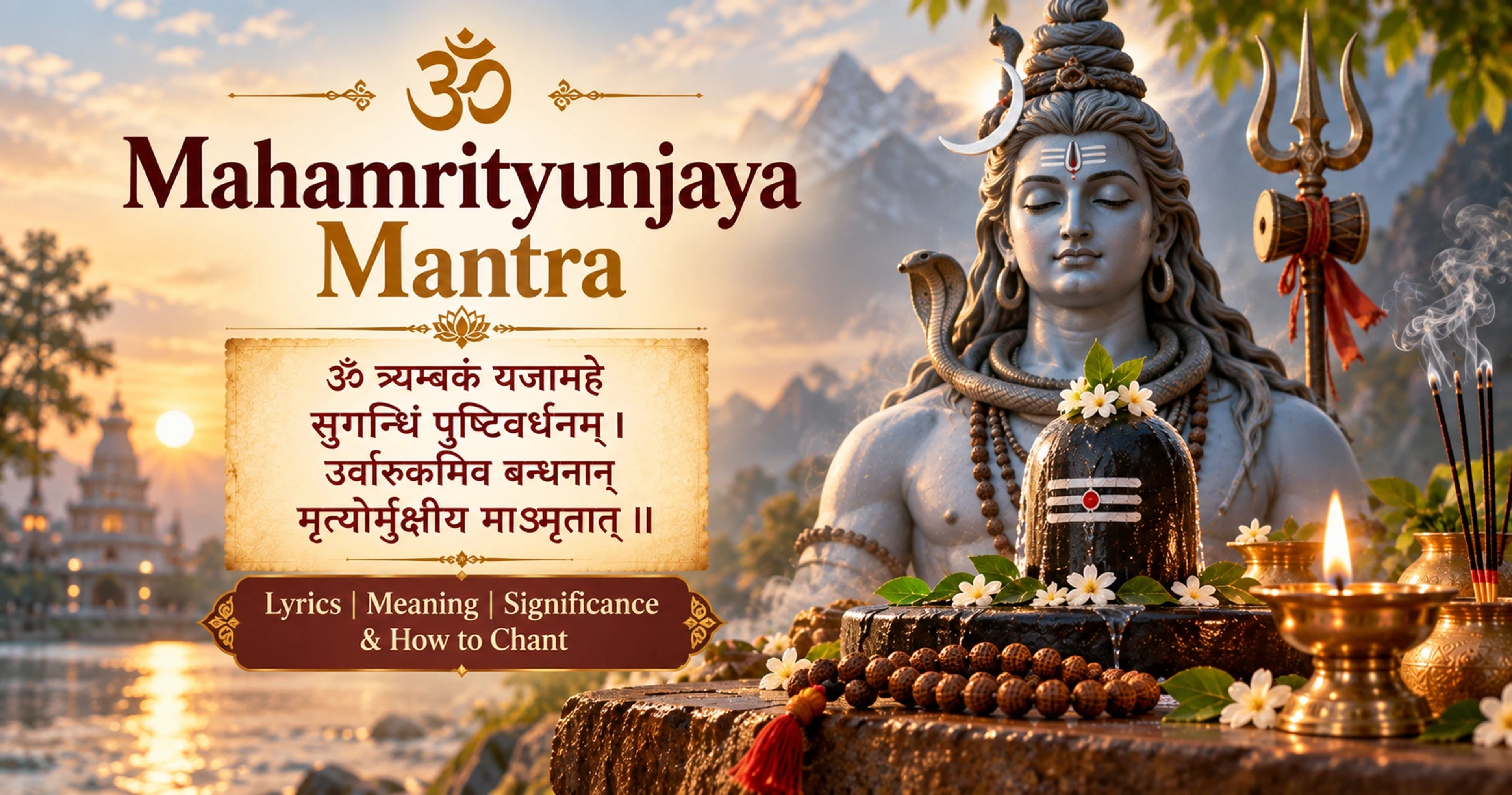
The Mahamrityunjaya Mantra is one of the most widely chanted mantras in Hindu tradition, recited by millions of people for courage, protection, and peace of mind. But if you’re encountering it for the first time, the Sanskrit can feel intimidating and the meaning unclear.
This guide walks through the correct traditional text, an accurate word-by-word meaning, where the mantra actually comes from, and how it is traditionally chanted — without exaggerated claims, so you can begin your own practice with confidence.
Table of contents
Key takeaways
- The mantra comes from the Rigveda (7.59.12) and is addressed to Tryambaka, an epithet of Shiva.
- In simple terms, it asks to be freed from the bondage of death, the way a ripe fruit falls easily from its vine.
- 108 repetitions is a common tradition, but no exact number is compulsory for everyone.
- It is traditionally associated with protection and courage in the face of death, not a scientifically proven medical cure.
What Is the Mahamrityunjaya Mantra?
The Mahamrityunjaya Mantra (महामृत्युंजय मंत्र) literally means “the great death-conquering mantra.” It is also known as the Tryambakam Mantra or the Rudra Mantra, since it addresses Tryambaka, “the three-eyed one,” an epithet of the Vedic deity Rudra who is later identified with Shiva.
It is a single verse, not a long hymn, which is part of why it’s so widely memorised and chanted — both in daily personal practice and in specific rituals and ceremonies.

The Mantra in Sanskrit (Devanagari)
Here is the traditional Rigvedic text, as it appears in Rigveda 7.59.12:
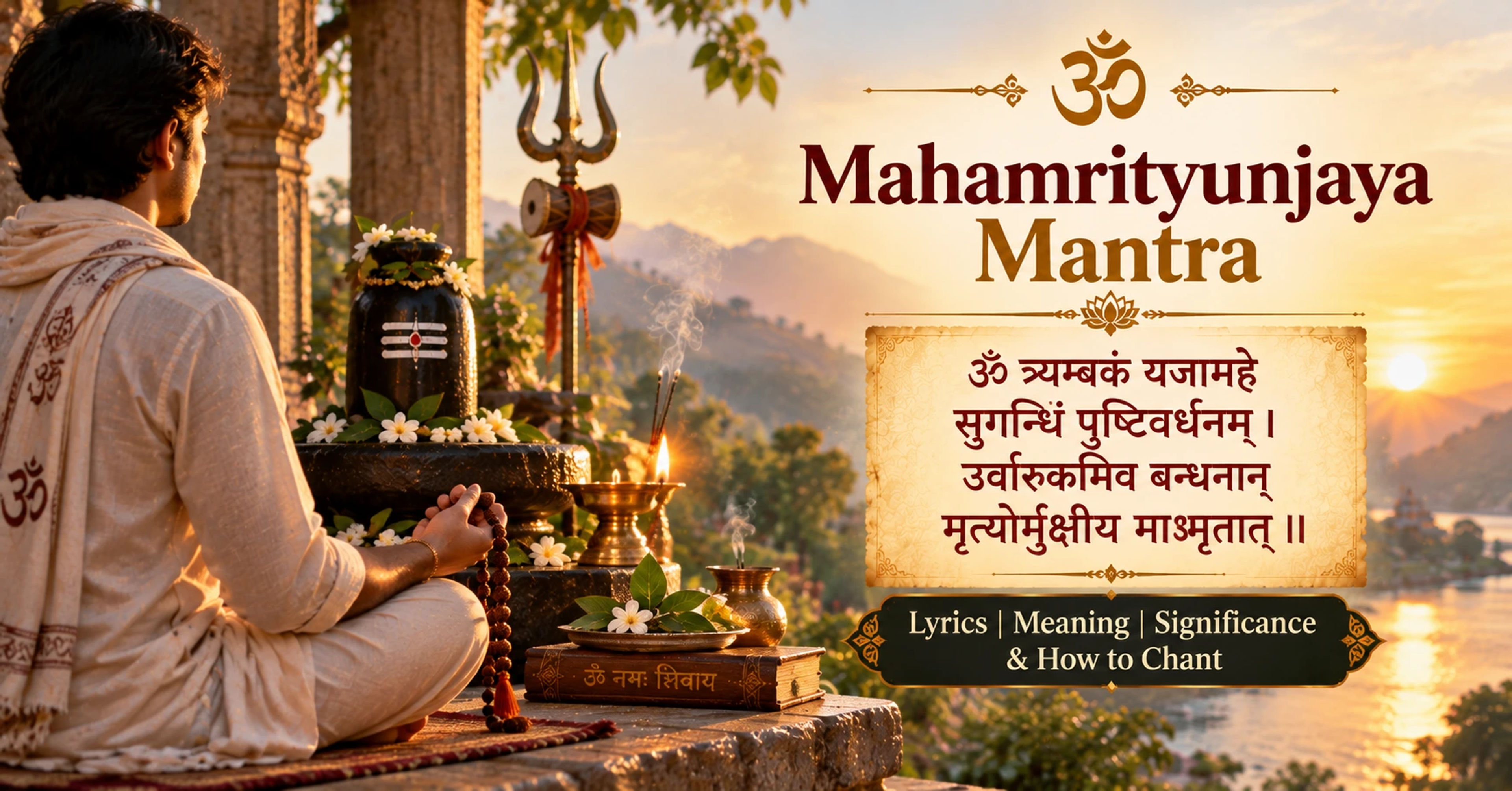
ॐ त्र्यम्बकं यजामहे सुगन्धिं पुष्टिवर्धनम् ।
उर्वारुकमिव बन्धनान्मृत्योर्मुक्षीय मामृतात् ॥
One point worth knowing: the syllable “ॐ (Om)” at the start is a later devotional addition used in most recitations today. The verse as it appears in the Rigveda itself begins directly with “त्र्यम्बकं.” Both forms are in wide and accepted use, so you’ll see the mantra written with or without the opening Om depending on the source.
Roman Transliteration
For readers not comfortable with Devanagari script, here is the mantra in Roman letters:
Oṁ Tryambakaṁ Yajāmahe Sugandhiṁ Puṣṭivardhanam |
Urvārukamiva Bandhanān Mṛtyor Mukṣīya Māmṛtāt ||
You may also come across small spelling variations between sources — for example “Tryambakam” vs. “Treyambakam,” or “Mrityor Mukshiya” written as one joined word. These are differences in transliteration style, not differences in the underlying mantra, and none of them change its meaning or pronunciation in any meaningful way.
Word-by-Word Meaning
Breaking the verse down word by word makes the overall meaning much easier to follow:
| Sanskrit Word | Simple Meaning |
|---|---|
| Om | A sacred sound, traditionally added before the verse |
| Tryambakam | The three-eyed one (an epithet of Rudra/Shiva) |
| Yajāmahe | We worship / we honour |
| Sugandhim | The fragrant one; one of sweet presence |
| Puṣṭivardhanam | Who nourishes and increases well-being in all |
| Urvārukam iva | Like a ripe cucumber (or gourd) from its vine |
| Bandhanān | From bondage / attachment |
| Mṛtyoḥ | From death |
| Mukṣīya | May I be liberated / released |
| Mā amṛtāt | Not from immortality (i.e., toward immortality, not away from it) |
Overall Meaning in Simple English
Put together in plain language, the mantra says something like this:
We worship the three-eyed Lord, who is fragrant and who nourishes and sustains all beings. Just as a ripe cucumber is easily freed from the vine it hangs on, may we be freed from the bondage of death — not cut off from immortality, but released into it.
Different traditional translators phrase the last line slightly differently — some emphasise “freedom from death,” others emphasise being “united with immortality.” Both readings come from the same Sanskrit and aren’t in real conflict; they’re simply two ways of expressing the same idea, that death is not an end but a passage.
Where the Mantra Comes From
The Mahamrityunjaya Mantra is one of the oldest mantras still in common use today. It appears in the Rigveda, specifically in Mandala 7, Sukta 59, verse 12 (commonly cited as RV 7.59.12), within a hymn traditionally attributed to the sage Vasishtha. The same verse also recurs later in the Yajurveda (Taittiriya Samhita 1.8.6 and the Vajasaneyi Samhita 3.60).
In the Rigveda, this verse sits among the closing stanzas of a hymn addressed to the Maruts, the storm deities associated with Rudra, and it is linked to a ritual offering made to Rudra Tryambaka. Over centuries, the verse moved out of that specific ritual context and became a standalone mantra chanted independently, widely associated with the Puranic legend of the sage Markandeya, who is said to have chanted it to overcome an untimely death.
Traditional Significance
Within Shaiva and broader Hindu tradition, this mantra holds a special place, often mentioned alongside the Gayatri Mantra as one of the most important Vedic verses. It is traditionally associated with:
- Overcoming the fear of death
- Protection from harm and obstacles
- Spiritual strength and resilience
- Long life and general well-being
- Deepening devotion to Shiva
It’s important to be clear about what this means. These are traditional religious beliefs held by devotees over centuries — they are not scientifically established medical claims. Many websites describe the mantra as something that can cure disease or guarantee recovery from illness; reliable traditional sources don’t support treating it as a replacement for medical care. If you or someone you know is unwell, chanting can be a source of comfort and strength alongside proper medical treatment, not instead of it.
How to Chant It
There’s no single rigid rulebook for chanting this mantra, but a few traditional practices are widely followed:
Pronunciation
Take time to get comfortable with the pronunciation before chanting fast or in long rounds. Listening to a correct, slow recitation a few times is more useful than reading transliteration alone, since Sanskrit has sounds that don’t map exactly onto English letters.
Aloud, soft, or silent
Chanting aloud (vaikhari japa) is common, especially for beginners and in group settings, since it helps with learning correct pronunciation. Once familiar with the mantra, many practitioners move to a softer whisper (upamshu japa) or fully silent, mental repetition (manasa japa) for a more inward practice.
When to chant
Brahma Muhurta — roughly the last 90 minutes before sunrise — is traditionally considered a favourable time for mantra practice in general. That said, evening chanting and other quiet times of day are also widely practised. A time you can return to consistently matters more than chanting at one specific “correct” hour.
What beginners should realistically do
Start small. Learn the correct pronunciation, chant a comfortable number of repetitions — even just 11 or 21 — and build up gradually as the words become familiar. A rushed, mispronounced 108 repetitions is less valuable than a slow, attentive smaller round.
Counting Your Repetitions
Because this verse is usually chanted in repeated rounds rather than said once, most practitioners use some way of counting. A 108-bead japa mala is the most traditional tool, since one full mala naturally equals 108 repetitions — a number connected to the mala’s own bead count rather than a rule specific to this mantra.
That said, no reliable traditional source says everyone must chant exactly 108 times. Some teachers recommend 11, 21, or 54 repetitions for beginners or for shorter daily practice, and simply chanting for a set period of time without counting at all is also a valid approach.
Alongside a mala, many people use a physical clicker counter or a digital jaap counter app to keep track, especially when chanting while walking, commuting, or at times when holding a mala isn’t practical. We’ve compared these options in more detail in Mala vs Physical Counter vs Digital Jaap Counter.
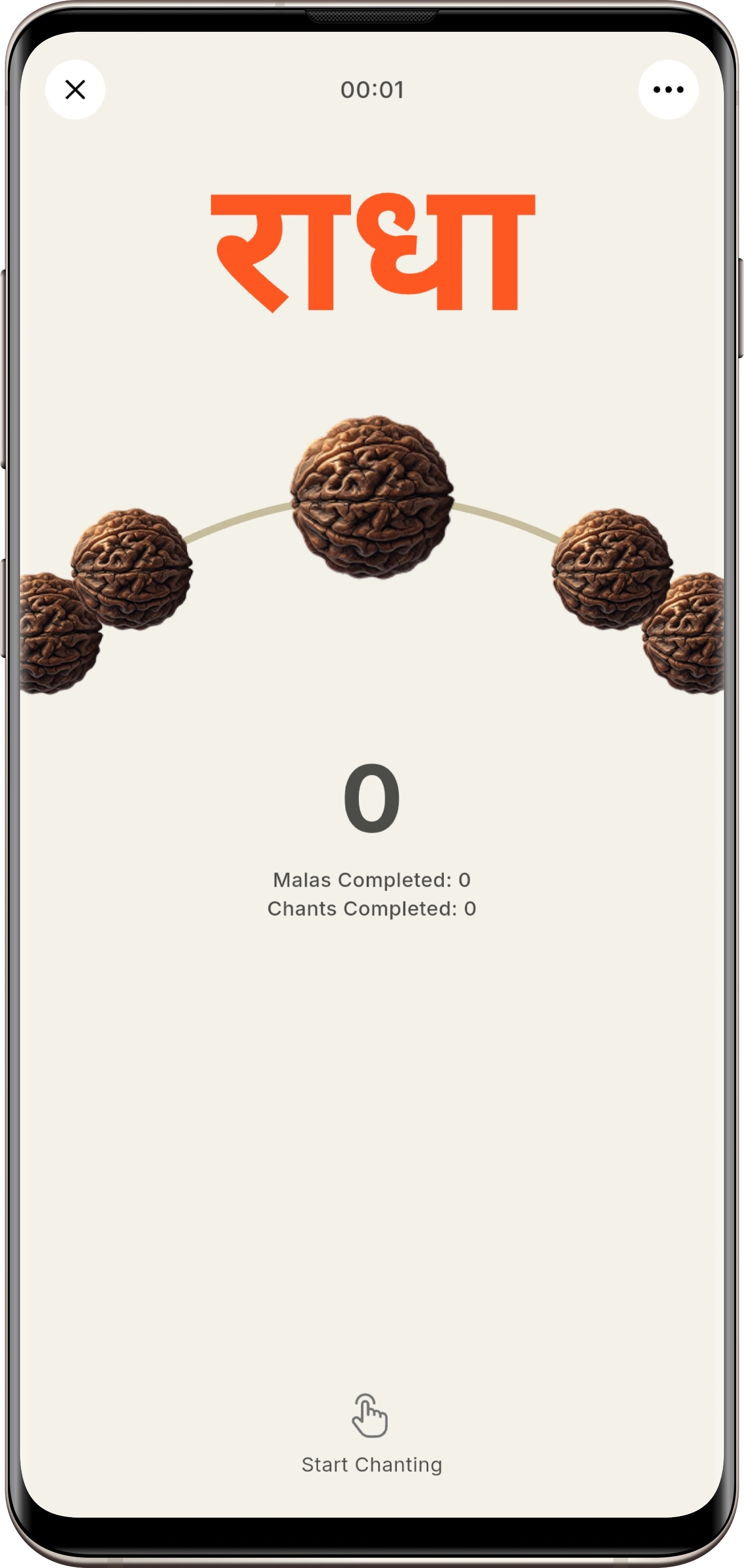
This is where Divya Marg can help with the practical side of the practice. The app lets you count repetitions of the Mahamrityunjaya Mantra — or any mantra — with a simple tap or button press, automatically completes a “mala” at 108, and keeps a record of your daily practice so you don’t lose track once you put your phone down. It’s simply a tool for the counting itself, not a replacement for learning the mantra correctly or chanting it with attention.
Begin your Naam Jaap today
Offline-first and built entirely around one purpose — helping you show up for your practice, every single day.
- Free, always
- Works offline
- No ads

If you’re new to mantra practice more broadly, our guides on what Naam Jaap is and its benefits and how to do Naam Jaap as a beginner cover the fundamentals that apply to chanting any mantra, including this one.
Frequently Asked Questions
What is the Mahamrityunjaya Mantra?
The Mahamrityunjaya Mantra, also called the Tryambakam Mantra, is a verse from the Rigveda (7.59.12) addressed to Tryambaka, 'the three-eyed one', an epithet of Rudra that is later identified with Shiva. Its name means 'great death-conquering mantra', and it is traditionally chanted for protection, courage in the face of death, and spiritual well-being.
What does the Mahamrityunjaya Mantra mean in English?
In simple terms, the mantra means: we worship the three-eyed Lord (Shiva), who is fragrant and who nourishes and sustains all beings. Just as a ripe cucumber is easily freed from its vine, may we be freed from the bondage of death — not cut off from immortality, but united with it.
Is 108 the correct number of times to chant this mantra?
108 is the traditional count associated with a full mala (rosary), and many people chant the Mahamrityunjaya Mantra in rounds of 108 for that reason. But no single number is universally mandatory — some traditions and teachers recommend 11, 21, or 54 repetitions, especially for beginners, and simply chanting consistently matters more than hitting an exact number.
Can beginners chant the Mahamrityunjaya Mantra?
Yes. There is no reliable traditional restriction that prevents a beginner from chanting this mantra. It's a good idea to first listen to a correct recitation a few times to get comfortable with the pronunciation, then start with a small, manageable number of repetitions and build up gradually.
Is there a best time to chant the Mahamrityunjaya Mantra?
Brahma Muhurta, the period roughly 90 minutes before sunrise, is traditionally considered a favourable time for mantra chanting in general, including this one. That said, many practitioners chant it in the evening or at any time that allows a calm, focused mind — consistency matters more than the exact hour.
Do I need a mala to chant this mantra?
No, a mala is a traditional aid, not a strict requirement. It helps you count repetitions without breaking focus, but you can also chant using your fingers, a physical clicker counter, a digital jaap counter, or without counting at all — simply chanting for a set period of time.
Does chanting the Mahamrityunjaya Mantra cure illness or prevent death?
Traditional belief holds that the mantra offers protection, courage, and freedom from the fear of death, and it has long been associated with prayers for health and longevity. However, this is a matter of religious faith, not a scientifically proven medical effect, and the mantra should never be used as a substitute for proper medical treatment.
Should this mantra be chanted aloud or silently?
Both are traditionally acceptable. Chanting aloud (vaikhari japa) is common in group settings and for beginners learning the pronunciation, while softer or silent repetition (upamshu or manasa japa) is often used once you're familiar with the mantra and want a more inward, meditative practice.