Hare Krishna Mahamantra: Lyrics, Meaning, Significance & How to Chant
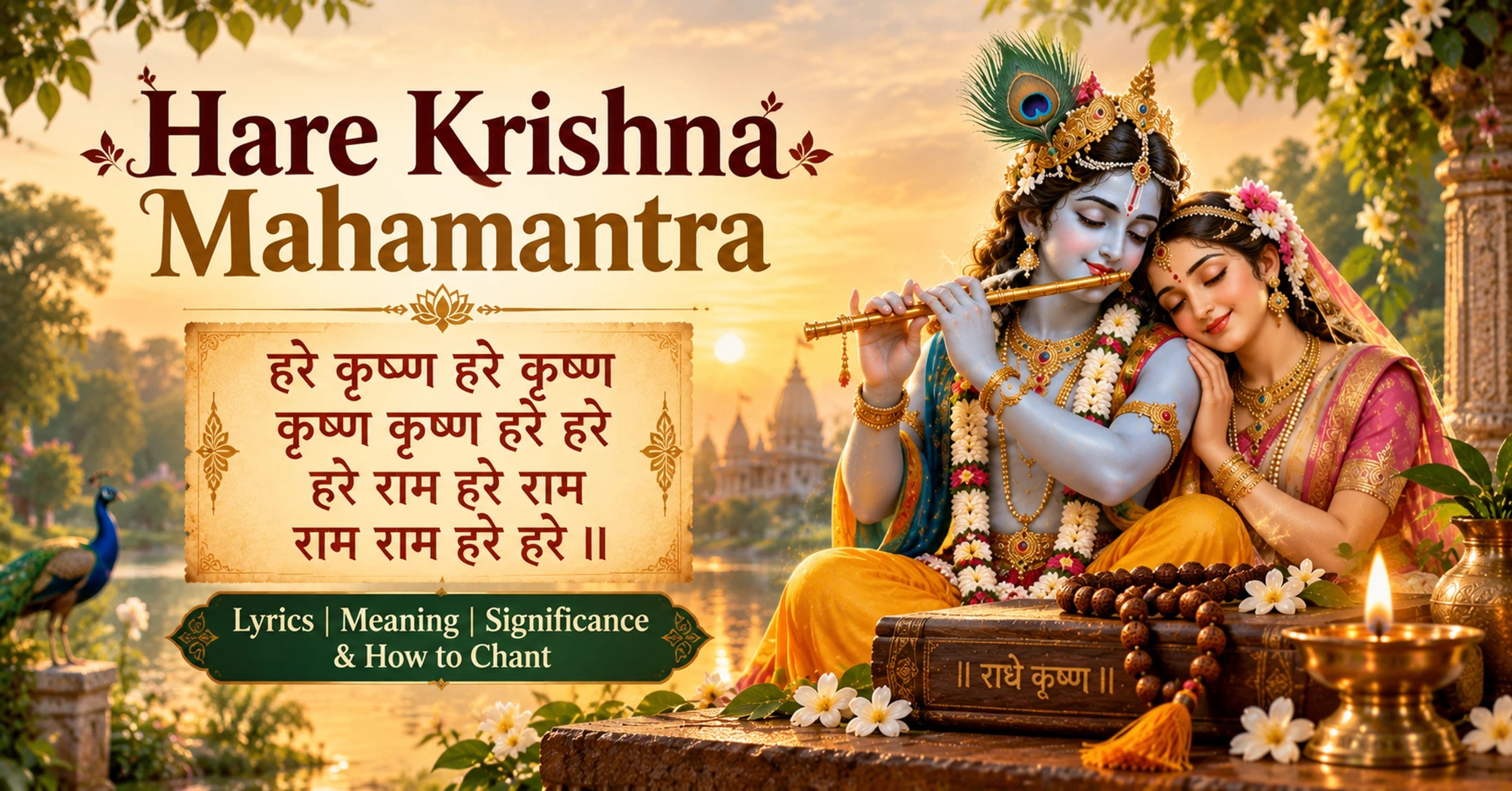
The Hare Krishna Mahamantra is one of the most widely chanted mantras in the world, sung in temples, streets, and homes for centuries. But if you’re new to it, the words alone can raise a lot of questions: What does it actually say? What does it mean? And is there a “right” way to chant it?
This guide walks through the exact traditional text, what each word means, where the mantra comes from, and simple, practical guidance on chanting it — without adding rules that don’t exist or claiming powers that traditional sources don’t actually claim.
Table of contents
Key takeaways
- The Mahamantra is sixteen words built from just three names — Hare, Krishna, and Rama — repeated in a fixed pattern.
- It traces back to the Kali-Santarana Upanishad and was popularised by Chaitanya Mahaprabhu in the 16th century.
- There is no single mandatory number of repetitions — 16 rounds of 108 is a specific tradition's personal vow, not a universal rule.
- It can be chanted softly to yourself (japa) or aloud with others (kirtan), sitting or otherwise, with or without a mala.
What Is the Hare Krishna Mahamantra?
The Hare Krishna Mahamantra, often just called “the Mahamantra” (great mantra), is a sixteen-word Vaishnava chant. Vaishnava means it belongs to the worship of Vishnu and his forms, here specifically Krishna. The mantra is made of only three words — Hare, Krishna, and Rama — arranged so that Hare appears eight times, and Krishna and Rama each appear four times.
It is especially associated with Gaudiya Vaishnavism, the Krishna-devotion tradition founded by Chaitanya Mahaprabhu in the 16th century, and became known around the world through the International Society for Krishna Consciousness (ISKCON), often called the “Hare Krishna movement,” founded by A. C. Bhaktivedanta Swami Prabhupada in 1966.
The Full Mantra Text
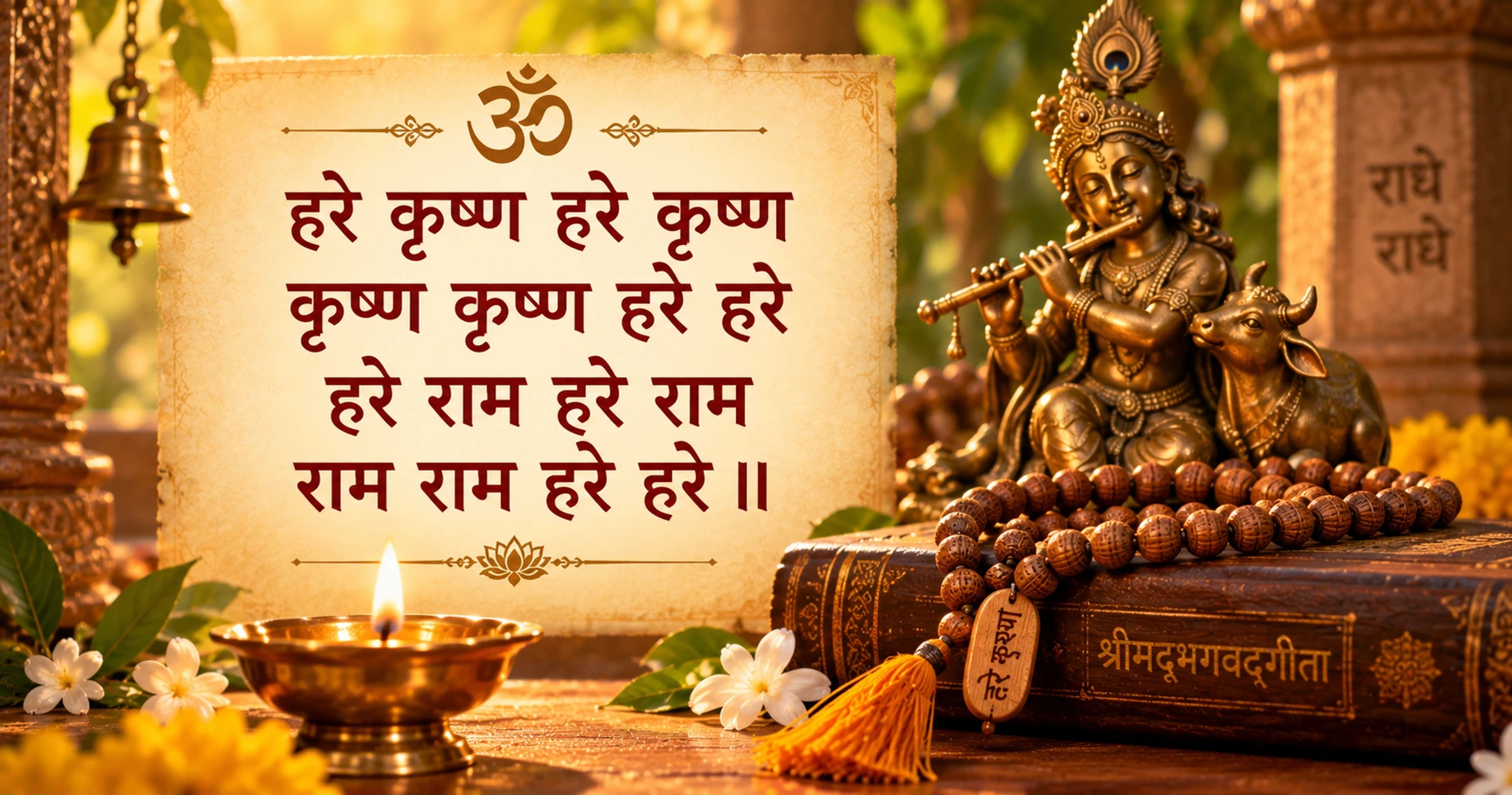
Here is the traditional text of the Mahamantra, as it is most commonly printed and chanted within Gaudiya Vaishnava tradition and ISKCON today.
हरे कृष्ण हरे कृष्ण
कृष्ण कृष्ण हरे हरे
हरे राम हरे राम
राम राम हरे हरे
Hare Kṛṣṇa Hare Kṛṣṇa
Kṛṣṇa Kṛṣṇa Hare Hare
Hare Rāma Hare Rāma
Rāma Rāma Hare Hare
A simple, non-diacritic transliteration — easier to read for most English readers — looks like this:
Hare Krishna Hare Krishna, Krishna Krishna Hare Hare, Hare Rama Hare Rama, Rama Rama Hare Hare.
Note that this exact order — “Hare Krishna” first, followed by “Hare Rama” — is the order most common in Gaudiya Vaishnava and ISKCON practice. Some manuscripts of the source Upanishad, and some other Vaishnava lineages, place “Hare Rama” first instead. Both orders use the exact same sixteen words and are accepted as correct within their respective traditions; the meaning doesn’t change either way.
What Do Hare, Krishna, and Rama Mean?
It's tempting to want one neat, word-for-word translation of the Mahamantra, but Vaishnava teachers generally treat it less like a sentence with a meaning and more like a direct, heartfelt call to God by name — similar to calling out to someone you love. Still, each word does carry meaning worth understanding.
| Word | Traditional meaning |
|---|---|
| Hare | The vocative (calling) form of Hari, a name of God. Within Gaudiya Vaishnava tradition, Hare is also understood as an address to Radha, Krishna’s divine energy, sometimes explained through her name Harā. |
| Krishna | A name of God meaning “all-attractive.” It is also, in Sanskrit, a word for dark or dark-blue, linked to Krishna’s traditional complexion. |
| Rama | Generally understood as “the source of all pleasure,” associated with Krishna as well as with Lord Ramachandra. Some Gaudiya teachers also connect this Rama to Balarama, Krishna’s brother, as an additional layer of meaning within their tradition. |
Put together, a common Gaudiya Vaishnava reading of the mantra is something like a prayer: “O Hare (Radha), O Krishna, please engage me in your service.” This is a traditional interpretation, not a literal translation of each word into a grammatical sentence — the mantra itself is simply sixteen names, called out again and again.
Where the Mahamantra Comes From
The earliest known text to record this exact sixteen-word mantra is the Kali-Santarana Upanishad, a short Upanishad connected to the Krishna Yajurveda. In it, the sage Narada asks Brahma how one can cross safely through Kali-yuga, the current age described in Hindu cosmology as difficult and quarrel-prone. Brahma answers by giving him these sixteen names, describing them as the means of destroying the harmful effects of this age, with no other rule attached to their chanting.
Scholars generally place the composition of this Upanishad centuries before it became widely known, and it only rose to real prominence in the 16th century, through Chaitanya Mahaprabhu, who is credited with popularising its chanting across Bengal and beyond. In the 20th century, A. C. Bhaktivedanta Swami Prabhupada carried this same practice out of India, founding ISKCON in New York in 1966 and introducing the Mahamantra to chanters around the world.
It’s worth being clear that the Kali-Santarana Upanishad is a short text, and much of what is written about the Mahamantra online — including some of its symbolism and expanded commentary — comes from later Vaishnava teachers and commentators building on this original source, rather than being additional lines from the Upanishad itself.
Japa and Kirtan: Two Ways to Chant It
Traditionally, the Mahamantra is chanted in two main ways, and most practitioners use both at different times.
- Japa — quiet, individual chanting, usually done in a soft voice audible to yourself, often while counting repetitions on a mala. This is typically a personal, focused practice, often done in the morning.
- Kirtan — congregational chanting, usually sung aloud with others, frequently accompanied by instruments like the mridanga drum and karatalas (hand cymbals). Kirtan is a shared, often joyful, musical experience rather than a silent, individual one.
Neither form is considered more “correct” than the other — they simply serve different purposes, and many devotees practise both japa and kirtan as part of a full chanting routine.
How to Chant It as a Beginner
If you’re starting out, here is simple, practical guidance drawn from common japa practice. None of these are strict, universal rules — they're widely followed habits that make regular chanting easier.
- Sitting comfortably in a quiet spot is the most common way to begin, though the mantra can also be chanted while walking or doing simple tasks.
- Chanting softly, aloud to yourself, is the traditional method for japa — you don't need to chant loudly or perform it for anyone.
- Chanting mentally, without sound, is also practised, especially when speaking isn't practical, such as during a commute.
- A mala is common but optional — many beginners start without one and count on their fingers or a simple counter instead.
- Consistency matters more than perfection — a short daily practice, chanted attentively, is generally considered more valuable than an occasional long session.
If you’re completely new to mantra chanting as a habit, our beginner’s step-by-step guide to Naam Jaap covers the basics of building a simple daily practice, which applies just as well to the Hare Krishna Mahamantra as to any other Naam Jaap.
Counting Repetitions and the Number 108
You’ll often see the Mahamantra linked to the number 108 — one full round on a traditional japa mala, which has 108 beads plus one extra “meru” bead marking the start and end. Within the Gaudiya Vaishnava tradition, especially among initiated ISKCON devotees, a common personal vow is to chant 16 full rounds of 108 names (1,728 repetitions) every day.
It’s important to understand this as a specific tradition’s recommended practice, not a rule that applies to every person chanting the Mahamantra. Many people, especially beginners, start with far fewer repetitions — a single round, or even just a few minutes of chanting — and build up gradually as it becomes a steady habit.
However you choose to count, there are a few common tools people use:
- Japa mala — the traditional method, moving one bead per repetition.
- Physical clicker counter — a small mechanical counter, often worn on a finger, useful when your hands are otherwise occupied.
- Digital Jaap counter app — counts each tap automatically and can also track your daily and long-term progress.
If you want a closer look at how these three compare, we cover it in detail in Mala vs Physical Counter vs Digital Jaap Counter.
What Tradition Says About Chanting It
The Kali-Santarana Upanishad itself describes chanting these sixteen names as the recommended means of overcoming the difficulties of Kali-yuga, and Gaudiya Vaishnava teachers have written extensively about chanting as a path of devotion and self-purification.
These are traditional, scriptural, and devotional teachings, held as matters of faith within Vaishnava communities — not claims that have been tested or proven scientifically. Chanting the Mahamantra isn’t presented in these traditions as a guaranteed fix for specific life problems, and it’s worth approaching it the way its own tradition does: as a sincere practice of remembrance and devotion, rather than a transaction with a fixed outcome.
If you'd like to understand this kind of practice more broadly, our guide on what Naam Jaap means and how it's traditionally practised is a useful starting point.
Keeping Count with a Digital Jaap Counter
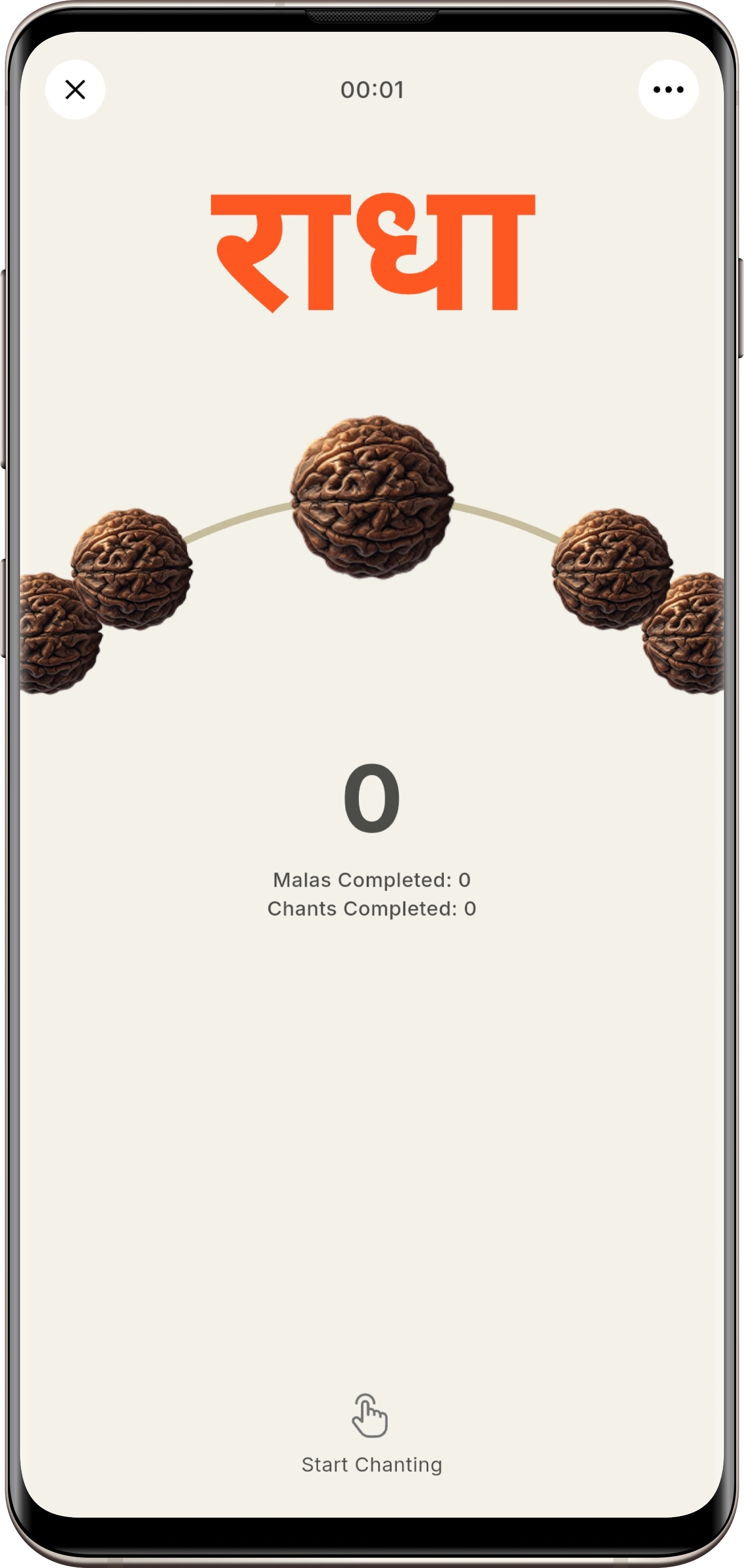
Once you have a sense of how you’d like to chant the Mahamantra, keeping a simple count can help turn it into a steady daily habit. This is exactly what a digital Jaap counter like Divya Marg is meant for — counting each repetition as you tap or press a button, so you don’t have to keep the number in your head while chanting.
It works well alongside a mala if you already use one, or on its own if you don’t. Either way, it’s simply a tool to support whatever chanting practice you choose — the chanting itself, and the attention you bring to it, remain the actual practice.
Frequently Asked Questions
What is the Hare Krishna Mahamantra?
The Hare Krishna Mahamantra is a sixteen-word Vaishnava chant made of three names: Hare, Krishna, and Rama, repeated in a set pattern. It is called a maha-mantra, or 'great mantra,' and is central to Gaudiya Vaishnavism and the Hare Krishna movement (ISKCON), though its roots go back to the Kali-Santarana Upanishad.
What does Hare Krishna mean?
Word by word, Krishna is a name of God meaning 'all-attractive,' and Hare is the vocative form of Hari, another name of God, which Gaudiya Vaishnava tradition also understands as an address to Radha, Krishna's divine energy. Taken together, the mantra is usually understood as a heartfelt call to God rather than a request for something specific.
What does Rama mean in this mantra?
In most Vaishnava traditions, Rama here refers to the source of all pleasure, and the name is associated with Krishna himself as well as with Lord Ramachandra. Within Gaudiya Vaishnavism specifically, some teachers also connect this Rama to Balarama, Krishna's brother, as part of a deeper theological reading. Different lineages emphasise this word slightly differently, so it's worth knowing both readings exist.
How many times should I chant the Hare Krishna Mantra?
There's no single number required for everyone. Many Gaudiya Vaishnava devotees, particularly initiated ISKCON members, follow a personal vow to chant 16 rounds of 108 names daily, but this is a specific tradition's practice, not a universal rule. Beginners can start with whatever number feels sustainable — even one or a few rounds a day — and build up gradually.
Can I chant the Hare Krishna Mantra without a mala?
Yes. A japa mala is a traditional and popular counting tool, but it isn't the only option. You can count on your fingers, use a physical clicker counter, use a digital Jaap counter app, or simply chant for a set amount of time without counting an exact number at all.
Can the Mahamantra be chanted silently, or does it need to be spoken aloud?
Both are practised. Traditional japa is usually done in a soft voice, audible to yourself, while kirtan involves chanting the same mantra aloud, often with music, in a group. Mentally repeating the mantra without sound is also practised by many, especially when speaking aloud isn't possible, though softly audible japa is the most commonly described method in devotional literature.
Is there a right time or place to chant Hare Krishna?
Many devotees prefer chanting early in the morning in a clean, quiet space, and some traditions especially recommend the pre-dawn hours known as brahma-muhurta. That said, there's no strict rule preventing chanting at other times — the consistent, sincere repetition of the names matters more than chanting at one exact hour.
Do both word orders — 'Hare Krishna' first and 'Hare Rama' first — count as correct?
Yes. Different manuscripts of the Kali-Santarana Upanishad present the sixteen names in different orders, and both are accepted across Vaishnava traditions. Gaudiya Vaishnavism and ISKCON commonly chant with 'Hare Krishna' first, while some other lineages chant 'Hare Rama' first — the words and their meaning stay the same either way.

Begin your Naam Jaap today
Offline-first and built entirely around one purpose — helping you show up for your practice, every single day.
- Free, always
- Works offline
- No ads