
Why Do Vaishnavas Wear Kanthi Mala? Meaning, Significance & Rules
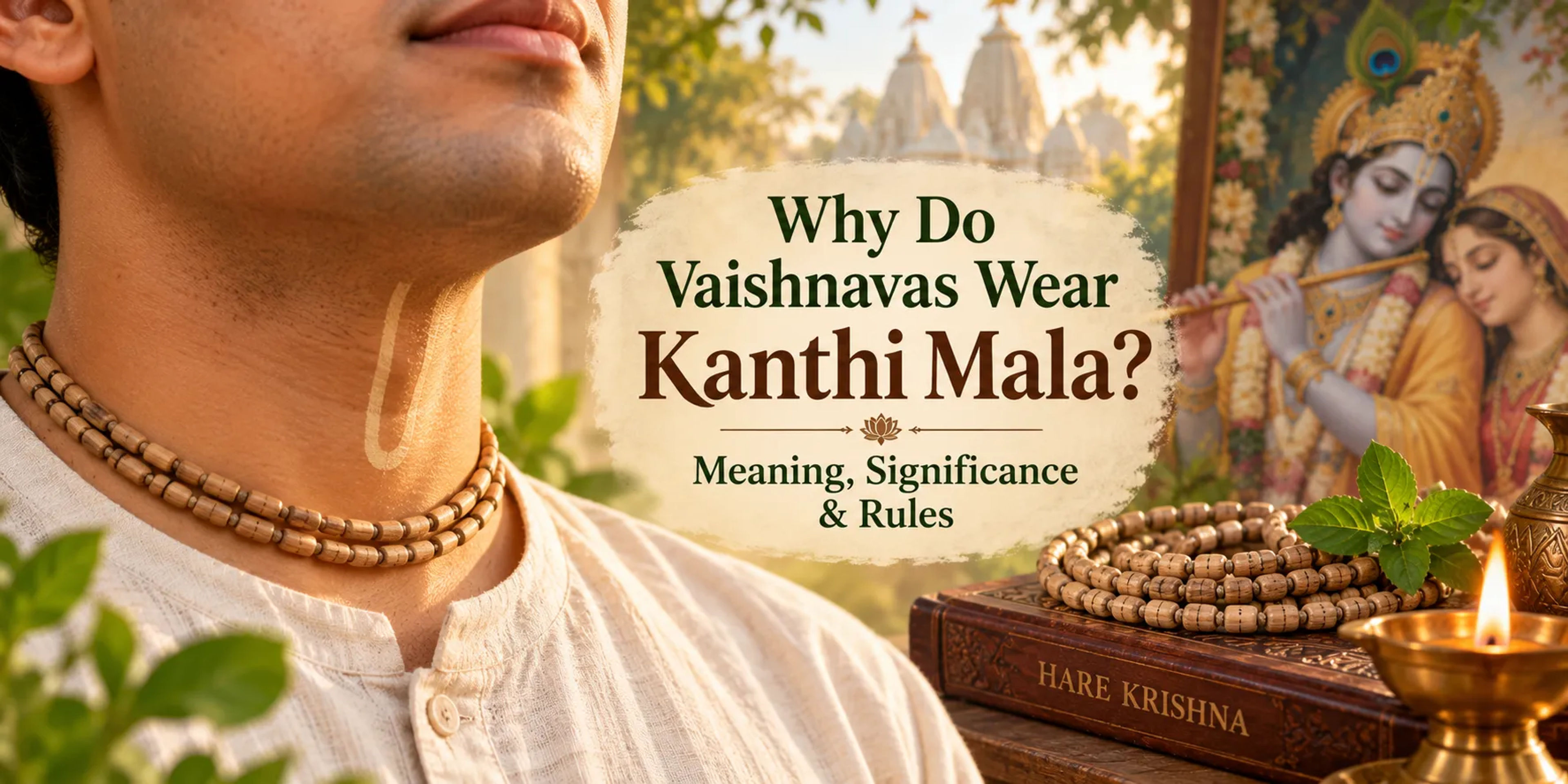
If you have ever visited a Krishna temple, spent time in Vrindavan or Mayapur, or met practitioners of Vaishnavism, you have likely noticed small wooden beads worn closely around their necks. This sacred neck ornament is known as a Kanthi Mala (or Tulsi Kanthi Mala).
Far from being a decorative piece of jewelry or a casual fashion choice, the Kanthi Mala holds deep spiritual, theological, and historical significance in Sanatana Dharma. In this article, we explore what a Kanthi Mala is, why Vaishnavas wear it, its direct connection to Tulsi Devi and Lord Vishnu, how traditions vary across different sampradayas, and practical etiquette for wearing and caring for it.
Table of contents
What Is a Kanthi Mala?
The word Kanthi originates from the Sanskrit root Kaṇṭha (कण्ठ), which translates directly to “throat” or “neck.” Mala (माला) means garland or string of beads. Therefore, a Kanthi Mala literally means a “neck garland.”
In Vaishnavism—the tradition focused on devotion (bhakti) to Lord Vishnu, Lord Krishna, Lord Rama, and their avatars—a Kanthi Mala consists of small, carved beads crafted primarily from the wood or stems of the sacred Tulsi plant (Holy Basil / Ocimum sanctum).
Kanthi Mala vs. Japa Mala: Understanding the Key Differences
One of the most common points of confusion for spiritual seekers is mistaking a Kanthi Mala for a Japa Mala. While both are sacred items made from Tulsi wood in Vaishnavism, they serve distinct purposes and are treated differently under traditional rules.
| Feature | Kanthi Mala (Neck Beads) | Japa Mala (Chanting Beads) |
|---|---|---|
| Primary Purpose | Sacred emblem of surrender & identity; worn continuously. | Counting repetitions during active mantra meditation (japa). |
| Where It Is Kept | Worn closely around the neck at all times. | Held in the right hand, kept inside a clean bead bag (Gomukhi). |
| Bead Count & Structure | Varies (usually 1, 2, or 3 strands fitting snugly around the neck). | Strictly 108 beads plus one larger head bead (Guru / Meru bead). |
| Handling Rules | Stays on the body during daily activities including sleep and bathing. | Never touches the floor; stored cleanly off the body when not in use. |
Can a single mala serve both purposes? According to traditional practices, no. A Kanthi Mala worn continuously around the neck absorbs bodily sweat and dust; using neck beads for counting japa—or wearing your 108-bead Japa Mala around your neck like a necklace—is generally discouraged in orthodox Vaishnava etiquette (Vaishnava Sadachara).
The Sacred Tulsi Connection in Vaishnavism
To understand why Kanthi Malas are made of Tulsi wood, one must understand the place of Tulsi Devi in Vaishnava theology. Tulsi is not merely viewed as a medicinal botanical plant; she is revered as a pure, eternal devotee of Lord Krishna, elevated to the status of a goddess (Vrinda Devi).
According to traditional scriptures such as the Padma Purana and Skanda Purana:
- Dearness to Vishnu: Lord Vishnu does not accept food offerings (bhoga) unless a fresh Tulsi leaf is placed upon them.
- Symbol of Purity: Tulsi wood embodies spiritual purity and devotion. Wearing it around the neck serves as an intimate physical connection to the Divine.
- Scriptural Allusions: The Padma Purana notes that one who wears beads made from Tulsi wood carries sacred remembrance of Lord Hari wherever they go.
Distinguishing Belief from Empirical Science
While modern botanical studies confirm that Holy Basil (Ocimum sanctum) possesses antibacterial and adaptogenic properties when ingested or applied medicinally, the wearing of dry Tulsi wood neck beads is a purely spiritual and devotional practice. Traditional beliefs regarding spiritual sanctity should not be confused with verified medical or physical health claims.
Spiritual Significance & Surrender (Sharanagati)
Why do Vaishnavas wear the Kanthi Mala specifically around the throat? In ancient Indian culture, placing a token around the neck carried deep symbolic weight.
- Symbol of Sharanagati (Surrender): Just as a ring on a finger signifies marriage, wearing a Kanthi Mala marks the individual as surrendered to Krishna or Vishnu. It is a humble declaration: “I belong to the Supreme Lord.”
- Purification of Speech: Situated at the throat chakra (Vishuddha), the Kanthi Mala reminds the practitioner to speak truthfully, gently, and without malice, dedicating their speech to divine praise.
- A Constant Spiritual Reminder: In the midst of daily material responsibilities, touching or seeing the Kanthi Mala brings the mind back to devotional mindfulness.
Variations Across Vaishnava Sampradayas
Vaishnavism is not a single monolith; it encompasses four main historic traditions (Sampradayas) along with distinct branches. Practices surrounding Kanthi Mala can differ significantly across these lineages:
1. Gaudiya Vaishnavism (including ISKCON)
In the lineage of Chaitanya Mahaprabhu, wearing Tulsi Kanthi Mala is central. Devotees often wear one, two, or three strands fitting snugly around the neck. Three strands are traditionally explained as representing surrender through mind (mana), speech (vak), and action (kaya).
2. Vallabha Sampradaya (Pushtimarg)
In Pushtimarg traditions, the Kanthi Mala is given during the Brahmasambandha initiation. It is often made of two strands of small Tulsi beads representing dedicated service to Shrinathji (Krishna).
3. Sri Vaishnavism
Practitioners in the lineage of Ramanujacharya place supreme importance on Pancha Samskara (five sacraments). While lotus seed malas, Tulsi, or specific silk threads are used in different contexts, the primary physical identity markers are the Urdhva Pundra (tilak) and shoulder markings (samashrayanam).
4. Madhva & Nimbarka Traditions
In Madhva traditions, Tulsi malas are highly respected, though some householders may reserve multi-strand sacred neck beads for formal initiation contexts.
Is Guru Diksha Required to Wear a Kanthi Mala?
A question frequently asked by beginners is whether one needs formal initiation (Diksha) from a spiritual master (Guru) before wearing a Kanthi Mala.
The answer depends on the specific tradition:
- Open Devotional Practice: In Gaudiya Vaishnavism, many acharyas encourage anyone who wishes to practice bhakti and follow basic vegetarian standards to wear a simple, single-strand Tulsi Kanthi Mala as an act of sincere faith.
- Formal Initiation Vow: In other sampradayas, receiving neck beads directly from the hands of a Guru during a formal ceremony is required, signifying the official taking of devotional vows.
If you are following a specific lineage, it is always recommended to consult your local spiritual preceptor or priest.
Practical Rules: Bathing, Sleeping, Care & Breaking
According to traditional Vaishnava etiquette guides (such as the Hari-bhakti-vilasa), here are common practical guidelines for wearing a Tulsi Kanthi Mala:
Daily Etiquette Checklist
- Continuous Wearing: Once put on, the Kanthi Mala is traditionally worn 24 hours a day, 7 days a week, including during sleep and bathing.
- Bathing Hygiene: Water flowing over sacred Tulsi during a shower is considered auspicious. Afterwards, gently pat the beads dry with a towel to preserve the natural wood.
- Lifestyle Standards: Out of respect for Tulsi Devi, wearers are traditionally expected to abstain from meat, fish, eggs, alcohol, and smoking.
- What if it breaks? If the string snaps due to wear and tear, treat the beads with reverence. Do not throw them in household trash. Place them in a flowing river, bury them at the root of a live Tulsi plant, or scatter them in clean natural soil before stringing a new mala.
- Oiling the Beads: To prevent dry Tulsi wood from cracking, you may occasionally apply a drop of natural oil (such as mustard, sesame, or almond oil) to the beads.
Common Misconceptions Debunked
Misconception 1: “Kanthi Mala is just a fashion necklace.”
Correction: It is a sacred religious emblem marking spiritual surrender, not a costume accessory.
Misconception 2: “Wearing it grants automatic magical protection or wealth.”
Correction: Traditional texts value Tulsi for nurturing devotion (bhakti) and inner purity, not as a shortcut for material luck or magic.
Misconception 3: “All Vaishnavas follow identical wearing rules.”
Correction: As shown above, specific strand counts, initiation rules, and customs vary by Sampradaya.
For further reading on Vaishnava practices and daily mantra meditation, explore our guides on The Hare Krishna Mahamantra: Meaning & How to Chant and What Is Naam Jaap? Meaning & Daily Practice.
How Divya Marg Supports Your Devotional Journey
While a Kanthi Mala serves as a continuous physical symbol around your neck, keeping track of your daily vocal or silent mantra repetitions (Japa) requires steady focus. That is where Divya Marg comes in:
Mantra Repetition Tracker
Count your daily Hare Krishna Mahamantra or Vishnu Sahasranama chants effortlessly.
Custom Daily Targets
Set achievable daily round (mala) goals and maintain your devotional momentum.
Haptic Bead Feedback
Focus your mind on the sound vibration without needing to look at your screen.
100% Offline & Private
Chant anywhere—at home, in temples, or while traveling—without needing internet access.
Begin your Naam Jaap today
Offline-first and built entirely around one purpose — helping you show up for your practice, every single day.
- Free, always
- Works offline
- No ads

Frequently Asked Questions
Why do Vaishnavas wear Kanthi Mala around the neck?
Vaishnavas wear Kanthi Mala as a sacred symbol of surrender (sharanagati) and devotion to Vishnu or Krishna. Made primarily from sacred Tulsi wood, it marks the wearer as a servant of the Divine.
What is the difference between a Kanthi Mala and a Japa Mala?
A Kanthi Mala is worn around the neck at all times as a devotional emblem and is not used for counting. A Japa Mala typically has 108 beads plus a guru bead, is held in the hand inside a bead bag, and is strictly used for counting mantra repetitions.
Can anyone wear a Tulsi Kanthi Mala without initiation (Diksha)?
In traditions like Gaudiya Vaishnavism, even beginners or uninitiated devotees are encouraged to wear a single-strand Tulsi Kanthi Mala out of devotion. However, other traditions, such as Sri Vaishnavism or Vallabha Sampradaya, reserve specific neck beads (or multi-strand malas) for formally initiated disciples.
Can you wear Kanthi Mala while bathing or taking a shower?
Yes. In traditional practice, the Kanthi Mala stays on the body continuously, including during bathing. In fact, bathing water flowing over sacred Tulsi beads is traditionally considered purifying for the body.
Can you wear Kanthi Mala while sleeping?
Yes, traditionally the Kanthi Mala is kept on the neck 24/7, including while sleeping, as it serves as a constant spiritual reminder and protective sacred token.
What should I do if my Tulsi Kanthi Mala breaks?
If a Kanthi Mala breaks, traditional practice is to treat the sacred Tulsi wood respectfully. You should submerge the broken beads in a sacred river, place them at the base of a live Tulsi plant, or bury them in clean soil, and replace the mala with a new one.
What do the number of strands mean on a Kanthi Mala?
In Gaudiya Vaishnavism, three strands often symbolize the three aspects of surrender: mind, body, and speech (or refuge in Krishna, Dhama, and Name). In other traditions, multi-strand neck beads signify formal diksha or specific spiritual vows.
Can meat-eaters wear a Tulsi Kanthi Mala?
Traditionally, wearing sacred Tulsi is closely associated with a sattvic (pure vegetarian) lifestyle free from meat, alcohol, and tobacco out of respect for Tulsi Devi's sacredness. However, guidelines vary by spiritual teacher.
Sources & References
- Hari-bhakti-vilasa by Srila Sanatana Goswami (Standard text on Vaishnava Sadachara and rituals).
- Padma Purana (Uttara-Khanda references regarding Tulsi Mahatmya).
- Skanda Purana (Sections on the glory and devotional use of sacred Tulsi wood).
- International Society for Krishna Consciousness (ISKCON) Educational Guidelines on Vaishnava Etiquette.
- Pushtimarg Traditional Literature on Brahmasambandha & Kanthi Vidhi.