Lakshmana Rekha in the Ramayana: Did Lakshmana Really Draw the Line?

In everyday Indian speech, a Lakshmana Rekha is a limit you must never cross. Most of us can picture the scene: Lakshmana scratches a line around the hut, asks Sita to stay inside, and Ravana tricks her into stepping out. Yet in the Valmiki Ramayana, there is no such line.
The Ramcharitmanas of Tulsidas does not describe it during the abduction either. The only place it speaks of a line drawn by Lakshmana is in a much later conversation, and it is Mandodari who mentions it. So how did one of the most familiar images of the Ramayana take hold? This article looks at what the texts say, what we can and cannot say about the origin of the legend, and what the story can still teach us.
Table of contents
Key takeaways
- In the Valmiki Ramayana, Lakshmana does not draw any protective line before leaving Sita, and Sita does not step across one.
- Lakshmana leaves because Sita, frightened by Maricha's false cry in Rama's voice, insists he go, and her words to him are sharp. He goes with a heavy heart and clear misgivings.
- The Ramcharitmanas does not show the line in the Aranya Kanda abduction scene. A reference to a line drawn by Lakshmana appears later, in Mandodari's words to Ravana in the Lanka Kanda.
- Exactly when and where the popular Lakshmana Rekha story took its familiar shape is uncertain, and it is best described as a later tradition that grew through retellings.
- Whatever version we follow, the responsibility for the abduction rests with Ravana, who planned the deception and carried out the crime.
The Lakshmana Rekha Story as It Is Popularly Told
The popular version goes like this. Sita sees a golden deer near the hermitage at Panchavati and asks Lord Rama to bring it. Rama goes after it, leaving Lakshmana to guard her. Soon a voice that sounds like Rama's cries out for help.
Sita urges Lakshmana to go. Before leaving, he draws a line on the ground around the hut and warns her that nothing harmful can enter it, but she must not step outside. Ravana arrives dressed as a mendicant, asks for alms, and persuades Sita to cross the line to give them. The moment she does, he seizes her.
This is the version seen in countless calendars, plays and television serials. It is dramatic and easy to remember, which is part of the reason it has lasted. But it is a different story from the one in the oldest text.
Why Did Lakshmana Leave Sita?
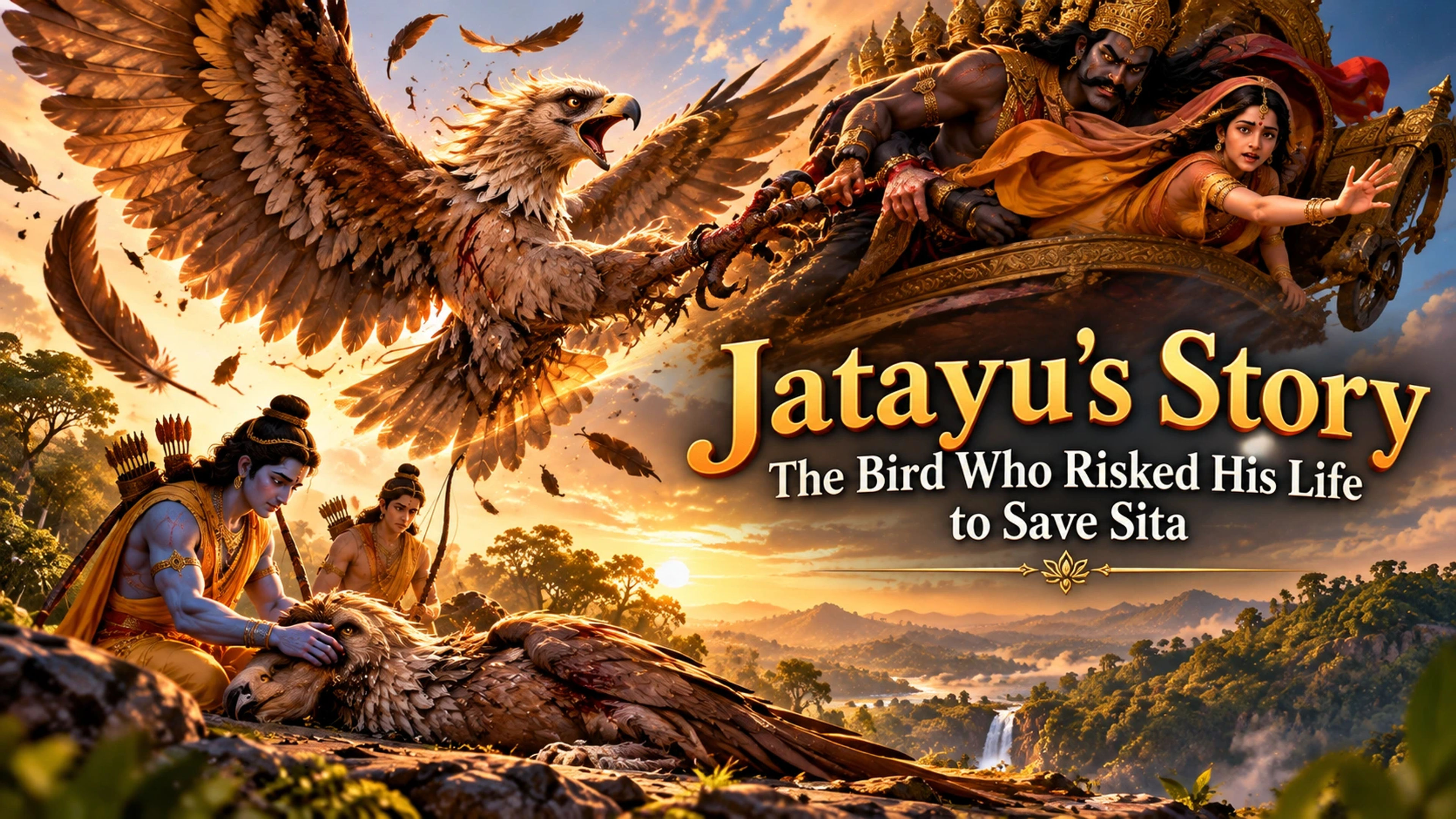
In the Aranya Kanda of the Valmiki Ramayana, Rama chases the deer and strikes it with an arrow. As it dies, Maricha takes back his rakshasa form and cries out in a voice that imitates Rama's, calling for Sita and Lakshmana. This was part of Ravana's design.
Sita hears the cry and is gripped by fear. Lakshmana tells her not to worry, because no one in the world can defeat Rama and the voice is surely a rakshasa's trick. But she remains terrified and presses him to go.
When he still hesitates, Sita speaks to him very harshly. In Valmiki's account she even suggests that he has selfish motives for staying. These words wound Lakshmana deeply, and he replies that she is speaking improperly. Convinced that something is wrong but unwilling to abandon her to her grief, he entrusts her to the forest deities and leaves with bad omens in his mind.
It is worth reading this scene carefully. Sita's sharpness comes from terror for her husband, not from malice. Lakshmana's departure is the product of two good people being pulled in opposite directions by a deliberate deception. The person who engineered that pressure was Ravana.
Does the Lakshmana Rekha Appear in the Valmiki Ramayana?
No. In Valmiki's telling, Lakshmana leaves without drawing any line. Scholars and popular explainers alike agree on this point, and a careful reading of the relevant chapters confirms it: there is no instruction to stay within a boundary, and no moment where Sita crosses one.
Ravana's approach is also quite different from the popular image. In the Valmiki Ramayana he comes to the hermitage as a wandering ascetic. Sita offers him the hospitality due to a guest, and only after he reveals who he is and she refuses him does he seize her and carry her off in his chariot. Nothing in this sequence depends on her stepping over a line.
Why this matters
The Valmiki version removes any idea that Sita broke a rule. She followed the norms of hospitality toward a guest who had come as a holy man, and Ravana exploited that trust. The wrong lies entirely with the deceiver.
How Different Ramayana Traditions Tell the Story
The Ramcharitmanas of Tulsidas, a hugely influential retelling in North India, does not show Lakshmana drawing a line during the abduction in the Aranya Kanda. The line is mentioned later, in the Lanka Kanda, where Mandodari rebukes Ravana for his boasting. She hints that a man who could not cross a small line drawn by Lakshmana has little to be proud of.
That is an interesting detail. It shows that by Tulsidas's time, the idea of a line associated with Lakshmana was already familiar enough to be used in a taunt. But it does not tell us that the Manas presents the line as part of the abduction scene.
The Manas and the Adhyatma Ramayana, which influenced it, also bring in the idea of Maya Sita, an illusory Sita who is taken by Ravana while the real Sita is kept safe. This reflects their devotional view of Rama's divinity, and it is not something Valmiki's text contains.
Some popular and theatrical versions are said to include the line and to explain Sita's crossing as an act of hospitality, an anxious woman honouring the principle that a guest should be treated with respect.
| Text or tradition | What it says about the line |
|---|---|
| Valmiki Ramayana | No line is drawn. Lakshmana leaves after Sita's harsh words, and Ravana approaches as an ascetic. |
| Ramcharitmanas (Aranya Kanda) | No line in the abduction scene. |
| Ramcharitmanas (Lanka Kanda) | Mandodari refers to a line associated with Lakshmana while criticising Ravana. |
| Popular retellings, plays and serials | Lakshmana draws a protective line, and Sita crosses it to give alms to Ravana. |
How Did the Lakshmana Rekha Become So Familiar?
The honest answer is that no one can point to a single source and date. The Ramayana has been retold in hundreds of versions across languages and centuries, and storytellers regularly added details that made the narrative more vivid or more morally explicit.
A protective boundary is a natural device for a storyteller. It gives the scene a clear moment of danger and makes the abduction feel like the result of a single act. It is likely that oral tradition, folk performance and modern media such as Ramlila and television helped fix the image in popular memory, but this is an inference rather than a documented history.
The word itself has travelled far beyond the epic. Today, a Lakshmana Rekha means any firm limit that should not be crossed, and it is used in conversations about law, politics and personal conduct. The phrase has outlived the debate about its origin.
The Meaning and Legacy of the Lakshmana Rekha
As a symbol, the line stands for protection, discipline and the importance of boundaries. Lakshmana, in this telling, is the devoted guardian who takes every precaution he can. These are meaningful ideas, and there is nothing wrong with enjoying them as part of the living tradition.
The risk lies in how the story is sometimes used. When the line is presented as a rule that Sita broke, it quietly turns a crime against her into a lesson about her conduct. That reading finds no support in the Valmiki Ramayana, and it should not be passed on as though it did.
Lessons from the Story
- Know your sources. The Lakshmana Rekha is a good example of how a popular detail can feel original even when it is not in the earliest text. Telling the two apart is part of honest devotion.
- Deception is the fault of the deceiver. Ravana and Maricha built a trap around fear and trust. Sita's fear for Rama and her courtesy to a guest were not failings.
- Pressure can distort good judgement. Lakshmana and Sita both acted out of love and concern, and Ravana used that very emotion. When we are anxious, it helps to pause and check what is actually true before acting.
- Boundaries are useful, but they are not the whole story. Rules and precautions have real value, yet the central cause of harm in this episode was a person's decision to do wrong.
Conclusion
So, did Lakshmana really draw the line? In the Valmiki Ramayana, he did not. In the Ramcharitmanas, the line is not part of the abduction scene, though it is hinted at later in Mandodari's rebuke. In popular retellings, it became one of the most memorable images of the epic.
Seeing this clearly does not diminish the Ramayana. It lets us appreciate the original story of Ravana and Sita, in which a faithful wife, a devoted brother and a heartless plan meet at one tragic moment, and it lets us honour the tradition's later additions for what they are. Through all of it, the responsibility stays with Ravana, and Mata Sita remains the wronged and steadfast figure of the story.
Does the Lakshmana Rekha appear in the Valmiki Ramayana?
No. In the Valmiki Ramayana, Lakshmana leaves Sita after her harsh words and does not draw any protective line. Ravana comes as an ascetic, receives Sita's hospitality, and abducts her once he reveals his intentions.
Why did Lakshmana leave Sita alone?
Sita heard Maricha's cry in Rama's voice and feared for Rama's life. Lakshmana believed it was a rakshasa's trick, but she pressed him to go and spoke sharply when he hesitated. Troubled by omens, he left, which gave Ravana his chance.
Is the Lakshmana Rekha in the Ramcharitmanas?
Not in the Aranya Kanda abduction scene. The Ramcharitmanas refers to a line later, in the Lanka Kanda, where Mandodari mentions a small line drawn by Lakshmana while criticising Ravana's boasting.
Where did the Lakshmana Rekha story come from?
The exact origin is uncertain. It appears to belong to later retellings and popular tradition, and the Ramcharitmanas reference shows the idea was known by Tulsidas's time. A specific earliest source cannot be named with confidence.
Was Sita at fault for crossing the Lakshmana Rekha?
No. In Valmiki there is no line to cross. Even in versions that include it, Sita is deceived by Ravana, who comes disguised as a holy man. The responsibility for the abduction rests with Ravana.
What does Lakshmana Rekha mean today?
In modern Indian usage, a Lakshmana Rekha means a firm limit or rule that must not be crossed. The phrase is used well beyond the Ramayana, in everyday speech about law, conduct and politics.

Begin your Naam Jaap today
Offline-first and built entirely around one purpose — helping you show up for your practice, every single day.
- Free, always
- Works offline
- No ads