Khatu Shyam Ji: History, Story, Significance, Temple & Darshan

Khatu Shyam Ji is the form in which Barbarik, the grandson of Bhima, is worshipped by lakhs of devotees, with his main temple at Khatu village in Sikar district, Rajasthan. According to the traditional story, Barbarik gave his head to Lord Krishna just before the Mahabharata war, which is why devotees call him Sheesh Ke Dani, the giver of his head. Krishna, the story says, blessed him so that he would be worshipped in the Kali Yuga by Krishna's own name, Shyam. For many, he is Hare Ka Sahara, the support of those who feel defeated. Here is who Barbarik was, how the Khatu tradition grew, and what devotees do at the temple today, with a clear line between what is devotional tradition and what is recorded history.
Table of contents
Key takeaways
- Khatu Shyam Ji is the form in which Barbarik, son of Ghatotkacha and grandson of Bhima, is worshipped. His main temple is at Khatu, Sikar district, Rajasthan.
- Barbarik's story is a devotional and folk tradition. Scholars note that he does not appear in the main text of the Mahabharata, and details vary between regions.
- Sheesh Ke Dani means one who gave his head. The title recalls Barbarik's offering to Krishna.
- Krishna's boon, in the traditional account, is that Barbarik would be worshipped by the name Shyam in Kali Yuga. Devotees understand this relationship in different ways.
- The Falgun Mela, Ekadashi and the Nishan Yatra are among the major observances. Temple timings change by season and festival, so check with the temple committee.
Who Is Khatu Shyam Ji?
Khatu Shyam Ji, often called Baba Shyam or Shyam Baba, is a deity of deep devotion in Rajasthan and across India, and among Marwari and other communities abroad. Devotees identify him as Barbarik (also spelled Barbareek), a warrior from the Mahabharata tradition.
He is known by many affectionate names: Hare Ka Sahara (support of the defeated), Teen Baan Dhari (bearer of three arrows), Lakhdatar (the giver in abundance), Moravinandan (son of Morvi), and Sheesh Ke Dani. Each name points to a part of his story, which is why the story matters so much to devotees.
Who Was Barbarik?
In the traditional account, Barbarik was the son of Ghatotkacha and the grandson of Bhima, one of the five Pandava brothers. Ghatotkacha was Bhima's son with Hidimba. Barbarik's mother is named in different tellings as Maurvi, Morvi or Kamkantakata, which is why he is also called Moravinandan.
He is described as a young warrior of remarkable skill and devotion, trained by his mother. The story says he received three infallible arrows through divine grace. Accounts differ on the source, with some naming Goddess Durga and others naming Shiva. These arrows gave him a unique place in the Kurukshetra tradition.
A note on sources
Barbarik is a beloved figure of folk and devotional tradition. Scholars point out that he is not found in the core text of the Mahabharata, and the story is told in later regional and devotional accounts, with variations. In this article, 'the story says' or 'according to tradition' marks these accounts.
The Three Arrows and the Promise
According to the story, the three arrows had a special power. The first marked everything that Barbarik wanted to destroy, the second marked what he wanted to save, and the third then struck what had been marked. Because of this, Barbarik could end a war almost on his own.
When Barbarik heard that the Pandavas and Kauravas were about to fight, he set out to witness or join the war. He had promised his mother that he would support whichever side was weaker. This promise is the heart of why devotees call him Hare Ka Sahara. It also created a problem: whichever side he joined would become weaker, so he would then switch, and the war would never end.
Krishna's Test
Krishna understood the danger. In the tradition, he met Barbarik in the disguise of a Brahmin and asked how quickly he could end the war. Barbarik said he could do it in a few moments with his three arrows.
To test him, Krishna asked him to mark all the leaves of a tree beneath which they stood. Barbarik released an arrow, and the leaves were marked. One leaf, in the telling, was hidden under Krishna's foot, and the arrow circled his foot. Krishna realised the full power of the arrows and, according to the story, asked Barbarik for a gift as a Brahmin may ask a warrior.
The Offering of the Head
The Brahmin asked for the head of Barbarik himself. Without hesitation, the story says, Barbarik agreed. He asked only to know who was asking, and Krishna revealed his true form. Barbarik then made two wishes: that he be allowed to see the war from beginning to end, and, in some accounts, that he be worshipped by Krishna's name.
Krishna agreed. The head was placed on a hill so that it could watch the Kurukshetra war. Later, when the Pandavas debated who deserved the credit for the victory, the story says the head replied that he had seen only Krishna's Sudarshan Chakra at work. In this telling, Krishna is the real victor, and Barbarik is the witness who understood it.
Details differ between tellings, including the exact words and the location of the hill. What stays constant is the central idea: a young warrior offering the greatest gift he has, willingly and joyfully.
Why Is He Called Sheesh Ke Dani?
Sheesh means head and dani means giver. Sheesh Ke Dani therefore means 'the one who gave his head.' In the tradition, it is the title that sums up Barbarik's act: a gift made not for fame or reward but out of devotion and trust.
Devotees see in this a deeper meaning. They see Barbarik's offering as complete surrender, giving up ego along with life. This is why those who feel they have lost, who have little or who are afraid come to him as Hare Ka Sahara, believing that someone who gave everything understands their struggle.
Barbarik and Krishna: How Are They Connected?
In the traditional account, Krishna tested Barbarik, accepted his offering and blessed him. The central blessing, according to the story, is that Barbarik would be worshipped in Kali Yuga under the name Shyam, one of Krishna's own names that refers to his dark complexion.
How devotees understand this varies. Many regard Khatu Shyam Ji as a form of Krishna himself, or as a manifestation carrying Krishna's name. Others emphasise that Barbarik was a devoted warrior honoured by Krishna and worshipped by his grace. Both understandings are part of living devotion, and neither needs to be forced into a single theological answer. What is common to all is the respect for Krishna's role in the story.
Similar worship of Barbarik appears elsewhere too. In Gujarat he is worshipped as Baliyadev, and in some Nepali traditions he is connected with the Kirati figure Yalambar. These variations show how widely the story has travelled.
How Did the Khatu Tradition Begin?
The tradition says that Barbarik's head was buried at the place that is now Khatu in Sikar district. Local accounts then tell of a ruler, Roop Singh Chauhan, who was guided in a dream to uncover the head from the site now known as Shyam Kund, and the first temple is traditionally said to have been built in 1027 CE. These are temple traditions, and the date comes from local accounts rather than firmly documented records.
Some sources also mention a major renovation in 1720 by a nobleman acting under the ruler of Jodhpur, and a 17th-century Braj Bhasha poem called Shyam Pacchisi by Durga Das Mathur, dated 1675, which shows that devotion to Shyam was already established by then. The present white marble temple reflects traditional Rajasthani style. For exact dates, it is best to rely on the temple committee and scholarly sources.
Khatu Shyam Ji Temple: Location and Importance
The Khatu Shyam Ji Temple is in the town of Khatu (Khatushyamji) in the Sikar district of Rajasthan, roughly 80 km from Jaipur by road. Ringas Junction is the nearest major railway station, about 17 km away. Distances and routes are best confirmed before travel.
In the temple, what devotees worship is the sacred head of Barbarik, adorned in beautiful faces and dresses. The sacred pond, Shyam Kund, is considered holy, and many devotees bathe or sprinkle its water. The temple is managed by the Shri Shyam Mandir Committee.
Darshan and Aarti
Worship at Khatu follows a daily rhythm of five aartis: Mangala at dawn, Shringar in the morning, Bhog at midday, Sandhya at dusk and Shayan at night. Reports say the temple is usually open in the morning and evening with an afternoon break, and stays open much longer on Ekadashi and during the Falgun Mela.
Because different websites list different timings, and the schedule shifts with seasons and festivals, this article does not give a fixed timetable. Please check with the Shri Shyam Mandir Committee or the temple's official channels before you plan your visit.
Falgun Mela and Other Festivals
The biggest event is the Falgun Mela, held in the Hindu month of Falgun (February to March), in the days leading up to Holi. According to tradition, Barbarik's head appeared on Phalguna Shukla Ekadashi, which is why the Ekadashi and Dwadashi days are the heart of the mela. Lakhs of devotees come, and a custom on Dwadashi is the bhog of kheer and churma.
A well-known part of the mela is the Nishan Yatra. Devotees carry saffron, orange or red flags, called nishans, and walk, often from Reengus about 17 km away, singing bhajans. A white flag from Surajgarh, which according to local accounts has been hoisted at the temple for centuries, is also a traditional part of the observance.
Ekadashi each month is considered special for Shyam devotion, and Kartik Shukla Ekadashi, around Dev Uthani, is widely celebrated as Shyam Baba's birth anniversary. Janmashtami is also observed because of Shyam's link with Krishna. On these days the temple is very crowded, so plan for long queues and follow the committee's guidance.
How Devotees Worship Khatu Shyam Ji
Worship is simple and heartfelt. Devotees offer flowers, sweets and bhog, sing bhajans and join aarti. Many take a vow and return to offer a nishan once it is fulfilled, while others keep Ekadashi fasts or travel on foot for the mela.
At home, devotees often chant a short mantra or the popular refrain of Shyam bhakti. One mantra devotees chant is:
ॐ श्री मोर्वीनन्दनाय नमः
Om Shri Morvinandanaya Namah
A devotional slogan you will hear everywhere at Khatu is 'Hare Ka Sahara, Baba Shyam Humara.' It captures why people turn to him: the feeling that no one is too small or too defeated to be supported.
Why Khatu Shyam Ji Matters Today
Barbarik's story is not really about a war. It is about what it means to give without holding back, and about the faith that someone who gave everything will stand by those who feel they have nothing left. That is why the temple remains full on ordinary days and overflowing during the mela.
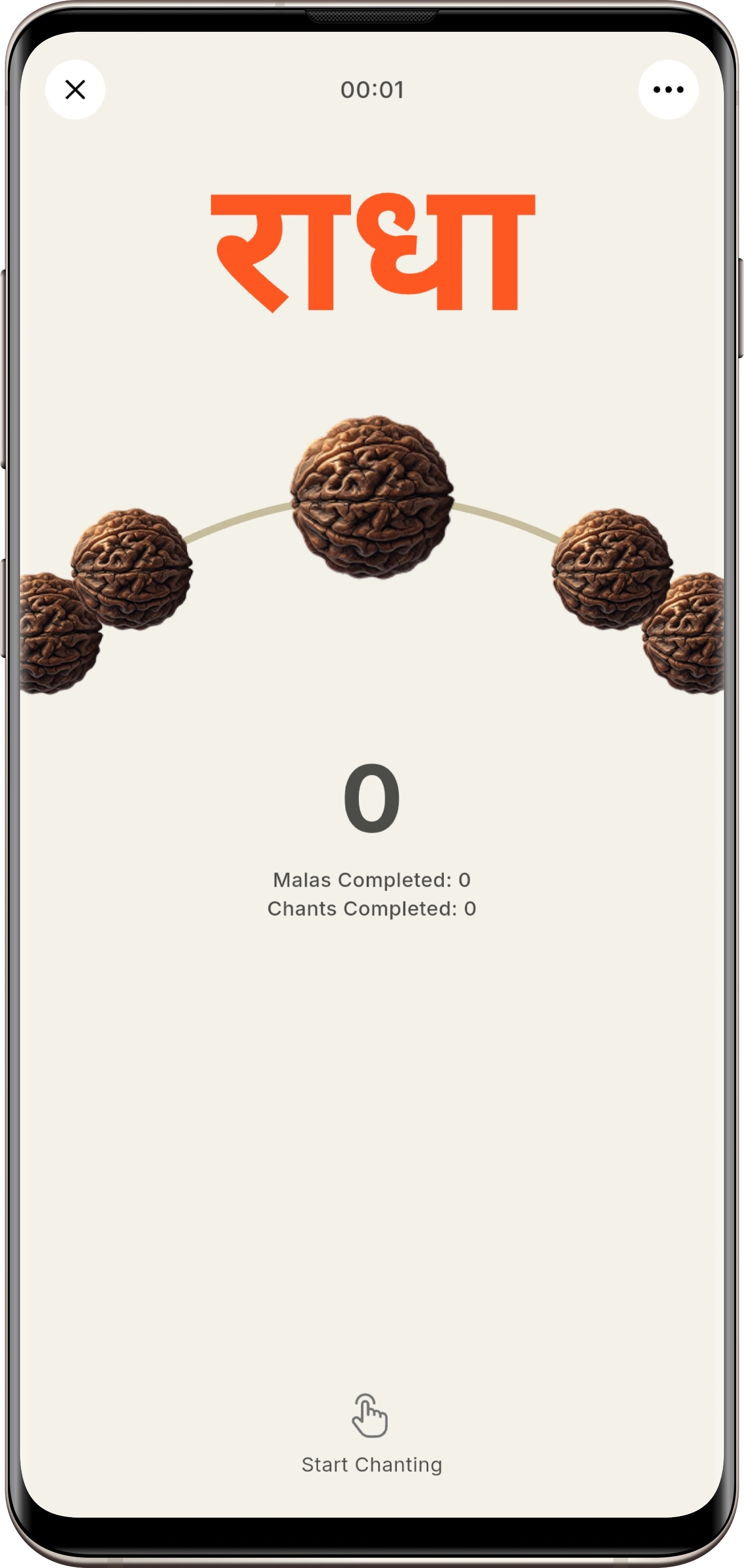
For many, the best way to carry Khatu Shyam Ji's devotion home is a simple daily practice: a few minutes of Naam Jaap with the name of Shyam or Krishna. The Divya Marg app is built for Naam Jaap and chant counting, so you can keep track of your chanting while you build the habit.
Frequently Asked Questions About Khatu Shyam Ji
Who is Khatu Shyam Ji?
Khatu Shyam Ji is the form in which Barbarik, the grandson of Bhima and son of Ghatotkacha, is worshipped. His main temple is in Khatu, Sikar district, Rajasthan.
Is Khatu Shyam Ji the same as Barbarik?
Yes, devotees identify Khatu Shyam Ji with Barbarik. The traditional account says Krishna blessed him to be worshipped in Kali Yuga by the name Shyam.
What is the story of Khatu Shyam Ji?
According to tradition, Barbarik had three powerful arrows and promised to support the weaker side in the Mahabharata war. Krishna, in disguise, asked him for his head as a gift. Barbarik gave it, asked to witness the war, and was blessed to be worshipped as Shyam.
Why is Barbarik called Sheesh Ke Dani?
Sheesh Ke Dani means the giver of the head. The title recalls Barbarik's offering of his head to Krishna in the traditional story.
What is the connection between Khatu Shyam Ji and Krishna?
In the traditional story, Krishna tested Barbarik, accepted his offering and blessed him to be worshipped by the name Shyam, which is a name of Krishna. Devotees understand this in different ways, with some seeing Khatu Shyam Ji as a form of Krishna.
Is Barbarik in the Mahabharata?
He is not found in the core text of the Mahabharata. His story comes from later folk and devotional traditions, which is why details vary by region.
Where is Khatu Shyam Ji Temple?
It is in Khatu (Khatushyamji) town in Sikar district, Rajasthan, roughly 80 km from Jaipur.
What is Khatu Shyam Ji famous for?
He is famous as Hare Ka Sahara and Sheesh Ke Dani, for the story of Barbarik's sacrifice, and for the Falgun Mela and Nishan Yatra.
What are the Khatu Shyam Ji darshan timings?
The temple generally opens early in the morning and closes at night, with an afternoon break, and stays open longer on Ekadashi and during the Falgun Mela. Timings vary by season and sources differ, so check with the Shri Shyam Mandir Committee for current times.
When is Khatu Shyam Ji Mela?
The Falgun Mela is held in the month of Falgun, in February or March, in the days before Holi, centred on Phalguna Shukla Ekadashi and Dwadashi. The dates change every year with the Hindu calendar.
Why do devotees visit Khatu Shyam Ji Temple?
Devotees come to seek Shyam's blessings, to fulfil vows, to offer nishans and to find strength. Many see him as a supporter of those who feel they have little left.

Begin your Naam Jaap today
Offline-first and built entirely around one purpose — helping you show up for your practice, every single day.
- Free, always
- Works offline
- No ads