Why Do Hindus Ring Bells in Temples? Meaning, Significance & Spiritual Importance

Walk into almost any Hindu temple and you will hear it: the clear ring of a bell as devotees step in, pause, and fold their hands. In simple terms, Hindus ring a bell in temples to mark the start of worship, to announce their presence before the deity, and to bring the mind into a calmer, more attentive state for prayer. Behind that small gesture sits a long tradition of symbolism, and a few popular claims that deserve a careful look. Let's go through what the bell means, why it is rung, and what is tradition, what is symbolism, and what is simply folklore.
Table of contents
Key takeaways
- The temple bell, called ghanta or ghantā, is traditionally rung to begin worship, welcome the divine, and focus the devotee's attention.
- Many people describe the sound as auspicious and as a way of leaving everyday thoughts at the door. This is traditional and devotional understanding, not a scientific claim.
- Bells are usually hung at entrances so that every devotee can ring one on the way in, though customs differ between temples and traditions.
- Popular claims about the bell healing the brain or purifying the air are not established science. The calming effect of a clear sound on attention is a more modest and reasonable idea.
- Ringing the bell is a custom, not a compulsory rule. Sincere devotion matters more than the ring itself.
What Is a Temple Bell in Hinduism?
A Hindu temple bell is usually a cast metal bell, often brass or a bronze-like alloy, hung at the entrance or inside the temple hall. Devotees ring it by pulling a rope or striking it with a clapper. In Sanskrit and many Indian languages, it is called a ghanta (sometimes written ghantā).
There are really two kinds of bells in Hindu worship. The large bell hangs in the temple so everyone can reach it. The small handbell is held by the priest or the worshipper during puja and aarti, and is rung at specific moments in the ritual. Both serve the same basic purpose: sound as an offering and a signal that worship is beginning.
Why Do Hindus Ring Bells in Temples?
There is no single reason, which is part of why the question is so interesting. Several traditional ideas sit side by side, and most devotees hold more than one of them at the same time.
To announce your presence to the deity
The simplest explanation is also the most human one. When you arrive at someone's home, you knock or ring the doorbell. Ringing the temple bell is often understood in the same spirit: a respectful way of saying, 'I have arrived, and I am here to pray.' For many devotees, the deity is a living presence rather than a statue, so announcing yourself feels natural.
To welcome the divine and begin worship
In puja, the bell is commonly rung at the start to invite the deity and mark the beginning of the ritual, and again during offerings and aarti. The sound works like a punctuation mark. It tells everyone present that something sacred is now happening.
To bring the mind to the present moment
Anyone who has walked into a temple straight from traffic and phone calls knows the mind does not switch off easily. A clear, sudden sound can act as a gentle reset. Many devotees describe the ring as a signal to leave worries outside and turn inward. This is a widely shared devotional experience and a reasonable psychological idea, even though it is not a rule laid down in any one text.
To create an auspicious atmosphere
In Hindu tradition, sound is closely tied to the sacred. Mantras, conch shells, drums, and bells all appear in worship, and each is considered auspicious in its own way. The bell is traditionally associated with welcoming what is good and, in popular belief, keeping away what is inauspicious. It is best understood as a traditional belief about atmosphere and intention rather than something that can be measured.
Why Is a Bell Rung Before Puja?
If you have watched a priest or a family member perform puja at home, you may have noticed that the handbell often comes out early. Ringing a bell before or at the start of puja is a common custom in many households and temples. The usual explanations are that it marks the start of worship, calls attention to the sacred act, and helps the person praying settle down.
The bell is also rung at other points, such as during aarti, when lamps are waved before the deity and the sound of bells, music, and singing fills the space together. The exact moments and the number of rings can vary by family, region, and sampradaya, so it is worth following the habit of your own tradition or your temple priest rather than a universal formula.
Why Are Bells Placed at Temple Entrances?
In many temples, bells hang near the entrance of the main shrine or along the approach to it. A practical reason is obvious: it lets every visitor ring one as they enter. A symbolic reason is that the entrance is a threshold. Stepping from the outer world into sacred space is a meaningful transition, and the ring marks that crossing.
Large bells at the front also let the sound carry through the temple and sometimes beyond it, so the whole surrounding area feels the rhythm of worship. In some places, many bells are offered by devotees and hung together, which is why a few temples look and sound like a forest of bells.
What Does the Temple Bell Symbolise?
Beyond its use, the bell carries layers of symbolism that are often passed on through teachers, priests, and family elders. These are traditional ways of understanding the bell, not claims about physics.
- Sound and the sacred. A bell's tone is clear and sustained, and many people connect it with the idea of a pure, steady sound that points the mind toward the divine.
- The sound of Om. It is often said that a well-made bell's ring resembles the sound of Om, the sacred syllable. This is a popular devotional comparison, and different people hear it differently.
- Awakening. The bell is sometimes described as waking the mind, much as it can wake the senses, so that prayer is not done absentmindedly.
- Auspiciousness. The sound is traditionally linked with welcoming the good and marking the moment as special.
In some traditions, bells are decorated with a small figure on the handle, such as a bull (Nandi), Hanuman, or Garuda, depending on the deity being worshipped. Practices like this vary widely, so it is more accurate to say bells can be made in many forms than to say there is one standard design.
Is There a Scientific Reason for Ringing Temple Bells?
You will find many online claims that temple bells produce special vibrations that heal the brain, balance the body, kill germs in the air, or synchronise the left and right sides of the mind. Most of these are repeated from site to site without reliable studies behind them, and they should not be treated as established science.
What can reasonably be said is much more modest. Sound strongly shapes attention and mood, and a sudden clear sound can pull a wandering mind back to the present. Calm, repeated sound is also commonly used in many contemplative practices. So it is plausible that ringing a bell helps some people feel more settled before prayer. That is an everyday psychological effect, and the experience differs from person to person.
Whether a bell has deeper physiological effects is not something we can confidently claim. It is fine to value the practice for its devotional meaning without needing science to certify it.
Are There Rules About Ringing the Bell?
Most temples welcome visitors to ring the bell on entering, usually with one or a few gentle strikes. The general spirit is respect: ring it calmly, not loudly or repeatedly just for fun, and be mindful of other worshippers, especially during quiet moments or rituals.
Customs do differ. Some temples ask visitors not to ring the bell at certain times. Some shrines have no bell at all, and families sometimes follow their own rules at home. If you are unsure, watching what other devotees do or asking the temple priest is the best approach.
Is Ringing the Temple Bell Compulsory?
No. Ringing the bell is a long-standing custom, not a requirement for your prayer to count. People who cannot reach the bell, who are visiting a temple without one, or who prefer silence can still worship fully. In Hindu understanding, what matters most is the sincerity and attention you bring, with the bell being a helpful aid rather than a condition.
From the Temple Bell to a Daily Devotional Practice
The idea behind the bell is really about focus: marking a moment so that attention turns toward the divine. That same idea shows up in other forms of devotion, such as chanting a name or mantra with steady attention. Many people find that a small, regular practice, even a few minutes of Naam Jaap each day, helps carry the quiet of the temple into ordinary life.
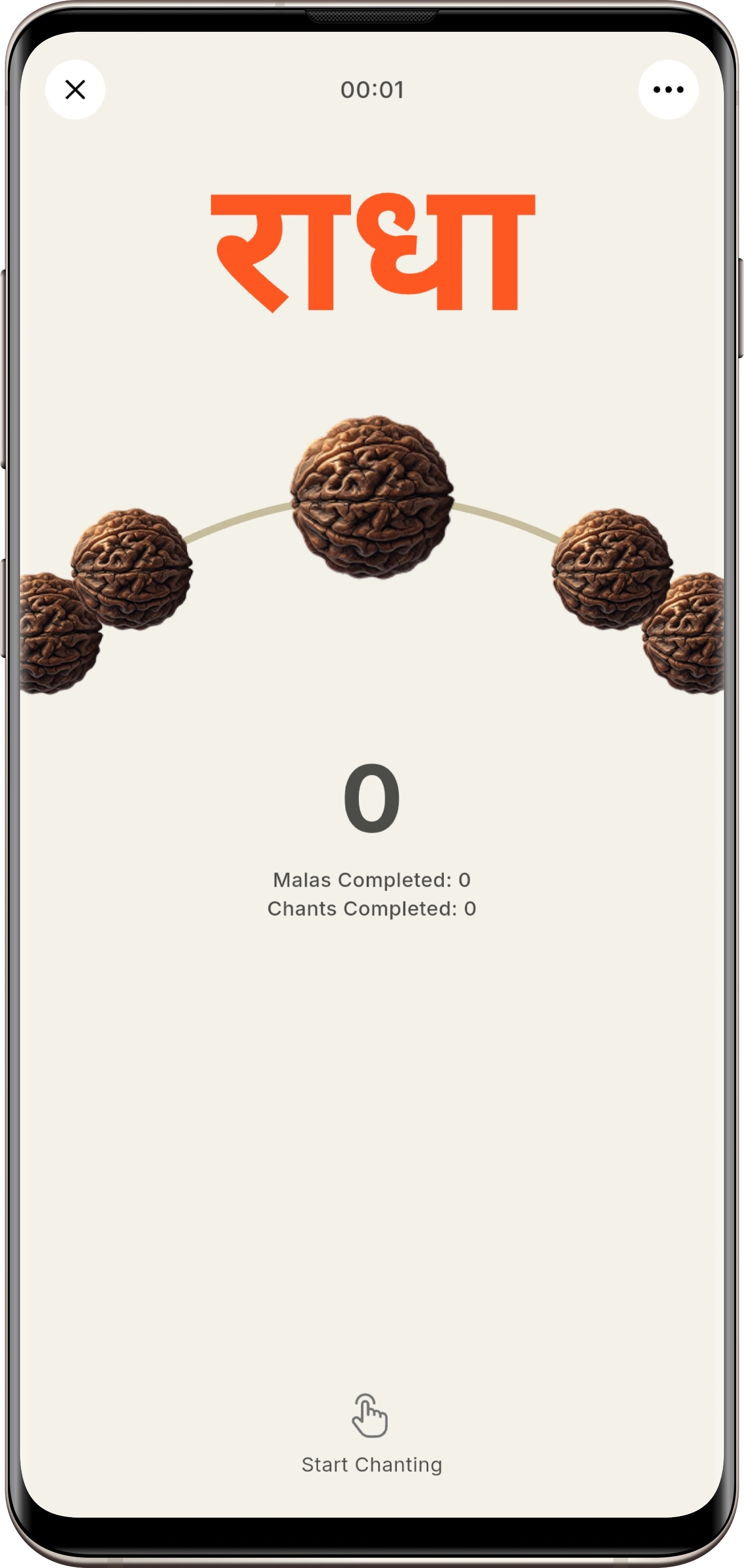
If you would like to keep a count of your chanting, the Divya Marg app is designed for Naam Jaap and chant counting. Whether you use an app, a mala, or simply your voice, the aim is the same as the bell's: to bring the mind gently back to the divine.
In short
The temple bell is a signal and an offering. It tells the deity and your own mind that worship is beginning. Its meaning comes from tradition, devotion, and symbolism, and its calming effect is best understood as a way of focusing attention rather than a scientific guarantee.
Frequently Asked Questions About Temple Bells
Why do we ring a bell when entering a temple?
Traditionally, it is a respectful way of announcing your arrival before the deity and marking the step from everyday life into sacred space. Many devotees also feel it helps them settle their mind before prayer.
What is the spiritual meaning of ringing a temple bell?
In devotional understanding, the bell welcomes the divine, creates an auspicious atmosphere, and awakens attention for worship. Many people also compare its sound to Om. These are traditional and symbolic meanings, and they are understood differently across traditions.
Why is a bell used during Hindu puja?
A bell is commonly rung to begin puja, invite the deity, and mark important moments such as offerings and aarti. It also helps the person worshipping to focus. The exact timing varies by family and tradition.
Is there a scientific reason for ringing temple bells?
There is no solid scientific proof for the popular claims that temple bells heal the brain or purify the air. A reasonable view is that a clear sound can help bring attention to the present and may help some people feel calmer before prayer.
Is ringing a temple bell compulsory?
No. It is a widely followed custom, not a requirement. You can worship sincerely without ringing a bell, and some temples or situations may not involve one.
Why are bells placed at temple entrances?
Placing bells at the entrance lets each visitor ring one while entering, and it symbolically marks the threshold between the outer world and sacred space. It also lets the sound carry through the temple.
How many times should you ring a temple bell?
There is no single rule that applies everywhere. Most people ring it once or a few times, gently. If your family or temple follows a specific custom, it is best to follow that.
What is the temple bell called in Hinduism?
It is called a ghanta (also written ghantā). A large one usually hangs at the temple, while a smaller handbell is used by priests and worshippers during puja and aarti.
What are the benefits of ringing a temple bell?
Devotees commonly say it helps them feel focused, calm, and ready to pray, and it adds a sense of auspiciousness to worship. These are personal and devotional benefits, not guaranteed outcomes.

Begin your Naam Jaap today
Offline-first and built entirely around one purpose — helping you show up for your practice, every single day.
- Free, always
- Works offline
- No ads