Dhanteras Mantra: Mantras to Chant on Dhanteras With Meaning
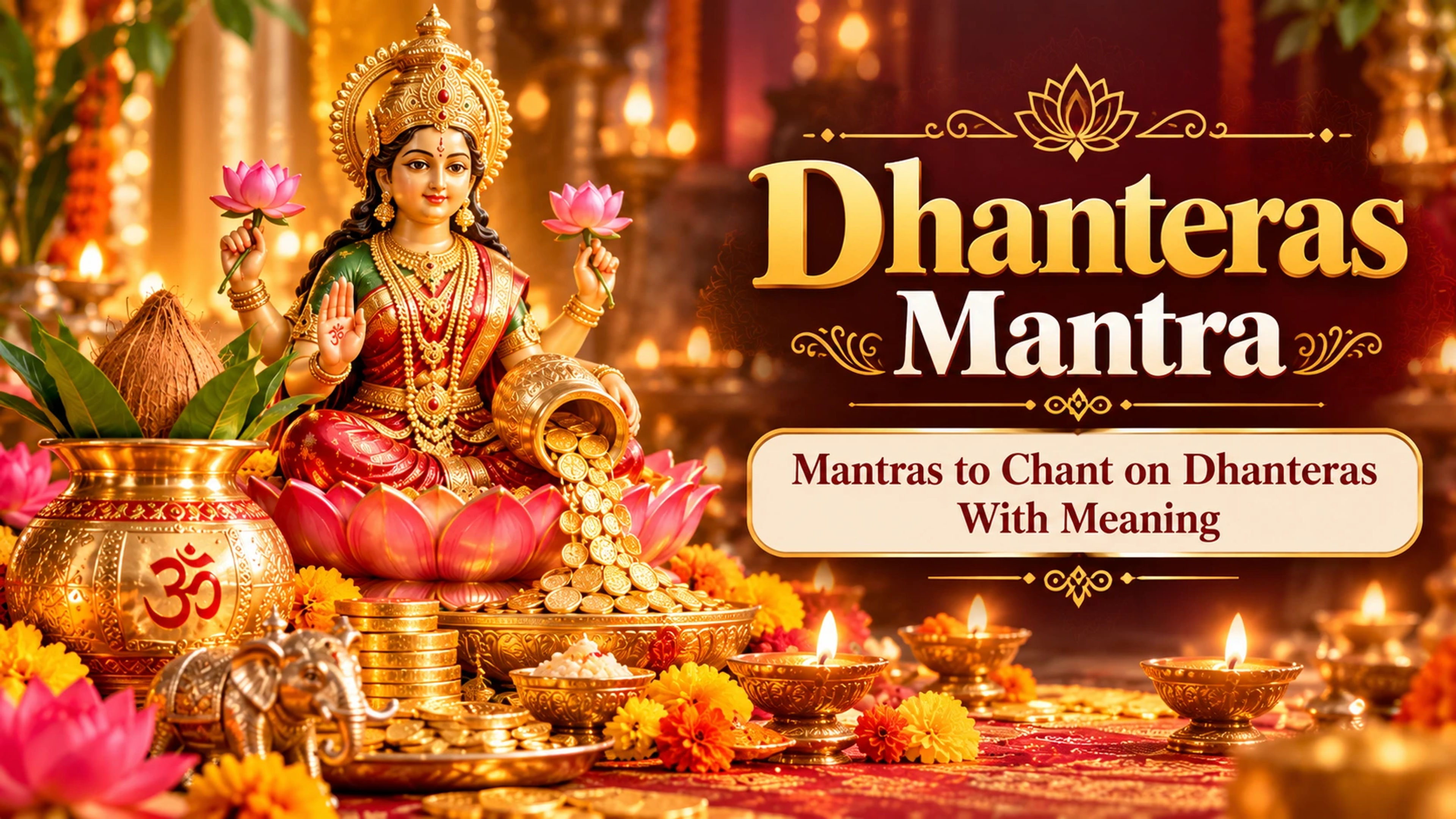
There is no single mantra that every household must chant on Dhanteras. Different families use different mantras depending on whom they worship that evening: Lord Dhanvantari, Goddess Lakshmi, Lord Kubera, or all three.
This guide brings together a small set of well-known Dhanteras mantras in Devanagari, with transliteration, simple English and Hindi meaning, and practical guidance on how and how many times to chant them. Dhanteras 2026 is on Friday, 6 November 2026, but the guide is meant to stay useful in every year. Mantras here are devotional practices. They are not guarantees of wealth, health or any other outcome.
Table of contents
Key takeaways
- There is no single official Dhanteras mantra. Households choose according to their tradition and the deity they worship.
- Commonly used mantras: the Dhanvantari mantra (for Dhanvantari Jayanti), a Lakshmi mantra, and a Kubera mantra in homes that worship Kubera.
- Short mantras such as Om Dhanvantaraye Namah and Om Mahalakshmyai Namah are easy for beginners.
- 108 is a common devotional counting number, but no Dhanteras mantra must be chanted exactly 108 times. Fewer repetitions, or chanting for a fixed time, are equally valid.
- A mala is helpful but not necessary. You can chant aloud, softly, or silently, with or without a lamp.
- Dhanteras 2026 is on Friday, 6 November. The New Delhi puja muhurat is 6:02 PM to 7:57 PM IST, and it varies by city.
What Is the Dhanteras Mantra?
When people search for the Dhanteras mantra, they often expect one fixed chant. In practice, Dhanteras is a day with several threads of worship, and each has its own mantras.
- Lord Dhanvantari: Dhanteras is also observed as Dhanvantari Jayanti, the day of the divine physician of Ayurveda.
- Goddess Lakshmi: Many homes worship Lakshmi in the evening, though the main Lakshmi Puja of the festival is on Diwali night two days later.
- Lord Kubera: In many households, Kubera is worshipped along with Lakshmi on Dhanteras. This is a traditional practice, not a universal requirement.
- Yama Deepam: A lamp is lit for Yama in the evening. Families follow their own customs for any verse recited with it.
This is why different websites show different Dhanteras mantras. They are not contradicting each other. They reflect different traditions. Pick the one that matches your family practice or your guru's guidance. If you are unsure, a short Dhanvantari or Lakshmi mantra is a simple and respectful choice.
| Type of mantra | Connected with | Commonly used by |
|---|---|---|
| Dhanvantari mantra | Dhanvantari Jayanti, the day of Lord Dhanvantari | Families who worship Dhanvantari, and the Ayurveda community |
| Lakshmi mantra | Evening worship of Goddess Lakshmi during the Diwali period | Most households that do a Dhanteras evening puja |
| Kubera mantra | Worship of Kubera with Lakshmi on Dhanteras | Households and business families following this tradition |
| Lakshmi Puja mantras for Diwali | The main Lakshmi Puja on Diwali night | Used on Diwali day; they overlap with the Lakshmi mantras on Dhanteras |
Dhanvantari Mantra for Dhanteras
Lord Dhanvantari is regarded in Hindu tradition as the physician of the gods and the deity of Ayurveda, and is considered an avatar of Lord Vishnu. According to the Samudra Manthan account found in the Puranic tradition, he emerged from the cosmic ocean carrying a pot of amrita. Because tradition places this on Krishna Trayodashi, Dhanteras is also observed as Dhanvantari Jayanti.
Devotees who chant his mantra do so as an act of reverence and gratitude for health and healing wisdom. It is a devotional practice and not a medical treatment. Please see a qualified doctor for any health concern.
Dhanvantari Mantra
ॐ नमो भगवते वासुदेवाय धन्वन्तरये अमृतकलशहस्ताय सर्वामयविनाशनाय त्रैलोक्यनाथाय श्रीमहाविष्णवे नमः
Om Namo Bhagavate Vasudevaya Dhanvantaraye Amrita-kalasha-hastaya Sarvamaya-vinashanaya Trailokya-nathaya Shri Maha-Vishnave Namah
Meaning: Salutations to the blessed Lord Vasudeva, to Dhanvantari who holds the pot of amrita in his hand, who is praised as the remover of all ailments and the lord of the three worlds, to Shri Mahavishnu. Hindi: भगवान वासुदेव को नमस्कार, अमृत-कलश धारण करने वाले, त्रिलोक के स्वामी भगवान धन्वन्तरि और श्रीमहाविष्णु को नमस्कार।
Traditional context: This is the best-known Dhanvantari invocation and it is widely published, with small spelling variations across sources. It opens with Om Namo Bhagavate Vasudevaya, the well-known twelve-syllable Vishnu mantra, followed by praise of Dhanvantari. The phrase about removing ailments is a devotional epithet, not a medical claim.
How it can be chanted: Many devotees chant it during the evening puja, after lighting a lamp and offering flowers to Dhanvantari's image. For a fuller Dhanvantari puja sequence with its verses, see Drik Panchang's Dhanvantari Puja Vidhi.
Short Dhanvantari Mantra (for beginners)
ॐ धन्वन्तरये नमः
Om Dhanvantaraye Namah
Meaning: Salutations to Lord Dhanvantari. Hindi: भगवान धन्वन्तरि को नमस्कार।
This short form is a simple namah mantra using Dhanvantari's name, which also appears in his traditional lists of names. It is easy to remember and works well for a few minutes of quiet chanting or for counting on a mala.
Lakshmi Mantra for Dhanteras
Goddess Lakshmi is worshipped in Hindu tradition as the goddess of wealth, fortune and auspiciousness, and as the consort of Lord Vishnu. Many homes light lamps and worship her in the evening of Dhanteras, as the Diwali festival period begins. Her main worship of the festival is on Diwali night, so the same mantras are also used on that day.
Lakshmi Mantra
ॐ श्रीं ह्रीं श्रीं कमले कमलालये प्रसीद प्रसीद ॐ श्रीं ह्रीं श्रीं महालक्ष्म्यै नमः
Om Shreem Hreem Shreem Kamale Kamalalaye Praseeda Praseeda Om Shreem Hreem Shreem Mahalakshmyai Namah
Meaning: O Goddess who is seated in the lotus and dwells in the lotus, be gracious, be gracious. Salutations to Mahalakshmi. Shreem and Hreem are bija (seed) syllables traditionally associated with Lakshmi. Hindi: हे कमल में विराजमान कमलालया देवी, प्रसन्न हों, प्रसन्न हों। महालक्ष्मी को नमस्कार।
Traditional context: This is a widely used Lakshmi mantra listed on established Panchang and mantra sites. In Hindu devotional practice, it is chanted as a prayer for Lakshmi's grace. It is not a formula that guarantees money or business success.
How it can be included in Dhanteras worship: Many devotees chant it after lighting the lamp and offering flowers to Lakshmi, and before or after the aarti. Some families chant it again on Diwali night.
Simple Lakshmi Mantra (for beginners)
ॐ महालक्ष्म्यै नमः
Om Mahalakshmyai Namah
Meaning: Salutations to Goddess Mahalakshmi. Hindi: माँ महालक्ष्मी को नमस्कार।
This is a plain namah form of address to Mahalakshmi. It has no bija syllables, so it is the easiest to pronounce and remember, and it suits a first-time chanter.
Kubera Mantra and Its Traditional Context
In Hindu tradition, Lord Kubera is the lord of the Yakshas and the guardian of treasures. Panchang sources note that he is worshipped along with Lakshmi on Dhanteras and Diwali. Many families and business communities follow this custom. Others worship only Lakshmi and Ganesh. Kubera worship is therefore a traditional practice in some households, not a mandatory part of Dhanteras.
Kubera Mantra
ॐ यक्षाय कुबेराय वैश्रवणाय धनधान्याधिपतये धनधान्यसमृद्धिं मे देहि दापय स्वाहा
Om Yakshaya Kuberaya Vaishravanaya Dhanadhanyadhipataye Dhanadhanya-samriddhim Me Dehi Dapaya Svaha
Meaning: Om, salutations to Kubera the Yaksha, son of Vishrava, lord of wealth and grain. Grant me, and cause to be granted, abundance of wealth and grain. Svaha is an invocatory closing word. Hindi: यक्षराज कुबेर, वैश्रवण, धन-धान्य के अधिपति को नमन; मुझे धन-धान्य की समृद्धि प्रदान करें।
How it is used: Households that worship Kubera usually chant it during the evening puja, alongside Lakshmi's mantra. It is a prayer for sufficiency and abundance, not a promise of any financial result. The text above matches the main Kubera mantra listed on Drik Panchang's Kubera mantra page, which also lists other Kubera mantras used in different traditions.
Dhanteras Mantra in Hindi: Quick Reference
If you are searching for the Dhanteras mantra in Hindi, the Devanagari text is already given above for each mantra. This table gives a quick overview in Hindi and English.
| मंत्र (Mantra) | संक्षिप्त अर्थ (Hindi) | Short meaning (English) |
|---|---|---|
| ॐ धन्वन्तरये नमः | भगवान धन्वन्तरि को नमस्कार | Salutations to Lord Dhanvantari |
| ॐ महालक्ष्म्यै नमः | माँ महालक्ष्मी को नमस्कार | Salutations to Goddess Mahalakshmi |
| ॐ श्रीं ह्रीं श्रीं कमले कमलालये प्रसीद प्रसीद ॐ श्रीं ह्रीं श्रीं महालक्ष्म्यै नमः | हे कमलालया देवी, प्रसन्न हों; महालक्ष्मी को नमस्कार | O lotus-dwelling Goddess, be gracious; salutations to Mahalakshmi |
| ॐ यक्षाय कुबेराय वैश्रवणाय धनधान्याधिपतये धनधान्यसमृद्धिं मे देहि दापय स्वाहा | धन-धान्य के अधिपति कुबेर को नमन; समृद्धि की प्रार्थना | Salutations to Kubera, lord of wealth and grain; a prayer for abundance |
Which Dhanteras Mantra Should You Choose?
- Follow your family or guru first. If your household already has a Dhanteras mantra, continue with it.
- New to chanting? Choose one short mantra, such as Om Dhanvantaraye Namah or Om Mahalakshmyai Namah, and stay with it.
- Worshipping Lakshmi in the evening? The Lakshmi mantra above is a widely used choice.
- Worshipping Dhanvantari for Dhanvantari Jayanti? Use the Dhanvantari mantra.
- Following the Lakshmi-Kubera custom? Add the Kubera mantra.
- Not sure how to pronounce a long mantra? A short, correctly pronounced mantra is better than a long one chanted with worry. A knowledgeable elder or priest can help you with pronunciation.
How to Chant Dhanteras Mantras
There is no single compulsory method. The points below are common and practical, and your tradition may differ.
- When to chant: Many devotees chant in the evening puja during Pradosh Kaal. In 2026, Dhanteras is on Friday, 6 November, and the New Delhi puja muhurat is 6:02 PM to 7:57 PM IST. Timings differ by city, so check a Panchang such as Drik Panchang's Dhanteras page for your location. You can also chant earlier in the day or at any quiet time.
- During puja or separately: Both are fine. Many people chant during the puja after offering flowers and before the aarti. Others prefer a separate quiet sitting afterwards.
- Lighting a diya: Lighting a lamp while chanting is a common and welcome custom, but it is not a compulsory condition.
- Posture and preparation: Sit comfortably in a clean place, after washing hands and face. Face any direction your tradition prefers, and keep the mind calm.
- Aloud, softly or silently: All three are accepted in practice. Many people chant softly so they can focus. Silent chanting is useful when you are in a shared space or travelling.
- Pronunciation: Go slowly. Understanding the meaning helps you chant with attention.
How Many Times Should You Chant a Dhanteras Mantra?
There is no mandatory repetition count for Dhanteras mantras. Common practices include chanting once with the puja, 11, 21 or 51 times, one mala of 108, or chanting for a fixed period of time. The count varies by mantra, tradition and what a family or guru has taught.
Why is 108 popular? In Hindu japa, the mala traditionally has 108 beads, and the number is widely regarded as sacred. Various explanations are offered in different traditions, and none is universal. Chanting 108 times is a popular devotional practice. It is not a rule that every Dhanteras mantra must be chanted exactly 108 times.
Beginners can start with 11 or 21 repetitions, or with five minutes of calm chanting. A small practice done regularly with attention is more meaningful than a large count done in a rush.
Can You Chant Dhanteras Mantras Without a Mala?
Yes. A mala is helpful for keeping count and for building a steady habit, but it is not necessary. You can count on your fingers, chant for a fixed time, or simply chant without counting. If you do use a mala, it is traditionally handled gently and not crossed over the sumeru bead.
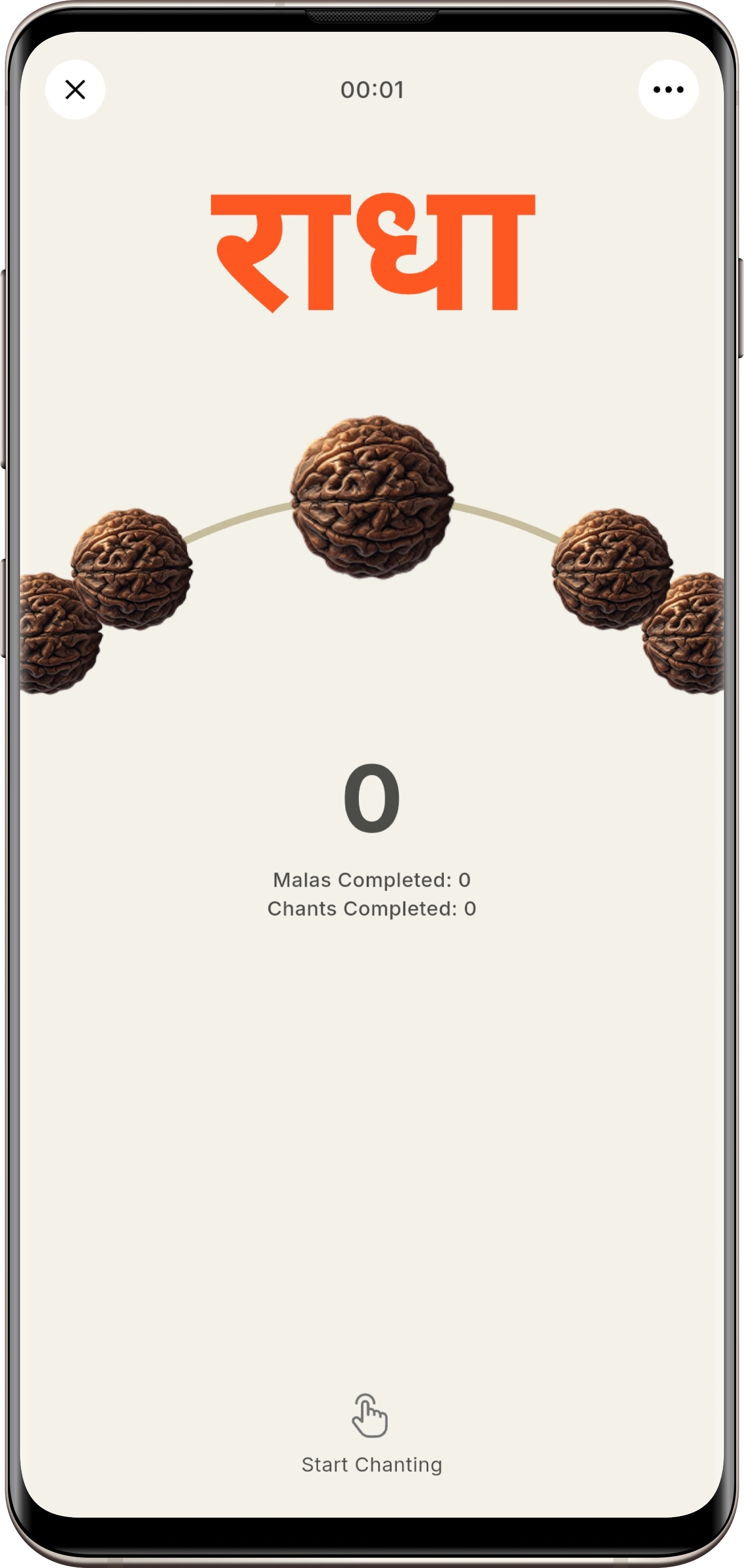
If you like to keep track of your repetitions, the Divya Marg app has an offline Jaap counter with daily goals, mala and count tracking, and progress analytics. It can be a convenient way to keep a regular chanting habit going through the Diwali days and beyond. It is only an aid, and sincerity matters more than the number.
Dhanteras Mantras vs Lakshmi Puja Mantras
The terms get mixed up online. A Dhanteras mantra is whatever a household chants on the day of Dhanteras, and this commonly means a mantra for Dhanvantari, Lakshmi or Kubera. Lakshmi Puja mantras are chanted mainly on Diwali night, which is the main day of Lakshmi worship. Because Lakshmi is also worshipped on Dhanteras, some of the same mantras are used on both days. Dhanvantari mantras are specific to Dhanvantari Jayanti, and Kubera mantras are specific to Kubera worship.
A note on claims and benefits
You will see many websites promise that a particular mantra brings wealth, cures illness or guarantees protection. Hindu tradition regards mantras as devotional practice, and no outcome is guaranteed. Chant for devotion, steadiness and gratitude, and take practical care of your finances and health in the ordinary way.
Making Dhanteras Mantra Chanting a Steady Practice
Naam Jaap, the repeated remembrance of a divine name or mantra, is not limited to festival days. If a Dhanteras mantra feels meaningful, you may choose to keep chanting it for a few minutes each morning or evening after Diwali too. Start small, choose one mantra, keep a fixed time and let the habit grow naturally.
Frequently Asked Questions About Dhanteras Mantras
Which mantra is chanted on Dhanteras?
There is no single mantra for all households. Commonly used ones include the Dhanvantari mantra, a Lakshmi mantra such as Om Mahalakshmyai Namah, and a Kubera mantra in homes that worship Kubera. Follow your family or guru's tradition.
What is the Dhanteras puja mantra?
Many families chant a Lakshmi mantra during the evening puja, and some add a Dhanvantari or Kubera mantra. Since traditions differ, there is no one official Dhanteras puja mantra.
Which Lakshmi mantra can be chanted on Dhanteras?
A widely used option is Om Shreem Hreem Shreem Kamale Kamalalaye Praseeda Praseeda Om Shreem Hreem Shreem Mahalakshmyai Namah. A simpler choice is Om Mahalakshmyai Namah, which is easier for beginners.
What is the Dhanvantari mantra?
The best-known form is Om Namo Bhagavate Vasudevaya Dhanvantaraye Amrita-kalasha-hastaya Sarvamaya-vinashanaya Trailokya-nathaya Shri Maha-Vishnave Namah. A short form is Om Dhanvantaraye Namah. It is a devotional prayer to Lord Dhanvantari and not a medical treatment.
Is there one specific Dhanteras mantra?
No. Dhanteras involves worship of Dhanvantari, Lakshmi, and in many homes Kubera, so different mantras are used by different traditions and families.
How many times should I chant a Dhanteras mantra?
There is no compulsory number. Common choices are 11, 21, 51 or 108 repetitions, or chanting for a fixed time. 108 is a popular devotional count, but it is not required for any Dhanteras mantra.
Can I chant a Dhanteras mantra without a mala?
Yes. A mala helps with counting, but it is not necessary. You can count on your fingers, chant for a set time, or chant without counting.
Can beginners chant Dhanteras mantras?
Yes. Beginners can start with a short mantra such as Om Dhanvantaraye Namah or Om Mahalakshmyai Namah. Pronounce it slowly, chant a small number of times, and increase gradually if you wish.
Can I chant the Lakshmi mantra on Dhanteras?
Yes. Many households worship Lakshmi in the evening of Dhanteras and chant a Lakshmi mantra. The main Lakshmi Puja of the festival is on Diwali night, and the same mantras can be chanted then as well.
What is the best time to chant Dhanteras mantras?
Many devotees chant during the evening puja in Pradosh Kaal. In 2026, Dhanteras is on Friday, 6 November, and the New Delhi puja muhurat is 6:02 PM to 7:57 PM IST. Timings vary by city, so check a Panchang for yours. You may also chant at any other quiet time of the day.
Can I chant silently, or must it be aloud?
Both are accepted in practice. You can chant aloud, softly or silently, depending on your comfort and your tradition.
Is a mantra guaranteed to bring wealth or good health?
No. Mantras are devotional practices. Tradition associates them with grace and spiritual growth, but no mantra guarantees wealth, health or protection.
Begin your Naam Jaap today
Offline-first and built entirely around one purpose — helping you show up for your practice, every single day.
- Free, always
- Works offline
- No ads