Dhanteras 2026: Date, Puja Vidhi, Muhurat, Samagri & Significance

Dhanteras 2026 falls on Friday, 6 November 2026. The evening puja is traditionally done in Pradosh Kaal, and the puja muhurat for New Delhi is 6:02 PM to 7:57 PM IST. Timings change from city to city, so this guide gives a city-wise table along with a beginner-friendly puja vidhi, samagri checklist, Yama Deepam details, Dhanvantari background, mantras and the customs around shopping.
Dhanteras opens the Diwali festival period, and Diwali's main Lakshmi Puja follows on Sunday, 8 November 2026. Rituals vary between regions and families, so treat this as a practical guide rather than a single fixed rulebook.
Table of contents
Key takeaways
- Dhanteras (Dhantrayodashi) 2026 is on Friday, 6 November 2026, on Krishna Paksha Trayodashi of Kartik.
- Trayodashi Tithi runs from about 10:30 AM on 6 November to about 10:47 AM on 7 November (IST). Because it covers the evening Pradosh Kaal on 6 November, that is the day of observance.
- Puja muhurat for New Delhi: 6:02 PM to 7:57 PM IST. Other cities differ by local sunset, so check a Panchang for your city.
- Yama Deepam is commonly listed for the evening of 6 November. Some families light it on the following evening, so follow your family tradition.
- Dhanteras is also observed as Dhanvantari Jayanti, honouring Lord Dhanvantari, the physician of the gods and the deity of Ayurveda.
- Buying gold, silver or utensils is a widely followed custom, not a religious requirement.
- Mantra chanting is a devotional practice. 108 is a common counting number, but no Dhanteras mantra must be chanted exactly 108 times.
When Is Dhanteras 2026? Date and Tithi
Dhanteras 2026 will be observed on Friday, 6 November 2026. It is celebrated on the Trayodashi (thirteenth lunar day) of the Krishna Paksha in the month of Kartik, which is why it is also called Dhantrayodashi or Dhana Trayodashi.
| Detail | Dhanteras 2026 (IST) |
|---|---|
| Date and day | Friday, 6 November 2026 |
| Trayodashi Tithi begins | About 10:30 AM, 6 November 2026 |
| Trayodashi Tithi ends | About 10:47 AM, 7 November 2026 |
| Puja muhurat (New Delhi) | 6:02 PM to 7:57 PM |
| Yama Deepam | Evening of 6 November in most Panchangs (see the Yama Deepam section) |
| Main Diwali Lakshmi Puja | Sunday, 8 November 2026 |
Why 6 November and not 7 November? The Dhanteras puja is an evening ritual, and the tithi must be present in the evening Pradosh Kaal. On 6 November, Trayodashi is running through the evening, so that is the day of observance. Tithi timings above follow the widely published calculations of Drik Panchang and other Panchang sources. Small differences of a few minutes between sources are normal.
Dhanteras and Diwali are not the same day
Dhanteras is the first day of the five-day Diwali festival period. In 2026, Dhanteras is on Friday, 6 November, and the main Diwali Lakshmi Puja is on Sunday, 8 November. Choti Diwali (Naraka Chaturdashi) is commonly observed on 7 November, though some Panchangs differ.
Dhanteras 2026 Puja Muhurat and Pradosh Kaal
The traditionally preferred time for Dhanteras Lakshmi-Kuber Puja is Pradosh Kaal, the evening period that begins after sunset. Many Panchangs narrow it further to the stretch when Vrishabha Lagna (a fixed, or sthir, ascendant) overlaps with Pradosh Kaal while Trayodashi is still running.
The muhurat depends on your local sunset, so there is no single time for all of India. The table below shows the Dhanteras Puja Muhurat for major Indian cities as calculated by Drik Panchang, in local time on 6 November 2026.
| City | Dhanteras Puja Muhurat (6 Nov 2026) |
|---|---|
| New Delhi | 6:02 PM to 7:57 PM |
| Noida | 6:01 PM to 7:57 PM |
| Chandigarh | 6:00 PM to 7:54 PM |
| Jaipur | 6:11 PM to 8:07 PM |
| Ahmedabad | 6:30 PM to 8:28 PM |
| Mumbai | 6:35 PM to 8:35 PM |
| Pune | 6:32 PM to 8:31 PM |
| Hyderabad | 6:15 PM to 8:13 PM |
| Bengaluru | 6:25 PM to 8:20 PM |
| Chennai | 6:14 PM to 8:10 PM |
| Kolkata | 5:28 PM to 7:26 PM |
Why timings differ between websites
You may see slightly different muhurat windows on different sites. Some quote the Vrishabha Lagna window, others quote the full Pradosh Kaal, and Panchang calculation methods and traditions vary. Cities also have different sunset times. For your exact muhurat, check a trusted Panchang for your own city, or ask your family priest or local temple.
If you cannot do the puja within the muhurat, many families simply perform it in the evening Pradosh period on the same day. Choose the time that is practical and sincere for your household.
What Is Dhanteras?
The name combines Dhan (wealth) and Teras (the thirteenth day). It is the first day of the Diwali festival period and is observed in many parts of India with cleaning, lighting lamps, worship and shopping.
Three themes are woven into the day. Lakshmi (and, in many homes, Kubera) is worshipped for prosperity. Dhanvantari, the divine physician, is remembered for health and Ayurveda. Yama Deepam, a lamp lit for Yama, is a customary prayer for the safety of the family. How much weight each theme gets differs by region and household.
Why Is Dhanteras Celebrated?
According to the traditional account of Samudra Manthan (the churning of the cosmic ocean), Lord Dhanvantari emerged carrying a pot of amrita on Krishna Trayodashi, just before Deepavali. Many Panchang sources also say Goddess Lakshmi emerged from the ocean at this time, though Lakshmi is more prominently worshipped on the Diwali amavasya two days later.
Another popular folk story, usually told as a regional legend, is about a young prince whose horoscope foretold death soon after marriage. His wife is said to have piled lamps and jewellery at the door and stayed awake singing, and Yama is said to have turned away. This story is commonly linked with the Yama Deepam custom. It is a folk tradition, not a universally accepted textual fact.
Dhanteras marks the start of Diwali because it is the first of the five days of celebration. Families begin cleaning, decorating, lighting lamps and preparing for the festival from this day.
Dhanteras Puja Vidhi: A Simple Step-by-Step Guide
There is no single universal method. Below is a commonly followed sequence suitable for beginners. Your family priest or tradition may add, skip or reorder steps, and that is perfectly valid.
- Clean the home and puja space (commonly followed). Clean the house in the days before Dhanteras, and tidy the puja area on the day. Many families draw a rangoli at the entrance.
- Bathe and dress simply. Wear clean clothes before sitting for the puja.
- Set up the puja area. Place a clean cloth on a raised platform or chowki. Keep images or idols of Lakshmi and Ganesh. Many families also include Kubera and Lord Dhanvantari.
- Prepare the kalash (common practice). Fill a kalash with water, place mango leaves and a coconut on top, and keep it beside the deities.
- Begin with Ganesh. Ganesh is traditionally remembered first before any auspicious ritual.
- Light the diya and incense. Offer a ghee or oil lamp and incense.
- Offer flowers, kumkum, haldi and akshat. Offer these with devotion to each deity.
- Offer naivedya. Offer sweets, fruits or prasad. In many North Indian homes, whole coriander seeds (dhaniya) with jaggery are offered. This is a regional custom.
- Worship wealth items (traditional in many homes). Newly bought coins, gold, silver or utensils may be kept near the deity and offered flowers and kumkum.
- Chant a mantra or sing devotional hymns. Choose a mantra from your own tradition. See the mantras section below.
- Perform aarti. Do aarti to Lakshmi and Ganesh, and to Dhanvantari if he is worshipped in your home, then distribute prasad.
- Light Yama Deepam after sunset. See the Yama Deepam section for the custom and timing.
Family and sampradaya differences
Some families perform a detailed shodashopachara puja with a priest, while others offer a simple lamp and prayer. Some worship Dhanvantari separately, and some focus on Lakshmi-Kuber. Business families often include the new account books or tools. None of these is the one correct way, so follow what your household or guru traditionally does.
Dhanteras Puja Samagri List
These are items commonly used in Dhanteras puja. You do not need everything. Use what your tradition calls for and what is practical.
| Item | Use in the puja |
|---|---|
| Images or idols of Lakshmi, Ganesh (and Kubera or Dhanvantari if worshipped) | The deities worshipped in the puja |
| Clay diyas | For the main puja lamp, lamps around the home, and the Yama Deepam |
| Ghee, sesame oil or mustard oil | To fuel the lamps (ghee for the main lamp is common, and mustard oil is often cited for Yama Deepam) |
| Cotton wicks | For the diyas |
| Incense sticks and dhoop | To be offered during the puja |
| Flowers and garlands | Offered to the deities; marigold and lotus are popular |
| Kumkum, haldi and akshat (unbroken rice) | For tilak and offering to the deities |
| Kalash with water, mango leaves and coconut | Placed beside the deities as an auspicious setup |
| Fruits, sweets or dhaniya with jaggery | Naivedya or prasad |
| Panchamrit (milk, curd, honey, ghee, sugar) | Used where an abhisheka or panchamrit offering is traditionally performed |
| Betel leaves and supari | Commonly offered in many households |
| New coins, gold, silver or a new utensil | Placed near the deity if purchased on Dhanteras |
| Gangajal or clean water | For purification and sprinkling |
| Aarti plate | For performing aarti |
Yama Deepam: The Lamp for Yama
Yama Deepam (also called Yama Deepak or Yamadeep) is a lamp lit outside the home in the evening of Dhanteras and dedicated to Yama, the deity of death and dharma. The traditional custom is to place a clay diya at the threshold or outside the door, facing south, the direction associated with Yama.
Traditionally it is a prayer for the well-being and long life of the family members. It is a devotional custom and not a guarantee of protection from any misfortune.
Timing in 2026: Drik Panchang lists Yama Deepam on Friday, 6 November 2026, to be lit in the evening after sunset during Pradosh Kaal. A few Panchangs mention the following evening, 7 November, and regional traditions differ. If your family has a fixed practice, follow it. Exact local timing can be confirmed on Drik Panchang's Yama Deepam page or from your local priest.
Commonly cited Yama Deepam verse
मृत्युना पाशदण्डाभ्यां कालेन श्यामया सह। त्रयोदश्यां दीपदानात् सूर्यजः प्रीयतां मम॥
Mrityuna pasha-dandabhyam kalena shyamaya saha | Trayodashyam deepadanat suryajah preeyatam mama ||
Meaning: May Yama, the son of Surya, be pleased with me through this offering of a lamp on Trayodashi, along with Mrityu, the noose and staff, Kala (Time) and Shyama. This verse is traditionally recited while offering the Yama Deepam. Wording can differ slightly across sources and families.
Dhanvantari and Dhanteras: Dhanvantari Jayanti
Lord Dhanvantari is revered in Hindu tradition as the physician of the gods and the deity of Ayurveda. He is regarded as an avatar of Lord Vishnu and is traditionally shown holding a pot of amrita, and often a conch, a discus and medicinal herbs.
Dhanteras is associated with him because, in the Samudra Manthan account, he emerged on this Trayodashi. The day is therefore observed as Dhanvantari Jayanti (Dhanvantari Trayodashi), his traditional birth anniversary. Many Ayurvedic practitioners and institutions in India remember him on this day, and it is also observed as National Ayurveda Day in India.
For devotees, worshipping Dhanvantari is an expression of gratitude for health and healing wisdom. It is a devotional practice and not a substitute for medical care. Please consult a qualified doctor for any health concern.
Dhanteras Mantras
Different households and traditions use different mantras on Dhanteras. The following are widely used in devotional practice. They are prayers, not formulas that guarantee any outcome. What matters most is sincere, steady remembrance.
Dhanvantari mantra (longer form)
ॐ नमो भगवते वासुदेवाय धन्वन्तरये अमृतकलशहस्ताय सर्वामयविनाशनाय त्रैलोक्यनाथाय श्रीमहाविष्णवे नमः
Om Namo Bhagavate Vasudevaya Dhanvantaraye Amrita-kalasha-hastaya Sarvamaya-vinashanaya Trailokya-nathaya Shri Maha-Vishnave Namah
Meaning: Salutations to Lord Dhanvantari, a form of Vasudeva, who holds the pot of amrita, who is praised as the remover of all ailments, the lord of the three worlds, to Shri Mahavishnu. This is a devotional praise and not a medical claim.
Dhanvantari mantra (short form)
ॐ धन्वन्तरये नमः
Om Dhanvantaraye Namah
Meaning: Salutations to Lord Dhanvantari. This short form is easy for beginners and for regular counting.
Lakshmi mantra
ॐ श्रीं ह्रीं श्रीं कमले कमलालये प्रसीद प्रसीद ॐ श्रीं ह्रीं श्रीं महालक्ष्म्यै नमः
Om Shreem Hreem Shreem Kamale Kamalalaye Praseeda Praseeda Om Shreem Hreem Shreem Mahalakshmyai Namah
Meaning: O Goddess who dwells in the lotus, be gracious, be gracious. Salutations to Mahalakshmi. Shreem and Hreem are bija (seed) syllables traditionally associated with Lakshmi. This mantra is widely chanted during Diwali-season worship.
Simple Lakshmi mantra for beginners
ॐ महालक्ष्म्यै नमः
Om Mahalakshmyai Namah
Meaning: Salutations to Goddess Mahalakshmi. A short mantra that can be chanted by anyone, at any pace.
Kubera mantra
ॐ यक्षाय कुबेराय वैश्रवणाय धनधान्याधिपतये धनधान्यसमृद्धिं मे देहि दापय स्वाहा
Om Yakshaya Kuberaya Vaishravanaya Dhanadhanyadhipataye Dhanadhanya-samriddhim Me Dehi Dapaya Svaha
Meaning: Om, salutations to Kubera the Yaksha, son of Vishrava, lord of wealth and grain. Grant me, and cause to be granted, sufficiency of wealth and grain. This is a traditional prayer used in many homes that worship Kubera on Dhanteras.
About 108 repetitions
108 is a common devotional counting number, often used with a 108-bead mala. It is a popular practice and not a rule that every Dhanteras mantra must be chanted exactly 108 times. You may chant 11, 21, 54 or any number that fits your capacity and tradition, or simply chant for a fixed time.
What to Buy on Dhanteras
Buying something new on Dhanteras is one of the most popular customs, and it is traditionally seen as welcoming Lakshmi, the goddess of prosperity, into the home. These are customs and cultural traditions, not mandatory religious requirements. Buying an item does not guarantee wealth, and no one needs to spend beyond their means.
| Commonly bought | Traditional association |
|---|---|
| Gold or silver (jewellery, coins) | Seen as a symbol of prosperity. Small silver coins or Lakshmi-Ganesh coins are a popular choice. |
| Brass, copper or steel utensils | Linked to the Dhanvantari story, since he is said to have emerged with a pot of amrita. Many families buy at least one new utensil. |
| New broom (jhadu) | A common custom in some regions, where the broom is associated with cleanliness and the home's welfare. |
| Coriander seeds (dhaniya) | In some North Indian homes, they are bought and offered in puja, sometimes later sown. |
| Household items, vehicles or appliances | Many people time larger purchases for Dhanteras. This is a modern extension of the custom. |
| Lakshmi-Ganesh idols and puja items | Bought ahead of the Diwali Lakshmi Puja. |
| Books, diyas and decorations | Simple, affordable purchases that also fit the spirit of the day. |
For many families, a small, meaningful purchase, such as a single coin or a utensil, is considered just as acceptable as expensive ones. Panchangs also publish shopping muhurats for gold, and these vary by city. Check your local Panchang if you want to follow one.
What Not to Buy on Dhanteras: Traditional Beliefs
Some families avoid certain purchases on Dhanteras. These are traditional beliefs, not scriptural rules or established facts, and they vary widely by region and household. Many families do not follow them at all.
- Sharp objects such as knives and scissors. A common belief is to avoid them on this day.
- Iron or black-coloured items. Some families avoid these, though steel utensils are widely bought by others.
- Glass, ceramic or plastic items. In some households, these are considered less suited to the day than metal.
- Aluminium items. Some prefer brass, copper, silver or steel instead.
- Oil, ghee or leather goods. A few families avoid buying these on the day.
- Lending or borrowing money. In some traditions, people avoid starting or settling debts on Dhanteras.
A balanced view
If a purchase is genuinely needed, whether a household essential or a safety item, your family can decide for itself. Traditions are meant to support devotion and mindfulness, not to create anxiety.
Dhanteras Traditions Across India
- North India: Lakshmi-Ganesh and Kubera worship, buying gold, silver and utensils, and offering coriander seeds with jaggery are widely followed.
- Maharashtra and Gujarat: Dhanteras (Dhantrayodashi) is a major shopping and puja day, and business families often begin Diwali-season worship.
- South India: Dhanvantari Trayodashi and Yama Deepam are observed in some communities, and the main Diwali celebrations may fall on Naraka Chaturdashi.
- Ayurveda community: Dhanvantari Jayanti is observed with special prayers by many practitioners.
- Nepal: The Tihar festival begins around this time, with its own distinct customs.
Customs, deities emphasised and even dates differ from place to place. This guide describes widely reported traditions, not a rule for every region.
Dhanteras and Naam Jaap: A Steady Devotional Practice
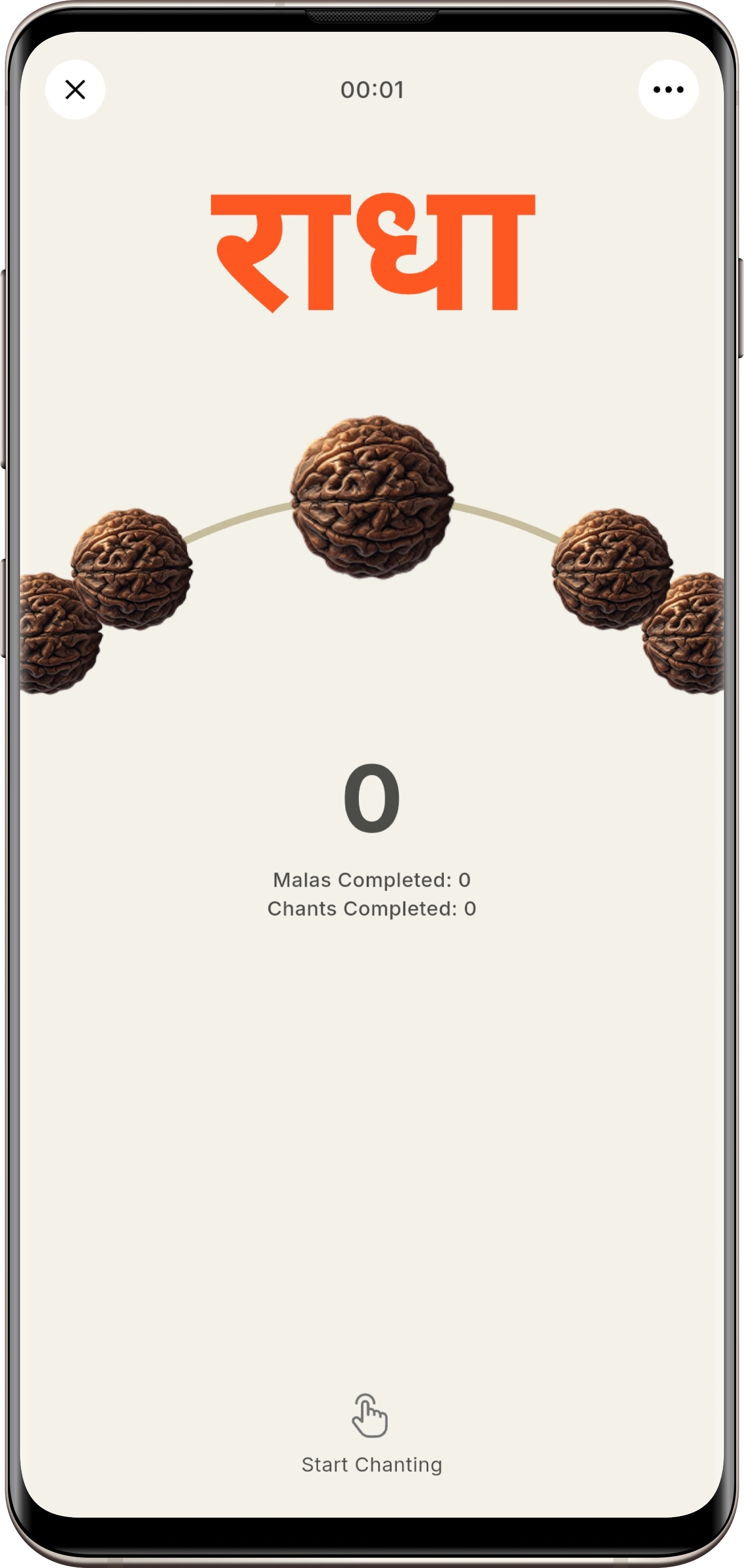
Festivals like Dhanteras are a natural time to begin or renew a daily chanting habit. Naam Jaap, the repetition of a divine name or mantra, is a simple practice that anyone can do, whether it is a few minutes of Om Dhanvantaraye Namah or Om Mahalakshmyai Namah during the festival days.
If you like to keep a count, the Divya Marg app offers offline Jaap and mantra counting, daily goals, mala and count tracking, and progress analytics. This can help devotees keep a regular practice going through Diwali and beyond. The tool is only an aid. Sincerity and consistency matter more than the numbers.
Frequently Asked Questions About Dhanteras
When is Dhanteras in 2026?
Dhanteras 2026 is on Friday, 6 November 2026. Trayodashi Tithi runs from about 10:30 AM on 6 November to about 10:47 AM on 7 November (IST), and it covers the evening Pradosh Kaal on 6 November.
What is the Dhanteras Puja Muhurat in 2026?
For New Delhi, Drik Panchang lists 6:02 PM to 7:57 PM on 6 November 2026. Other cities differ, for example Mumbai 6:35–8:35 PM, Kolkata 5:28–7:26 PM and Chennai 6:14–8:10 PM. Check a Panchang for your own city.
Why do different websites show different Dhanteras muhurat timings?
Some sources quote the Vrishabha Lagna window, others quote the full Pradosh Kaal. Timings also depend on local sunset and on the Panchang calculation method. Use a trusted Panchang for your city or follow your family priest.
What should we buy on Dhanteras?
Commonly bought items include gold, silver, coins, brass or steel utensils and a new broom, and some people also buy household items or vehicles. These are customs, not religious requirements, and a small, simple purchase is perfectly acceptable.
What should we not buy on Dhanteras?
Some families avoid sharp objects, iron or black items, glass, aluminium, oil or leather goods, and lending money on this day. These are traditional beliefs that vary by region and family. Many households do not follow them.
What is the significance of Dhanteras?
Dhanteras opens the Diwali festival period. It is associated with Lakshmi and Kubera for prosperity, Lord Dhanvantari for health and Ayurveda, and Yama Deepam as a prayer for the family's well-being.
What is Dhanvantari Jayanti?
Dhanvantari Jayanti is the traditional birth anniversary of Lord Dhanvantari, the physician of the gods, and it falls on the same Trayodashi as Dhanteras. In 2026, it is observed on 6 November. It is also observed as National Ayurveda Day in India.
What is Yama Deepam and when is it lit?
Yama Deepam is a lamp lit outside the home, facing south, on Dhanteras evening as a prayer to Yama for the family's well-being. In 2026, Drik Panchang lists it for the evening of 6 November. Some families light it on the next evening, so follow your family tradition.
What items are needed for Dhanteras Puja?
Common items are idols or images of Lakshmi and Ganesh, clay diyas, ghee or oil, cotton wicks, flowers, kumkum, haldi, akshat, incense, fruits and sweets, a kalash with mango leaves and coconut, and any new coins or utensils bought that day. Use what your tradition calls for.
Which mantra is chanted on Dhanteras?
It depends on the household. Common choices include Om Dhanvantaraye Namah for Dhanvantari, Om Mahalakshmyai Namah for Lakshmi, and a Kubera mantra in homes that worship Kubera. Chanting 108 times is a popular counting practice but not a requirement.
Is Lakshmi Puja performed on Dhanteras?
Yes, many families worship Lakshmi, often with Kubera and Ganesh, in the evening of Dhanteras. The main Lakshmi Puja of Diwali is on the Amavasya two days later, which is Sunday, 8 November in 2026.
Is Dhanteras the same as Diwali?
No. Dhanteras is the first day of the five-day Diwali festival period. In 2026, it is on 6 November and the main Diwali night is on 8 November.
Can I do the Dhanteras puja if I miss the muhurat?
Many families perform the puja at another time in the evening of the same day if the exact muhurat is not possible. A sincere offering of a lamp, a prayer and a mantra is what matters most. For specific guidance, consult your family priest.
Begin your Naam Jaap today
Offline-first and built entirely around one purpose — helping you show up for your practice, every single day.
- Free, always
- Works offline
- No ads