Why Do Hindus Circumambulate Temples? Meaning of Pradakshina & Spiritual Significance

If you have ever visited a Hindu temple, you have likely observed a quiet, rhythmic ritual: after standing in reverence before the sanctum sanctorum (Garbhagriha), devotees turn to their right and gently walk in a circle around the deity or temple premises. This act of circumambulation, known as Pradakshina or Parikrama, is one of the oldest and most universal practices in Sanatan Dharma. But why do Hindus walk around temples? Is it simply a physical sign of respect, or does it hold a deeper symbolic and spiritual meaning? In this guide, we explore the origins of Pradakshina, why the movement is traditionally clockwise, the distinction between Pradakshina and Parikrama, customary guidelines around the number of rounds, and how this bodily prayer can bring focus to your daily spiritual routine.
Table of contents
Key takeaways
- Pradakshina literally means keeping the sacred object or deity to your right (Dakshina) while circumambulating.
- The practice symbolizes making the Divine the central axis of one's life, keeping God at the core while worldly thoughts move on the periphery.
- Walking clockwise naturally keeps the right hand—associated with reverence and righteousness—toward the deity.
- While Pradakshina typically refers to walking around a deity or temple altar, Parikrama often refers to broader pilgrimages around sacred hills, rivers, or holy towns.
- Traditional practices associate specific numbers of rounds with different deities (e.g., 1 for Devi, 2 for Surya, 3 for Ganesha, 4 for Vishnu, 0.5 or 3 for Shiva), though sincere devotion remains the ultimate requirement.
What Do Pradakshina and Parikrama Mean?
To understand the practice of temple circumambulation, it helps to examine the Sanskrit words behind it. The terms Pradakshina and Parikrama are often used interchangeably in everyday conversation, yet they carry distinct linguistic roots:
- Pradakshina (प्रदक्षिणा): Composed of Pra (meaning 'intense' or 'forward') and Dakshina (meaning 'right' or 'south'). It literally means moving so that the sacred deity, altar, or person remains on your right-hand side (Dakshinabhimukha).
- Parikrama (परिक्रमा): Composed of Pari (meaning 'around' or 'surrounding') and Krama (meaning 'step' or 'path'). It translates to 'walking around a perimeter'.
In common devotional language, Pradakshina usually refers to walking around an idol, sanctum, or sacrificial altar inside a temple or home setting. Parikrama frequently describes larger pilgrimages—such as walking around a sacred mountain (like Govardhan Parikrama or Mount Kailash), a holy river (like Narmada Parikrama), or an entire pilgrimage town (like Vrindavan or Ayodhya).
The Spiritual Significance: Making God the Sacred Center
In daily life, human minds naturally orbit around ego, personal ambitions, family concerns, and material desires. We tend to place 'self' at the center of our personal universe.
When a devotee steps into a temple and performs Pradakshina, a conscious internal shift occurs. By physically walking around the Garbhagriha (the inner sanctum containing the deity), the devotee symbolically acknowledges:
"The Divine is the true center of the universe, and my life revolves around God, not around my own ego."— Traditional Devotional Philosophy
Just as planets revolve around the sun to receive light, energy, and life, the devotee moves around the Divine source to absorb spiritual warmth, clarity, and peace. It is a physical act of surrender (Sharanagati)—moving your body, mind, and thoughts in devotion around the divine center.
Why Is Pradakshina Always Done Clockwise?
One of the most frequent search questions regarding temple etiquette is why circumambulation is performed strictly in a clockwise direction. There are three traditional reasons rooted in culture and symbolism:
1. Keeping the Sacred on the Right Hand Side
In Vedic culture, the right side (Dakshina) is traditionally associated with respect, auspiciousness, righteousness (Dharma), and grace. By moving clockwise, your right shoulder and hand are constantly facing the deity or holy vessel, signifying deep honor and reverence.
2. Alignment with Natural Solar Rhythm
When standing in the Northern Hemisphere facing East toward the morning sun, the sun appears to move across the sky from East to South to West—a clockwise arc. Moving clockwise during prayer traditionally connects human movement with the natural celestial movement of the sun (Surya), the giver of physical light.
3. Cultivating Inner Calm and Mindful Focus
Walking at a steady, orderly, clockwise pace prevents chaos when hundreds of devotees gather in temple corridors. Moving together in harmonious direction creates an atmosphere of order, quietude, and shared devotional intent.
How Many Times Should You Do Pradakshina?
While walking around the temple with a pure heart is always accepted, classical texts on temple worship (Agama Shastra and regional traditions) suggest specific customary numbers of rounds for different deities:
| Deity / Aspect | Customary Rounds | Traditional Context & Guidelines |
|---|---|---|
| Goddess / Devi (Durga, Lakshmi, Parvati) | 1 Round | Single Pradakshina (Eka Pradakshina) is traditionally offered during Goddess worship. |
| Surya Dev (Sun God) | 2 Rounds | Two rounds are traditionally observed during morning solar offerings. |
| Lord Ganesha | 3 Rounds | Three rounds represent removing obstacles across the physical, mental, and spiritual realms. |
| Lord Vishnu / Sri Krishna / Sri Rama | 4 Rounds | Four rounds symbolize aligning with the four primary goals of human life (Dharma, Artha, Kama, and Moksha). |
| Lord Shiva | 3 or Half-Round (Soma Sutra) | In many Shiva temples, devotees perform the 'Soma Sutra Pradakshina', turning back before crossing the holy water outlet (Nirmalya / Soma Sutra). |
| Navagraha (Nine Planets) or Hanuman | 7, 9, or 11 Rounds | Often performed during specific personal vows (Vratas) or Saturday temple visits. |
A Helpful Reminder on Rules
These numbers reflect regional customs and temple traditions rather than strict mandatory laws. If age, crowd size, health, or time constraints prevent you from performing multiple rounds, doing one single, mindful Pradakshina with total devotion is completely meaningful.
Unique Temple Practice: The Shiva Somasutra Pradakshina
A notable exception to standard complete circular walking is found in traditional Lord Shiva temples housing a Lingam.
From the base of the Shiva Lingam (Yoni), a small drainage channel called the Soma Sutra carries the sacred bathing liquids (Abhisheka water, milk, or ghee) outward. According to ritual traditions, devotees do not step over this sacred outlet.
Instead, devotees walk clockwise up to the Soma Sutra channel, bow to it, reverse direction to walk counter-clockwise back to the opposite side of the channel, bow again, and return to the starting point. This half-circle back-and-forth movement is known as Soma Sutra Pradakshina.
Atma Pradakshina: How to Perform Pradakshina Anywhere
What if you are praying at home in a small space, or performing personal prayers where walking around an altar is physically impossible?
In Hindu tradition, when space is limited, devotees perform Atma Pradakshina (self-circumambulation). After finishing prayers, you simply stand in one place and slowly rotate your body clockwise 360 degrees on the spot, usually three times.
This beautiful practice carries profound meaning: acknowledging that the divine Soul (Atman) resides within your own heart, and that you are circumambulating the God dwelling inside you.
यानि कानि च पापानि जन्मान्तरकृतानि च । तानि तानि विनश्यन्ति प्रदक्षिण पदे पदे ॥
Yani Kani Cha Papani Janmantara Kritani Cha | Tani Tani Vinashyanti Pradakshina Pade Pade ||
Meaning: 'May all negative actions and impressions accumulated over past lives be erased with every step taken during sacred Pradakshina.'
Simple Etiquette for Performing Pradakshina
To make your temple circumambulation a peaceful and fruitful experience, keep these simple, traditional practices in mind:
- Walk at a Gentle Pace: Walk calmly without rushing, pushing, or running. Traditional texts describe the ideal pace as that of a pregnant woman holding a pot full of water—careful, steady, and poised.
- Fold Your Hands in Namaste: Keep your hands joined at chest level (Anjali Mudra) as a sign of mental focus.
- Chant Mindfully: Instead of chatting or letting your thoughts wander, use the walk to silently chant a sacred mantra or practice Naam Jaap—such as repeating Om Namah Shivaya, Sri Rama, or Hare Krishna.
- Maintain Personal Space: Respect fellow devotees walking along the circumambulatory path (Pradakshina Patha).
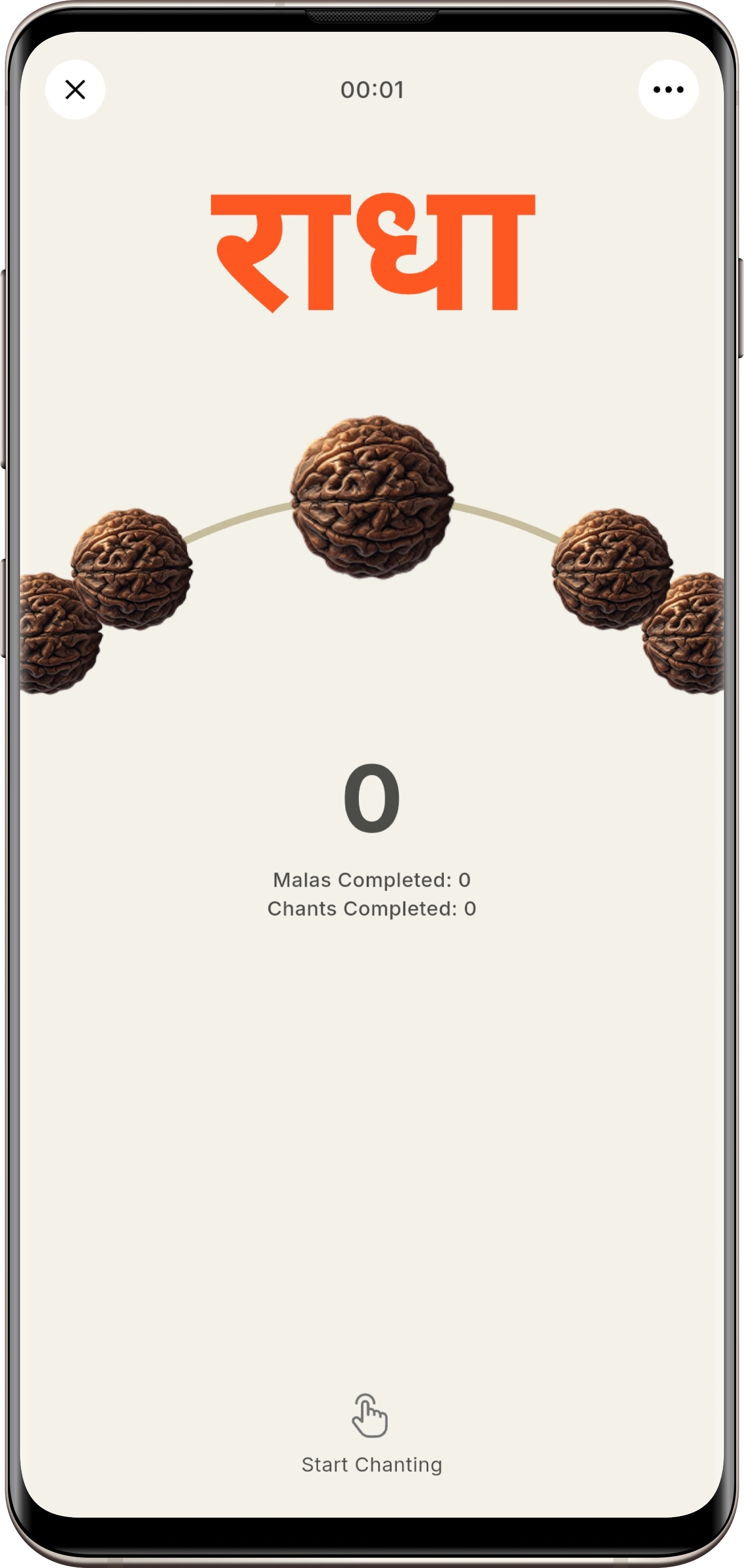
Combining physical Pradakshina with mental chanting turns a brief temple visit into a deeply restful meditative experience. If you are seeking to build consistency in your daily devotional routine—whether at the temple or at home—the Divya Marg app provides a simple, peaceful way to track your daily Naam Jaap rounds and maintain your spiritual momentum.
Frequently Asked Questions About Pradakshina
What is the difference between Pradakshina and Parikrama?
In general practice, both mean walking around a sacred entity. However, Pradakshina usually refers to walking around a temple deity or altar inside a mandir, while Parikrama typically refers to larger pilgrimages around sacred hills, holy rivers, or entire towns.
Why do we walk clockwise during Pradakshina?
Walking clockwise keeps the deity on your right side (Dakshina), which is traditionally considered the side of honor, righteousness, and respect in Hindu culture. It also symbolically aligns with the path of the sun.
How many times should you go around a temple?
Customary traditions suggest 1 round for Goddesses, 2 for Surya, 3 for Ganesha, and 4 for Lord Vishnu. However, if space or health is limited, completing 1 or 3 rounds with sincere devotion is considered complete.
Can Pradakshina be performed at home?
Yes. If space permits, you can walk around your home altar. If space is tight, you can perform Atma Pradakshina by standing in front of your shrine and slowly turning clockwise 360 degrees on the spot.
Why do devotees turn back during Shiva Pradakshina?
In Shiva temples, the water outlet (Soma Sutra) carrying bathing liquids from the Shiva Lingam is considered sacred and is traditionally not crossed. Devotees perform a half-circle Pradakshina and return in reverse.
Is Pradakshina compulsory during a temple visit?
Pradakshina is a cherished traditional practice that deepens reverence and focus, but it is not compulsory. If health or crowd conditions make walking difficult, simple prayer and silent darshan carry full spiritual merit.
Begin your Naam Jaap today
Offline-first and built entirely around one purpose — helping you show up for your practice, every single day.
- Free, always
- Works offline
- No ads