Sharad Purnima 2026: Date, Puja Vidhi, Significance, Moonlight & Kheer Tradition

Sharad Purnima 2026 will be observed on the night of Sunday, 25 October 2026, the full moon of the month of Ashwin. The Purnima tithi begins around 11:55 AM on 25 October and ends around 9:41 AM on 26 October (IST, New Delhi), so the moonlit night that matters for kheer, Lakshmi puja and the night-long vigil falls on the 25th. It is one of the most loved full moons of the Hindu year: the monsoon has gone, the sky is clear, and devotees remember Krishna's Raas, welcome Goddess Lakshmi, and leave a bowl of kheer in the moonlight. Here is the date, the timing, the puja vidhi and the meaning behind it all.
Table of contents
Key takeaways
- Sharad Purnima 2026 is on Sunday, 25 October 2026. The main night rituals take place on the night of 25 October.
- Purnima tithi runs from about 11:55 AM on 25 October to about 9:41 AM on 26 October (IST, per New Delhi panchang). Always check your own city's panchang.
- The night is connected with Krishna's Raas in Vrindavan and with Lakshmi worship, known as Kojagara or Kojagari Puja in several regions.
- Keeping kheer in the moonlight is a traditional custom. The idea that moonlight gives it special properties is a belief, not a proven fact.
- Fasting, puja and jagran are observed in different ways across regions and families. There is no single fixed method.
Sharad Purnima 2026 Date and Timings
Most current panchang sources agree on the date: Sharad Purnima falls on the night of Sunday, 25 October 2026. The only reason you may see 26 October mentioned is that the Purnima tithi continues into the morning of the 26th. Some calendars that follow the tithi at sunrise mark the day as 26 October, while the moonlit night itself, which is what the kheer and Lakshmi traditions depend on, is the night of the 25th.
| Detail | 2026 |
|---|---|
| Festival | Sharad Purnima (also Kojagari, Raas or Kaumudi Purnima) |
| Main night | Sunday, 25 October 2026 |
| Hindu month and tithi | Ashwin Shukla Paksha Purnima |
| Purnima tithi begins | About 11:55 AM, 25 October 2026 |
| Purnima tithi ends | About 9:41 AM, 26 October 2026 |
| Moonrise (New Delhi) | Around 5:00 PM on 25 October, varies by city |
A small note on timings: panchang sources differ by a minute or so, and the times above are for New Delhi. Moonrise and the Nishita (midnight) puja time change from city to city, and in India moonrise is usually somewhere around the early evening. Outside India, the date itself can shift. For your own city, check a local panchang or ask your family priest.
What Is Sharad Purnima?
Sharad Purnima is the full moon of the lunar month of Ashwin, when the rains have ended and the autumn season, sharad, has begun. The sky is clear and the moon looks especially bright, which is why this night has inspired poetry, devotion and a few lovely customs for centuries.
The festival goes by many names. In much of North India it is Sharad Purnima or Raas Purnima, in Bengal, Assam, Mithila and Tripura it is Kojagari Purnima, and in Odisha it is known as Kumar Purnima. Different names, different ways of celebrating, but the same full moon.
Why Is Sharad Purnima Special?
Several beautiful ideas gather around this one night. Traditionally, the autumn full moon is described as shining with all sixteen of its kalas, or phases of radiance, which is why it is called the brightest and most complete moon of the year. This is a traditional and poetic description rather than an astronomical statement.
For devotees of Krishna, it is the night of the Raas. For those who honour Lakshmi, it is the night when the goddess is believed to move through the world asking who is awake. For many families, it is simply an evening of kheer, bhajans, and sitting together under the moon. The full moon becomes a doorway into devotion.
Sharad Purnima and Krishna: The Night of the Raas
The best-known devotional story of Sharad Purnima is Krishna's Raas in Vrindavan. The Bhagavata Purana describes the Raas Leela in its Raas Panchadhyayi, five chapters in the tenth canto, as taking place on an autumn moonlit night. Tradition and popular devotion link that night to Sharad Purnima, which is why the festival is also called Raas Purnima.
In the story, the gopis hear Krishna's flute in the forest and leave their homes to be near him. The Raas that follows, the circle dance in which Krishna is felt to be present beside each of them, is understood by devotees as a picture of the soul drawn irresistibly toward God. Devotional traditions place Radha at the heart of this love. The Bhagavata's Raas chapters do not name her directly, but Radha holds a central place in many Vaishnava traditions, poetry and temple worship as the highest embodiment of devotion.
In Vrindavan, Mathura and other Krishna centres, Sharad Purnima is marked with kirtan, special darshan and Raas Leela performances. Even if you cannot be there, the spirit of the night is easy to carry home: sing, chant, and remember Radha-Krishna with an open heart.
Kojagara Puja: Lakshmi and the Night Vigil
In many regions, especially Bengal, Odisha, Assam and Mithila, Sharad Purnima is Kojagari or Kojagara Purnima, devoted to Goddess Lakshmi. A popular explanation of the name is that it comes from the question 'Ko jagarti?', meaning 'Who is awake?'. According to tradition, Lakshmi visits homes on this night and blesses those who are awake in remembrance of her.
That is the origin of the night-long jagran: families stay up singing, reading, playing quiet games or doing devotional practices. People often worship Lakshmi at night, and in some traditions the puja is timed around Nishita, roughly midnight, so it is worth asking your priest or checking your panchang. The belief in Lakshmi's visit is a matter of faith and tradition. It is best seen as an invitation to gratitude and wakeful devotion rather than a promise of wealth.
Not every community observes the festival this way. In some places the focus is entirely on Krishna and the Raas, and in others on the moon itself, so follow your own family or regional custom.
Why Is Kheer Kept Under the Moonlight?
This is probably the most searched tradition of the festival, and also the one most surrounded by claims. The custom is simple. Kheer, made with milk, rice and sugar, is prepared in the evening and left in the open under the moon through the night. Many families offer it as bhog first, then eat it as prasad the next morning.
Why kheer? Milk and rice are white and cooling, much like the moon, and sweet milk-based dishes are associated with Lakshmi, Vishnu and Krishna. Many families also see it as a way of making the night feel like a shared offering to the moon, which is called Chandra in the tradition and is linked with calm and the mind.
Popular belief holds that the Sharad moonlight carries a special, nourishing quality, sometimes described as amrit, which is why the kheer is left out. That is a traditional belief.
Practices vary. Some families use a clean bowl covered with a thin cloth, some keep it on a terrace or in a courtyard, and some begin only after the moon is visible. In parts of Gujarat and Maharashtra, people commonly place sweetened milk or milk-based dishes, such as dudh-pauva or spiced milk, in the moonlight instead. Whatever you choose, it is sensible to keep the food covered and clean, and to take it in before sunrise.
Sharad Purnima Puja Vidhi at Home
There is no one fixed sequence for every household. What follows is a simple, commonly followed way to observe the day at home. Adapt it to your own family tradition.
- Begin the day clean and calm. Take an early bath, wear fresh clothes, and tidy your puja space.
- Set up the altar. Place an image or idol of Lakshmi, along with Vishnu or Krishna and Radha if that is your tradition. Many also place a kalash with water.
- Take a sankalp. Quietly state your intention to observe the puja or vrat with devotion. If you are keeping a fast, this is when you begin it.
- Prepare the kheer. Cook it in the evening and keep some aside for the offering.
- Perform the evening or night puja. Light a diya and incense, offer flowers, roli, akshat and fruit, and offer the kheer as naivedya. Many people do the main Lakshmi worship at night, and some time it around Nishita.
- Chant and sing. Recite a mantra, sing bhajans or kirtan, or read about the Raas Leela or Lakshmi.
- Offer kheer to the moon. After moonrise, place the covered kheer in the moonlight, and many people also offer water and a prayer to the moon.
- Conclude with aarti. Perform aarti, ask for forgiveness for any mistakes, and distribute prasad to the family.
- Receive the kheer next morning. Bring it in before sunrise and eat it as prasad.
Simple mantras you can chant
You do not need elaborate Sanskrit. Many devotees simply chant the name of the deity they feel close to. Two widely used mantras are:
ॐ श्री महालक्ष्म्यै नमः
Om Shri Mahalakshmyai Namah
ॐ नमो भगवते वासुदेवाय
Om Namo Bhagavate Vasudevaya
Sharad Purnima Puja Samagri: A Simple List
This is a practical list for a simple home puja. It is not a universal requirement, and you can offer what you have with sincerity.
- Image or idol of Lakshmi, and Krishna, Radha or Vishnu if you worship them
- Clean cloth or chowki for the altar
- Kalash with clean water, and a coconut if your tradition uses one
- Diya, ghee or oil, cotton wicks, and incense
- Flowers (lotus or other fresh flowers), roli, akshat and haldi
- Fruits, sweets, and fresh kheer for the offering
- Tulsi leaves if you are worshipping Krishna or Vishnu
- A clean covered vessel to keep the kheer in the moonlight
- Bell, aarti plate and camphor
Sharad Purnima Vrat: How Is the Fast Observed?
Many devotees observe a vrat on Sharad Purnima, often called the Kojagara or Kaumudi vrat, while many others simply do the puja and eat normally. It is a personal choice, and families follow different ways.
A common form is to fast during the day, perform the puja at night, and break the fast after worship, often with the kheer prasad. Some people take only fruit, milk or other simple fasting foods, while others skip meals entirely or just avoid grains. Practices differ by region and household, so follow your family's tradition. If you have any health condition, or are pregnant, elderly or unwell, it is wise to speak to a doctor before fasting. A sincere puja is just as meaningful without a fast.
Regional Ways of Celebrating
The same full moon looks different from place to place:
- Braj (Vrindavan and Mathura): Raas Leela, kirtan and Krishna devotion take centre stage.
- Bengal, Assam, Mithila and Tripura: Kojagari Lakshmi Puja, with a night vigil and offerings such as coconut-based sweets.
- Odisha: Kumar Purnima, associated with young people, the moon and the worship of Kartikeya.
- Gujarat and Maharashtra: Evening gatherings under the moon, with milk-based dishes and, in many places, garba and music.
- North India generally: Kheer in the moonlight, Lakshmi worship and bhajans at home.
These are broad pictures, and individual families may do things differently.
The Deeper Meaning: A Night for Devotion and Gratitude
Beyond the rituals, Sharad Purnima is really about turning the mind toward what is bright and steady. The full moon is a symbol of fullness and calm, Krishna's Raas is a picture of love that asks for nothing, and the Lakshmi vigil reminds us to be grateful and awake to the blessings we already have.
The festival also sits at a gentle turning point in the year. In the purnimanta calendar followed in much of North India, the month of Kartik begins after Ashwin Purnima, a period associated with lamp-lighting, Tulsi worship and the build-up to Diwali. So Sharad Purnima can feel like a quiet, moonlit prelude to the festive season.
Make the Night a Devotional Practice
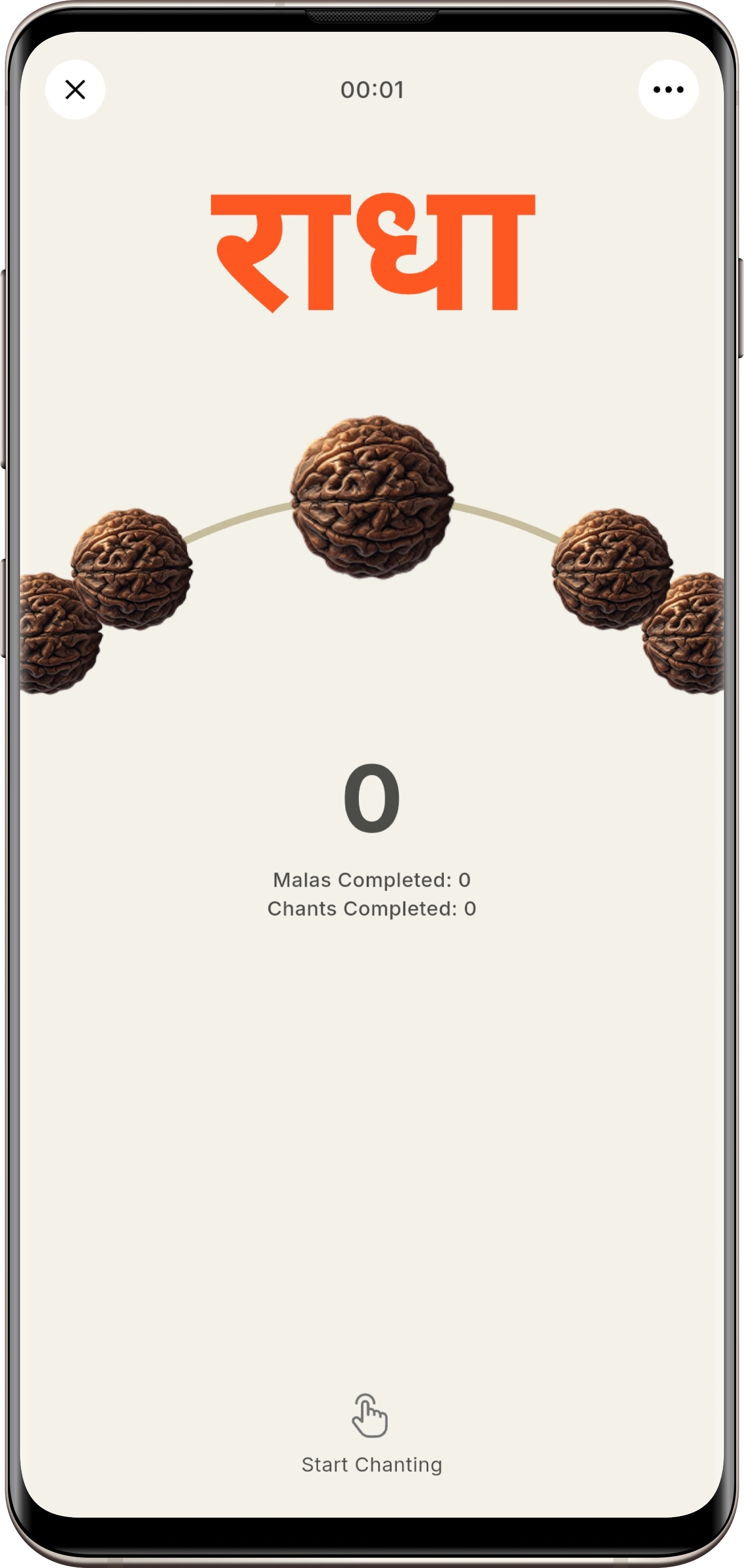
If you are keeping the jagran, this is a lovely night to simply sit under the moon and chant. Many devotees choose the name of Radha-Krishna, Krishna or Lakshmi and repeat it with steady attention. A few quiet rounds of Naam Jaap can be as meaningful as a long ritual.
If you would like to keep count of your chanting, the Divya Marg app is built for Naam Jaap and chant counting. Whether you use a mala, the app, or just your voice, let the night be about presence rather than numbers.
Before you plan your night
Sharad Purnima 2026: Sunday, 25 October night. Purnima tithi from about 11:55 AM on 25 October to about 9:41 AM on 26 October (IST, New Delhi). Moonrise and the Nishita puja time vary by city, so confirm them with your local panchang.
Frequently Asked Questions About Sharad Purnima 2026
When is Sharad Purnima in 2026?
Sharad Purnima 2026 is observed on the night of Sunday, 25 October 2026, the Ashwin full moon.
Is Sharad Purnima on 25 or 26 October 2026?
The main moonlit night is 25 October. The Purnima tithi starts around 11:55 AM on 25 October and ends around 9:41 AM on 26 October (IST, New Delhi), so some calendars that go by the sunrise tithi mention 26 October for daytime observances. Check your local panchang.
What is the Sharad Purnima 2026 tithi timing?
In New Delhi, the Purnima tithi begins around 11:55 AM on 25 October 2026 and ends around 9:41 AM on 26 October 2026 (IST). Timings can differ slightly by source and city.
What time is moonrise on Sharad Purnima 2026?
Moonrise on 25 October 2026 is around 5:00 PM in New Delhi according to panchang sources, and it varies across Indian cities. Look up your own city for an accurate time.
When should kheer be kept under the moonlight in 2026?
Traditionally, it is kept after moonrise on the night of 25 October and brought in before sunrise on the 26th. Keep it covered and clean.
Why is kheer kept under the moon on Sharad Purnima?
It is a traditional custom linked to the belief that the autumn full moon is especially radiant and auspicious. Many families offer the kheer as prasad afterwards.
What is Kojagara or Kojagari Puja?
It is the worship of Goddess Lakshmi on Sharad Purnima night, followed in regions such as Bengal, Odisha, Assam and Mithila. It involves staying awake, which comes from the traditional belief that Lakshmi asks who is awake on this night.
What is the connection between Sharad Purnima and Krishna?
Tradition links Sharad Purnima with Krishna's Raas in Vrindavan, described in the Raas Panchadhyayi of the Bhagavata Purana as taking place on an autumn moonlit night. For this reason the day is also called Raas Purnima.
Is Sharad Purnima vrat compulsory?
No. Many people observe a fast, while others only perform the puja. Practices vary by region and family, and anyone with a health concern should consult a doctor before fasting.
What should we do on Sharad Purnima?
Common observances include Lakshmi or Krishna puja, a vrat for those who keep it, a night vigil with bhajans or chanting, and offering kheer in the moonlight, then sharing it as prasad.
Why is Sharad Purnima called Raas Purnima and Kaumudi Purnima?
Raas Purnima refers to Krishna's Raas, while Kaumudi Purnima refers to the bright moonlight of the night. Different regions and traditions use these names for the same Ashwin full moon.
Begin your Naam Jaap today
Offline-first and built entirely around one purpose — helping you show up for your practice, every single day.
- Free, always
- Works offline
- No ads