Govind Dev Ji Temple Jaipur: History, Story, Significance, Darshan & Festivals

Govind Dev Ji is Krishna in one of his best-loved temple forms, worshipped alongside Radha, and for generations Jaipur has considered him its true king. The deity is traditionally said to have been rediscovered in Vrindavan by Rupa Goswami, a disciple of Chaitanya Mahaprabhu, and later carried to Rajasthan for safekeeping. The Govind Dev Ji Temple in Jaipur, inside the City Palace complex, was established in the 18th century by Maharaja Sawai Jai Singh II, the founder of Jaipur. Today it is one of the most visited Krishna temples in Rajasthan, known for its seven daily jhankis and its grand festivals. Here is the story, told as devotees and historians tell it, with the differences noted along the way.
Table of contents
Key takeaways
- Govind Dev Ji is Krishna worshipped with Radha as Radha-Govind. The Jaipur temple is a major centre of Krishna bhakti outside Braj.
- According to tradition, the image was rediscovered in Vrindavan by Rupa Goswami and later brought to Jaipur. The temple was established in the 18th century by Sawai Jai Singh II.
- Accounts differ on exact dates and the route of the deity's journey, so this article marks which parts are tradition and which are commonly cited history.
- Darshan is given through seven daily jhankis: Mangla, Dhoop, Shringar, Rajbhog, Gwal, Sandhya and Shayan. Timings change with the season and on festival days.
- Janmashtami, Radhashtami, Holi, Gopashtami, Sharad Purnima and Kartik Purnima are among the important celebrations.
Who Is Govind Dev Ji?
'Govind' is one of Krishna's names, often understood as the one who delights and protects the cows, the senses and the devoted. So Govind Dev Ji is not a separate deity from Krishna. He is Krishna, worshipped as a living presence in the temple, with Radha beside him.
In the Gaudiya Vaishnava tradition, which grew from the teachings of Chaitanya Mahaprabhu, Krishna is approached through the love of Radha and the devotion of Vrindavan. That is why the temple is known as Radha-Govind, and why the deity is so closely tied to the story of Vrindavan itself.
The Traditional Story of Govind Dev Ji
The story of Govind Dev Ji begins as a tradition, not a dated record. According to Vaishnava accounts, Krishna's great-grandson Bajranabh had three images of Krishna made, each said to reflect a different part of the Lord's form. Over time, the images were lost or hidden, and were later rediscovered in Vrindavan in the age of the Goswamis.
| Deity | Said to represent | Where he is worshipped today |
|---|---|---|
| Madan Mohan Ji | The feet | Karauli, Rajasthan |
| Gopinath Ji | The chest | Jaipur |
| Govind Dev Ji | The face | Jaipur |
This is a devotional tradition that comes down through temple and Vaishnava accounts. Historians do not treat the Bajranabh story as established history, but it explains why many devotees feel that Govind Dev Ji's face is especially beloved, and why some pilgrims try to have darshan of all three forms.
Rupa Goswami and Vrindavan
The person most closely tied to the deity's rediscovery is Rupa Goswami, a leading disciple of Chaitanya Mahaprabhu who settled in Vrindavan. Gaudiya tradition holds that he found the image and began its worship, and the deity became central to the Goswamis' devotional life in Braj.
A grand red sandstone temple for Govind Dev Ji was later raised in Vrindavan, with the patronage of Man Singh I of Amber during the reign of the Mughal emperor Akbar. It is commonly dated to the late 16th century. Sources differ on the exact year, with some giving 1570 for the consecration and others 1590 for the temple's construction, so it is safest to say the later 16th century.
The Vrindavan Govind Dev temple is also linked with Baladeva Vidyabhushana, a philosopher of the Gaudiya tradition. According to tradition, he composed his Govinda Bhashya, a commentary on the Brahma Sutras, here after receiving guidance from the deity in a dream. Like many such accounts, it is a devotional tradition rather than a documented fact.
Why Did Govind Dev Ji Leave Vrindavan?
In the later 17th century, during the reign of Aurangzeb, many temples around Vrindavan and Mathura were believed to be at risk. Popular accounts say the priests and devotees chose to move the deity to safety, and several Braj deities were taken to Rajput territories at this time, including Madan Mohan to Karauli and Gopinath and Govind Dev to the Jaipur region.
Some sources give 1670 for the removal, though the date is not firmly settled. Accounts also differ on the route and on how long the deity stayed in Rajput lands before reaching its present home. Local tellings often mention a journey by bullock cart. These details are best treated as traditional memory rather than precise history.
How Govind Dev Ji Came to Jaipur
The Kachwaha rulers of Amber had long been devotees of Govind Dev Ji, and Man Singh I of Amber had supported the original Vrindavan temple. When the deity left Braj, it found refuge in their kingdom. Sawai Jai Singh II, who ruled from 1699 to 1744, moved his court from Amber to his new city of Jaipur in 1727, and the deity was installed in the new capital.
The temple stands in the City Palace complex, in the Jai Niwas garden between the Chandra Mahal and the Badal Mahal. One account says Jai Singh II built his palace so that it faced the temple, and popular tradition holds that the Jaipur rulers regarded Govind Dev Ji as the true sovereign of the state, with the Maharaja serving as his devoted deputy. This is a cherished tradition that shapes how the city sees the deity.
Some modern pages also associate the deity with Kanak Vrindavan, a garden near Amber built by Jai Singh II as a Vrindavan-like setting. This reflects the maharaja's wish to bring the spirit of Braj to Rajasthan.
Why Is the Temple Special to Jaipur?
For many Jaipur families, Govind Dev Ji is not a distant deity but the city's own Thakur Ji. Residents visit daily, schedule family occasions around darshan, and begin important days with a visit. The temple shaped the city's devotional rhythm, from the early Mangla aarti to the evening crowds.
Its place inside the royal palace, its royal patronage and the continuing worship by the Goswami priests have made it part of Jaipur's religious and cultural identity, much as other deities anchor other cities. It is also an important Krishna temple for Vaishnava devotees outside Braj.
Radha-Govind: The Heart of the Devotion
At the temple, Govind Dev Ji is worshipped together with Radha. In the Radha-Krishna tradition of Vrindavan, devotion to Krishna is deepest when it is expressed through Radha's love, which is why many devotees say Radha's name first. At Govind Dev Ji, that devotion is expressed in daily seva: dressing, offerings, song and aarti, all offered as to a beloved family deity.
Many people who cannot come in person simply chant 'Radha Govind' or 'Radha Krishna' with the same feeling. A simple, regular Naam Jaap can be a way of carrying this temple's devotion into the home.
Darshan and the Seven Jhankis
Darshan at Govind Dev Ji is not continuous. The deity is shown to devotees in seven jhankis, or glimpses, through the day, each with its own mood of seva. The curtain closes between them.
- Mangla, the first early-morning awakening of the deity
- Dhoop, the morning offering of incense and food
- Shringar, when the deity is dressed and adorned
- Rajbhog, the main midday offering of food
- Gwal, the afternoon darshan linked with Krishna's cowherd life
- Sandhya, the evening aarti
- Shayan, the last darshan before the deity is put to rest
The temple's schedule changes with the season and on festival days, and different websites list different times. For that reason, this article does not give a fixed timetable. Before you travel, check the temple's official website, govinddevji.net, which also mentions live darshan, or confirm with the temple office.
Festivals at Govind Dev Ji Temple
Festivals are when Govind Dev Ji's devotion is most visible. The temple is especially associated with:
- Janmashtami, the birth of Krishna, which brings some of the biggest crowds of the year.
- Radhashtami, the birth of Radha, which matters deeply in a temple dedicated to Radha-Govind.
- Holi, celebrated with colour, music and special darshan.
- Gopashtami, linked with Krishna's role as the cowherd.
- Sharad Purnima and Kartik Purnima, the full-moon festivals tied to Krishna's Raas and the Kartik season.
- Govardhan Puja, when the deity is offered special food and, in some years, dressed in historic attire.
On such days the temple can be extremely crowded, and darshan arrangements and timings may change. If you wish to experience a festival, plan extra time and follow the temple's announcements.
Visiting Govind Dev Ji Temple, Jaipur
The temple is inside the City Palace complex in the old city of Jaipur, in the Jai Niwas garden between the Chandra Mahal and the Badal Mahal. It is a short distance from other landmarks of the Pink City, and many visitors combine it with the City Palace.
Early morning and evening are popular for darshan, and weekdays outside festivals are usually calmer. As with any temple, dress modestly and be mindful of the temple's own guidelines. Since rules and timings are set by the temple, it is wise to check the official site before your visit.
The temple's Satsang Hall has also been recorded by Guinness World Records, in 2009, as the widest concrete building with a single span, a modern landmark alongside the old devotion.
Why Govind Dev Ji Still Matters
Govind Dev Ji's story is about how devotion travels. A deity rediscovered in Vrindavan was carried through uncertain times, welcomed by a royal house, and has been worshipped daily for centuries since. For devotees, that continuity is the real significance: the same Thakur Ji, the same seva, and the same love.
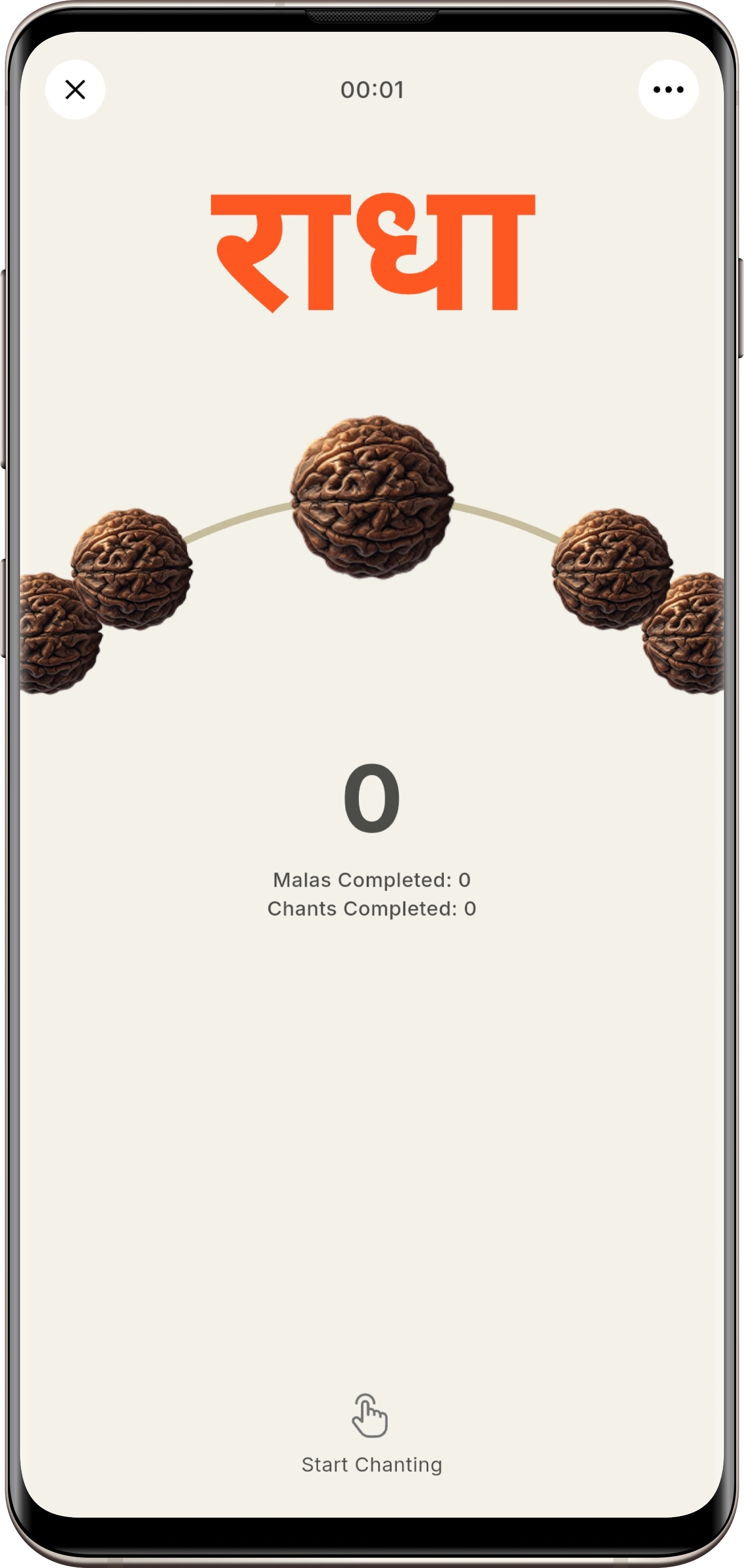
If this story inspires you to build a daily devotional habit, even a few minutes of Naam Jaap in the morning or evening can help. The Divya Marg app is built for Naam Jaap and chant counting, so you can keep track of your chanting of Radha or Krishna's name, wherever you are.
A note on the history
Parts of this story are historical, such as the patronage of the Amber rulers and the founding of Jaipur, while others are traditions handed down in Vaishnava and temple accounts, such as the Bajranabh story and the details of the deity's journey. Where sources differ on dates or routes, it is best to trust the temple's own accounts and respected historians.
Frequently Asked Questions About Govind Dev Ji Temple
Who is Govind Dev Ji?
Govind Dev Ji is Krishna worshipped as Govind, together with Radha, in the Radha-Govind tradition. The deity is especially associated with Vrindavan and with the city of Jaipur.
What is the history of Govind Dev Ji Temple in Jaipur?
The temple inside the City Palace complex was established in the 18th century by Sawai Jai Singh II, the founder of Jaipur, who brought the deity from Vrindavan. The deity is traditionally said to have been rediscovered in Vrindavan by Rupa Goswami.
How did Govind Dev Ji come to Jaipur?
According to commonly cited accounts, the deity was moved out of Vrindavan for safety in the Aurangzeb era and found refuge in the Rajput kingdom of Amber. Jai Singh II then installed it in Jaipur. Dates and the exact route differ between accounts.
What is the connection between Govind Dev Ji and Vrindavan?
The deity was worshipped in Vrindavan by the Goswamis and had a grand red sandstone temple there, built with the patronage of Man Singh I of Amber in the late 16th century. The Jaipur temple continues that worship.
Who built Govind Dev Ji Temple in Jaipur?
The Jaipur temple was established by Maharaja Sawai Jai Singh II in the 18th century. The earlier Vrindavan temple was built with the patronage of Man Singh I of Amber.
What is Govind Dev Ji famous for?
It is famous as a major Radha-Krishna temple in Jaipur, for its link with Vrindavan and the Gaudiya Vaishnava tradition, for its seven daily jhankis, and for festivals like Janmashtami and Holi.
What are the Govind Dev Ji darshan and aarti timings?
Darshan is given in seven jhankis through the day, and timings change with the season and on festival days. Sources vary, so check the temple's official website or office for the current schedule.
What are the seven aartis at Govind Dev Ji Temple?
The seven daily jhankis are Mangla, Dhoop, Shringar, Rajbhog, Gwal, Sandhya and Shayan.
Which festivals are celebrated at Govind Dev Ji Temple?
Important festivals include Janmashtami, Radhashtami, Holi, Gopashtami, Sharad Purnima, Kartik Purnima and Govardhan Puja.
What is the story of Bajranabh and the three Krishna images?
According to tradition, Krishna's great-grandson Bajranabh had three images made, said to represent Krishna's feet, chest and face: Madan Mohan, Gopinath and Govind Dev Ji. It is a devotional tradition and not documented history.
Where is Govind Dev Ji Temple located?
It is in the City Palace complex in the old city of Jaipur, Rajasthan, in the Jai Niwas garden between the Chandra Mahal and the Badal Mahal.

Begin your Naam Jaap today
Offline-first and built entirely around one purpose — helping you show up for your practice, every single day.
- Free, always
- Works offline
- No ads